
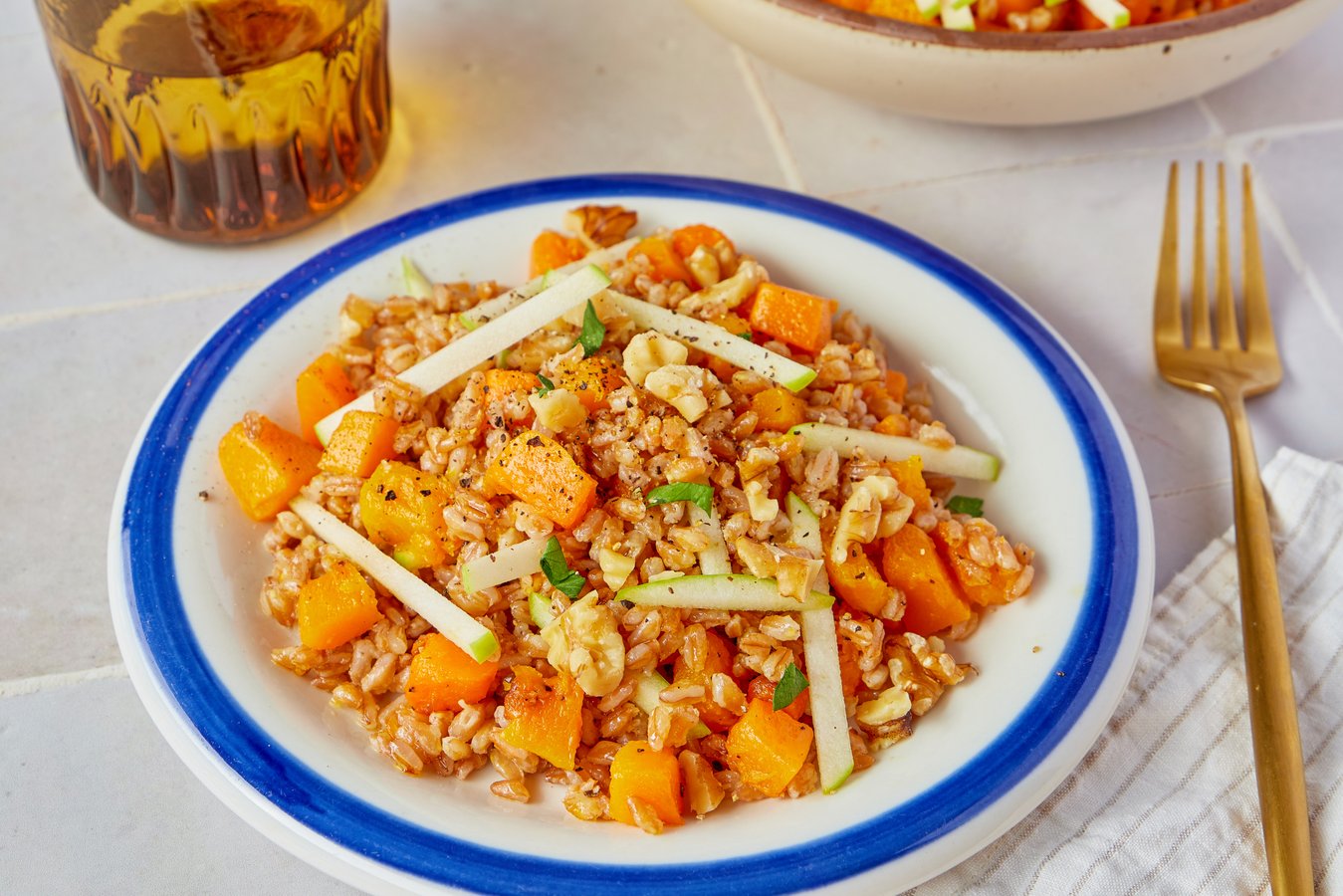
I think some people think that grains are boring. For this, I blame the bland grain bowls of yesteryear—considered a diet-friendly staple for easy weeknight dinners. Blah! Even I’m bored reading that. As someone who doesn’t eat meat, I look to grains not only as a hearty base for lots of winter and spring dishes, but to provide essential dietary components to my meals, like fiber and protein.
How to Cook Grains
The world of grains is wide, but once you crack the code for how to cook them, it’s easy to dive in and start playing. The key to cooking grains is to cook them in well-seasoned water or broth. During cooking is your best chance at adding meaningful seasonings into these grains, so salt it up. These grains have widely varying cook times, so while you watch the clock, don’t forget to rely on your intuition to check in. Taste the grains while they’re cooking and don’t be afraid to deviate from the instructions if you think they’re done. I tend to slightly undercook my grains and then let them rest while covered to achieve the perfect texture.
Preparing Grains
Some grains will soak up their cooking liquids, and some need to be drained. Refer to the cooking instructions or recipes to know what works best for each grain. No matter how I’m preparing the grains, I tend to add seasonings, including salt, fat, and acid, after they’re done cooking. From there, they make great (and exciting!) base.
My Favorite Grains
Farro
I eat a ton of farro all year long. This hearty, chewy grain makes an amazing addition to salads, soups, and even wraps. I love how it holds its shape after being cooked—there’s no soggy textures here. This is a grain I reach for a lot when prepping meals on busy weeks because you can cook it ahead of time and store it in the refrigerator to use all week long.
Barley
Barley is a more tender grain which tends to do better with sauces and soups. It absorbs the flavor beautifully and adds a nice starchy quality to the soups, so it can actually help to thicken an otherwise thinner soup or broth. When I’m buying it, I typically opt for pearled barley, which has had the bran removed, making it quicker to cook and better for releasing the creamy starch into the dish.
Arborio Rice
Arborio rice is a favorite grain of mine for shoulder seasons. It’s way easier than you might think to cook up a risotto using this naturally creamy rice, and you can lighten it or bulk it up depending on what seasonal veggie you want to highlight. This rice is available in most grocery stores—the only special ingredient you need when cooking it is patience.
Cornmeal
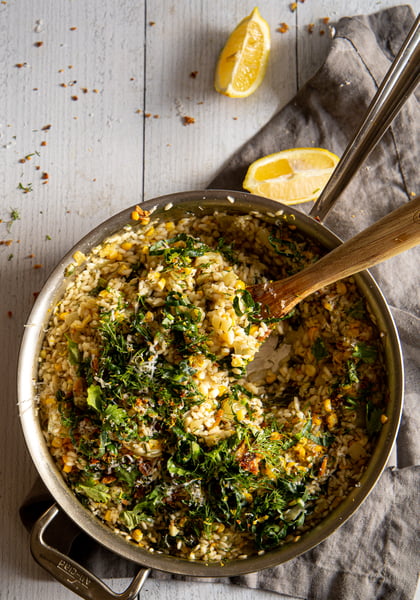
You can buy cornmeal prepared as “polenta,” which comes in a log shape and is ready to slice into a dish, but I prefer to buy the uncooked cornmeal and then cook it to my preference. I reach for medium and coarse grind cornmeal when I’m using it as a side for seafood stews, thicker soups, and fried eggs. The finer grind cornmeal should be reserved for baking or battering and frying.
Wild Rice
I love wild rice, especially in the spring time when seasonal vegetables are starting to be in play again. It’s as perfect in a pilaf as it is in a light salad. Technically, it’s a grass and not a grain, but I love it too much not to include it here. The grains of this rice are longer and firmer than white rice, which I think makes it more interesting to eat.
The Chopping Block has a new hands-on class in March that I'm very excited about: Plant Forward Plates: Eggs, Greens, and Grains. On Friday, March 27 at 11am, you can learn how to make:
- Poached Eggs with Avocado Toast, Radishes and Fresh Herb Salad
- Farro Risotto with Leeks, Wilted Spinach and Basil Pesto Swirl
- Zucchini, Chard and Quinoa Fritters with Green Goddess Yogurt Sauce and Pickled Shallots