
Every chef has a kitchen injury story. Hot oil splashes, a sliced finger, grazing a hot pan, you name it. I think back to my mother's hands, with little knicks scars and burns from cooking for us everyday. You may think it comes with the territory, but these injuries are avoidable
Earlier this week, after a long day, I was getting an easy chicken recipe together. As I was hungry, rushing, and eager to get food on the table, I briefly grabbed the handle of a hot cast iron pan. Ouch! Don’t worry, a band aid and a little burn cream and I’m just fine. After treating my wounds, I sat down to eat my now lukewarm dinner and thought about how I can save others from suffering the same fate.
So, today we’re talking about kitchen safety. We’ll cover:
- Planning
- The proper equipment
- Cleanliness and sanitation
- Safe temperatures for consumption
- Knife safety
- Bonus tip
If you’ve taken classes at The Chopping Block, you’ve probably heard the term "mise en place." Mise en place, often shortened to "mise," is a French culinary term meaning “everything in its place.” It refers to the practice of gathering, measuring, and organizing your ingredients before you start to cook. This not only makes the cooking process smooth and seamless but allows you to keep a clear and focused mind while preparing your meal. A clean and organized kitchen means less stress, fewer split-second decisions, and less room to make mistakes that result in injury. A good rule of thumb: everything should be measured, chopped, and in its place (see what I did there?) before turning on a heat source.
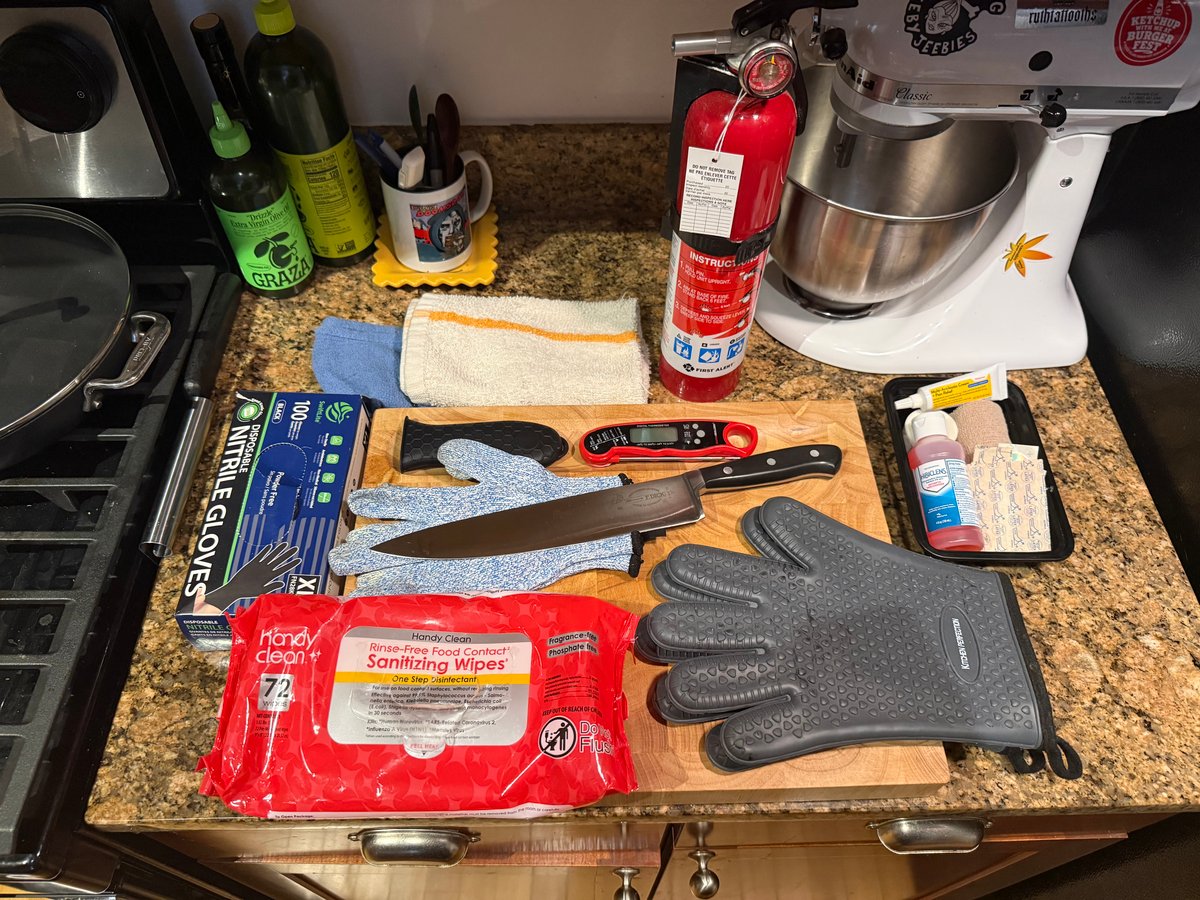
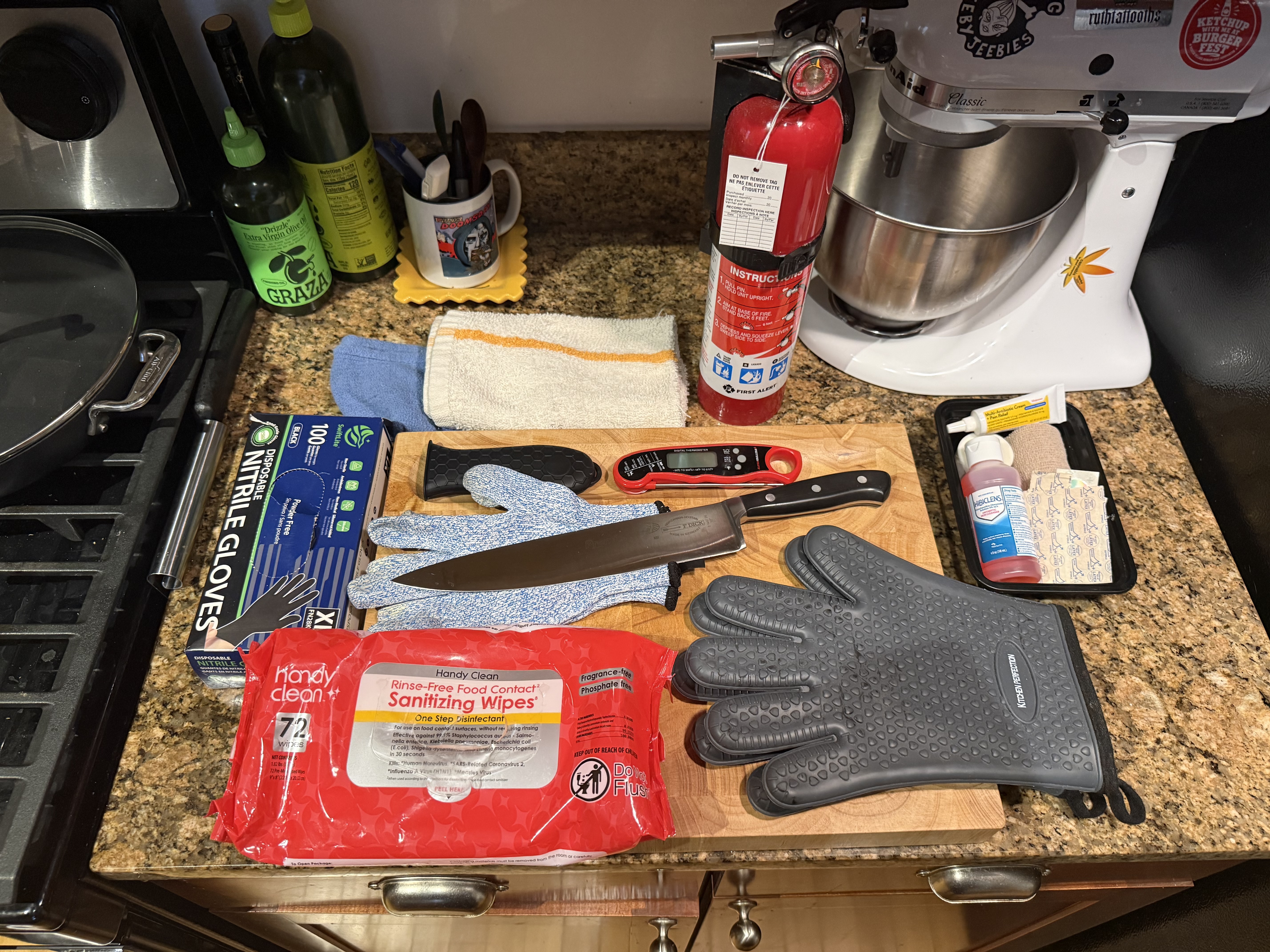
Any home cook needs to keep the proper equipment on hand. I’ve listed some basic, low cost tools that might just save you some stitches down to road.
- Potholders
- Dry hand towels: When using a hand towel as a sub for a potholder, it’s very, very important to ensure that towel is dry. When a damp towel touches a hot surface it creates immediate steam, and that steam can result in a wicked burn.
- Sanitation wipes/spray
- Fire extinguisher: Make sure it’s not expired!
- First aid kit
- Latex gloves: For an extra layer of safety after washing your hands thoroughly
- Cut gloves: Optional, but a pair of cut-resistant gloves can be a great tool if you’re processing a lot of food at a time. I break mine out for Thanksgiving.
- Meat thermometer
The number one rule and first thing you should do when entering the kitchen is wash your hands. Do it early and do it often. Your best cooking tool is a pair of clean hands, so scrub, scrub! This is your first line of defense against bacteria and food borne illness.
Speaking of food borne illness, let’s talk cross contamination. Cross contamination refers to the transfer of harmful germs, bacteria, or allergens from surface to surface. The best example in the home kitchen is raw chicken. I like to prep any raw chicken or proteins at the top of my cooking process, allowing time to clean all surfaces, replace tools, and wash my hands before proceeding. Another best practice to avoid cross contamination is to store raw meat on the bottom shelf of your fridge, to avoid any harmful germs from dripping onto other products.
Next, let’s talk temps. The trusty meat thermometer might be your number one safety tool. When checking the temperature of your proteins, ensure your probe is inserted in the middle of the thickest part of the meat. Heat is transferred from the surface inward, so the most inner portion of food will take the longest to cook. I’ve listed safe temperatures for consumption below; but they’re often listed directly on your thermometer.
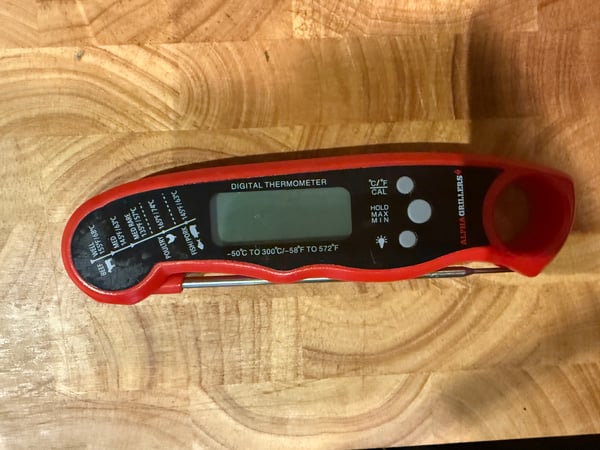
- Chicken and poultry: 165 F
- Beef, veal, lamb: 145 F
- Eggs: 160 F
- Pork: 145 F
- Seafood: 145 F
Finally, let’s talk about knives. If you want to build confidence with your knife, check out our Knife Skills class. You’ll learn proper knife handling, basic cuts, and knife care. It’s our most popular class, so check it out!
First tip: a sharp knife is a safe knife. It may seem counterintuitive, but a sharp knife means smooth cuts, less slipping, and less pressure needed which all results in more control over the blade. If you have a dull knife, consider replacing or sharpening. The Chopping Block also offers an excellent knife sharpening class to teach you proper techniques for home.
Another rule of thumb: a falling knife has no handle. By that, I mean if you drop a knife do not try and catch it. In the event of a falling knife, put your hands up, step back, and allow the knife to hit the floor.
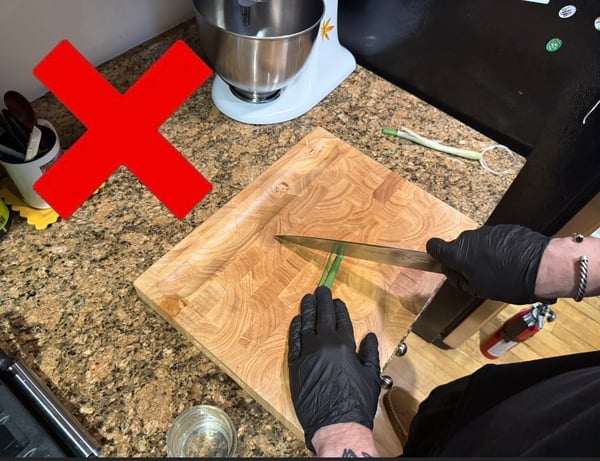
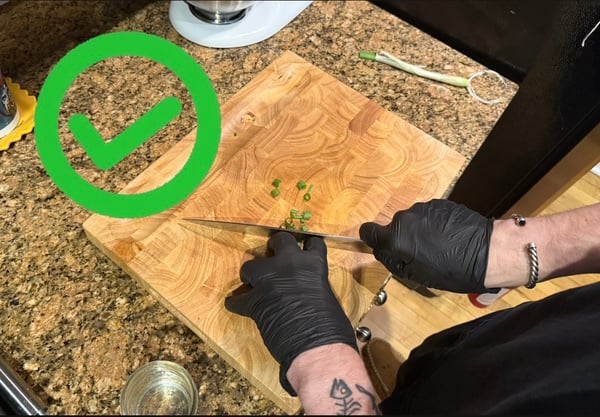
Continuing our knife discussion, I’m going to touch on the most basic knife technique: The Claw. The Claw technique is a knife-safety method where you curl your fingers inward, on your noncutting hand, creating a “claw” shape while holding your product. Allow the knife blade to rest against your knuckles as a guide, helping you make precise cuts while keeping your fingers safely out of the way. See pictures below for an example of proper and improper use of this technique.
Bonus tip: have a snack! An easy way to get distracted while cooking is by doing it hungry. When your first focus is your hunger instinct, you’re much more likely to make a costly error.
Remember, safety first and happy cooking!
