
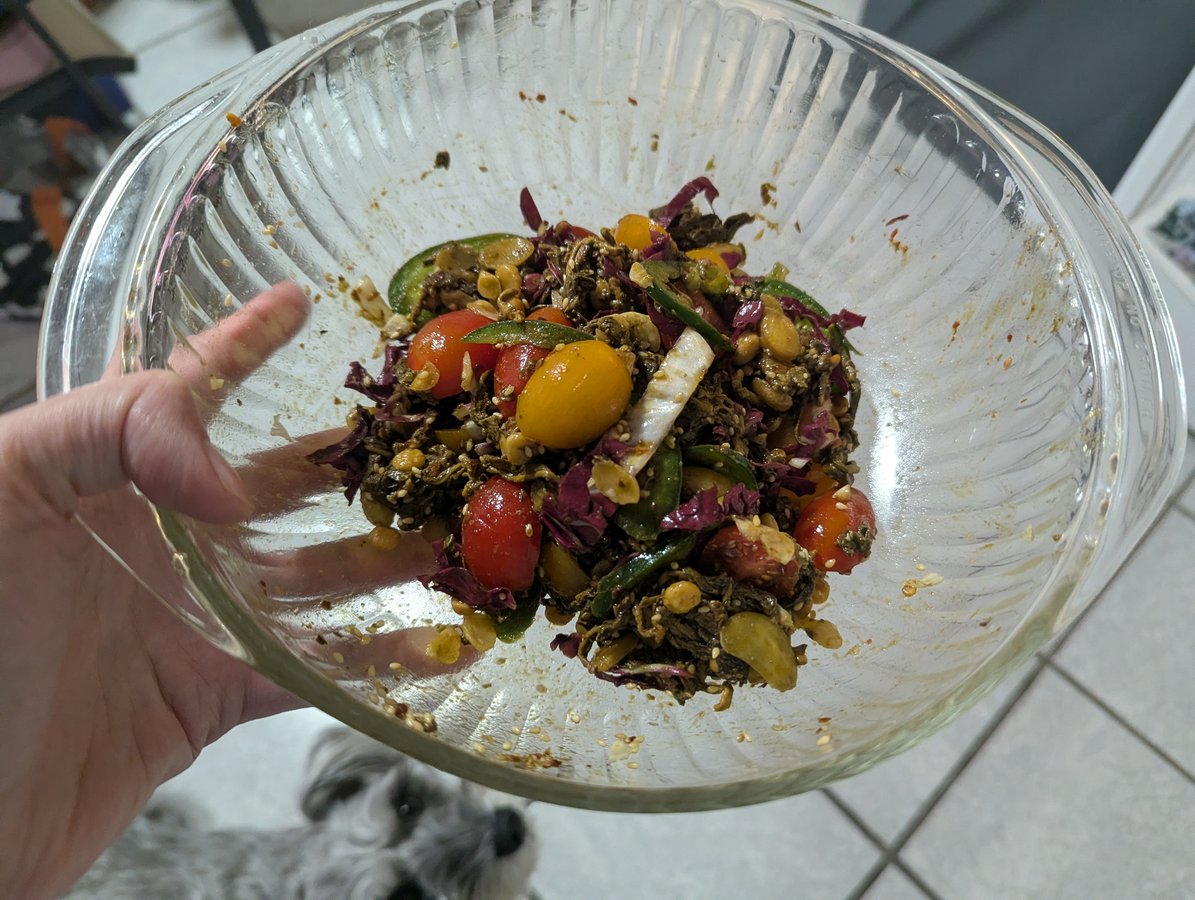
Let’s deep dive into the staple Burmese dish, Laphet Thoke, also known as Burmese (or Myanmar) Tea Leaf Salad. When my mom made this for us growing up, my siblings and I would devour the entire dish before we even sat down for dinner.
Laphet translates to fermented tea leaves, and thoke translates to tossed or salad. It’s a combination of fermented pickled tea leaves, fried beans, peanuts, fish sauce, and sometimes fresh vegetables. It’s a wonderful umami-packed flavor bomb with a variety of textures.
The tea leaves are cultivated in the mountain regions of Myanmar, where they are steamed, smoked, and fermented to remove bitter tones. Different varieties may have different levels of bitterness depending on whether the leaves are rinsed before fermentation. The actual tea leaves come from a specific green tea plant, Camellia sinensis, and can be purchased fresh, fermented, or as the finished product. The finished product—laphet—is the tea leaves mixed with garlic, lemon juice, peanut oil, chili, salt, and other seasonings.
In ancient times, laphet was considered a symbol of peace between kingdoms at war. Today, it’s common in almost every meal and can be an expression of hospitality. Another form of Burmese Tea Leaf Salad is called ahlu-laphet, which is served as a centerpiece during celebrations or after meals. It’s a very decorative version of the dish, often presented with beautiful tableware.
Laphet Thoke is such a fascinating staple food, and I love sharing it when I talk about my culture’s cuisine. It is so specific to Burmese culture, yet few people outside the community know about it. I also wrote two other blog posts about Burmese dishes if you want to explore more of Burma’s food culture, including Samosa Thoke and Oho No Khao Swe.
Now let’s talk a little bit about how we can make this at home. You’ll need a few key ingredients—then the rest is up to you!
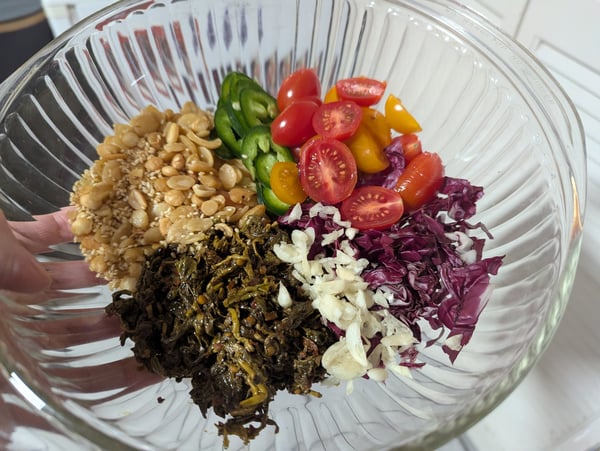
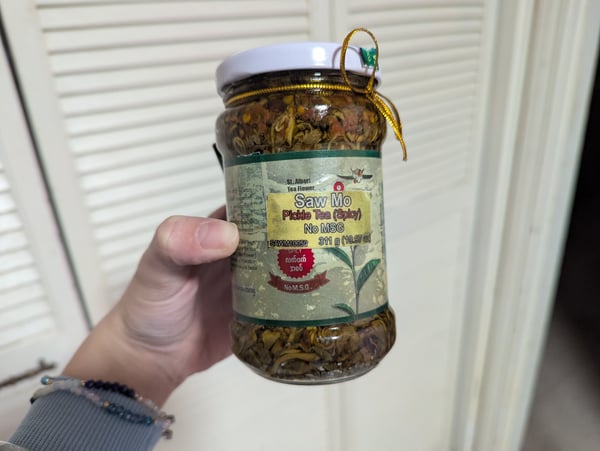
Laphet
A couple of brands are available on Amazon, or if you find a Burmese grocery store, you can ask for their favorite laphet. It’s usually labeled as “pickled tea leaves.” My favorite Burmese grocery store is in the suburbs of Wheaton: Karen Asia Grocery. It’s worth the trip.
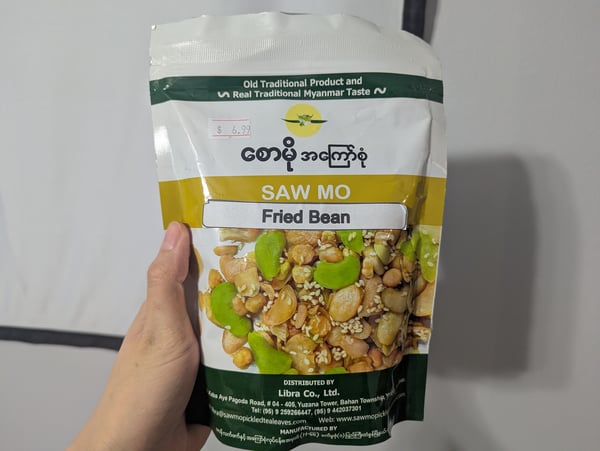
You can find these on Amazon or at Burmese grocery stores as well. It’s usually a mixture of fried beans, sesame seeds, and sometimes peanuts.
Dressing
The main components of the dressing are simply fresh lime juice and fish sauce. Start with a splash and adjust. Everyone’s preference is different when it comes to fish sauce, especially with the already fermented, umami-filled tea leaves.
Extras
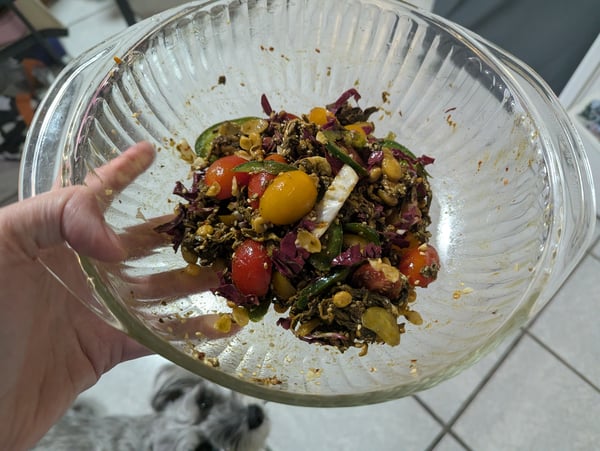
It really depends on what else you want to add to your thoke. Some of my favorite additions are shredded cabbage, fresh minced chilies, sliced garlic, and halved cherry or grape tomatoes. Cabbage is typically a filler to give bulk to the salad, but I like adding a little for texture.
After you gather your ingredients, toss everything together in a bowl. Taste and adjust the saltiness with fish sauce or the sourness with lime juice as you see fit.
If you want to learn more about food around the world, consider joining one of our culinary tours for 2026: Ireland and Tuscany and Iceland will be announced next week! Explore, learn, and eat your way through a country’s culture and history—which I believe is the best way to experience a new place.
