
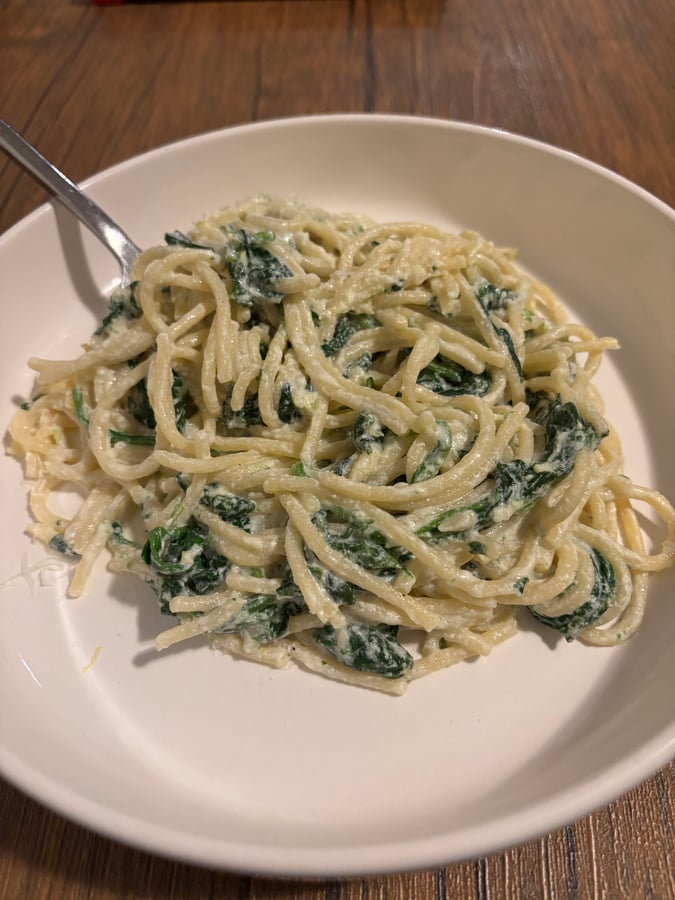
I’m a huge stickler for reducing food waste. Whenever our household plans our meals for the week, we go through the fridge and pantry to see what we can use up first. Such was the case last week, when I saw that we still had over half a jug of milk with an expiration date that had already passed. My fiancée and I both don’t really drink milk by itself, so we often end up with extra whenever we buy it for cooking. Our breakfasts had already been overwhelmingly full of pancakes and cereal, and I was itching to try something different. That’s when I had the idea to use the rest of our milk to make ricotta cheese.
I’ve dabbled in at-home cheesemaking before, but never specifically with ricotta. Truthfully, I’d never been a fan of this cheese. I always found it to be overly dry and gritty, and I hated the texture it lent to whatever dish it was used for. But after first being exposed to this at-home recipe at The Chopping Block, I realized I don’t actually hate ricotta at all! I just hate the store-bought stuff. After trying this recipe, you’ll wonder why you even wasted your money buying it from the store.
Homemade Ricotta
Yield: 1-1 ½ cups
Active Time: 30 minutes
Inactive Time: 10-15 minutes
Total Time: 50 minutes - 1.5 hours
4 cups milk (whole or 2%)
1 cup heavy cream
1/2 teaspoon salt
1/2 teaspoon granulated sugar
1/4 cup white distilled vinegar
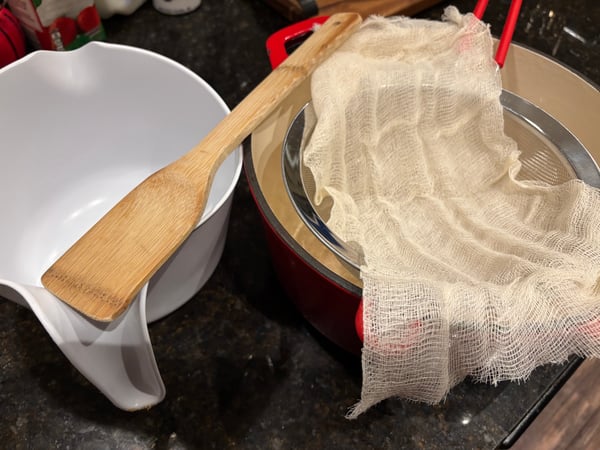
You’ll notice that most of the ingredients and equipment you need for this process are things you likely already have in your kitchen. The only thing you might need to buy for this specific recipe is cheesecloth, which I highly recommend for straining the ricotta. The recipe says you can use paper towels in a pinch, but that just sounds too messy to deal with. Opt for the cheesecloth, friends.
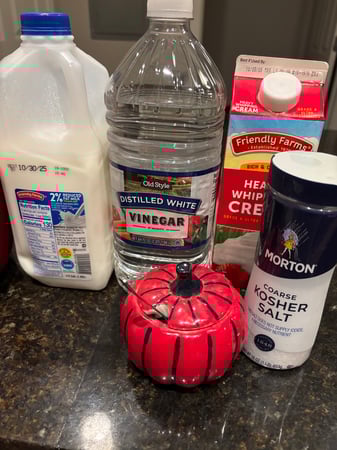
To start, pour the milk and heavy cream into a saucepot and add the salt and sugar. I recommend using a Dutch oven because those pots are the best at maintaining temperature, but whatever pot you have should work fine. Heat the milk and cream over medium heat until it reaches 185° on an instant-read thermometer.
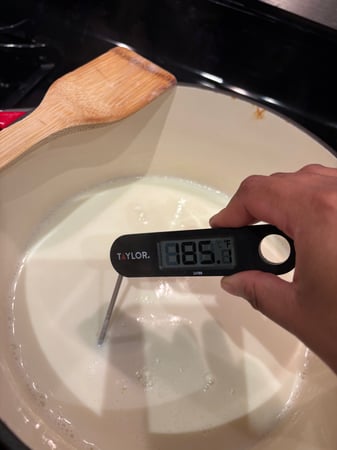
Once the milk reaches temperature, add the vinegar and stir briefly to incorporate. The curds will immediately start to form. Stop stirring once they do!
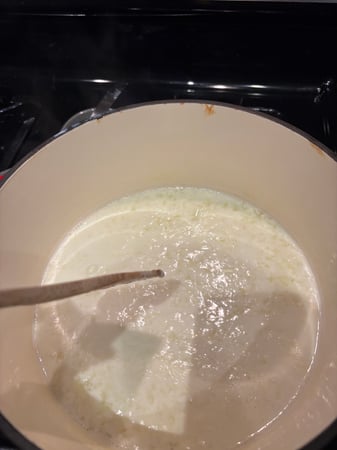
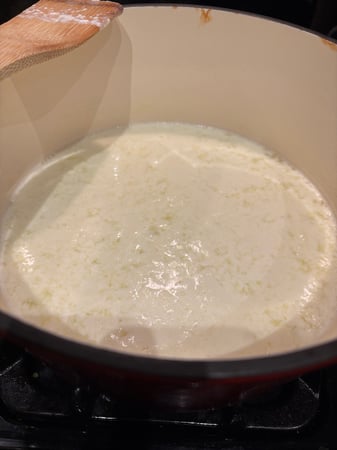
Without stirring, continue to hold the mixture at 185° for 20 minutes. It’s okay if the temperature fluctuates between 175° and 190°, but try to keep it in that range for the full 20 minutes. Maintaining temperature is important for this step, so I wouldn’t recommend just setting a timer and walking away.
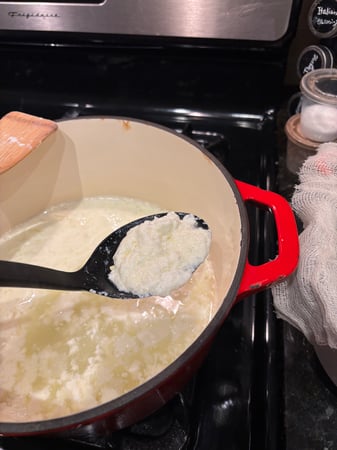
After 20 minutes, line a fine-mesh strainer with cheesecloth and use a slotted spoon to transfer the curds to the strainer. Allow the curds to stand until the excess liquid is strained away. The exact amount of time it takes to drain depends on whether you want a moister or drier final product. I recommend doing this process in batches, as trying to fit all of the curds in the strainer at once will clog it and not allow the liquid to flow through.
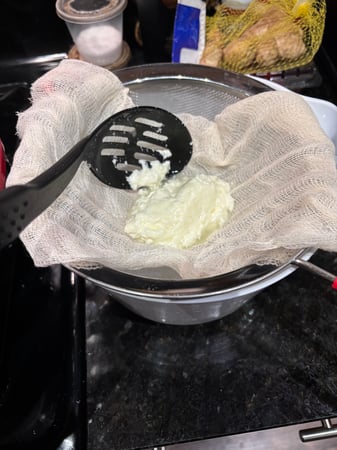
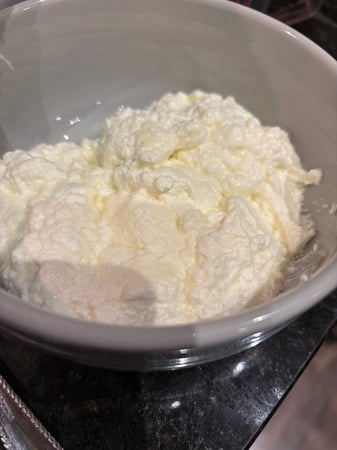
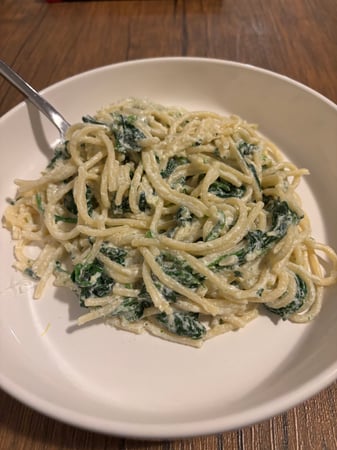
And that’s it! Now you have delicious, creamy ricotta cheese to use however you’d like. I used mine to make some delicious lemon-ricotta pasta with spinach and parmesan, a recipe you will learn if you sign up for our cheese making class. We offer that class periodically throughout the year, so check our calendar every month to see if we have one coming up!
If you’re interested in leveling up your homemaking skills in other ways, we have some exciting classes happening later this month:
- Ramen Workshop on November 21st, where you will learn how to make your own ramen noodles from scratch!
- Homemade Breads for the Holiday Table on November 22nd, where you will learn all sorts of breadmaking techniques and recipes to add to your holiday menu!
- Pasta and Gnocchi Workshop on November 23rd, where you will make gnocchi and pasta of various shapes from scratch, and enjoy them with seasonal accompaniments and sauces.
