
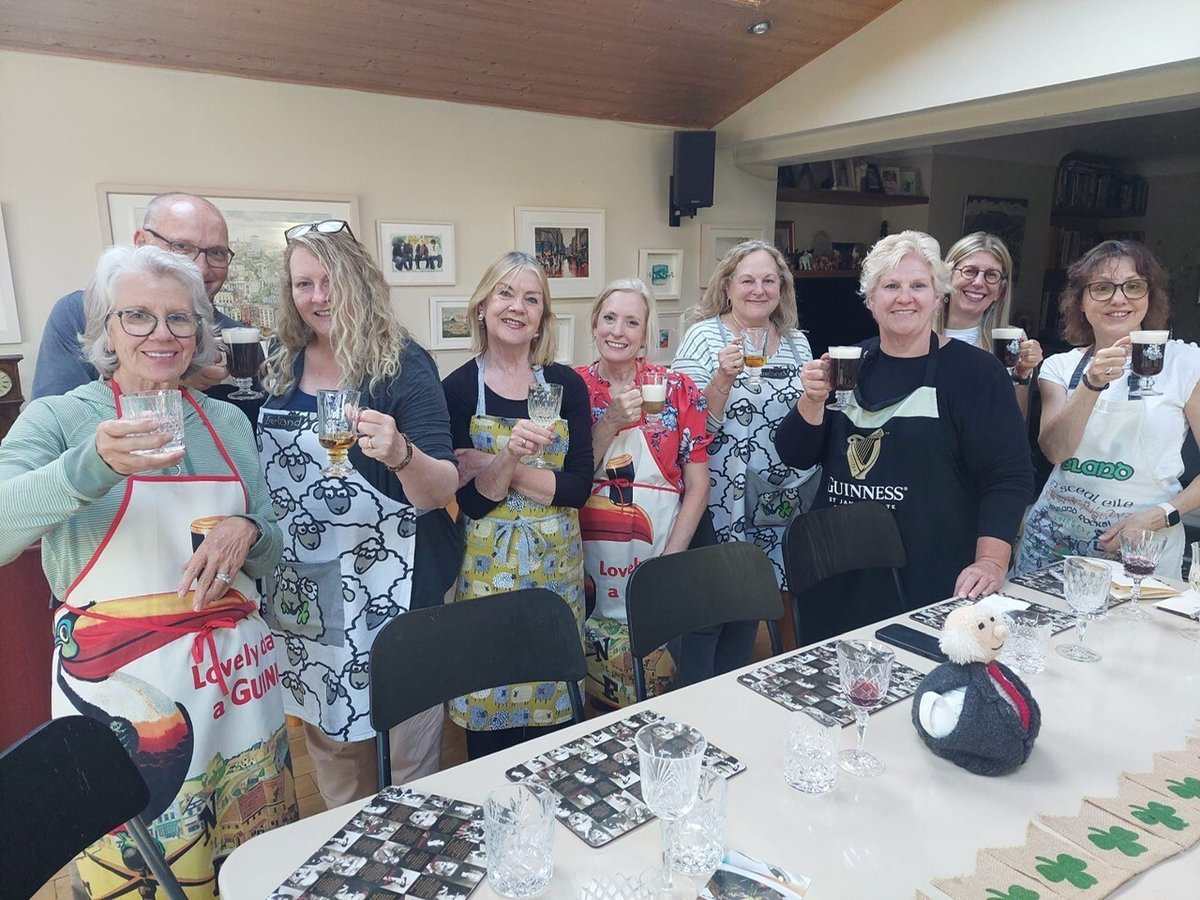
In part one of this series, I shared how Ireland challenged my perception of what makes a great culinary destination. From conversations with chefs and producers to exceptional seafood and unforgettable meals, I discovered a food culture rooted in local ingredients, hospitality and a deep connection to place. But tasting Ireland's cuisine was only part of the experience. To truly understand it, we needed to step into the kitchen ourselves.
During our journey, we had the opportunity to cook in two very different settings: the home kitchen of Chef Ann Tomlin in Dublin and the world-renowned Ballymaloe Cookery School in County Cork. While the experiences couldn't have been more different, both offered valuable lessons about Irish food, cooking and the people who are passionate about sharing it.
One focused on traditional Irish home cooking passed down through generations. The other showcased a modern, ingredient-driven approach taught in one of the most respected cooking schools in the world.
Yet despite their differences, both experiences taught many of the same lessons about simplicity, hospitality and the importance of great ingredients.
Learning Irish Cooking in a Dublin Home
One of the most memorable evenings of the trip was cooking with Chef Ann Tomlin of Irish Craic and Cuisine.
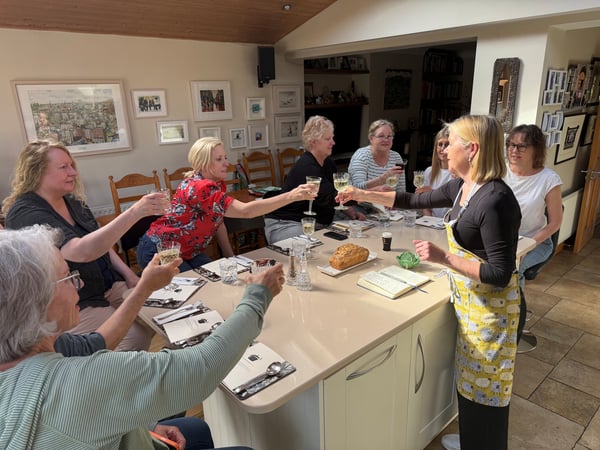
After spending time with Ann on her Dublin food tour the day before, our group joined her for a hands-on cooking class in her home.
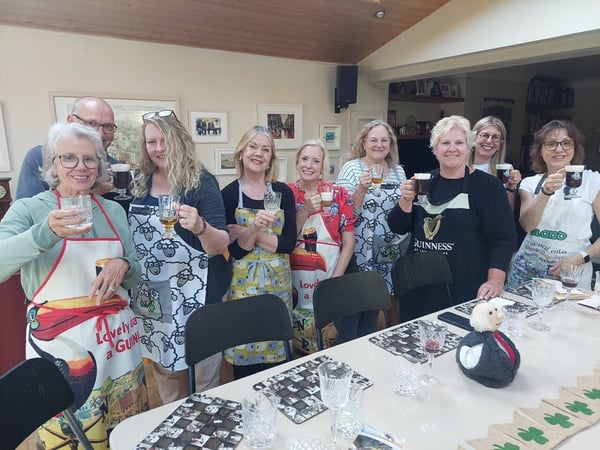
The setting immediately created a different atmosphere than a typical cooking school. Instead of entering a professional teaching kitchen, we were welcomed into Ann's personal space. She handed out her own aprons for us to wear and guided us through recipes that represented traditional Irish home cooking.
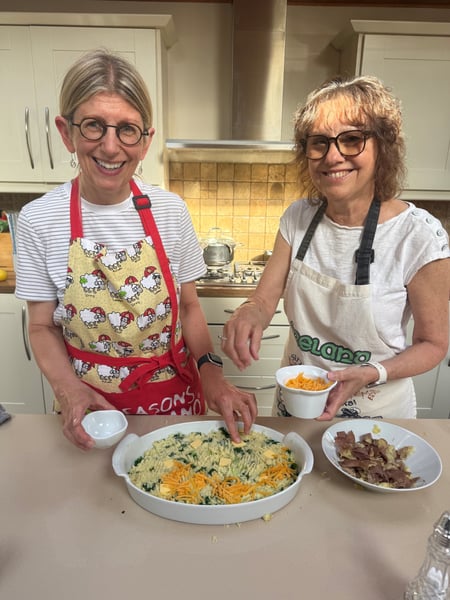
The menu included Irish soda bread with butter, potato and leek soup, colcannon, Guinness and beef stew, green beans and Irish coffee.
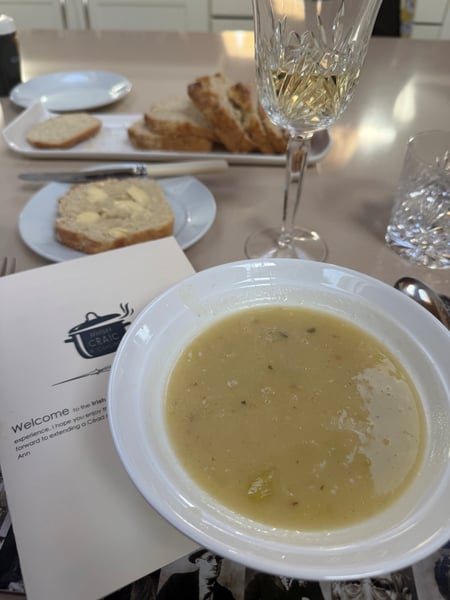
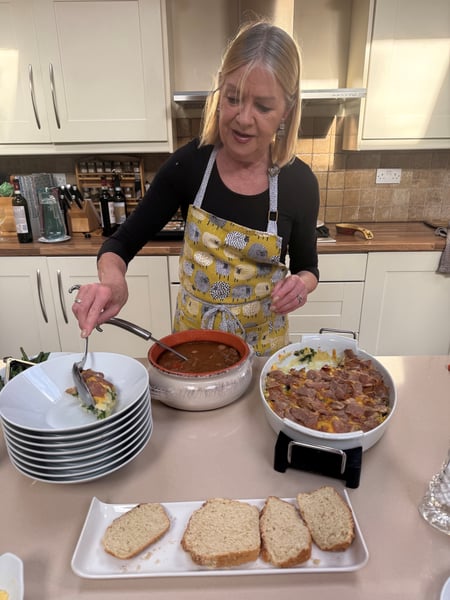
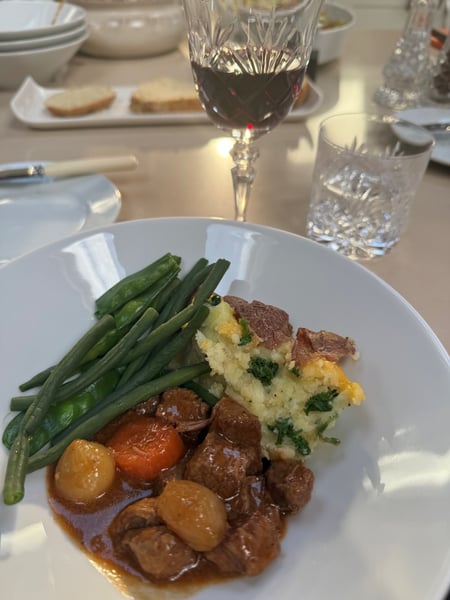
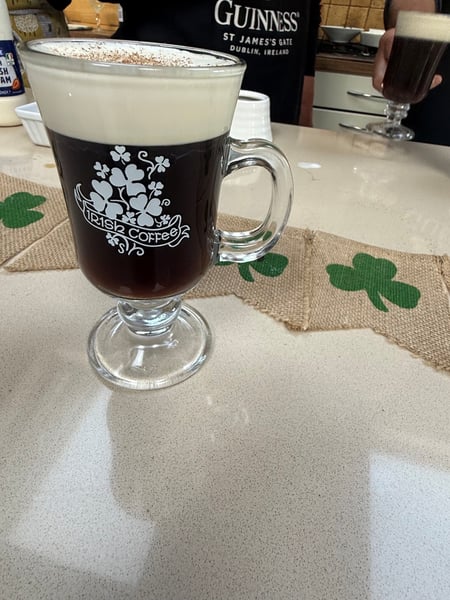
These weren't restaurant dishes designed to impress diners with elaborate presentations. They were dishes designed to nourish families, celebrate local ingredients and bring people together around the table.
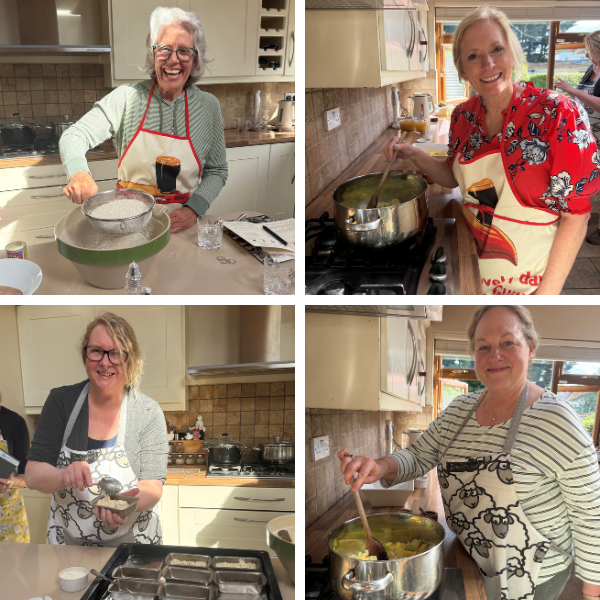
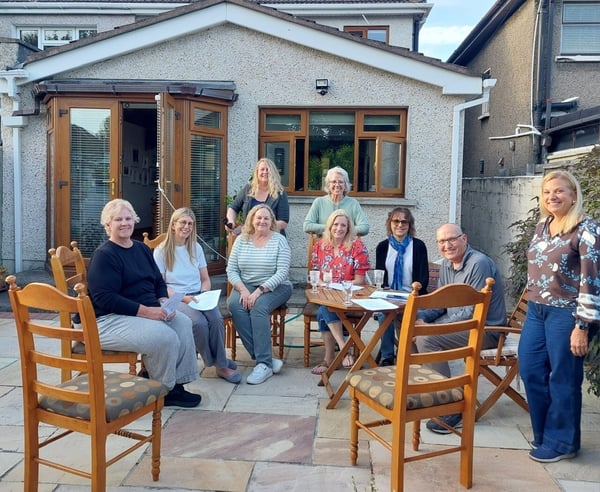
As we cooked, Ann shared stories about Irish food traditions and how these recipes have remained staples in Irish homes for generations. It was an experience that felt less like taking a cooking class and more like being invited into a family kitchen. It was such a nice evening, we even finished our Irish coffees in her garden before heading back to our hotel.
The Soda Bread Surprise
One of the biggest culinary surprises of the trip was Irish soda bread.
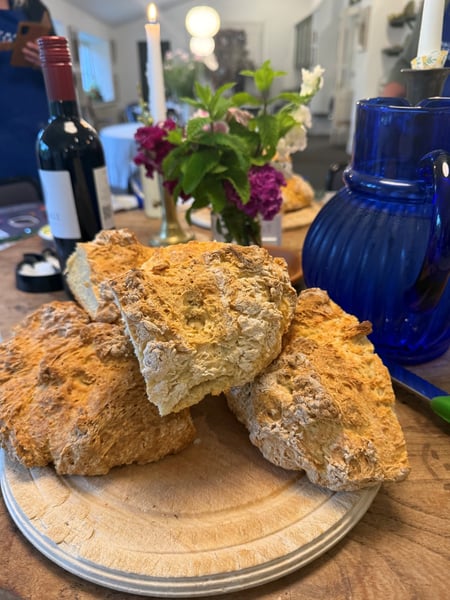
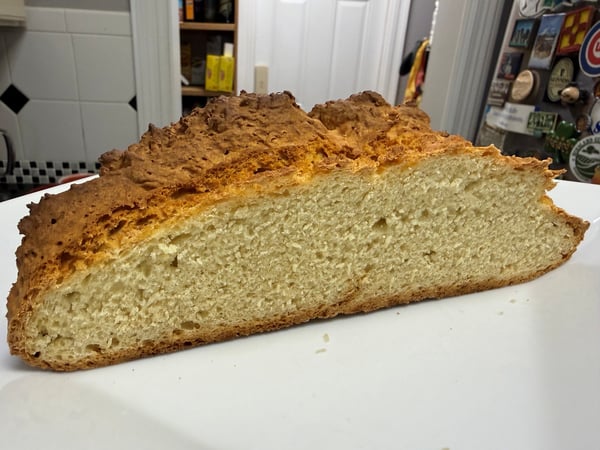
Before visiting Ireland, I thought I knew what Irish soda bread was. Like many Americans, I associated it with loaves studded with raisins or currants and flavored with caraway seeds. Then I arrived in Ireland and discovered that the soda bread served throughout the country was far simpler. Whether white or brown, it was typically served plain alongside meals, allowing the flavor and texture of the bread itself to take center stage.
Soda bread appeared everywhere. It was served at restaurants, hotels, cooking classes and private meals. The version we made with Ann reflected that tradition perfectly.
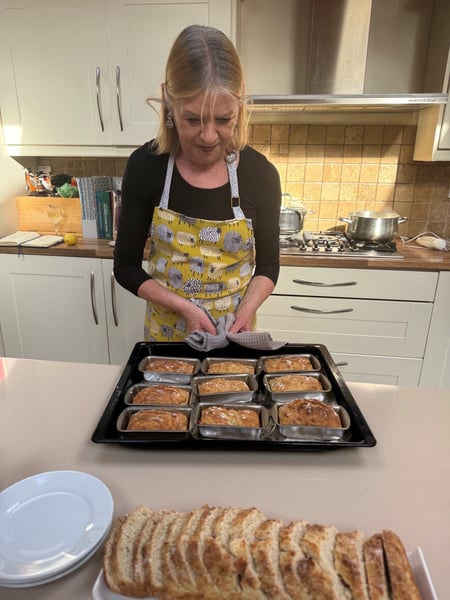
It was a reminder that some of the foods we think we know are often quite different in their country of origin. While traditional Irish soda bread may be wonderfully simple, it's also incredibly versatile. I've previously shared how easy it is to customize soda bread at home while still respecting its roots, and after seeing how frequently it appears on Irish tables, I have an even greater appreciation for this humble bread.
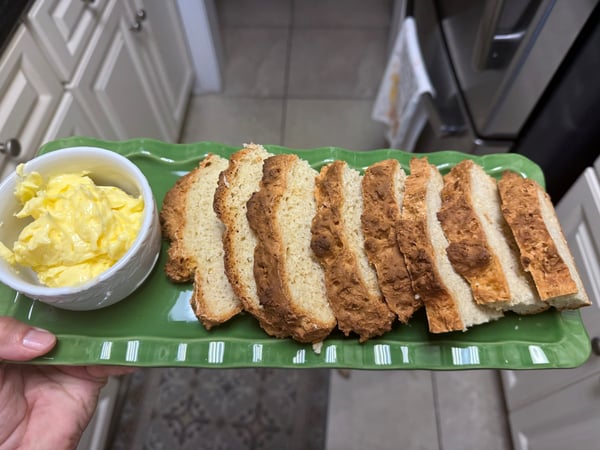
By the end of the trip, I understood why soda bread remains such an important part of Irish food culture. It's practical, delicious and perfectly suited to accompany everything from soup and stew to seafood and cheese.
A Different Kind of Classroom
A few days later, our group arrived at Ballymaloe Cookery School.
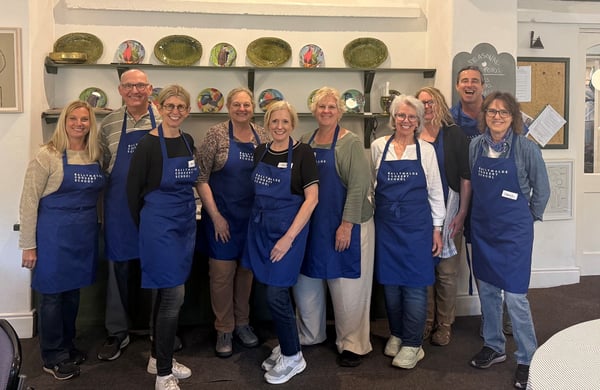
Founded by Darina Allen and recognized internationally for its culinary programs, Ballymaloe attracts aspiring chefs and food enthusiasts from around the world. Walking around the property, it wasn't uncommon to see students in checked chef pants and white jackets carrying knife rolls between classes.
Yet despite Ballymaloe's reputation and professional facilities, the atmosphere remained welcoming and approachable. Before we cooked anything, our day began with a tour of the gardens and greenhouses that supply many of the ingredients used throughout the school.
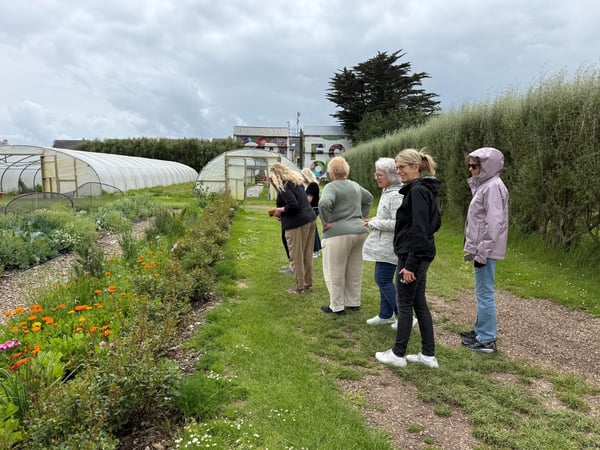
This wasn't simply a pleasant walk around the property; it was an intentional part of the curriculum and a reflection of Ballymaloe's philosophy that great cooking begins with understanding ingredients before learning recipes.
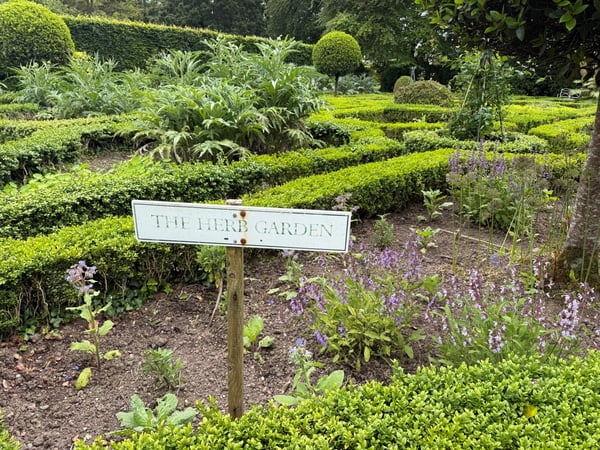
Rows of vegetables, herbs, edible flowers and fruits provided a visual reminder that great cooking starts long before anyone steps into a kitchen. For home cooks, it's an easy lesson to overlook. We often focus on techniques, recipes and equipment. Ballymaloe encourages students to think first about the ingredients themselves and the care required to grow them.
Watching Before Doing
Another aspect of Ballymaloe's teaching style that stood out was its demonstration process.
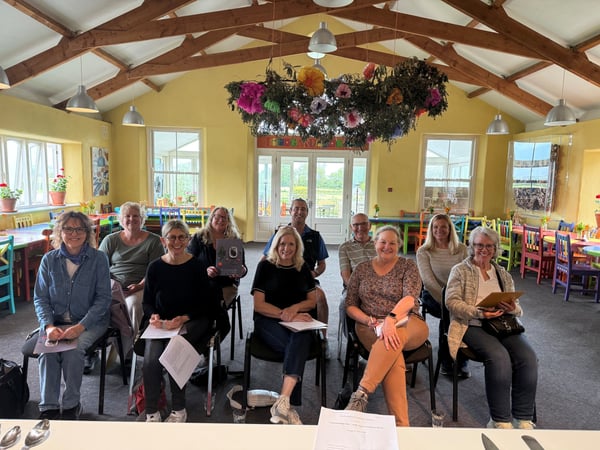
Before entering the kitchen, our chef instructor demonstrated some of the recipes in a dedicated teaching space equipped with large mirrors and television screens. Every student could clearly see each technique, ingredient and step in the process.
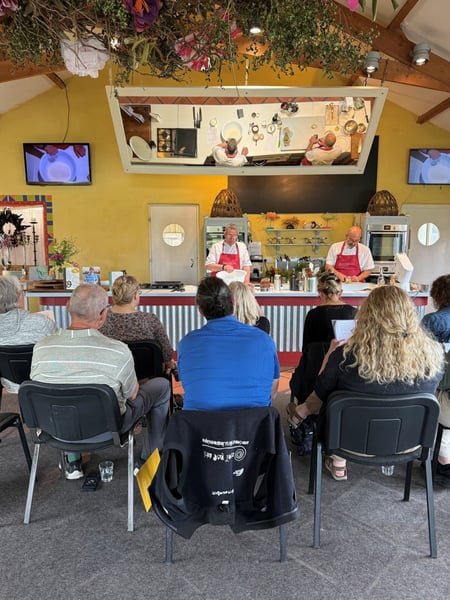
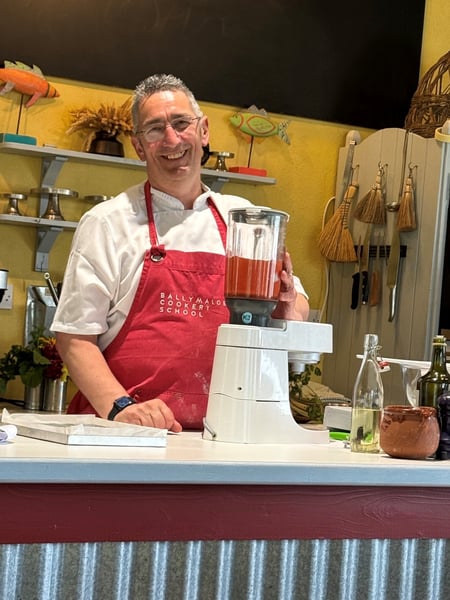
Only after the demonstrations were complete did we move into the kitchens and begin cooking ourselves.
As someone who has spent more than two decades working at The Chopping Block, I naturally found myself comparing teaching styles. While Ballymaloe's facilities and global reputation are impressive, the experience reinforced something we value at The Chopping Block as well: students learn best when they can watch techniques demonstrated clearly and then immediately put them into practice. There is tremendous value in learning by doing, and both organizations share a commitment to hands-on learning that empowers students to build confidence in the kitchen.
Traditional Meets Modern
Perhaps the most interesting contrast between Ann's class and Ballymaloe's class was the food itself.
Ann's menu focused squarely on traditional Irish cooking. Ballymaloe's menu reflected modern Irish cuisine while remaining firmly rooted in local ingredients and seasonality.
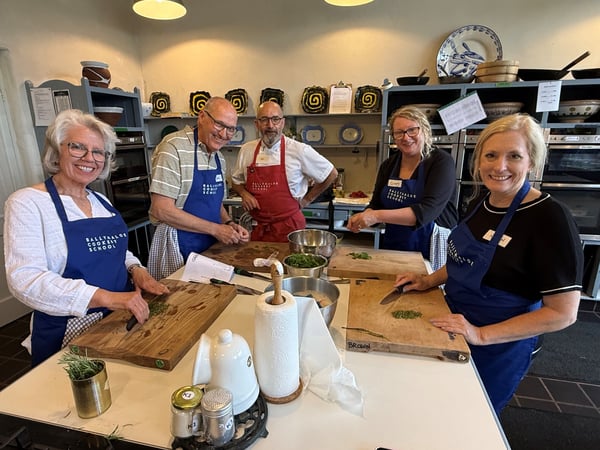
One group prepared white Irish soda bread and scones, pea and coriander soup, chargrilled chicken paillarde with aioli and roasted cherry tomatoes, crispy chicken skin, boiled new potatoes and a strawberry meringue roulade with elderflower cream and fresh strawberry sauce.
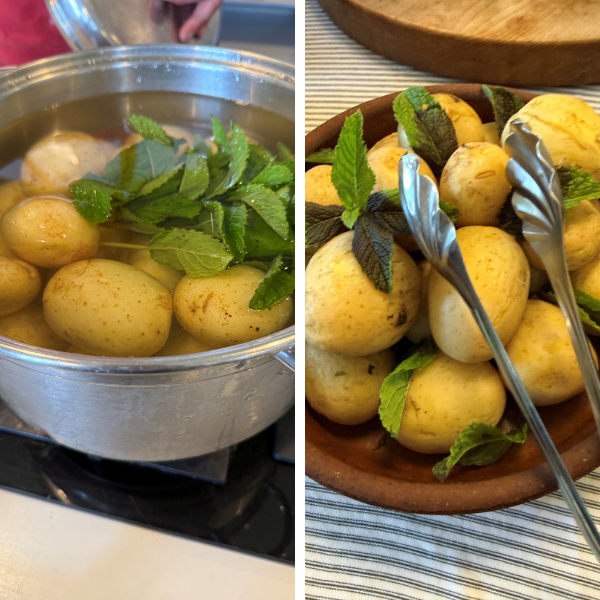
Even the potatoes offered a lesson in simplicity. Rather than boiling them in plain water, they were cooked with a large bunch of fresh mint, subtly infusing them with flavor. It's the sort of small detail that transforms an everyday ingredient into something memorable.
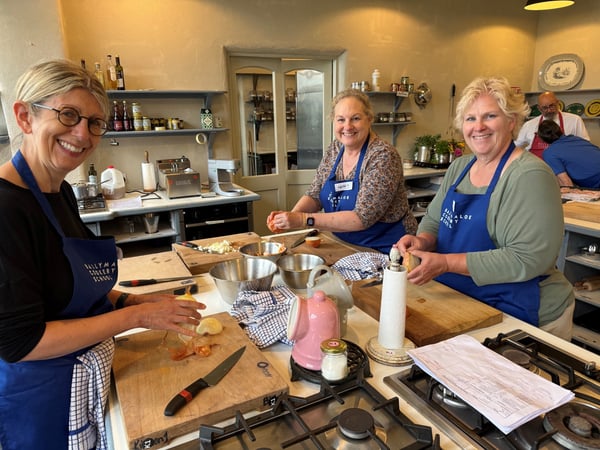
The other group prepared spiced Keralan chicken with almonds, a frittata with oven-roasted tomatoes, Ardsallagh goat cheese and summer herbs, poppadums, a summer green salad with honey-mustard dressing and raspberry fool with shortbread biscuits.
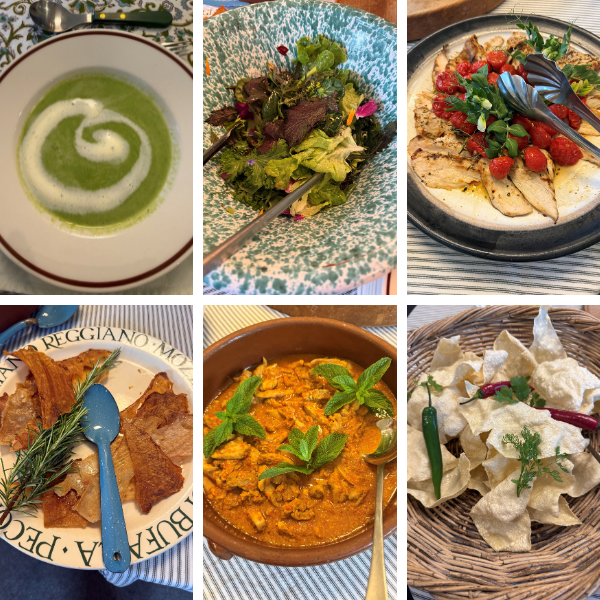
Check out the dessert spread!
The menus demonstrated something I hadn't fully appreciated before visiting Ireland: modern Irish cooking embraces global influences while remaining deeply connected to local ingredients. While soda bread and potatoes provided a link to tradition, dishes featuring Indian spices, Mediterranean flavors and seasonal produce reflected how Irish chefs continue to evolve and expand their culinary traditions.
Different Kitchens, Same Philosophy
Despite the obvious differences between the two experiences, both classes shared remarkably similar values. Ann emphasized tradition, heritage and home cooking, while Ballymaloe focused on seasonality, ingredients and technique. Yet both approaches began with quality ingredients and a respect for simplicity. Neither class relied on complicated presentations or unnecessary flourishes. Instead, the focus remained on understanding ingredients, using proper technique and creating food that people genuinely want to eat.
Those shared values echoed many of the themes we encountered throughout the trip. Whether dining at Ballymaloe House, foraging with Sally Barnes or listening to restaurant owners discuss their relationships with local farmers and fishermen, the conversation consistently returned to the same ideas: quality ingredients, thoughtful preparation and hospitality. The food itself varied from place to place, but the underlying philosophy remained remarkably consistent.
Bringing Ireland Home
A little over a week after returning home, I invited a couple of friends over for an Ireland-inspired dinner. The menu featured homemade soda bread, scallops with pea purée, grilled snapper collars and salmon and a strawberry meringue roulade, each dish reflecting a different lesson from the trip. Some were inspired by the traditional recipes I learned from Ann Tomlin, while others reflected Ballymaloe's emphasis on seasonal ingredients, thoughtful technique and letting simple flavors shine.
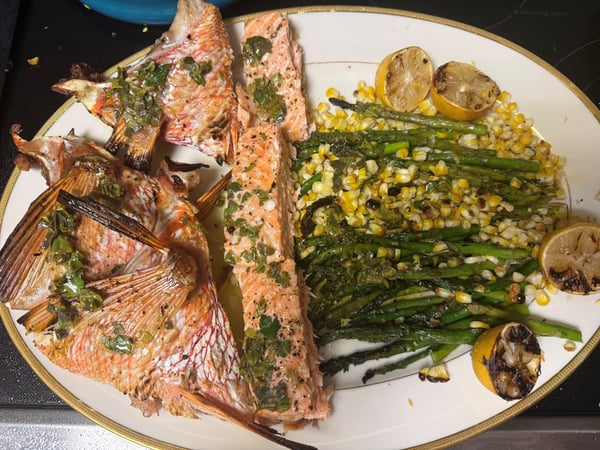
As we gathered around the table, I realized the trip had given me much more than a collection of recipes. It introduced me to people who were passionate about preserving and sharing Ireland's food culture. From Ann opening her home and teaching generations-old family recipes to Sally Barnes foraging along the coast before preparing our lunch at The Keep, and the instructors at Ballymaloe demonstrating how exceptional ingredients can elevate even the simplest dishes, every experience reinforced the idea that cooking is about more than preparing food. It's about sharing stories, traditions and hospitality.
That's one of the things I value most about The Chopping Block's culinary tours with Onward Travel. Rather than simply visiting a destination, we seek out opportunities to learn from the people who shape its food culture—chefs, producers, artisans and educators who are passionate about sharing their knowledge. Those experiences not only deepen our understanding of a place, but often inspire us to bring new ideas, techniques and traditions back into our own kitchens. As this trip proved, the best souvenirs aren't things you buy. They're the recipes, skills and memories you bring home.
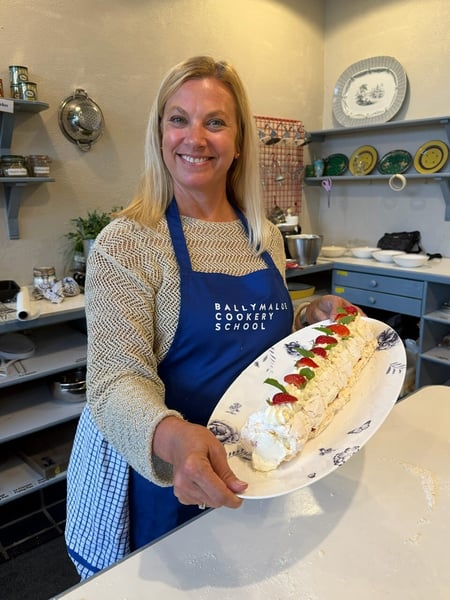
One recipe, in particular, made that journey from Ireland to my kitchen almost immediately. After making Ballymaloe's strawberry meringue roulade in County Cork, I couldn't wait to serve it at my Ireland-inspired dinner party. In my next post, I'll share the recipe, along with a few tips I picked up at Ballymaloe Cookery School, so you can bring a little taste of Ireland to your own table.

Missed part one of this series about our Ireland culinary tour? Read it here.