
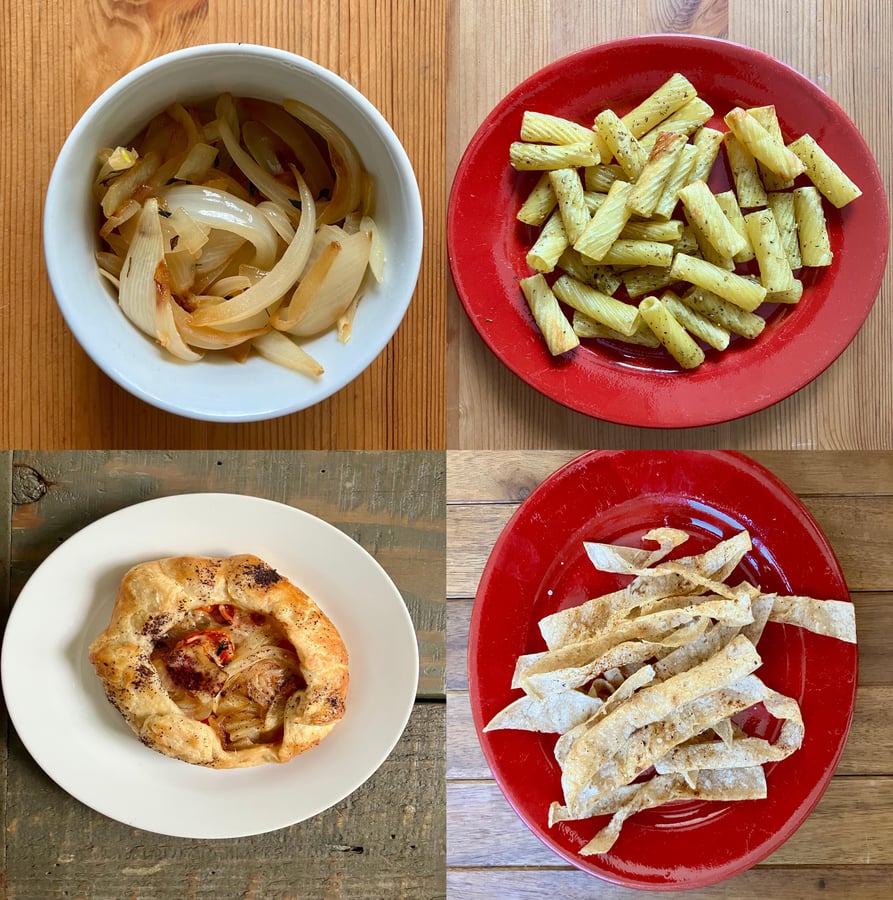
I get my recipe inspiration from all over—podcasts, cookbooks, magazines—but often, it starts with one simple motivation: not letting food go to waste. There’s something satisfying, even fun, about the challenge of opening the fridge and asking, “What can I make with what I’ve got?”
Sometimes it’s a lonely zucchini, other times, like recently, it was an overwhelming amount of onions on the brink. Either way, it’s a puzzle I enjoy solving and a balancing act that pushes me to be more creative in the kitchen.
Food waste is a serious issue, one that goes beyond spoiled leftovers. According to the Environmental Protection Agency, in the United States over one-third of food is never eaten, and more food reaches landfills than any other material in the municipal solid waste stream. That waste carries a hidden cost - all the labor, water, packaging, transportation, and nutrients in the uneaten food and the money spent by households on unconsumed food. An EPA report “Estimating the Cost of Food Waste to American Consumers,” found that the weekly cost of food waste for a household of four is $56.
I’m not talking about leftovers which deserve their own spotlight, what intrigues me are those odds and ends that don’t make a meal, in and of itself, but for which there is still enough. Or on the flip side, an abundance of something that needs to be used before it turns. It’s a balancing act, and one that pushes me to be more creative in the kitchen.
Some foods can be spared the garbage by being stored in the freezer, but freezer space is limited, and good freezer storage takes multiple steps.
So, here are some ways to put food to use so they don’t have to get wasted.
Cooked Pasta Noodles
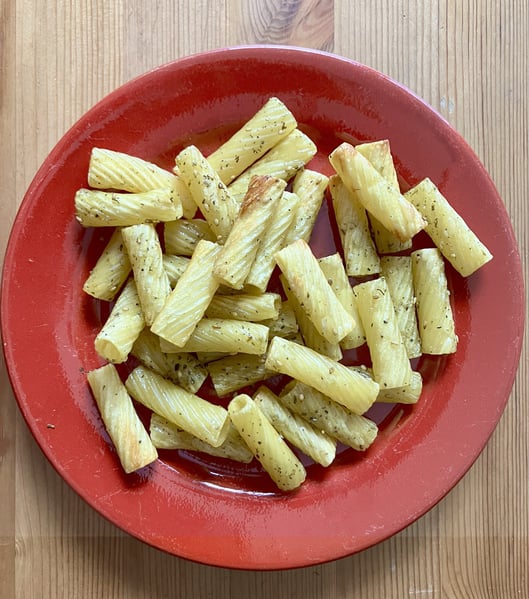
What the recipe says isn’t always correct. For a dinner of Pasta Amatriciana, after cooking a whole pound of pasta, it became evident there would be extra based on the amount of sauce. There was both pasta noodles with sauce and cooked noodles without sauce left over that night. Properly stored cooked pasta can only last for three to five days in the refrigerator. Knowing it might get wasted, I made pasta croutons for salad topping and snacking.
Preheat the oven to 400°F. Line a baking sheet with parchment paper. Toss the noodles with enough oil to lightly coat the noodles. Then generously sprinkle with your desired spices. Spread pasta on a baking sheet in a single layer and bake until golden and crispy, about 5 to 8 minutes. Use the croutons immediately or keep them in an air-tight container on the counter for up to a week.
Parmesan Cheese
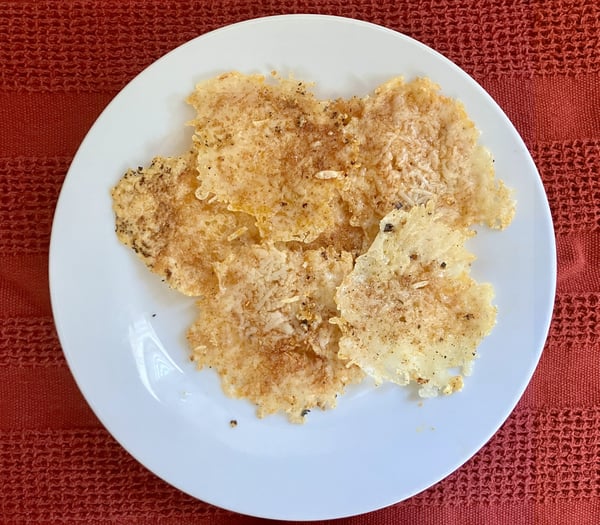
Once you open a package of Parmesan, its shelf life depends on factors such as how well it is sealed and stored. I grated way too much for some pasta. Once it’s grated, the shelf life shortens. Making Parmesan cheese crisps added an elegant gluten-free touch to a recent salad. The crisps could also be a perfect pairing to a cold glass of crisp white wine.
Combine the cheese with desired spices or none at all. Drop the cheese by tablespoon, leaving about 1 1/2 inches between each, onto a baking sheet lined with parchment paper or a silicon mat. Gently flatten each cheese mound. Bake for 5-7 minutes in a 400° oven. Let them rest on the baking sheet for three minutes and gently remove with a knife or offset spatula.
Tortillas
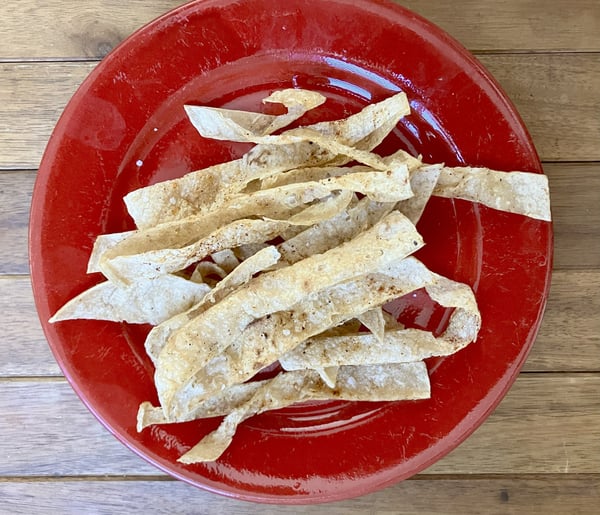
Some ingredients, not just cheese and wine, gain new value when they stick around. Recently, when I was preparing some tacos, I was disappointed to find my corn tortillas were somewhat stale. I gave them new life by turning them into tortilla crisps for a Mexican salad that started as tacos.
Just cut corn or flour tortillas into 1/4-inch strips with kitchen shears. Toss them with enough neutral oil to get the strips coated and sprinkle with salt. Place on a baking sheet in a single layer and bake for 7 minutes at 400 degrees F, until crispy.
Kale
Even with proper storing in a crisper, kale won’t last forever. While bunched kale usually doesn't have a use-by date, make use out of it before the leaves show limpness or any yellowing. Turn kale into Kale Chips or something similar with other dark leafy greens.
Line a cookie sheet with parchment paper. Pat whole leaves dry with a towel. Tear or snip kale leaves. Toss pieces in a bowl with olive oil, salt and parmesan cheese or nutritional yeast, if desired. Lay the kale on the prepared cookie sheets in a single layer. Bake for 10-15 minutes or until the kale leaves are completely dry and crunchy!
Onions
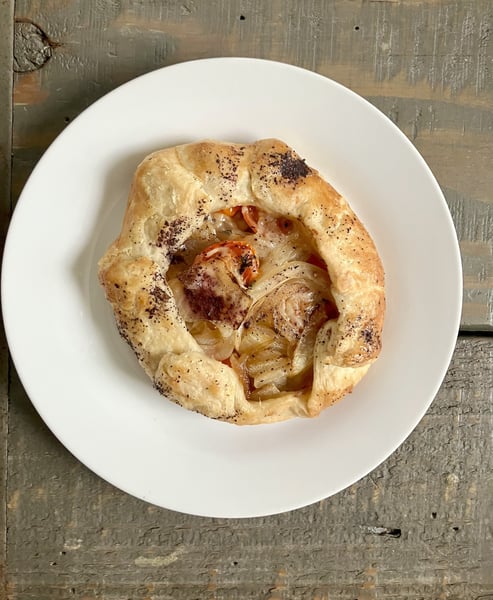
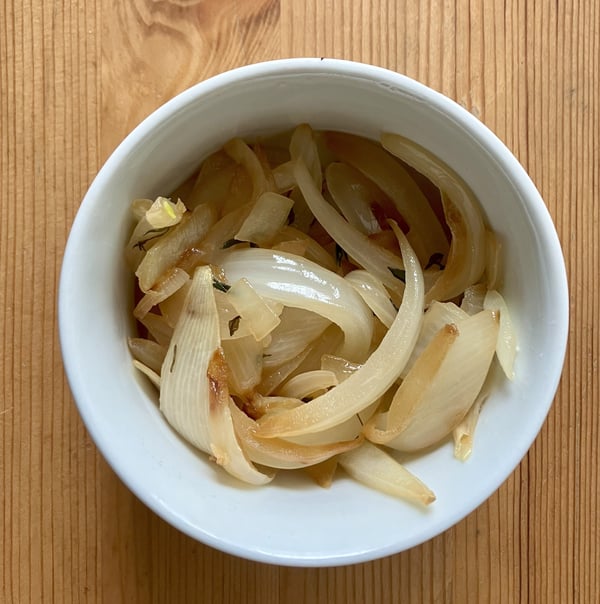
I recently worked two knife skills classes in one day at The Chopping Block. On this day, I took home the chef’s onions x 2. I turned those leftover onions into caramelized onions and added them to a tomato-onion galette, eggs, salad, and stuffed baked potatoes.
Heat enough oil at medium to coat the bottom of the pan and add diced or sliced onions. Add salt and sauté for 5 minutes. Reduce the heat to medium-low and cook for 50 to 80 minutes, stirring every few minutes, or until the onions are very soft, golden brown, and caramelized. A higher heat will get more caramelization but be sure to stir often to prevent burning.
These ideas are just a start. I encourage you to find your own delicious ways to put ingredients to use before it’s too late.
The Chopping Block’s full calendar of classes will inspire your current skills and recipe collection. The chefs always give great guidance on food storage and uses of ingredients beyond the recipes.
Want to take home your own perfectly prepped vegetables? Join us for an upcoming Knife Skills and put your creativity to the test on using them:
