
Every year, I make my way to the Pacific Northwest to visit my friends Patti and Jon on Marrowstone Island, Washington. And every year, I seem to come home with another food adventure to write about.
Last year, it was my first time foraging for Pacific golden chanterelle mushrooms. I went deep into the woods, learned how to spot those flashes of gold hiding hidden among the ferns and somehow managed to come home with both a box full of mushrooms and myself intact.
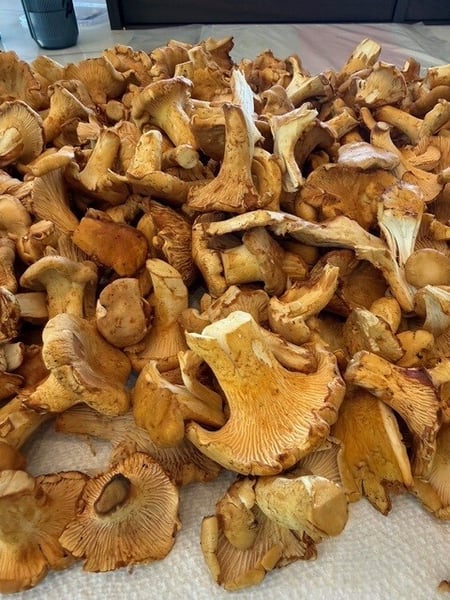
This year, we went mushroom hunting again. And yes, I got lost in the woods again. Apparently, I have learned how to identify chanterelles much more successfully than I have learned how to navigate a Pacific Northwest forest.
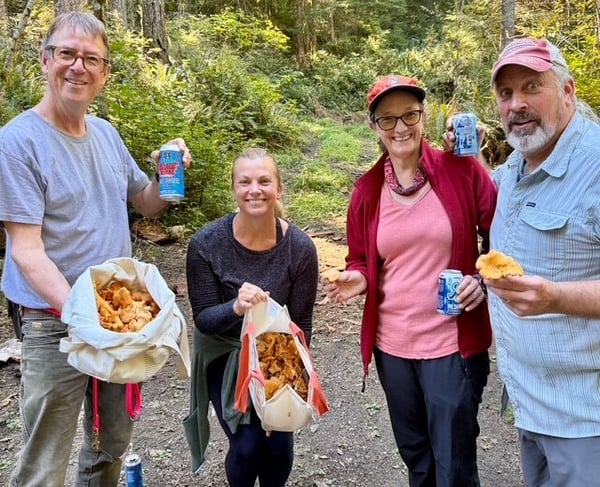
Enjoying a well-deserved beer after foraging for mushrooms (and being found by friends!)
If you missed last year's adventure, you can read it here, which also includes recipes for putting a chanterelle haul to good use.
We found plenty again this year which I carefully carried home on the plane. I shared some with family and friends and turned the rest into pizza topped with chanterelles, fresh thyme, goat cheese, crispy prosciutto and lemon zest.
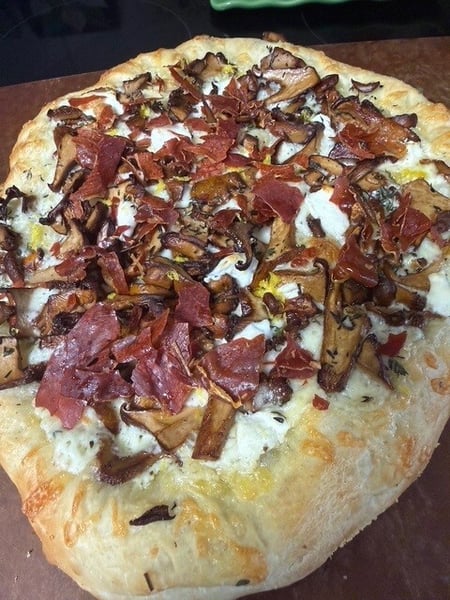
Chanterelles have a delicate earthy flavor and meaty texture, so they don't need a lot of competition. The tangy goat cheese, salty prosciutto, fresh thyme and bright hit of lemon were just enough to complement them without covering up the reason for making the pizza in the first place.
But as much as I love mushroom hunting, the culinary adventure I was most excited about on this trip happened on the water.
In Search of Dungeness Crab
Patti and Jon recently got a boat, which opened up a whole new way for us to explore the area. We waited for calm seas, and we took the boat across Admiralty Inlet from Marrowstone Island to San Juan Island.
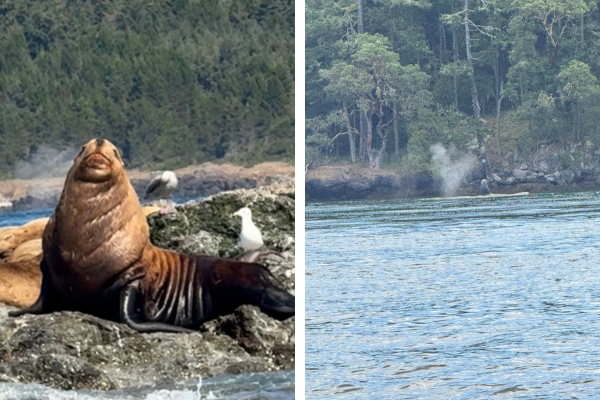
The scenery alone would have made the trip worthwhile, but then came the wildlife. We saw Orca whales, seals, sea lions and more diving birds called Cormorants than I could keep track of. It's one of those places where you need to keep looking in every direction because something is always happening around you.
The new boat also came with one feature that was especially exciting to me: a crab pot puller.
Dungeness crab is one of the signature foods of the Pacific Northwest. The species is found along the Pacific Coast from Alaska to Mexico and is especially abundant in parts of Puget Sound. It prefers sandy or muddy bottoms and gets its name from Dungeness, Washington, on the Strait of Juan de Fuca, where commercial harvesting of the species began in the 1800s.
Crabbing is also one of Washington's most popular recreational fisheries. Each year, recreational crabbers catch more than 1.5 million pounds of Dungeness crab using pots, ring nets and, in the case of wade and dive fishers, even their bare hands.
It's easy to understand the obsession once you've eaten really fresh Dungeness crab. The meat is sweet, tender and delicate, and when you're lucky enough to pull dinner out of the water yourself, you don't want to do much to cover up that flavor.
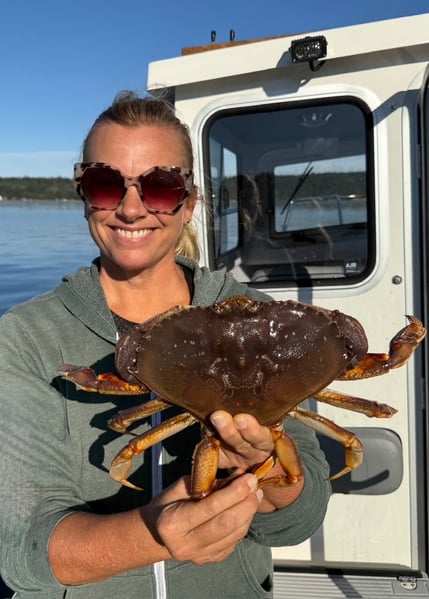
Setting the Crab Pots in Port Townsend Bay
Our crabbing took place in Port Townsend Bay, part of Puget Sound and just a short boat ride from Marrowstone Island.
Crab pots are essentially baited traps lowered to the bottom. Ours went down about 50 to 80 feet, and this is where the boat's crab pot puller became the star of the show. Instead of hauling all that line and a heavy pot up by hand, the puller does the hard work.
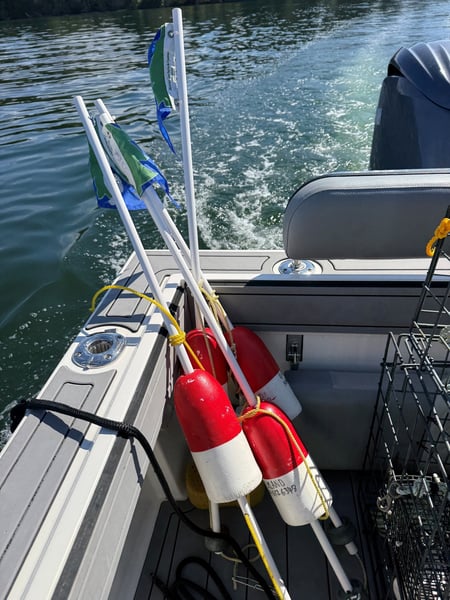
If you spend any time boating around this part of Washington during crab season, you'll see buoys floating everywhere. Crabbers decorate and mark their buoys so they can identify their pots among everyone else's.
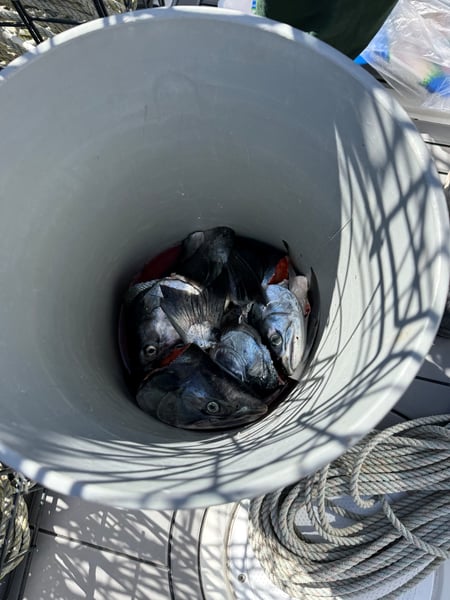
On Saturday afternoon, we baited ours with chicken legs along with salmon heads and tails that had been given to us by some fishermen. It wasn't exactly an appetizing combination, but all that mattered was that the crabs were impressed.
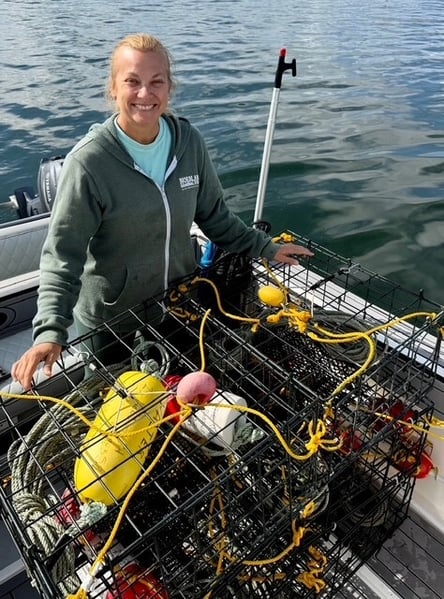
Then we dropped the pots and waited.
When we went back out Sunday afternoon to check them, there was plenty of activity in the pots. Unfortunately, activity doesn't necessarily equal dinner.
For the recreational fishery in this part of Puget Sound, a Dungeness crab must be male, hard-shelled and at least 6 1/4 inches across the widest part of the shell to be kept. Females, soft-shell crabs and undersized males go right back into the water.
Jon gave me a lesson in telling the difference between males and females. Flip the crab over and look at the abdominal flap: females have a much wider, rounded flap, while males have a narrower one.
We pulled up lots of females along with some red rock crabs, so back into the water they went. After sorting everything, we had exactly one keeper.
One.
For the first time since we had started talking about our Labor Day crab dinner, I wondered whether we were actually going to have enough crab to make it happen.
One Last Chance for Our Labor Day Crab Dinner
Monday was our final shot. It was Labor Day and the last day of the crabbing season in the area, which meant the pots had to come out of the water that day.
We didn't need a giant haul. Four crabs would be enough for the dinner we had planned, and we already had one. We just needed three more.
So, we headed back out and started pulling pots.
This time, the crabbing gods cooperated. We had three more keepers for a total of four Dungeness crabs (most of which were in the last pot we pulled up). Our Labor Day crab dinner was officially on!
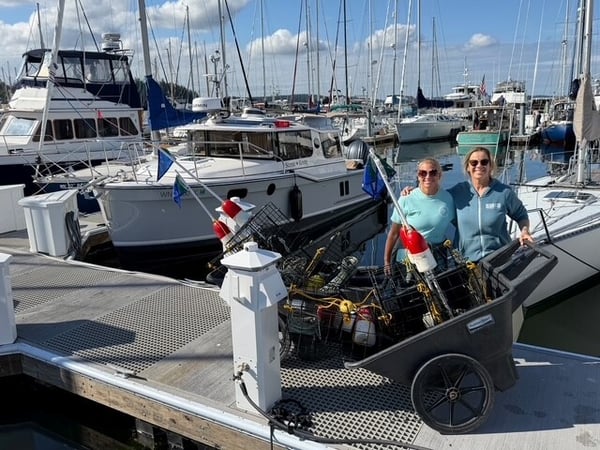
But pulling them out of the water was only the beginning of getting dinner on the table.
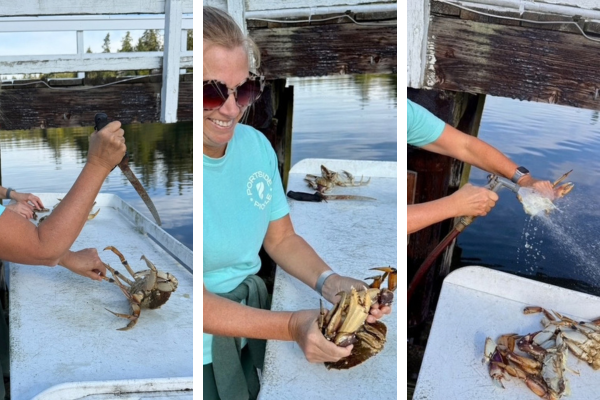
First, we had to clean them at the dock which involves stabbing them with a knife to quickly kill them, then cracking the shell open, removing the gills and rinsing the clusters with water. Only the clusters go home with you!
Jon steamed the crabs, and once they were cooked and cool enough to handle, we covered the dining room table with paper and turned the next step into a crab-cracking party.
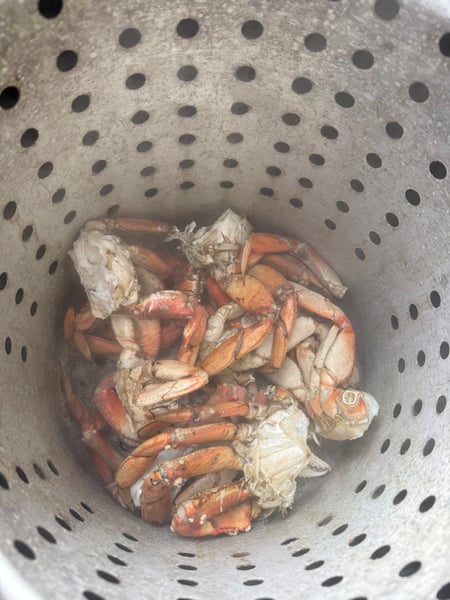
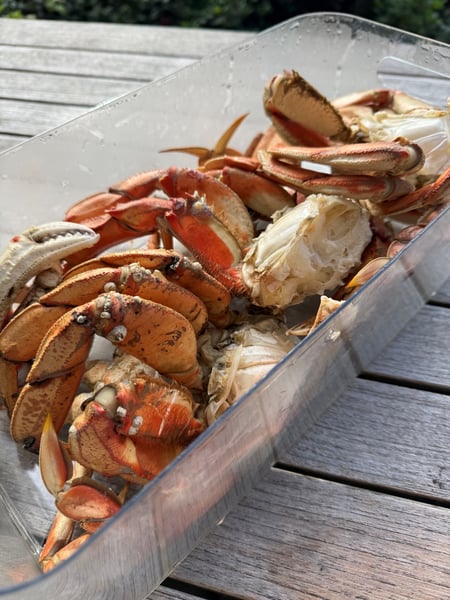
We cracked claws, picked through shells and tried to extract every last bit of that sweet crab meat. It's messy, time-consuming work, but when you've spent the weekend catching the crabs yourself, there's something incredibly satisfying about sitting around a table together and doing the work to turn them into dinner.
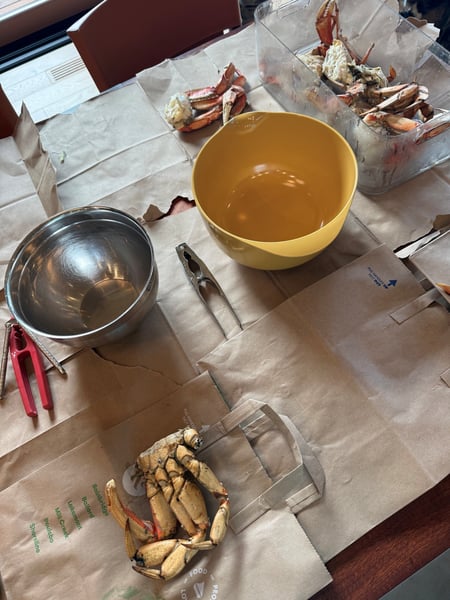
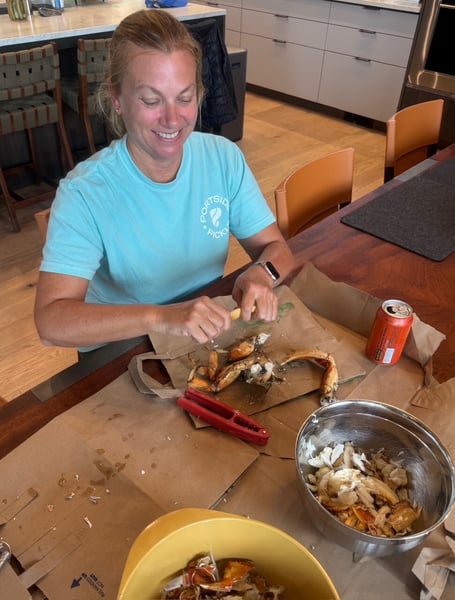
And we knew exactly where all that crab meat was headed next.
Dungeness Crab Cakes
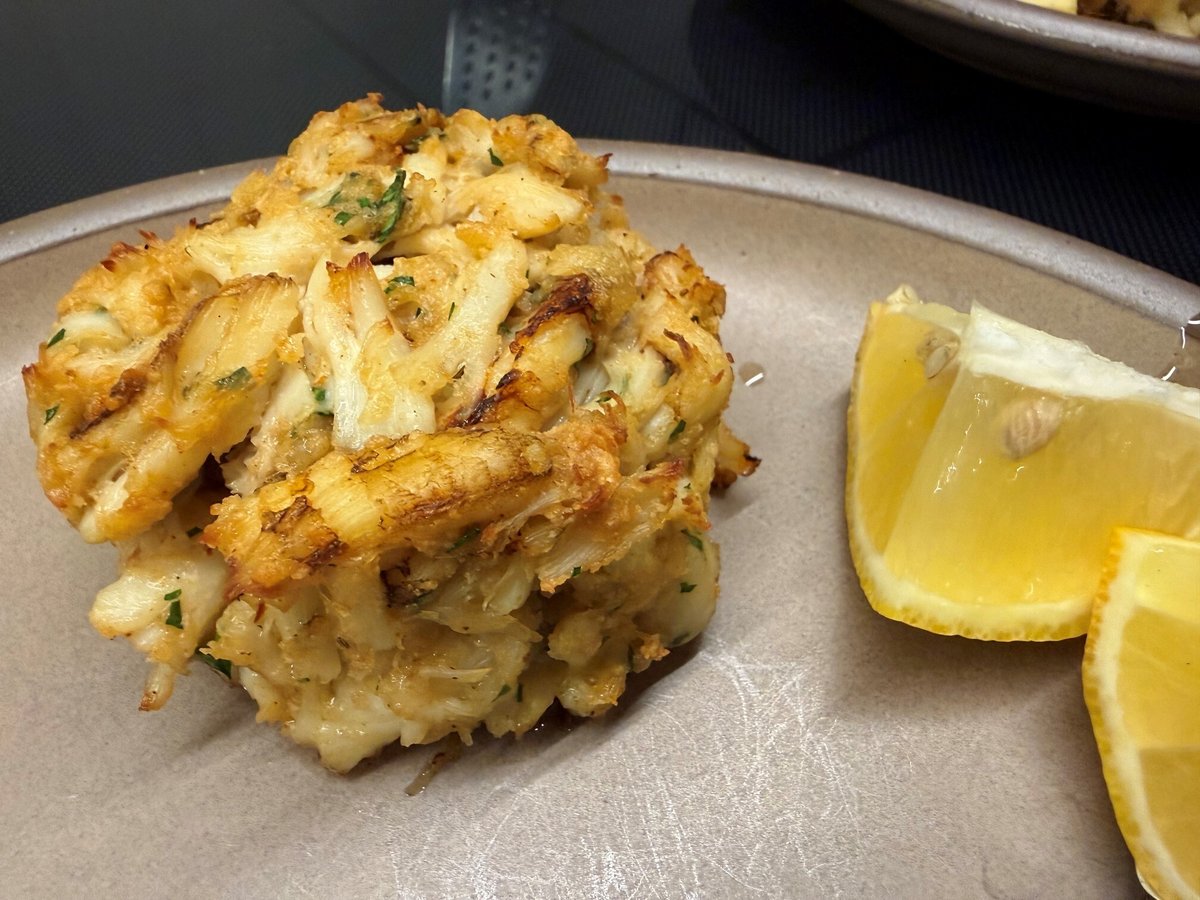
Patti turned our catch into her famous crab cakes, and this is exactly the kind of recipe you want when you're working with crab this fresh.
Her recipe started with a Maryland-style crab cake recipe that already calls for very little filler, but Patti takes that philosophy even further.
First, she uses Ritz crackers instead of saltines. They add a subtle buttery flavor and nice texture. But her biggest change is considerably increasing the amount of crab without increasing the filler along with it.
The original recipe calls for one pound of crab meat. Patti's measurement is a little more appropriate for someone who has just spent the afternoon cracking freshly caught Dungeness crab: "7 crab clusters or more." Depending on the size of your crabs and how thoroughly you pick them, that's roughly 1 1/2 to 2 pounds of crab meat.
The result is a crab cake that's truly about the crab.
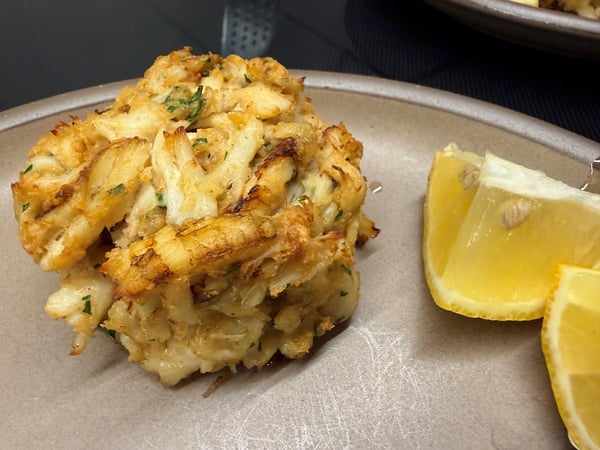
After everything we'd done to catch, steam and pick those Dungeness crabs, there was no way we were going to bury all of that beautiful meat under a bunch of filler.
We served the crab cakes simply with lemon wedges and salads for our Labor Day dinner.
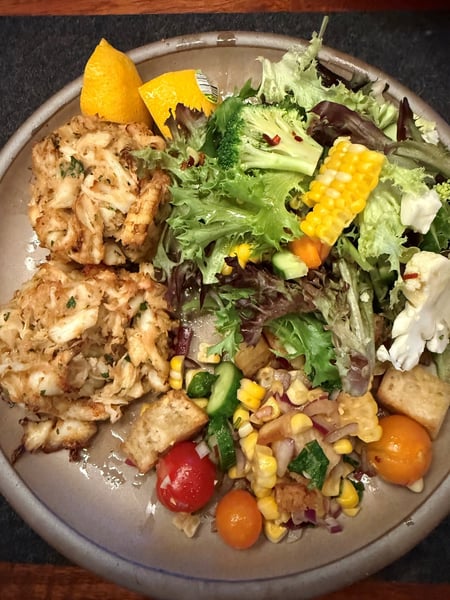
Patti's Dungeness Crab Cakes
Adapted from Sally's Baking Addiction's Maryland Crab Cakes
Yield: Approximately 6 large crab cakes
Prep time: 40 minutes
Cook time: 15 minutes
Total time: 55 minutes
1 large egg
1/4 cup mayonnaise
1 Tablespoon chopped fresh parsley
2 teaspoons Dijon mustard
2 teaspoons Worcestershire sauce
1 teaspoon Old Bay seasoning, or up to 1 1/2 teaspoons for more spice
1 teaspoon fresh lemon juice, plus more for serving
1/8 teaspoon salt
7 Dungeness crab clusters or more, picked (approximately 1 1/2 to 2 pounds crab meat)
2/3 cup Ritz cracker crumbs
2 Tablespoons melted butter, optional
Lemon wedges, for serving
- In a large bowl, whisk together the egg, mayonnaise, parsley, Dijon mustard, Worcestershire sauce, Old Bay, lemon juice and salt.
- Add the crab meat and Ritz cracker crumbs. Using a rubber spatula or large spoon, gently fold everything together, being careful not to break up the larger pieces of crab.
- Cover and refrigerate for at least 30 minutes.
- Preheat the oven to 450ºF. Generously grease a rimmed baking sheet or line it with parchment paper.
- Portion the mixture into six generous mounds on the prepared baking sheet. Don't flatten them. Gently compact each mound just enough to hold it together.
- If desired, brush the tops with melted butter.
- Bake for 12 to 14 minutes, until the tops and edges are lightly browned.
- Finish with fresh lemon juice and serve warm with lemon wedges.
From Forest to Sea
One of the things I love most about my annual trips to the Pacific Northwest is how much of our time revolves around food without necessarily starting in the kitchen.
One day, we're wandering through a forest searching for chanterelles (and apparently searching for me). Another day, we're dropping crab pots. Then we're steaming crabs and cracking shells together before turning all of that hard-earned meat into dinner.
Eventually, everything makes its way back to the kitchen.
I brought the chanterelles home and turned them into pizza. Patti took our Dungeness crab and turned it into crab cakes. Neither dish was complicated because neither ingredient needed much help.
That's a lesson that translates far beyond chanterelles and Dungeness crab, and it's one we talk about all the time at The Chopping Block. Becoming a better cook isn't just about collecting more recipes. It's about understanding ingredients, learning the techniques to handle them properly and knowing how to build flavor without overwhelming what you're cooking. Once you have those skills, you can take whatever looks best at the market, arrives in your CSA box or, in this case, comes out of the forest or water, and figure out how to turn it into dinner.
If you'd like to build those skills yourself, check out our upcoming hands-on cooking classes. Whether you're learning the fundamentals or looking to take your cooking to the next level, the goal is the same: become a more confident cook who knows what to do when a great ingredient lands in your kitchen.
