
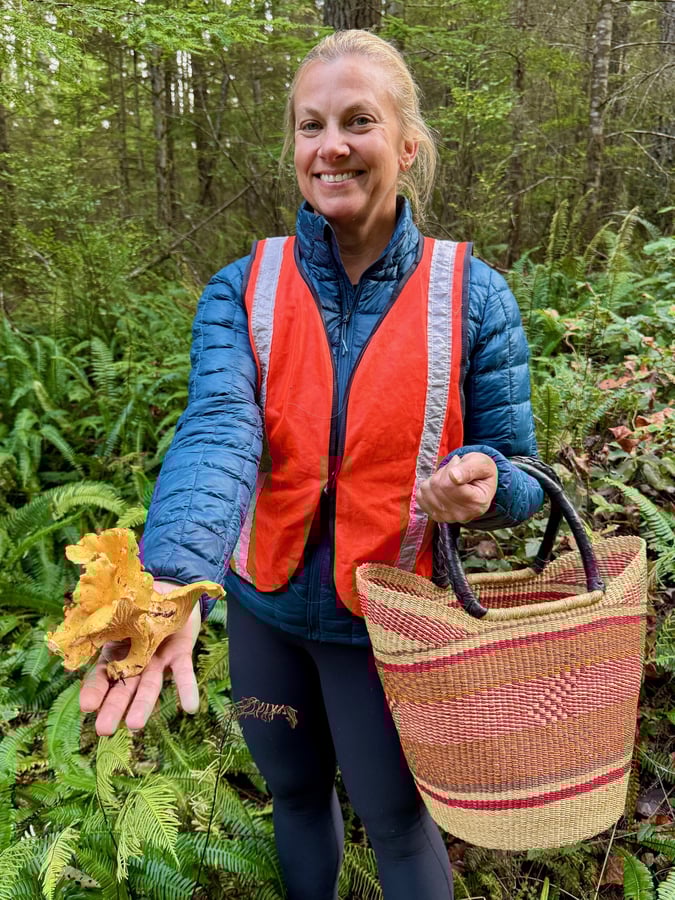
On a recent trip to the Pacific Northwest to visit friends, I found myself deep in the woods several times. Most of the time we stuck to hiking trails, but on this particular adventure, we ventured far from any trail, climbing over moss-covered fallen trees, and calling out to each other now and then so no one wandered too far away into the lush green forest.
I’d been invited on a mushroom foraging trip with my friend Patti and one of her local friends Katie, a trained botanist, and as someone who had never foraged before, I wasn’t sure what to expect. Within minutes, I realized this wasn’t a casual stroll through the forest. We wore neon vests so hunters could see us and moved slowly, knife in hand, eyes scanning the forest floor for a flash of gold.
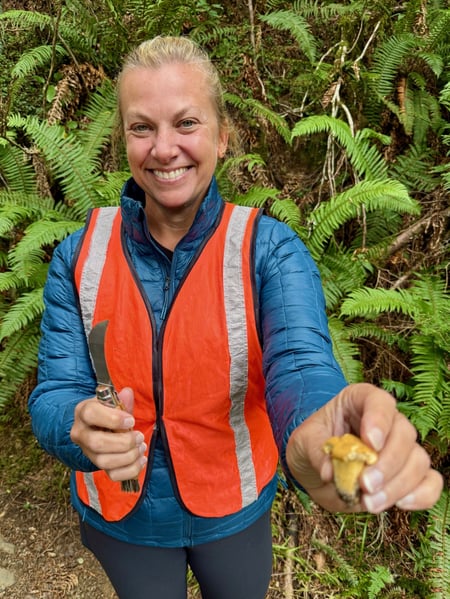
That’s how I met my first Pacific golden chanterelle. These golden mushrooms are the pride of the region - Oregon’s official state mushroom - and a mushroom lover’s dream. They favor damp, mossy forests beneath towering conifers, especially Douglas firs and hemlocks. Their season peaks from late summer through the fall, vanishing with the first frost.
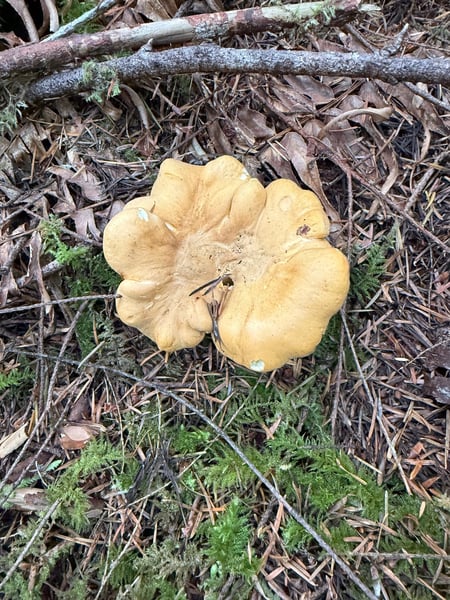
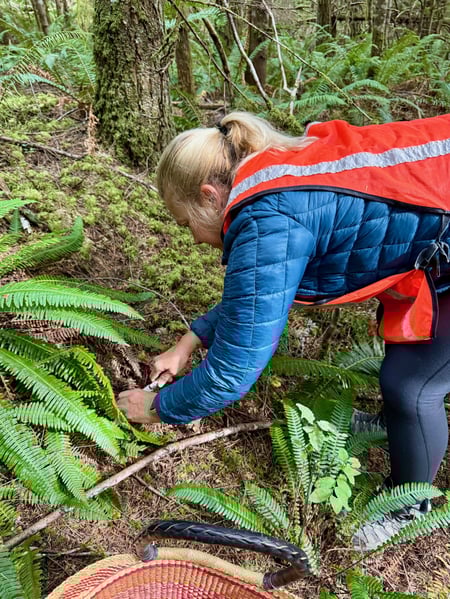
Spotting one takes some patience and practice, but my friends let me shadow them to watch their method. The Pacific golden chanterelle’s cap is bright yellow and funnel-shaped, often with wavy, rippled edges that bend outward. The underside has branching false gills that run partway down the stem rather than standing apart like the true gills of many mushrooms. The cap, gills, and stem share the same sunny hue, sometimes flecked with dark specks of forest soil. When cut, the stem is firm and solid with pale yellow or white flesh - a key sign you’ve found the real thing.
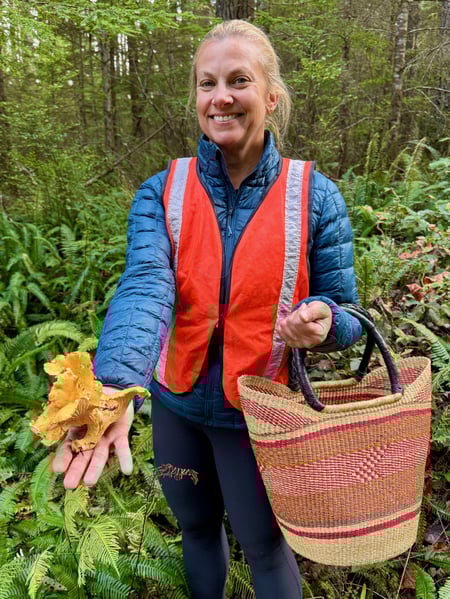
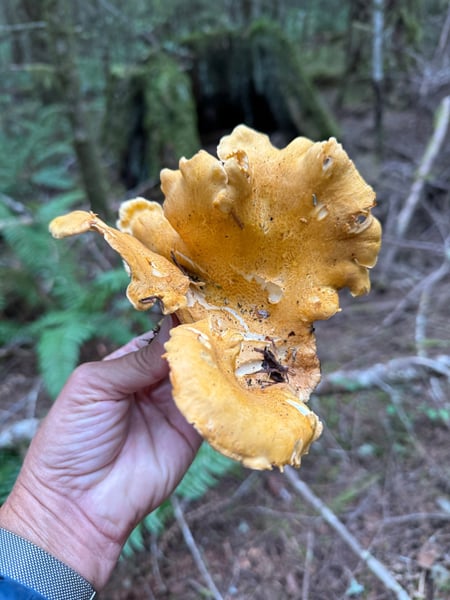
My biggest chanterelle of the day
It’s worth noting there’s a tricky impostor in these forests: the false chanterelle. It’s thinner, darker orange, with true gills and a mostly hollow stem. While not deadly, it can cause stomach upset. A quick slice through the stem will tell you the truth—solid means safe.
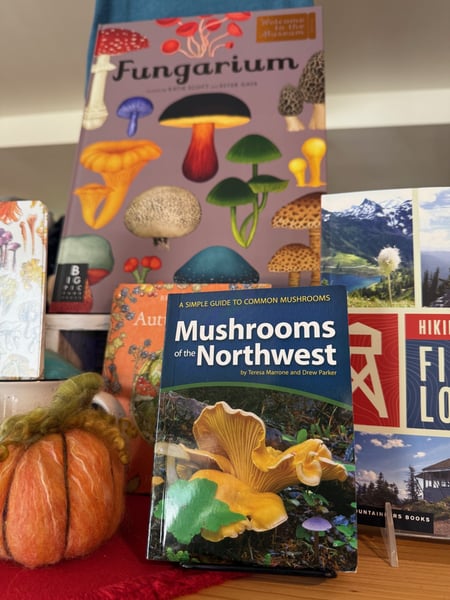
If you aren't lucky enough to have a botanist to forage with, be sure to do your research! We saw several other types of mushrooms in the forest, but we were only focused on chanterelles, due to the season. This display of mushroom books at the local Nordland General Store (the cutest store ever!) provides visitors like myself with a guide to local mushrooms.
Once I learned what to look for, I began to see the chanterelles easily. A single golden glow under the ferns usually meant more were nearby, clustered in the same patch of damp soil. The excitement of spotting one never faded, though Katie and Patti were collecting them much faster than novice me!
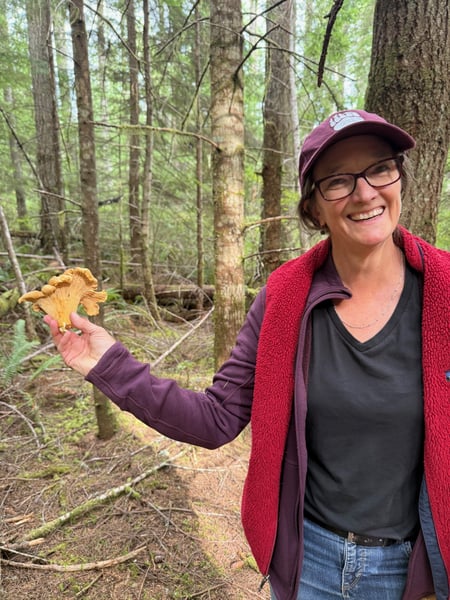
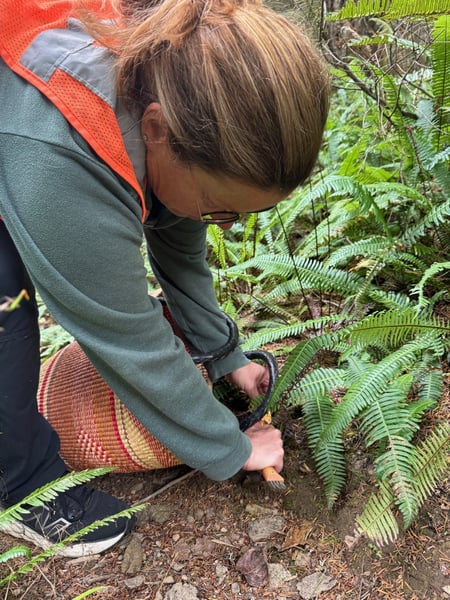
By the end of the afternoon, our baskets were heavy with chanterelles. Back at the house, we spread them out on the counter like treasure—golden, slightly damp, and speckled with bits of moss and pine needles (and a few bugs). Cleaning them felt almost as meditative as finding them, brushing away the forest one fleck at a time.
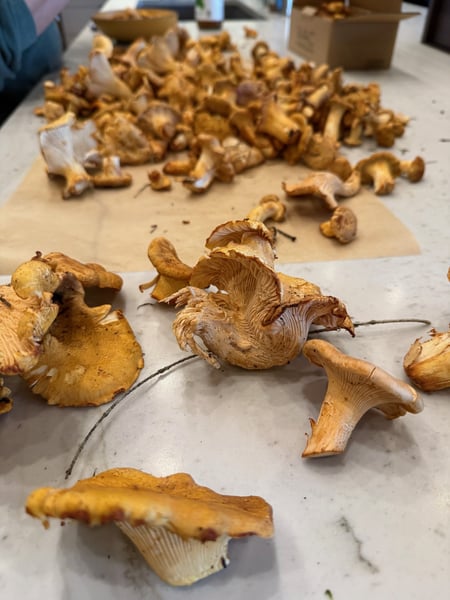
Patti and I sorted our haul of mushrooms into three groups: one I would travel home with in a box carried protectively on the plane, one of smaller mushrooms that Patti would pickle, and one for another local friend who loves to cook.
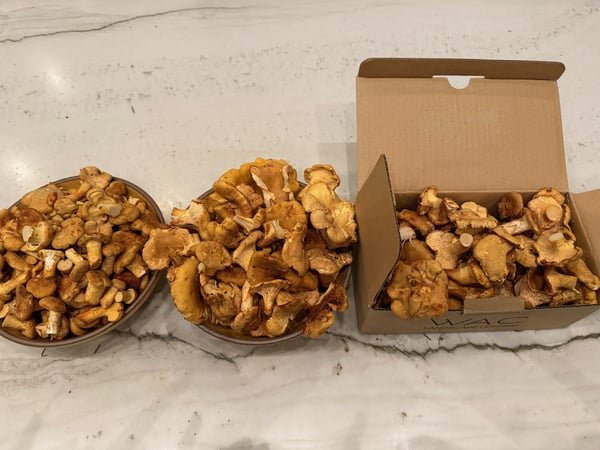
Once I got home, I kept the mushrooms in the box in the fridge for a couple of days. When I was ready to use them, I washed them gently with running water to remove the dirt missed by just brushing them before.
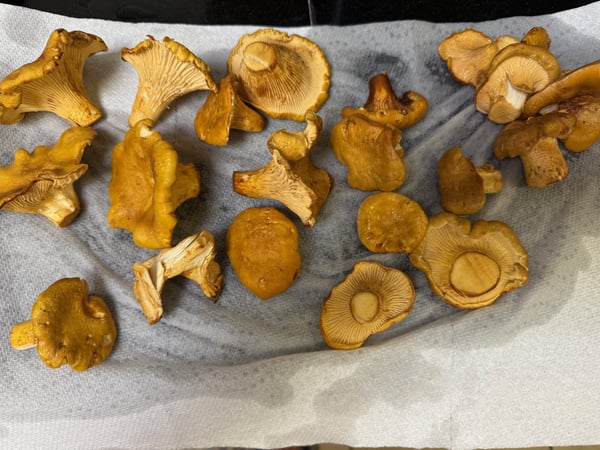
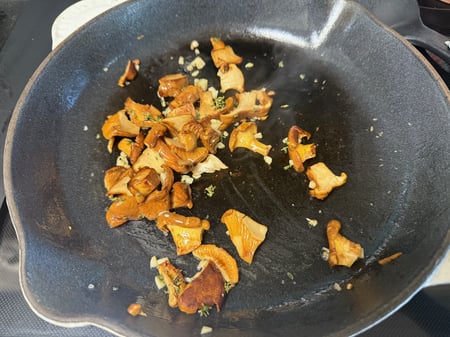
That’s when the real fun began: figuring out how to cook them! Chanterelles have a delicate, fruity aroma - often compared to apricots - and a meaty texture that makes them perfect for everything from simple sautés to rich sauces. I ended up experimenting with a few recipes that showcased their flavor without overpowering it, including a simple omelet with sauteed chanterelles, fresh thyme and garlic for breakfast.
Katie shared her favorite mushroom cookbook with me Shroom: Mind-bendly Good Recipes for Cultivated and Wild Mushrooms by Becky Selengut. I took a couple of recipes from there and adapted them.
This isn't a blog on how to make risotto (I've covered that before) but rather how to make the chanterelles shine. It just so happens that I love mushroom risotto!
Chanterelle Risotto
Adapted from Shroom
Serves: 4
Prep time: 10 minutes
Cook time: 20 minutes
Total time: 30 minutes
4 cups stock (I used vegetable but mushroom would be even better)
2 tablespoons extra-virgin olive oil
5 tablespoons unsalted butter
6 ounces fresh chanterelle mushrooms, torn into bite-size pieces
1 small yellow onion, small diced
1 cup arborio or carnaroli rice
1 tablespoon fresh thyme
1 teaspoon lemon zest
1/2 cup grated Parmesan cheese
Salt and freshly ground pepper, to taste
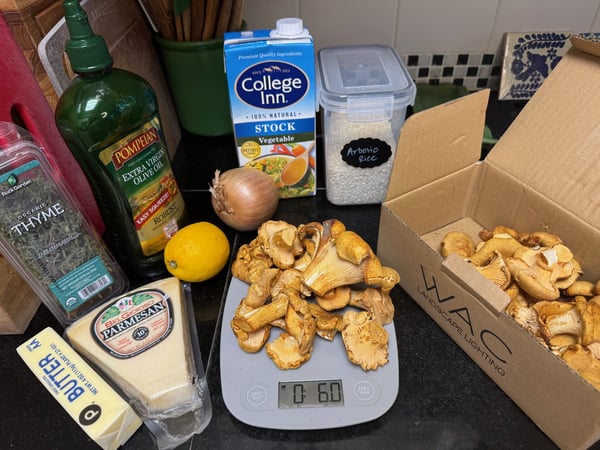
1. In a medium saucepan, heat the stock.
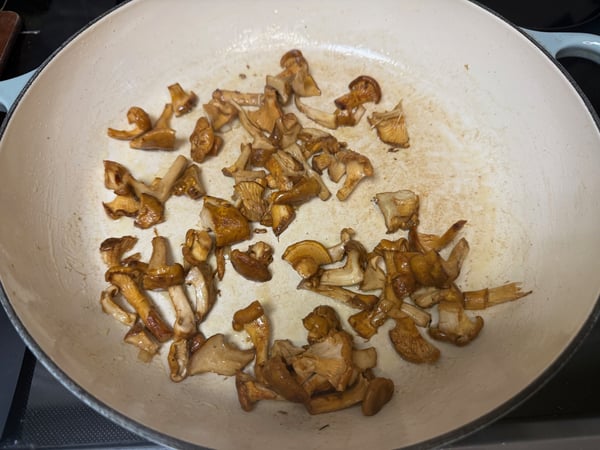
2. In a large sauté pan on medium-high heat, add 1 tablespoon each of the olive oil and butter. Add the chanterelles and a pinch of salt and cook until tender and just lightly caramelized, about 3-5 minutes. Transfer to a bowl and reserve.
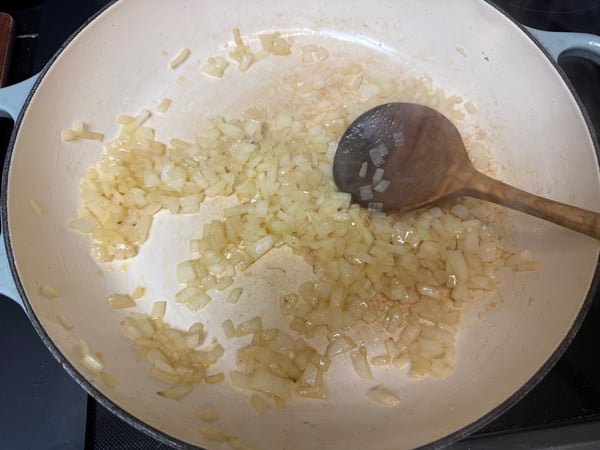
3. In the same pan, heat the other tablespoon of olive oil with 1 tablespoon of butter. Add the onion and a pinch of salt and cook until softened, about 5 minutes.
4. Add the rice and cook, stirring constantly, until the rice is translucent at the edges, about 3 minutes.
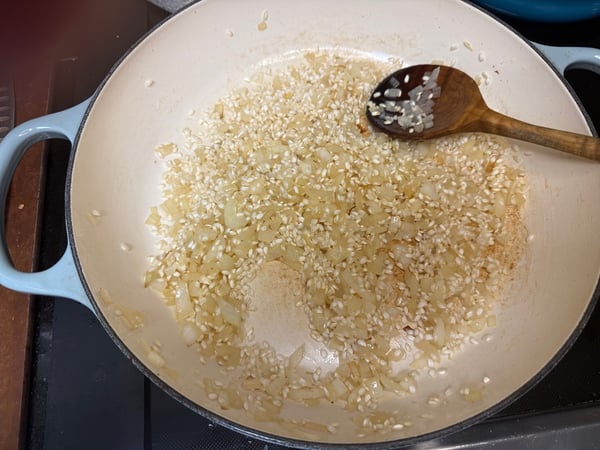
5. Add a ladle of warm stock (1/2 to 3/4 cup) and store until almost completely absorbed. Continue adding stock a ladleful at a time and cooking, stirring constantly, until it is absorbed, before adding another ladle of stock.
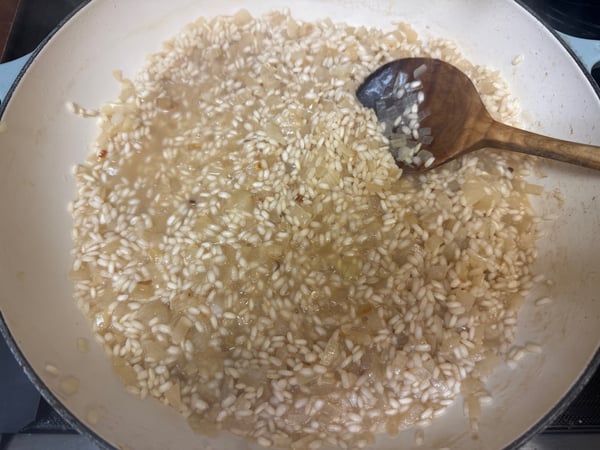
6. After about 15 minutes, begin tasting the risotto adding each new ladle of stock. When the rice is nearly done, add the chanterelles, thyme and lemon zest.
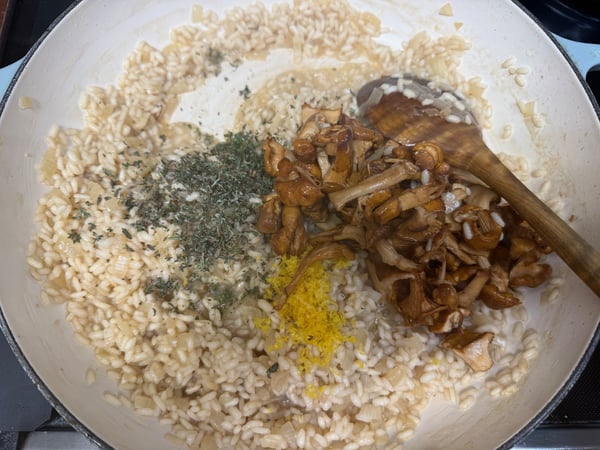
7. Add more stock if needed and continue to cook until the rice is al dente. Stir in the cheese and the remaining 3 tablespoons of butter.
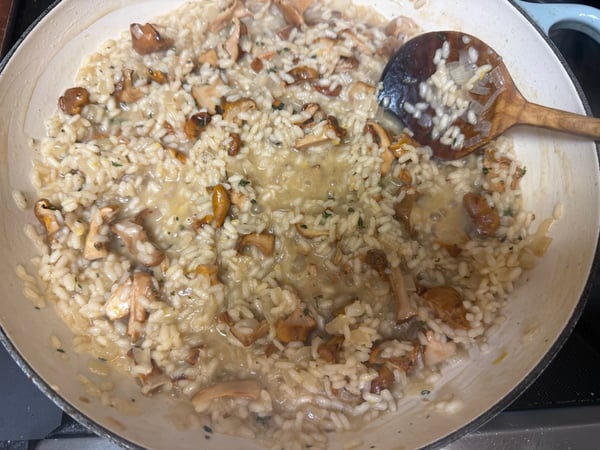
8. Season to taste with salt and pepper.
9. Serve, with extra cheese for the table.

The risotto was pure comfort — creamy, rich, and filled with the earthy aroma of chanterelles. But I still had some mushrooms left and wanted to try something that highlighted their texture in a completely different way. That’s when I turned to another recipe from Shroom, pairing the chanterelles with roasted fish, sweet corn, and crispy bacon for a dish that perfectly bridged my Pacific Northwest adventure with a homecoming to the South.
Roasted Fish with Chanterelles, Bacon and Sweet Corn Sauce
Adapted from Shroom
Serves: 2
Prep time: 15 minutes
Cook time: 30 minutes
Total time: 45 minutes
1 8 oz piece of white fish (I used cod but halibut from the Pacific Northwest would be even better!)
9 ounces chanterelles, large ones split in half, small ones left whole
1/4 pound bacon, small diced
2 cups corn
2/3 cups stock (again, I used vegetable but mushroom would be better)
1 tablespoon butter
4 oz small sweet peppers (I used these from my grocery store's deli but piquillo chile peppers from a jar or roasted red peppers would work, too.)

Salt and freshly ground pepper, to taste
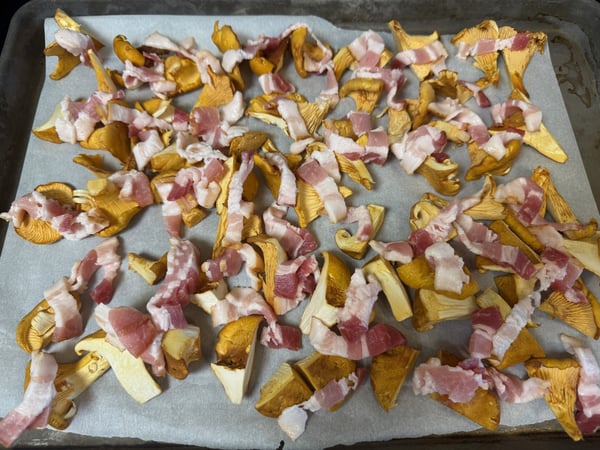
1. Line a sheet pan with parchment paper and spread out the mushrooms first and sprinkle bacon on top. Place in a cold oven, turn on to 400 degrees F and set a timer for 10 minutes.
2. At the same time, put the piece of fish on a separate small pan and drizzle with a little bit of olive oil, season with salt and pepper. Set aside.
3. When the timer goes off, stir the mushrooms and bacon and put back in the oven for another 10 minutes. Add the fish pan to the oven now.
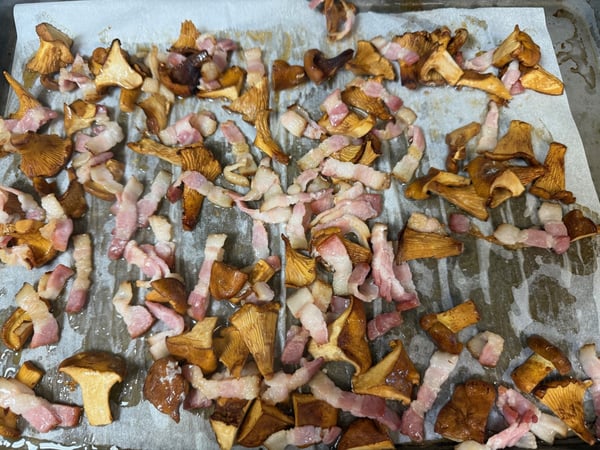
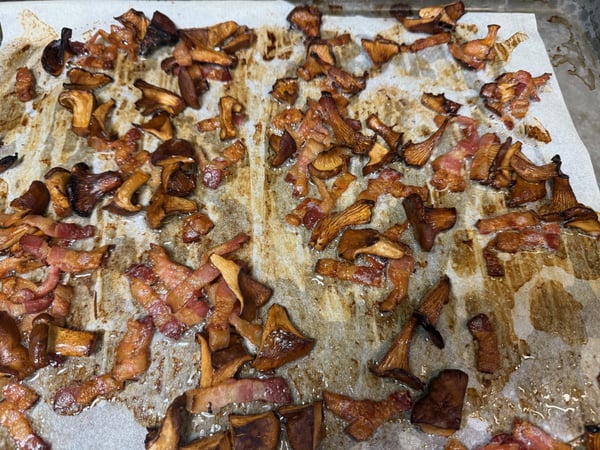
3. Continue to cook until the mushrooms are tender and caramelized and the bacon is crispy. Reserve the bacon fat on the pan.
4. Check the fish for doneness after 10-12 minutes. It's done when it flakes easily with a fork.
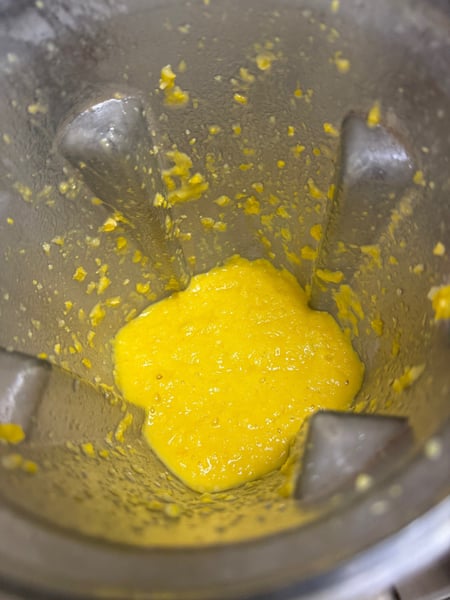
5. Add 1 cup of the corn to a blender. Add the stock and puree until smooth (add more stock if you need to make it thinner). Season with salt and pepper. Transfer to a pot to warm.
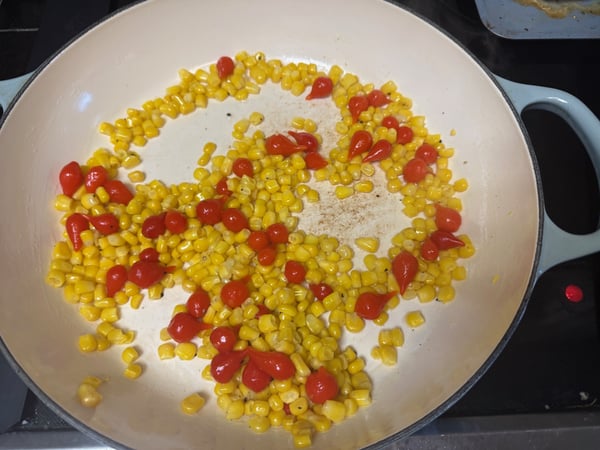
6. In a sauté pan over medium-high heat, add 1 tablespoon of the bacon fat from the baking pan. Add the remaining half of the corn kernels and the peppers and sauté for 5 minutes. Season with salt and pepper.
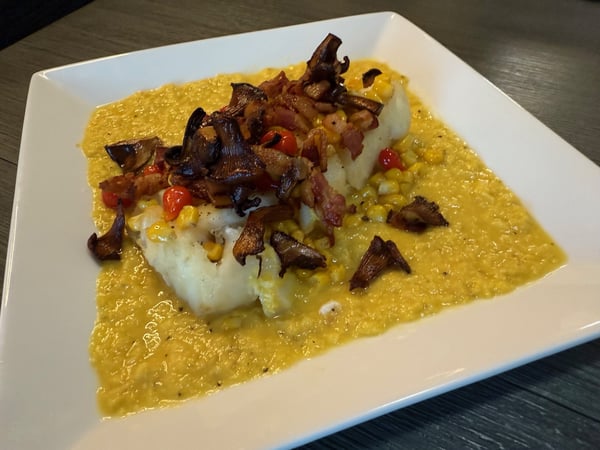
7. To serve, pour the warm corn sauce on a platter, top with fish, spoon the corn and pepper mixture on top, and garnish with the mushroom bacon mixture.
Each time I cooked with those chanterelles, I was reminded of that afternoon in the forest — the scent, the quiet thrill of discovery, and the flash of gold that made my heart race. Foraging connected me to my food in a way grocery shopping never could. It made me appreciate not just the ingredients, but the effort, patience, and curiosity that go into finding them. Whether you’re in the woods or in your kitchen, there’s something special about slowing down and savoring what the season gives you.
If you think you don't like mushrooms, I would question whether you've had them cooked properly. Seriously, the proper cooking method can be a game changer!
The Chopping Block's Founder Shelley Young also loves to forage mushrooms and is somewhat of a mushroom fanatic like me, so be sure to check out her other posts:
- How to Cook Maitake or Hen of the Woods Mushrooms
- How to Dry and Preserve Morel Mushrooms
- How to Cook Chicken of the Woods Mushrooms
If you love mushrooms, you won't want to miss The Chopping Block's hands-on Vegetarian Thanksgiving class this year where you'll learn how to make Mushroom Crostata with Caramelized Onions, Fennel and Thyme with Baby Kale-Apple Salad.
We'll also make a hearty mushroom ragu to go with handmade pasta dough in our upcoming Pasta Boot Camp.
