
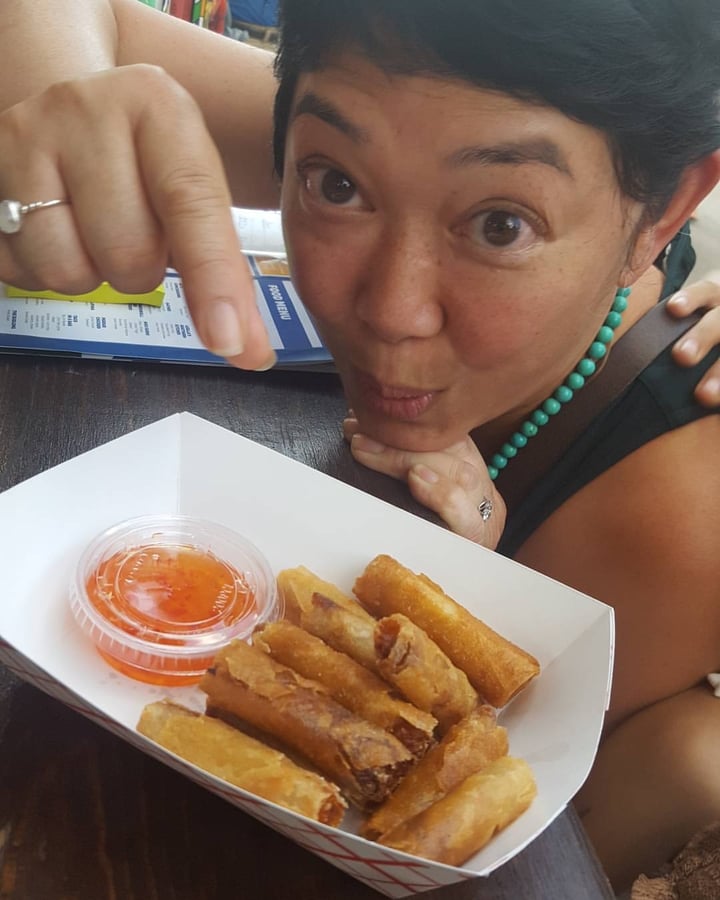
“Nolan, eat! Here… Eat!” That’s what I hear as I enter a Filipino home. More often than not, I’ve barely made it through the threshold of the front door (often with a dish of my own in hand), and a Tita* (see glossary at end of post) or a Lola is handing me a plate of food before I can remove my jacket or set down my own culinary contribution. It’s not advice I’m being given. It’s not instruction - it’s a command.
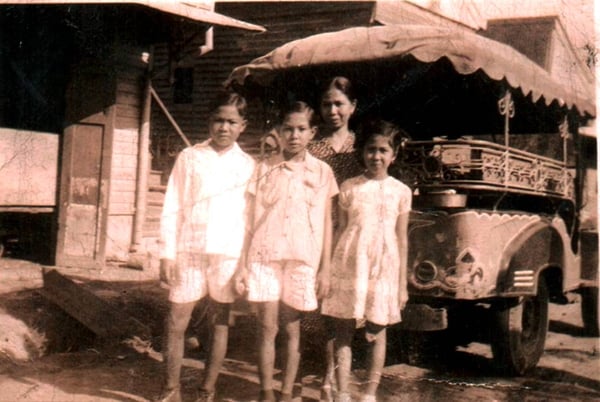
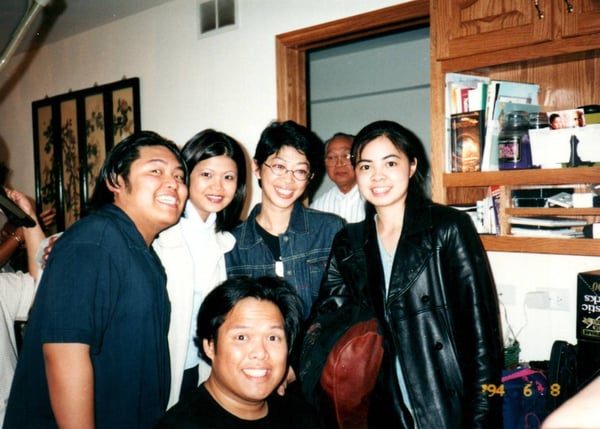
As I settle in, the aroma of food is often the first to strike the senses. Garlicky rice. Vinegary chicken or pork stew (adobo). Savory peanut braised oxtails (kare-kare). Umami-rich stir-fried noodles (pancit) with a spattering of patis (fish sauce) and a squeeze of citrus. Charred, sweet BBQ pork (inihaw na baboy).
I find a place to set down my contribution.
I am handed a plate.
Not an empty plate but not necessarily filled yet. Often there will be a sort of culinary primer already placed on my plate. Tita’s crispy fried pork and shrimp spring rolls (lumpia shanghai). A little something to start me off and get me moving in the right direction. A prompt to remind me of the imperative given at the front door, “Eat! Eat!”
As I finally make my way to the dining table, the sight of the vibrant and ample communal dishes hits next. The perfectly sauced adobo is often studded with whole peppercorns and bay leaves. It’s going to go great over the garlic rice. The kare-kare has a beautiful golden, peanutty glaze and is contrasted by the bright green of string beans and bok choy. The pancit always has a lot going on… shrimp, steamed mussels, chicharron, hard-boiled eggs, lemon wedges. I can see uncle in the kitchen over a pot of hot oil frying the lumpia, but he’s not frying them nearly as fast as they are being eaten. I think I can take down about 50 of these bad boys. The Inihaw na baboy has the look that screams summertime BBQ grill even if it’s December and someone has braved the outdoor elements to deliver this simple offering.
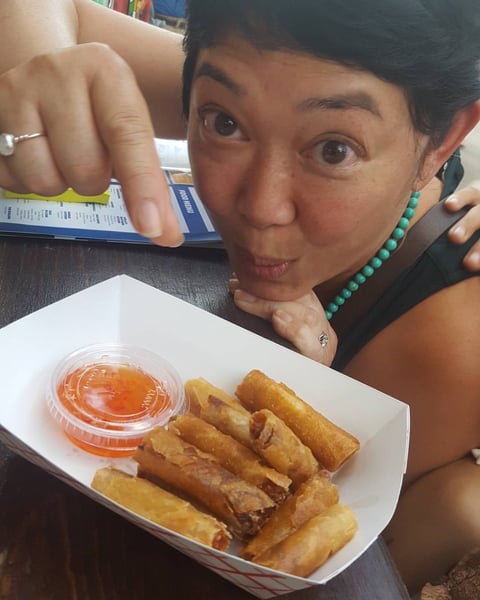
Lumpia Shanghai
Now it’s time to eat. Not much room now that we’ve packed 40+ loved ones in a modestly sized Chicago two-flat and the dining room table has been compromised to hold all the family dishes about to be enjoyed. No worries. There’s a chair and I have a lap. I dig in.
The flavors are diverse. As diverse as one would expect from a cuisine bred in a multicultural heritage shaped by centuries of tradition, foreign influence and regional diversity. 7000+ islands. Chinese migrants, traders, Spanish and American colonizers.
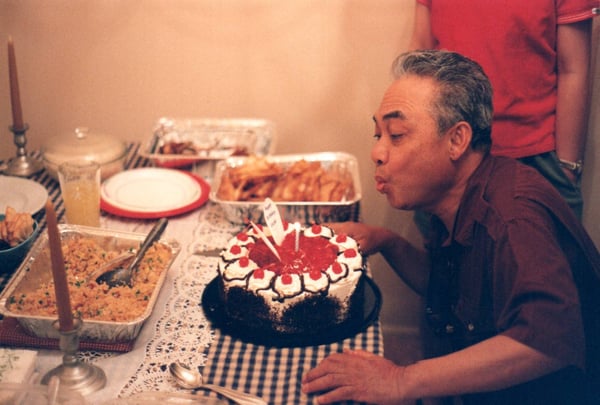
Generally, there’s not much heat/spice in Filipino cuisine, something that is more indicative to Thai, Malay or Sichuan cuisines, (yes, there are always exceptions to the rule and there are some spicier regional Filipino dishes). Most of what I’ve come to love is rooted in sweet, sour and salty preparations. The adobo is a savory and garlicky braise that relies on the addition of vinegar to balance the saltiness of soy sauce and the fat from the pork itself. The lumpia are an addictively pleasant snack. Salty, crispy pork spring rolls. They are rolled up like thin cigarillos, fried crispy and cut into bite size pieces. They are served with a simple sweet and sour sauce that lends a tangy sweet contrast to the lumpia.
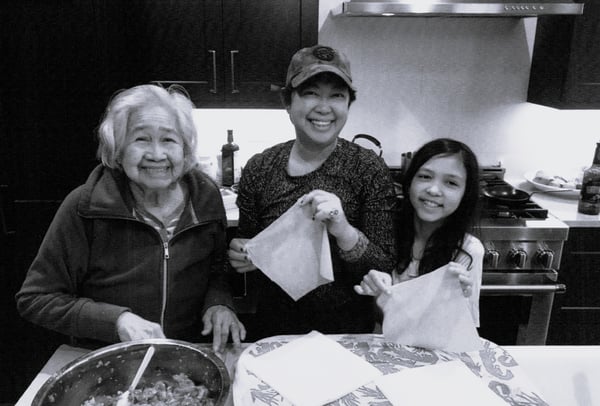
3 generations of Lumpia makers
Pancit is one of the most diverse dishes. There are seemingly as many preparations of pancit as there are islands in the Philippine archipelago. Pancit Bihon (rice noodles) and Pancit Canton (egg noodles) is more of an everyday preparation and relies on soy sauce, oyster sauce, meat and stir-fried vegetables. This is similar to a Chinese chow mein or lo mein.
Pancit Palabok uses thicker rice noodles, with an orange gravy derived from shrimp broth and annatto seeds) and garnished with tinapa flakes, shrimp, hard-boiled egg, and chicharron. Palabok is more of a special occasion dish. Pancit Malabon is very similar to Palabok, but with the addition of more seafood such as squid, crab fat, and mussels in the shell. My favorite pancit is always the one I am currently eating.
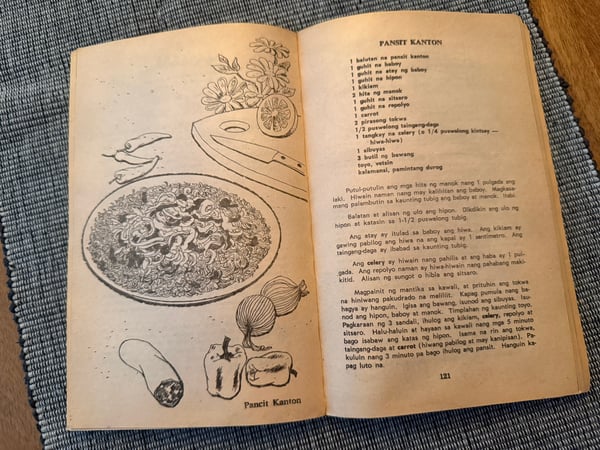
A Pancit Canton recipe in Tagalog
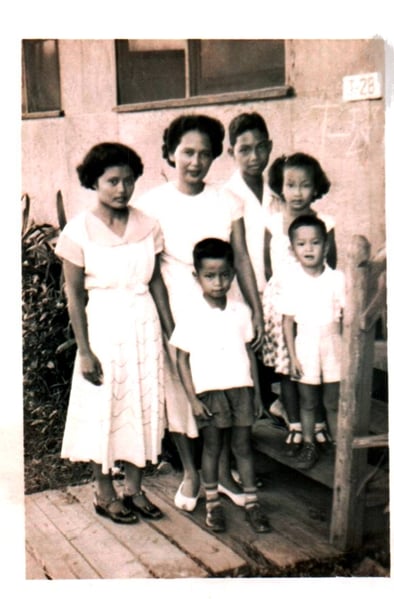
I married into a Filipino family in 2006. Before we were married, I felt as if I was already being adopted into the family attending year-round get togethers, birthdays, and holiday parties. The parties were founded in food and family, and I was being “baptized” as I entered the Filipino home… but instead of holy water, it was sinigang (a Filipino sour soup).
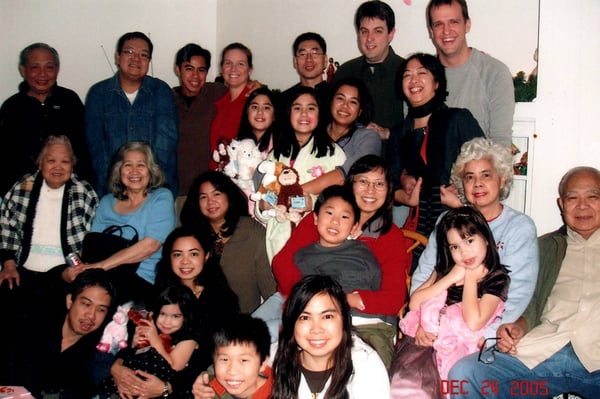
Always being handed a plate. Always “Eat! Eat!”
Admittedly, of all the dishes that I have come to know and love through my Filipino marriage, some have been an acquired taste. Just 24 years ago these flavors, ingredients and dishes were all foreign to me. The sour tang of sinigang, the funky shrimp paste used in Kare-Kare, the reliance on patis in anything from a simple rice porridge (Lugaw), or with grilled fish (inihaw na isda). But it’s easy to come back and explore these dishes when you feel so welcome in a Filipino home.
The dishes vary from one party to the other. The ingredients seem to be put in and out of rotation depending on how the cook is going to prepare for that get together. It’s a reminder that Filipino food is alive, and it has to be experienced. It is a cuisine that is rooted in culture and history, but it is continually adapted and altered, like a language, to fit in new places and new times. A different kind of soul food. A living art.
In a previous post, I stressed the importance of connecting with food, flavor and culture. It’s been challenging to hold on to my Czech and Polish side as many of my relatives have moved out of the Chicago area. There’s less of my Eastern European culture and roots to connect with in the city today.
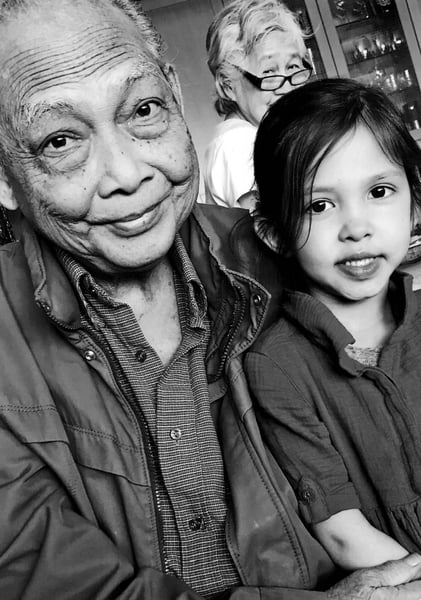
On the other hand, my adopted Filipino side is strong and present here in Chicago for my wife, my children, and my wife’s extended family. And for me! And we are happy to celebrate this wonderfully diverse cuisine and culture. I am very excited that The Chopping Block offers a Hands-on Filipino Feast Class. This is a great class for beginners, experts, Titas, Lolas, or anyone wanting to learn about Filipino culture and cuisine. If you are interested in coming together to celebrate a beautiful culture, people and cuisine I invite you to join us tomorrow night. Come, Eat! Eat!

Glossary
Lola – grandmother
Lolo – grandfather
Tita – aunt
Tito – uncle
Adobo – braised protein in garlic, onion, vinegar, soy sauce
Bagoong – Filipino shrimp paste
Chicharron – crispy fried pork rinds .
Inihaw na baboy – BBQ pork
Inihaw na isda – fried fish
Kare-Kare – peanut and garlic braised oxtails
Lugaw – savory rice porridge
Lumpia Shanghai – crispy fried shrimp and pork spring rolls
Pancit – Filipino-style stir-fried noodles
Patis – fish sauce
Tagalog – Filipino language
Tinapa Flakes – Filipino-style smoked fish flakes
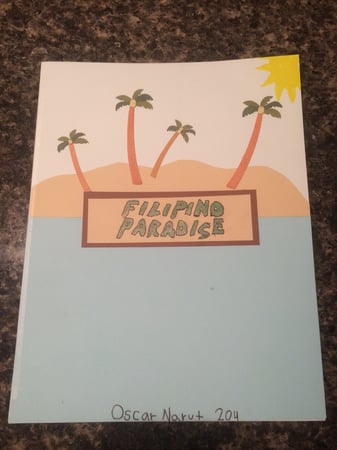
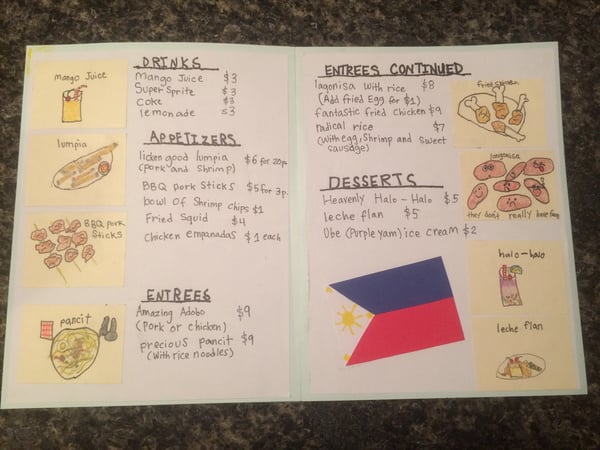
A 2nd grade school project