
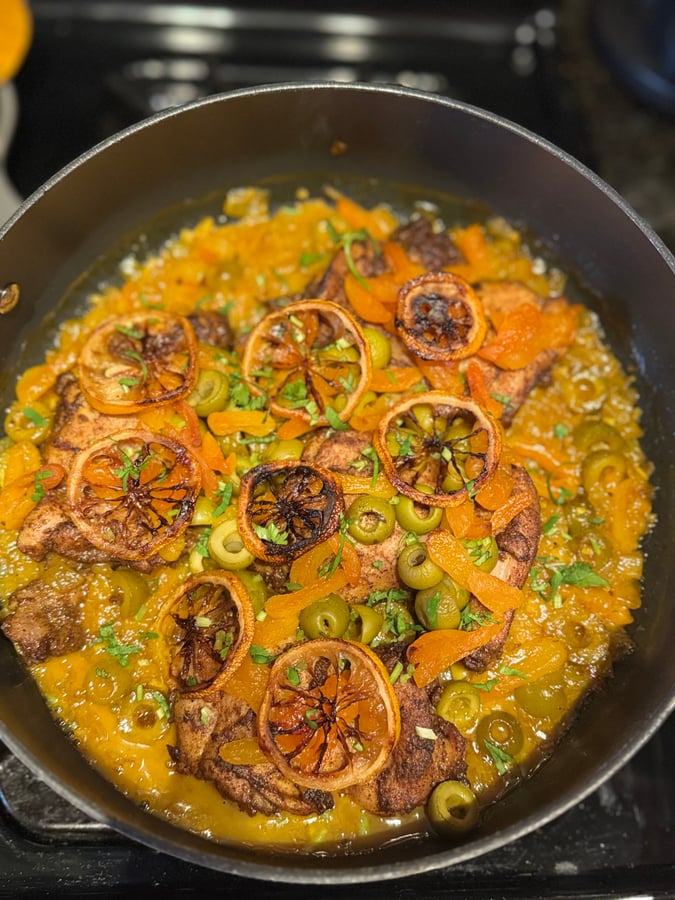
I’ve been working at The Chopping Block for about six months now, and I still haven’t seen all of the classes we have to offer. That said, I have racked up a couple favorites, and currently our Moroccan Kitchen class sits at the top of that list.
Have you ever seen or tasted a dish for the first time and thought, “I have to try this at home!” That’s exactly how I felt the first time I worked this class. I’m always a little jealous of our students when they sit down to enjoy the fruits of their labor at the end of class, but on this day I was especially envious. The kitchen smelled incredible from start to finish, and every dish on the menu, including the dessert, looked delectable. Read on to find out which recipe I tried at home.
What Is Moroccan Cuisine?
I love the diversity and complexity of African cuisine. Every region, subregion, and country is different, but they all share some quintessential similarities. Moroccan cuisine is defined by a uniquely sweet and savory flavor profile, achieved by combining warm and earthy spices such as cinnamon, cumin, saffron, paprika, and ginger. Other common ingredients include preserved lemons, olives, dates and other dried fruits, and fresh herbs such as mint and cilantro.
The recipe I’m showcasing today uses a beloved North African spice blend called ras el hanout. The name translates to “top of the shop” or “top shelf”, and means exactly that — the spice vendor combines the best spices the shop has to offer into one versatile blend. The type of spices used can vary from shop to shop, but the blend typically includes warming spices like cardamom, cinnamon, clove, nutmeg, ginger, black pepper and allspice, along with coriander, cumin, and turmeric. You can find it at any specialty grocery store that sells African and Middle Eastern ingredients, but just know that no blend is exactly the same!
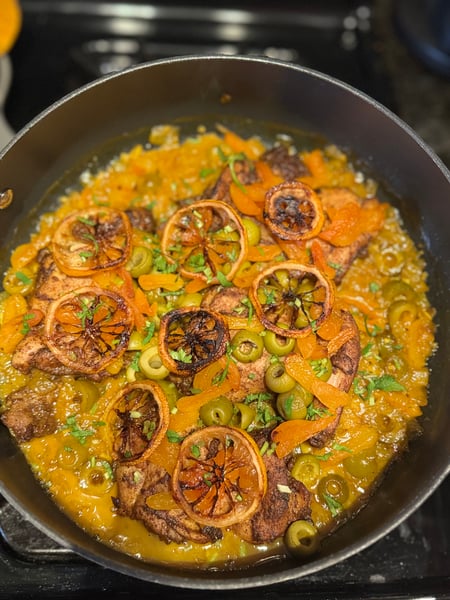
Braised Chicken “Tagine” with Olives, Preserved Lemons and Apricots
Yield: 4 servings
Prep time: 30 minutes
Inactive time: 30 minutes
Cook time: 45 minutes
Total time: 1 hour, 45 minutes
For the chicken:
2 tablespoons ras el hanout
1/4 teaspoon cayenne pepper
1/2 teaspoon ground ginger
2 tablespoons extra virgin olive oil
4 chicken thighs, boneless and skinless
Salt and pepper to taste
For the braise:
2 tablespoons extra virgin olive oil
1 onion, medium dice
3 cloves garlic, minced
1/2 - 3/4 cup water
1 preserved lemon, thinly sliced into rounds (or fried lemon slices)
1 cup green olives, pitted and halved
1/2 cup dried apricots, sliced
1 tablespoon fresh cilantro, rough chopped
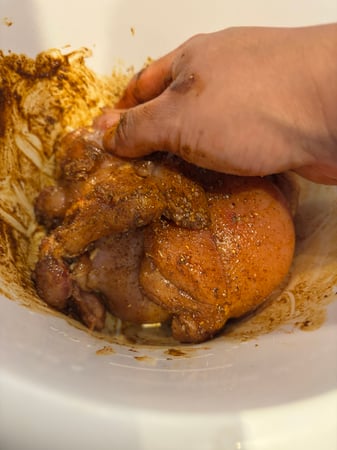
1. In a medium bowl, whisk together the ras el hanout, cayenne pepper, ginger and olive oil. Add the chicken thighs to the bowl, and season with salt and pepper to taste. Thoroughly coat the chicken with the spices, and allow to marinate for 30 minutes but up to 2 hours.
2. While the chicken is marinating, prep the rest of your ingredients.
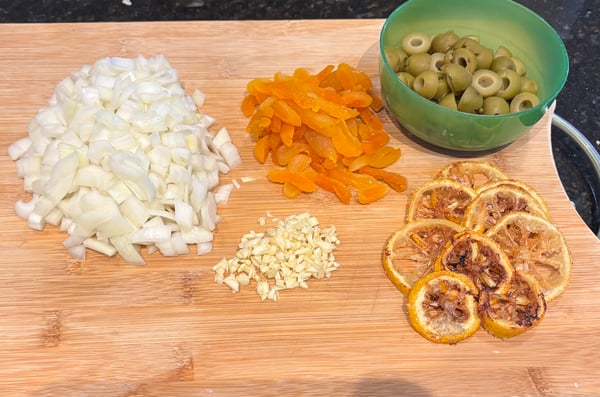
3. You’ll notice in this photo that my lemon slices are fried, which is a quick alternative to preserved lemons if you don’t have access to them. Simply slice a lemon as thin as you can, lightly fry them in olive oil for 3-5 minutes or until the skins crisp, then immediately sprinkle with salt. Warning: If you love lemons as much as I do, it may be hard not to snack on these like potato chips.
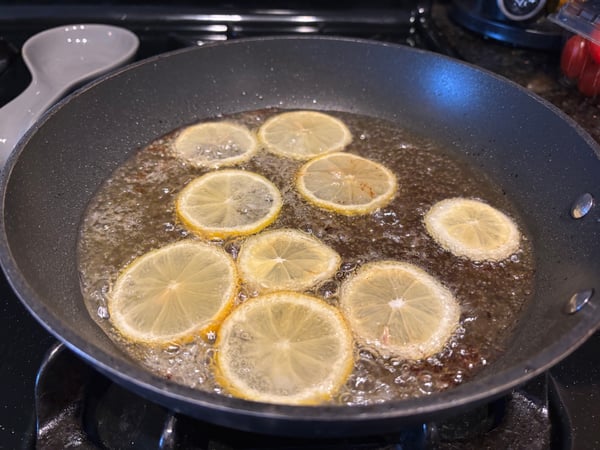
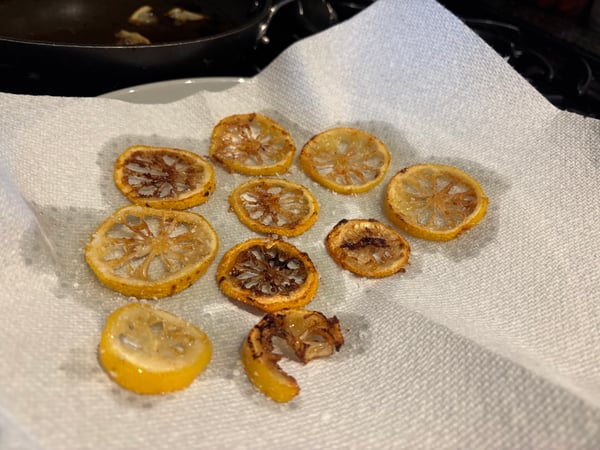
4. Preheat the oven to 400° F. Once the chicken is marinated, heat a wide, heavy pan over medium heat and add the olive oil. Lightly brown the chicken, presentation side down, until the spices are lightly toasted, about 2 minutes. Flip and repeat, then remove from the pan and set aside.
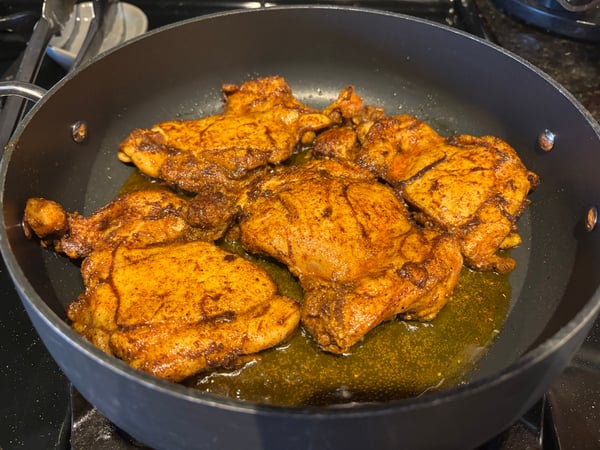
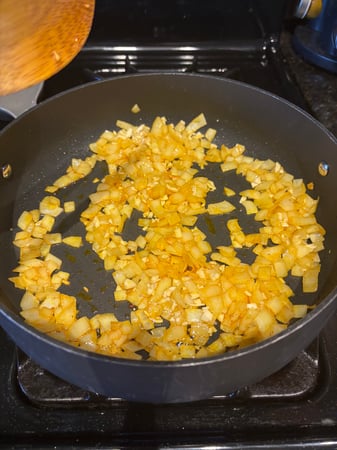
5. Add the onions to the pan, and cook until softened. Stir in the garlic and cook for an additional 30 seconds, or until aromatic.
6. Return the chicken to the pan, add the water, and top with the preserved lemon slices, olives, and apricots. By now, your kitchen should smell amazing.
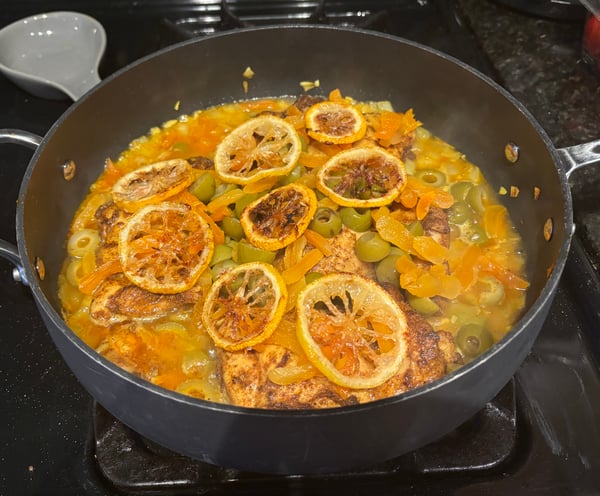
7. Cover the pan with a lid and transfer to the oven. I was baking bread at the same time as this, so I let mine braise on the stove, which is perfectly fine, too. Cook until the chicken is tender, 30-35 minutes (or 40-45 minutes if stovetop braising.)
8. If braising in the oven, increase the heat to 425°. Uncover the pan and continue to cook for an additional 10 minutes. Sprinkle with cilantro before serving.
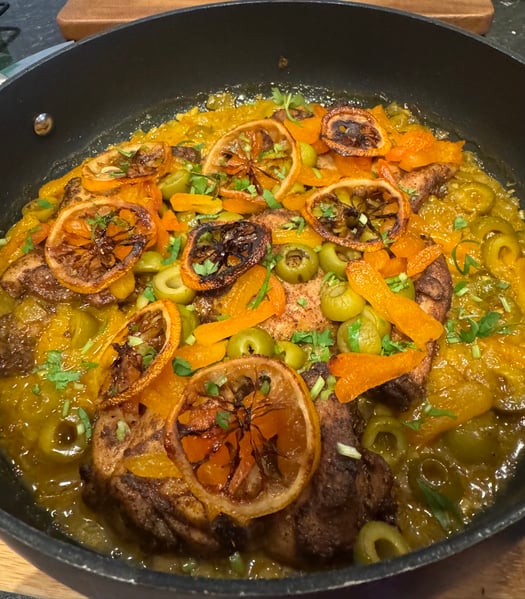
I mean, come on. How is your mouth not watering?
I served mine on top of some couscous tossed with lemons, scallions and herbs, another dish featured in our Moroccan Kitchen class. If you’re a fan of spicy, tangy, aromatic dishes with rich flavor profiles, this dish checks all the boxes. There’s a reason this class is my favorite.
We run the Moroccan Kitchen class several times a year, so check back periodically to see when the next one is happening! If you’re interested in taking other classes that feature world cuisines, these classes are happening later this month:
- Pancakes Around the World Wednesday, January 14 6pm
- Culinary Adventure: Trip to Puerto Rico Thursday, January 16 6pm
- Indian Vegetarian Monday, January 26 6pm
- Pasta and Gnocchi Workshop Tuesday, January 27 6pm
- Mediterranean Boot Camp Friday, January 30 10am
