I’m taking my kids on a graduation trip next month—Japan first, then the Philippines. I’m looking forward to the beaches, but more than anything, I’m looking forward to eating.
I’ve been part of a Filipino family for nearly half my life, and the food has been a constant at every gathering—birthdays, holidays, backyard barbecues. It’s a cuisine I’ve come to know well, but not one I’d ever claim to have mastered. That’s part of the draw. There’s always more to learn, more to taste, more to understand.
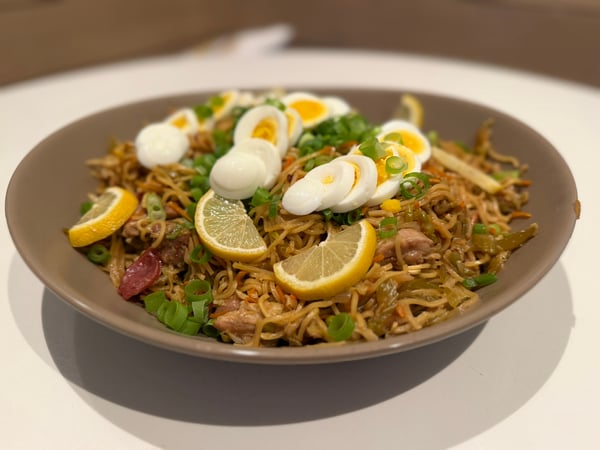
One dish always anchors the table: pancit (PAHN-sit).
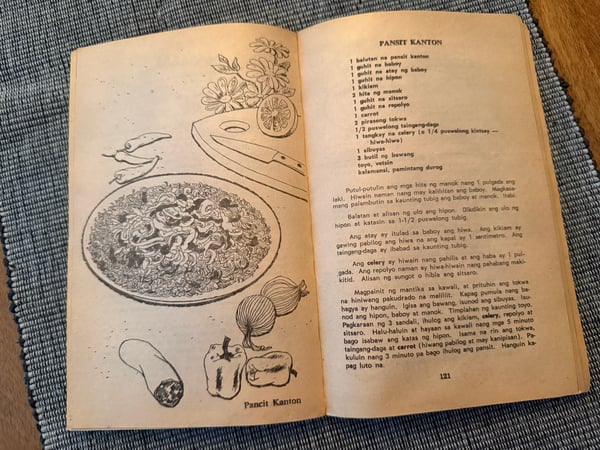
A pancit recipe in Tagalog from an old Filipino cookbook
The word translates simply to “noodles,” but pancit refers to a wide range of dishes built around them. Recipes vary from region to region, household to household. Often, the name of the dish reflects the noodle itself. Pancit canton uses wheat egg noodles similar to lo mein, while pancit bihon uses thin rice noodles that are soaked before cooking. There are as many interpretations of pancit as there are islands in the Philippines.
If you’re new to Filipino cuisine, here are three versions of pancit you’re most likely to encounter—and a good place to start.
Pancit Canton
Probably the most approachable of the pancit dishes, pancit canton combines wheat egg noodles with a mix of meats and vegetables in a savory sauce.
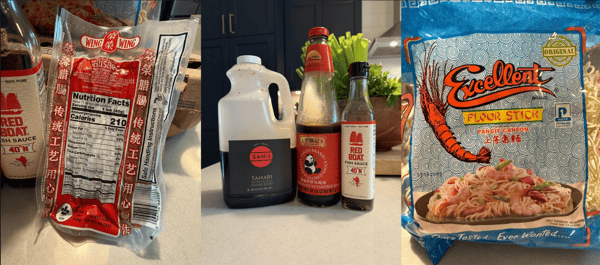
In our house, we make it with chicken or shrimp, Chinese sausage, onion, carrot, cabbage, and snow peas. The dish is seasoned with soy sauce, oyster sauce, and patis (fish sauce), then brightened with citrus. The noodles finish cooking directly in the pan, absorbing the sauce as they soften under a tight-fitting lid.
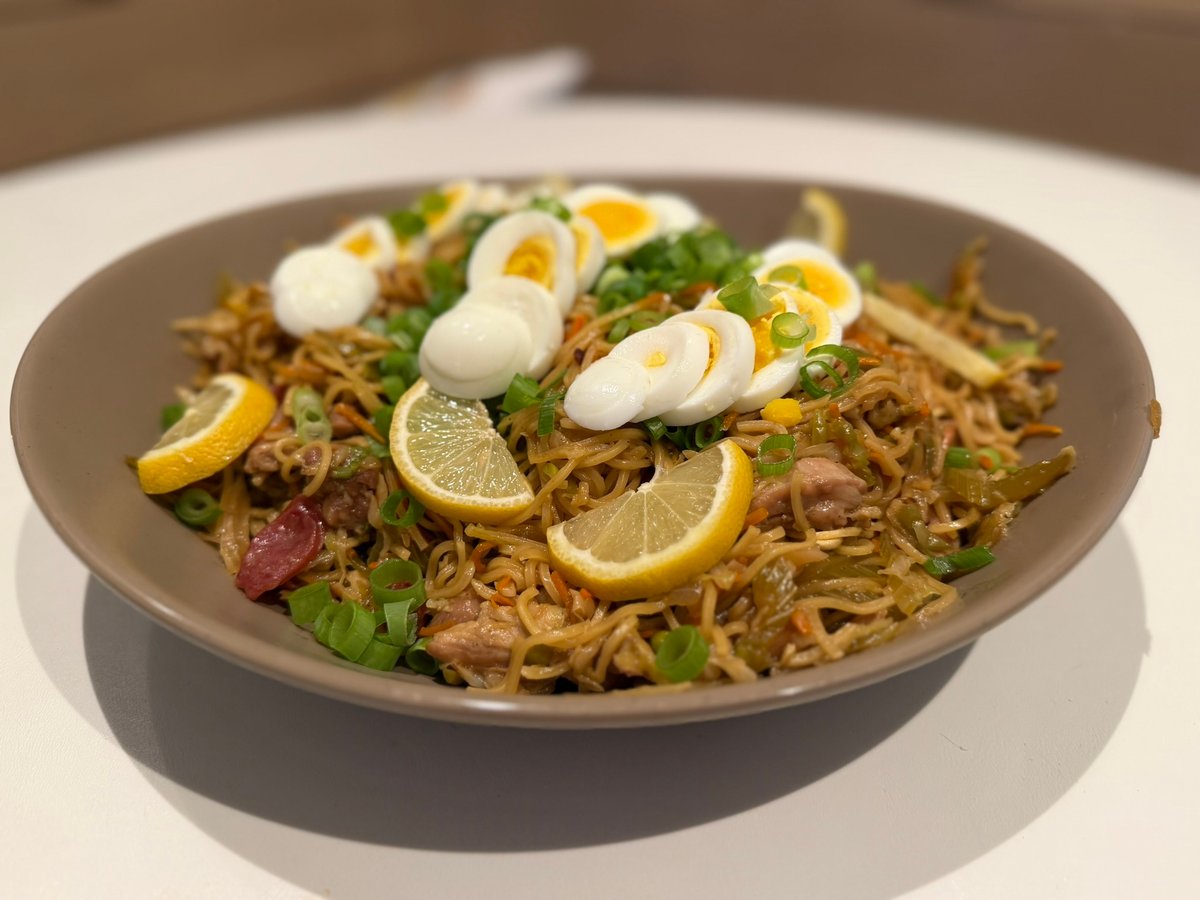
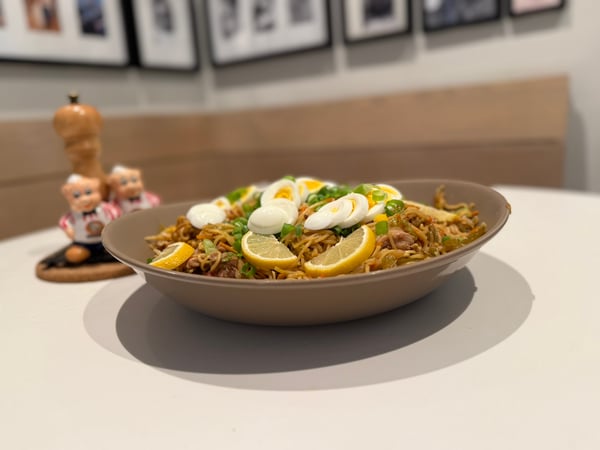
It’s typically garnished with chopped scallions, citrus wedges, and sliced hard-boiled eggs.
Pancit Palabok
Loosely translated, palabok refers to the sauce—and that’s what defines this dish. Traditionally, it features a rich, almost bisque-like sauce made from ground shrimp shells and heads, thickened and colored with annatto.
Palabok uses thicker rice noodles and is topped with shrimp, smoked fish (tinapa), hard-boiled egg, and crushed chicharrón. It’s a more composed, celebratory dish—something you’re likely to see at special occasions.
A close relative, pancit Malabon, leans even further into seafood, often including squid, mussels, and crab fat.
Pancit Bihon
Pancit bihon is built on thin rice stick noodles—the same type often used in Vietnamese spring rolls. They cook quickly and absorb flavor easily, making them ideal for fast, high-heat stir-fries.
Typically prepared with chicken, pork, or shrimp, the noodles are tossed with garlic, onions, and vegetables like cabbage, carrots, and green beans or snow peas. The seasoning is simple—soy sauce and broth—creating a deeply savory, umami-driven dish.
A squeeze of calamansi, a small citrus fruit native to the Philippines, adds brightness and balance.
Below is a recipe for pancit canton—one of the most accessible versions and a great entry point if you’re cooking Filipino food at home.
For the sausage, I like to use Chinese-style sausage (lap cheong), a slightly sweet, cured pork sausage seasoned with soy and rose wine. It caramelizes nicely when sautéed and adds depth to the dish.
Canton noodles are widely available in Asian markets, often labeled as “pancit canton flour sticks.”
If you try this recipe, make it your own. With so many variations and ingredients, pancit is less about strict rules and more about adaptability—one of those dishes that evolves with the cook.
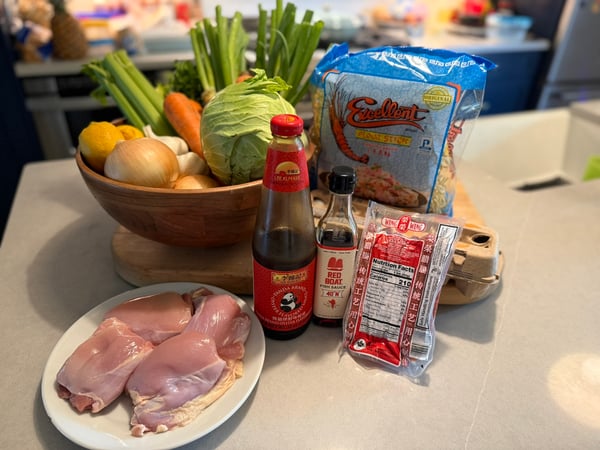
Pancit Canton
Yields: 6 - 8 portions
Prep time: 45 minutes
Cook time: 30 minutes
Total time: 1 hour, 15 minutes
2 oz. neutral oil
12 oz. chicken thighs, cut into bite sized pieces
4o z. Chinese sausage, cut thinly on the bias
1 medium sized Spanish onion, small dice
1 bunch green onions, sliced thin (keep separate the green tops and the white bottoms)
6 cloves garlic, peeled and sliced thin
2 ribs celery, sliced thin on the bias
1 carrot, medium sized, grated or julienne
1/2 head of green cabbage, sliced thin
3 oz. sugar snap peas, cut roughly on the bias
Soy sauce 2 oz.
Oyster sauce 2 oz.
Fish sauce 1 oz.
1/2 lemon juiced
1.5 cups chicken stock
1 pound Pancit Canton Flour Stick dried noodles
1 lemon, cut in half lengthwise and cut into ½” half-moons
3 hard boiled eggs, sliced thinly
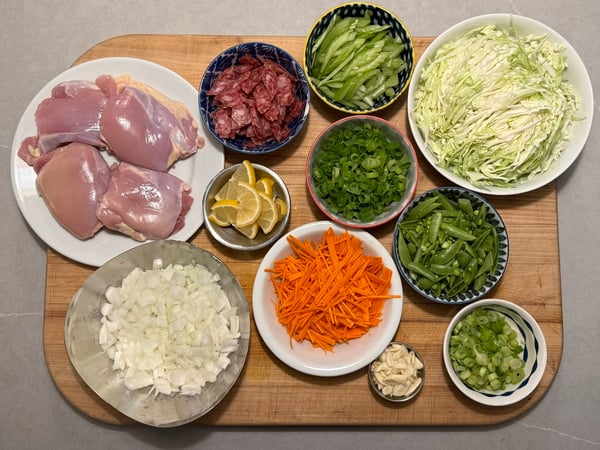
1. Heat oil in a large shallow braiser.
2. Season the chicken thighs with salt and sear in the braiser for about 3 minutes.
3. Add the Chinese sausage and continue to cook the chicken with the sausage until the sausage becomes slightly caramelized, about 3 minutes.
4. Remove the chicken and the sausage from the pan and set aside and reserve the oil in the braiser.
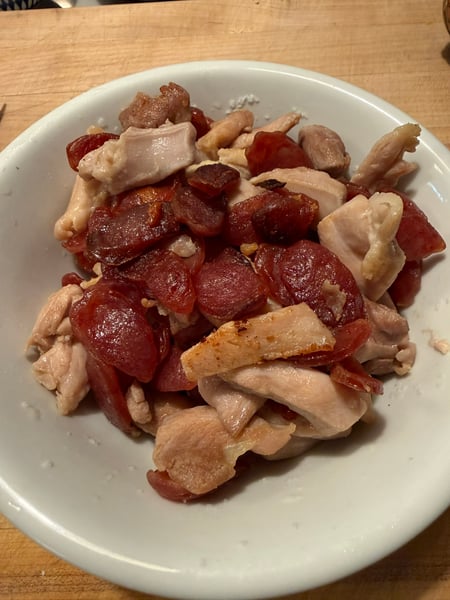
5. In the same pan, add the onions and begin to sweat on a medium heat until the onions become translucent.
6. Add half of the green onions and the garlic. Continue to cook for about 1 minute.
7. Add celery, carrots, cabbage and snap peas. Cook on medium heat for about 3 minutes or until the cabbage softens slightly. Season with a pinch or two of salt.
8. Return the chicken and sausage back to the pan.
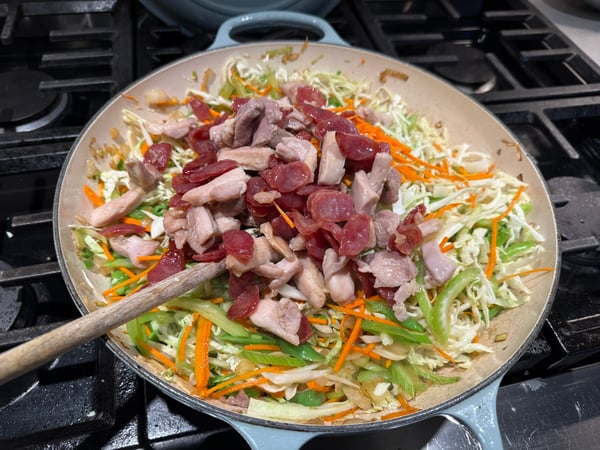
9. Add the soy sauce, oyster sauce, fish sauce and half of a lemon juiced to the braiser.
10. Bring the liquids to a simmer, then add the dried pancit canton noodles.
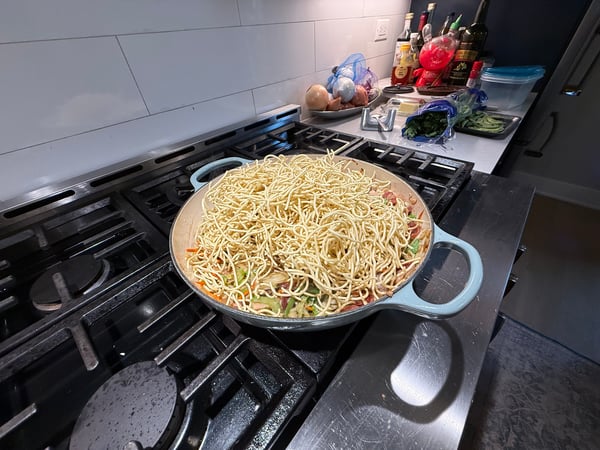
11. Cover the pot with a heavy lid immediately and turn the heat to medium/low flame. Let the noodles steam for about 6-7 minutes. Remove the lid, gently stir the noodles, vegetables, and broth together so that they are mixed thoroughly. Return the lid and let steam for another 3-4 minutes or until the noodles have completely softened.
12. Transfer the pancit to a platter. Garnish with the remaining scallions, sliced hard boiled egg and lemon slices.
When I get back from this trip, I’ll be teaching a hands-on Filipino Feast on Saturday, June 27. We’ll be making:
-
Lumpia Shanghai (Pork and Cabbage Spring Rolls) with Black Pepper Vinegar Sauce
-
Pancit Bihon (Noodle Stir Fry with Shrimp and Vegetables)
-
Chicken Adobo with Steamed Rice
-
Cassava Cake with Citrus-Caramel Sauce
I’m excited to bring back what I learn in the Phillipines and share it in the kitchen with you.