I’ve never been a picky eater, not really, not ever. Food, to me, has always been an invitation rather than a challenge. But if you’ve ever sat across from someone who inspects every bite, negotiates every texture, or declines anything unfamiliar, you know eating is not the same experience for everyone.
A “picky eater” is often defined by what they don’t eat: limited variety, hesitation around new foods, strong reactions to certain textures or tastes. But that definition feels incomplete. Because behind every “no, thank you” is a story, a habit, a comfort zone that didn’t appear out of nowhere.
In my case, I trace my openness to food straight back to my childhood kitchen.
My mom set the tone early: fresh, homemade, and full of flavor. Most days, I went home for lunch. Dinner was expected, familiar, and somehow still varied. There wasn’t a strict weekly menu, but certain meals anchored my memory: meatloaf with a ketchup-y glaze served on an oval pewter platter, tuna salad and kugel (my favorite), and homemade pizza on Sundays. I also remember peanut butter sandwiches. Our peanut butter came from the Home Economist, where I watched peanuts turn into something spreadable right before my eyes.
There were few consistent expectations, that stick with me today about not wasting food. You finished the first half of your sandwich before reaching for the second. Crust stayed on. (Maybe that’s why I eat it first now.) And dessert? Always a possibility, but never a guarantee—though more often than not, it meant a homemade cookie.
Eating wasn’t a battleground. It was just… enjoyable. Not everyone at the table had the same relationship with food, though. My brother was more selective, and my mom adapted. “We’re having this,” she’d say, “but your brother is having that.”
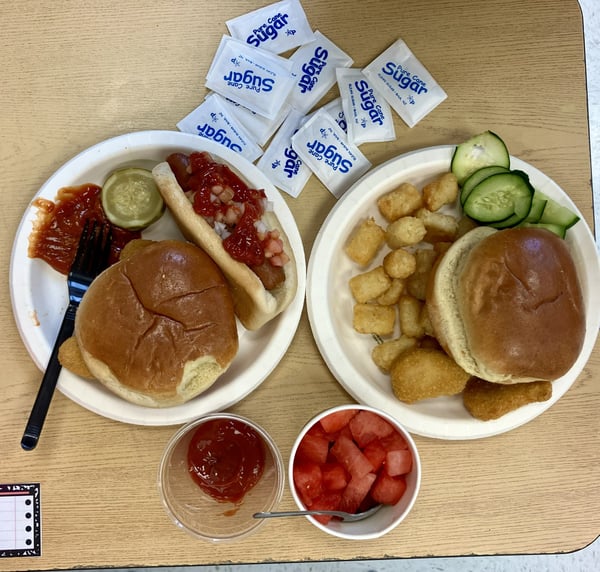
As a teacher, I am around kids all the time and if I choose, can observe their eating. What do they gravitate to and what do they avoid? I believe that broadening their repertoire of pleasurable foods is just one the benefits of getting kids in the kitchen.
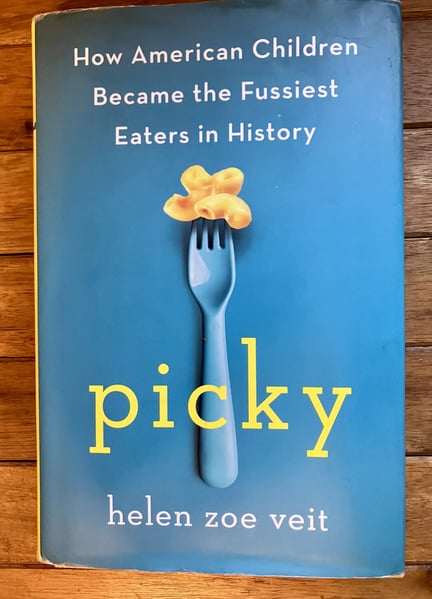
I recently came upon the topic of picky eating from a talk by Helen Zoe Veit, author of Picky: How American Children Became the Fussiest Eaters in History. The book was a fascinating exploration of how and why children today, especially in America, are such selective eaters.
While I am not a parent and the book is not a parenting book, it offered me the following ideas to think about regarding kids and eating and actions to promote a growing palate.
I encourage you to see how they resonate with you.
Adults need to:
- Feel confident about the food they offer to children. They should set expectations and lead by example.
- Encourage children to try new foods.
- Emphasize that healthy eating is a smart investment and authentically enjoyable.
- Talk openly and enthusiastically about all kinds of food. Children can expand their palates beyond what society might lead us to believe.
- Let kids be hungry at mealtimes by cutting back on constant snacking.
- Not provide special food, “aka kids’ food."
To explore the book’s ideas even more, I asked my students (5th graders) the following questions:
- What is your favorite main dish?
- What is something you are curious to try?
- What is a food you don’t like? What could be done to get you to try it?
As expected, responses varied widely and resulted in a few surprises. Favorites included chicken tenders, chicken nuggets, pizza, sushi and mac and cheese. Foods that students listed they were willing to try included pineapple, stuffing, lobster, and caviar. The responses may be indicative of the random context in which students were asked. Most students couldn’t think how a food they disliked could be prepared in a way that would make it desirable.
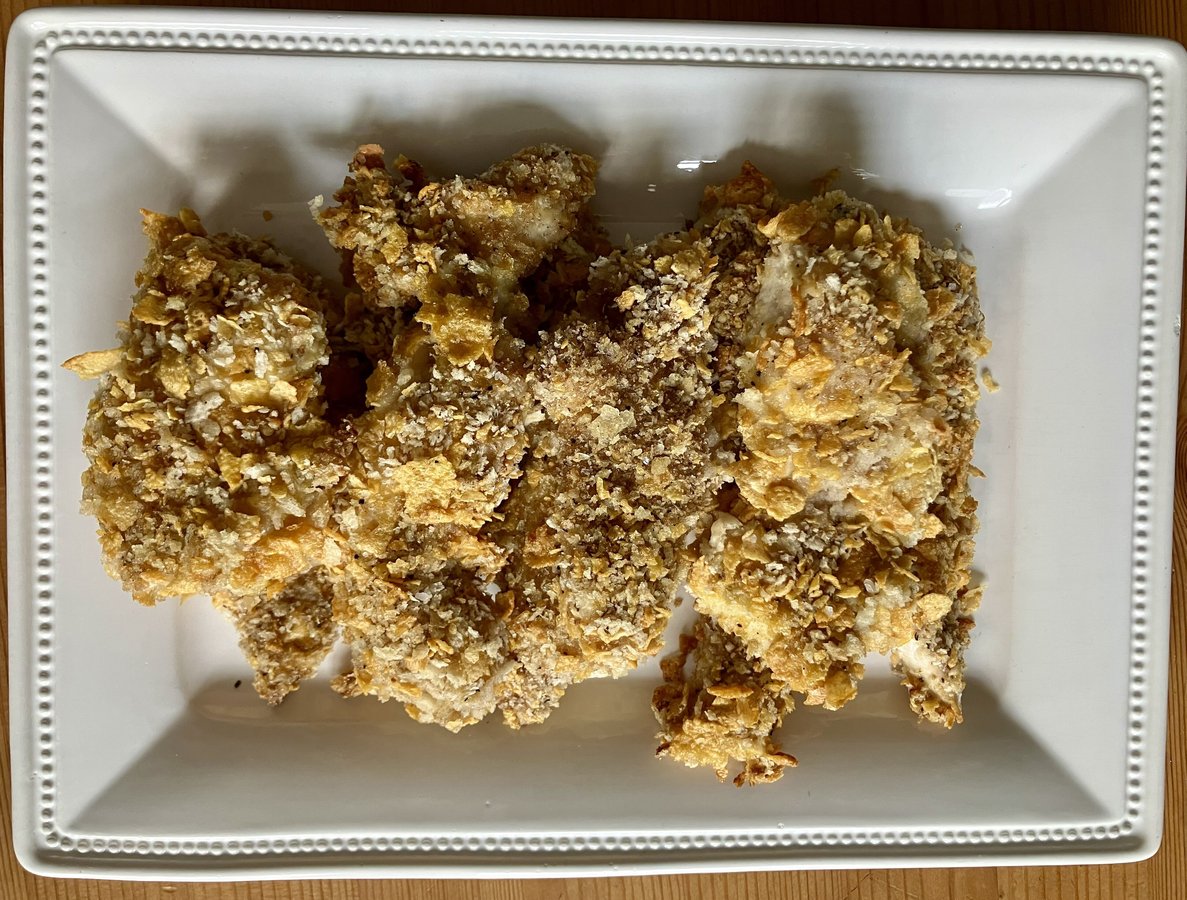
While the book argues against the trend of “kid-food” I imagine it is a difficult balancing act. At a recent dinner with families, a parent said, “We are just trying to get calories in.” So how about a hybrid recipe for homemade chicken tenders that are baked not fried and made with real chicken. Get kids in on the action with tasks such as crushing the cornflakes, shaking the bag of coating, and beating the eggs.
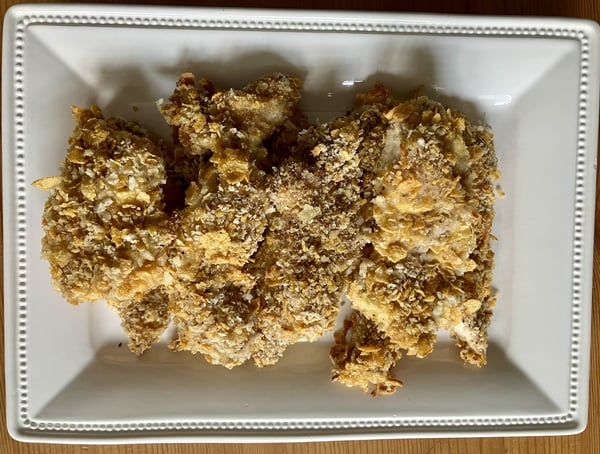
Crunchy, Oven-Baked Chicken Tenders
Yield: 4-6 servings
Active Time: 25 minutes
Cook time: 15 minutes
Total time: 40 minutes
1 cup corn flakes
1 cup plain breadcrumbs
2 Tablespoons brown sugar
1 teaspoon salt
1/2 teaspoon black pepper
1/2 teaspoon ground allspice
3 Tablespoons vegetable oil (optional)
1 1/2 pounds chicken breast tenders, cut into 2-inch pieces
1/3 cup all-purpose flour
2 eggs
1. Preheat the oven to 375 degrees F. Line baking sheet with parchment, if desired.
2. Crush the cereal with hands or rolling pin in a Ziploc bag.
3. Add in breadcrumbs, sugar, salt, pepper, and allspice.
5. Transfer mixture to a shallow dish.
6. Drizzle vegetable oil evenly over the breading (if using). Toss and turn to mix the oil all through the mixture.
7. In a separate shallow dish, beat eggs.
8. In another shallow dish, measure and put flour.
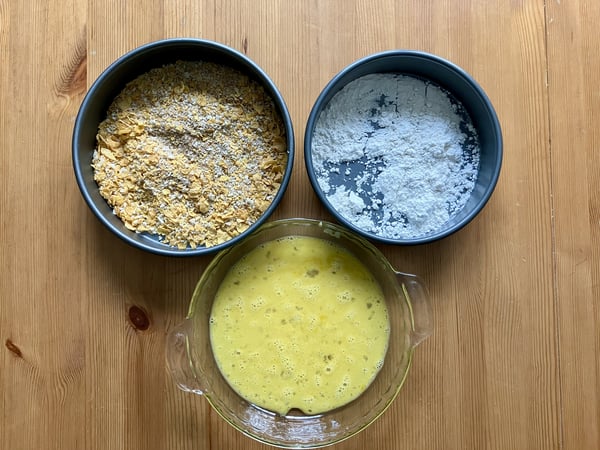
9. Season the chicken.
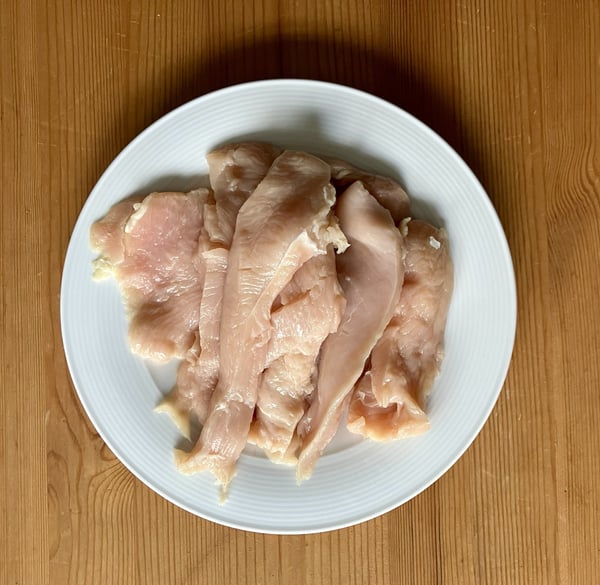
10. Working with a piece of chicken at a time: coat in flour, dip in egg, roll in cornflake mixture.
11. Arrange the chicken on a nonstick baking sheet. Spray with cooking spray for added crispness.
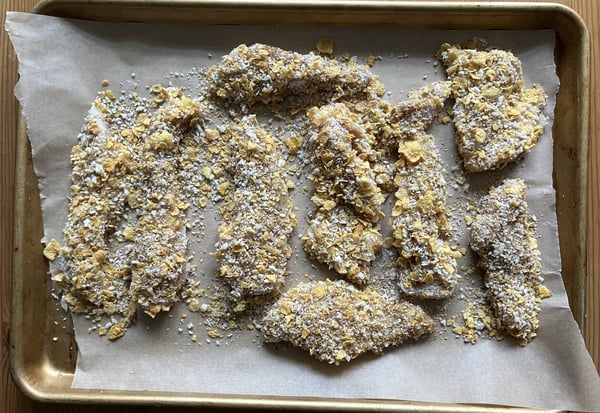
12. Cook 15 minutes or until crisp and brown all over.
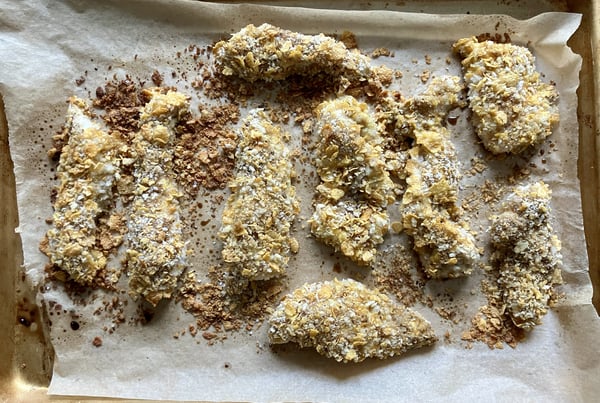
The tenders are delicious as is, but also go well with a BBQ dipping sauce or honey mustard sauce. Consider making one while the tenders bake.
Before the summer calendar fills up, consider the benefits of having a child in your life experience the joy of cooking, to broaden their diet, develop life skills, and foster school success. The Chopping Block has great camps just for young people this summer, like Baking Around the World, Baking and Pastry Techniques, and Mastering the Basics.