
As a self-taught home cook, I look for versatility in ingredients and have developed a bit of a kitchen philosophy: make it work with what you’ve got. While I recently bought chili crisp because it “seemed” important to Deconstructed Dumplings, and I knew it would last a while, I regularly google substitutions when a recipe calls for something I don’t have or don’t feel like buying. It usually works pretty well, and without the real thing I don’t actually know what my dish might be lacking. That chili crisp, for the record, earned its spot on my shelf.
On the other hand, the epitome of versatility is the humble carrot, which I am noticing in so many recipes. Sweet or savory, raw or roasted, starring role or supporting act, the carrot fits everywhere. When you stop to notice, this unassuming root can do a bunch.
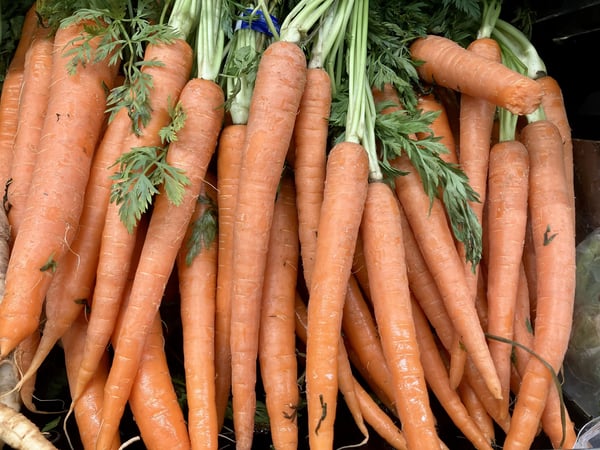
10 Carats about Carrots
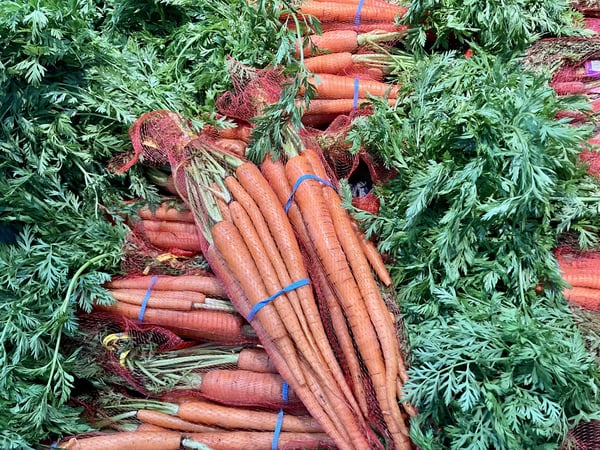
They are seasonal. Carrots are very seasonal yet can be found year-round. They can be planted in the early spring for a late spring and planted in last summer for an early fall harvest.
They are moderately perishable. Carrots last about 3–4 weeks in the fridge if stored properly, or up to 2–3 months if kept in high-humidity conditions. Removing the tops makes them last even longer.
They are beautiful. While orange carrots are the most common, they were originally purple, yellow and white. Dutch farmers enhanced carrots’ color and sweetness to cultivate the orange carrot we know today. Carrots also come in a variety of shapes and sizes. These include Chantenay, Danvers, Imperator, Nantes, and mini.
They are healthy. Orange carrots are highest in beta-carotene, which supports eye health. The other colors provide ample amounts of fiber and antioxidants.
They are accessible. Carrots are the second most popular vegetable in the world. In a pureed form they are often one of a baby’s first foods. Infants like carrots’ natural sweetness.
They produce no waste. While most often people eat the root, the carrot top is edible. If carrots are washed and scrubbed, the peel is also edible. It is often removed for aesthetic reasons.
They can be processed creatively. Depending on the recipe, personal preference, and the desired final outcome, carrot cuts go beyond coins and sticks. There are ribbons, obliques, planks, juliennes, and grating and shredding.
They have so many cooking possibilities. Carrots can be roasted, pureed, mashed, steamed, grilled, sautéed, baked or fried into chips, and enjoyed raw in a variety of ways. Carrot juice can even be used as a natural food coloring.
They have a place in sweet and savory dishes. The high natural sugar content, earthy flavor undertones and their variation in texture based on cooking method make carrots a good partner to many foods. Sweets that use carrots include carrot cake (including every other sweet with a carrot cake variation) and carrot cookies. Savory dishes include carrot fritters, glazed carrots, and carrot raisin salad.
They have a place in many cuisines. Carrots are also found in many cuisines. Carrots fit in Asian cuisine in recipes for spring rolls and stir fries. Indian dishes include a sweet carrot pudding Gajar Ka Halwa and Gajar Matar. Pickled carrots are found as a condiment to tacos, tortas, and tostados.
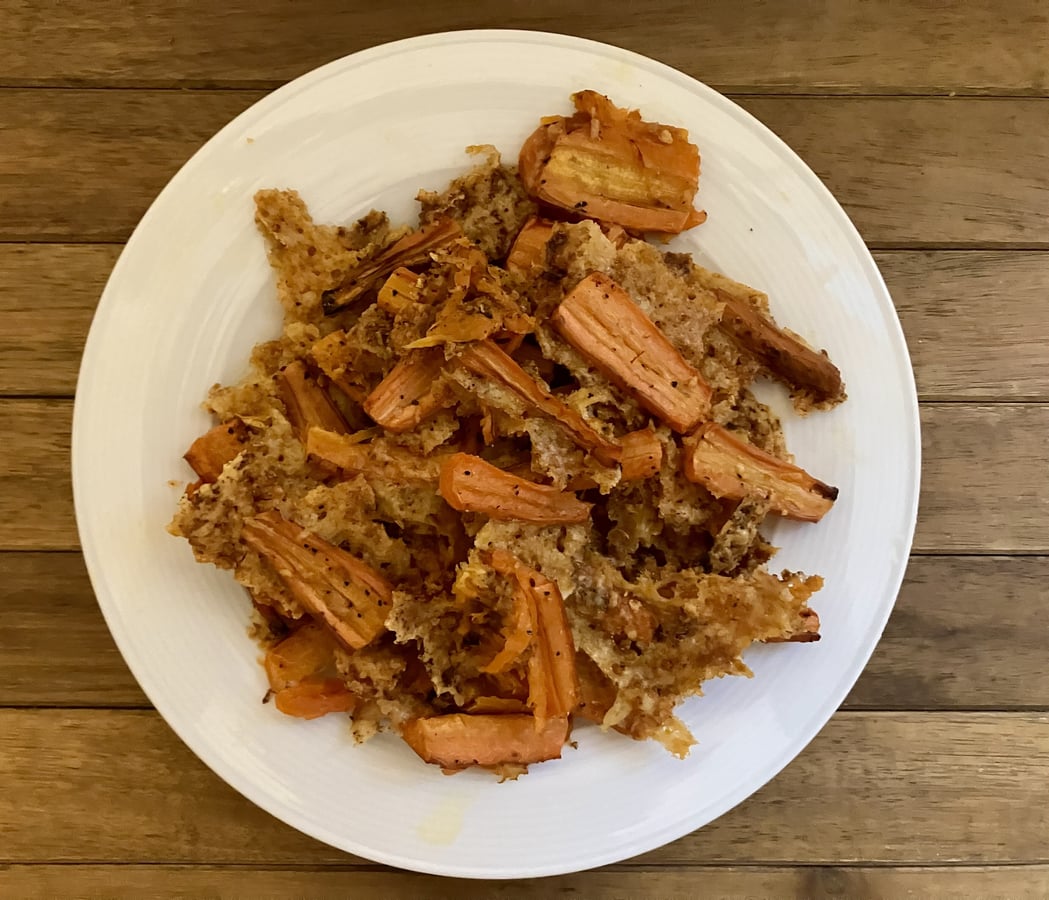
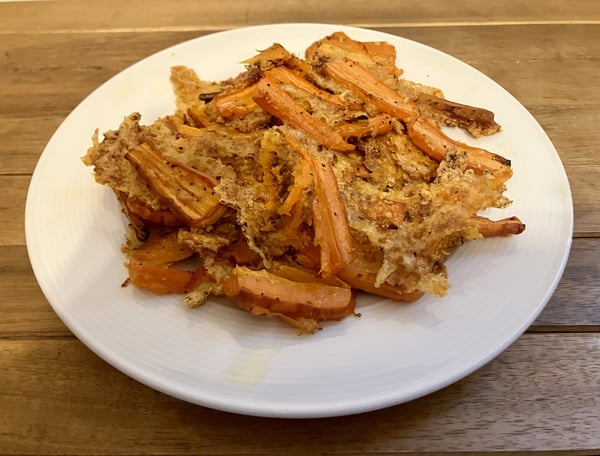
My recent cooking with carrots produced some winners that demonstrated them to be a great partner to so many flavors. Hits were Smashed Parmesan Carrots, Carrot Cookies with Lemon Buttercream Frosting, and Roasted Miso Mushroom and Carrots.
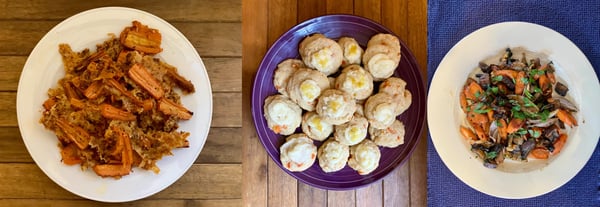
Smashed Parmesan Carrots
Yield: 4-6 servings
Active Time: 25 minutes
Cook time: 45 minutes
Total time: 1 hour 10 minutes
1 lb medium carrots, peeled
1 tablespoon extra-virgin olive oil
Kosher salt and freshly ground black pepper
3 oz -Parmesan cheese, finely shredded
 1 1/2 teaspoon garlic powder
1/2 teaspoon smoked paprika
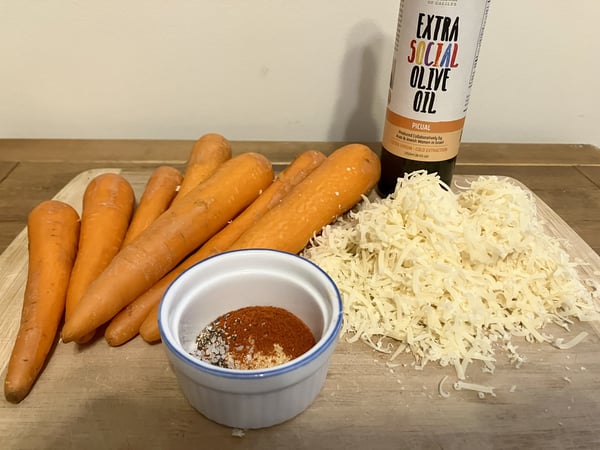
1. Position an oven rack in the middle of the oven and preheat to 425 degrees F. Line a baking sheet with a silicone baking mat or parchment.
2. Cut the carrots crosswise into 1 1/2-inch lengths. Work to keep carrots no thicker than an inch in diameter.
3. Toss the carrots on the prepared baking sheet with the olive oil, 1/2 teaspoon salt and several grinds of pepper.
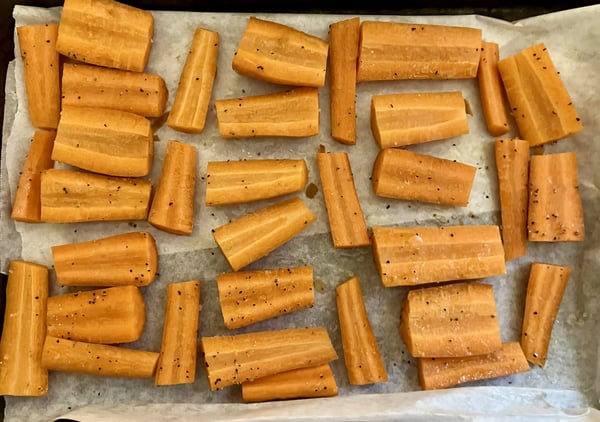
4. Roast until a paring knife can slide easily through the thickest carrot, 30 to 40 minutes. Transfer the carrots to a plate.
5. While carrots roast, mix the Parmesan, garlic powder, paprika, 1/4 teaspoon salt and several grinds of pepper in a small bowl.
6. With carrots on the plate, sprinkle the mixture evenly over baking sheet/mat.
7. Arrange the carrots on top, leaving space between each. Using the bottom of a glass, gently press each carrot to smash into the cheese.
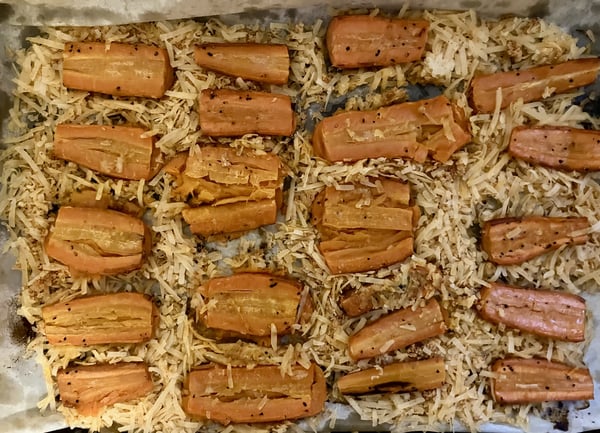
8. Bake until the cheese is dark golden brown and crisp, about 12 minutes.
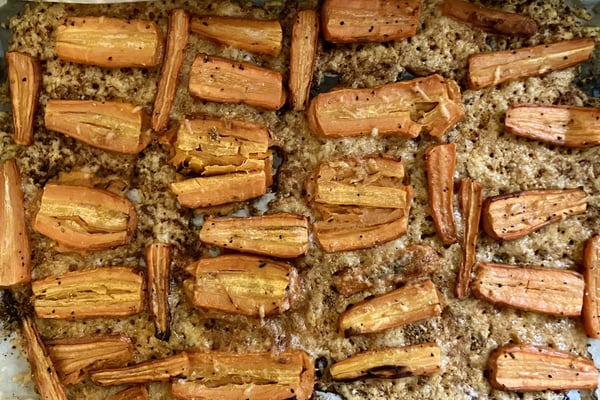
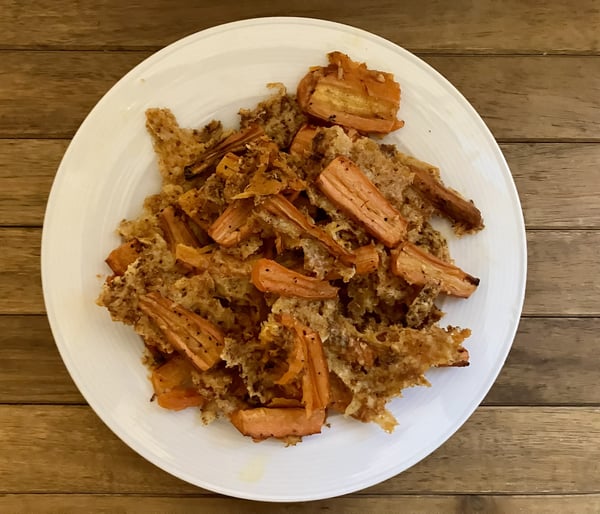
9. Let cool on the baking sheet for 5 minutes, then use a thin metal spatula to lift the carrots and crispy Parmesan from the pan, breaking it apart as needed.
10. Transfer to a serving platter and sprinkle with any crispy cheese bits left on the baking sheet.
11. Serve immediately.
Inspired to get into the carrot action? You see how to roast carrots at our Lunch and Learn demonstration on Friday, April 24 at 12pm, or roast them yourself at Crave Worthy Vegetables on Monday, April 27 at 6pm. For something more fundamental, how about learning how to cut carrots safely and efficiently during Knife Skills? There is always something great happening in the kitchen at The Chopping Block.
