
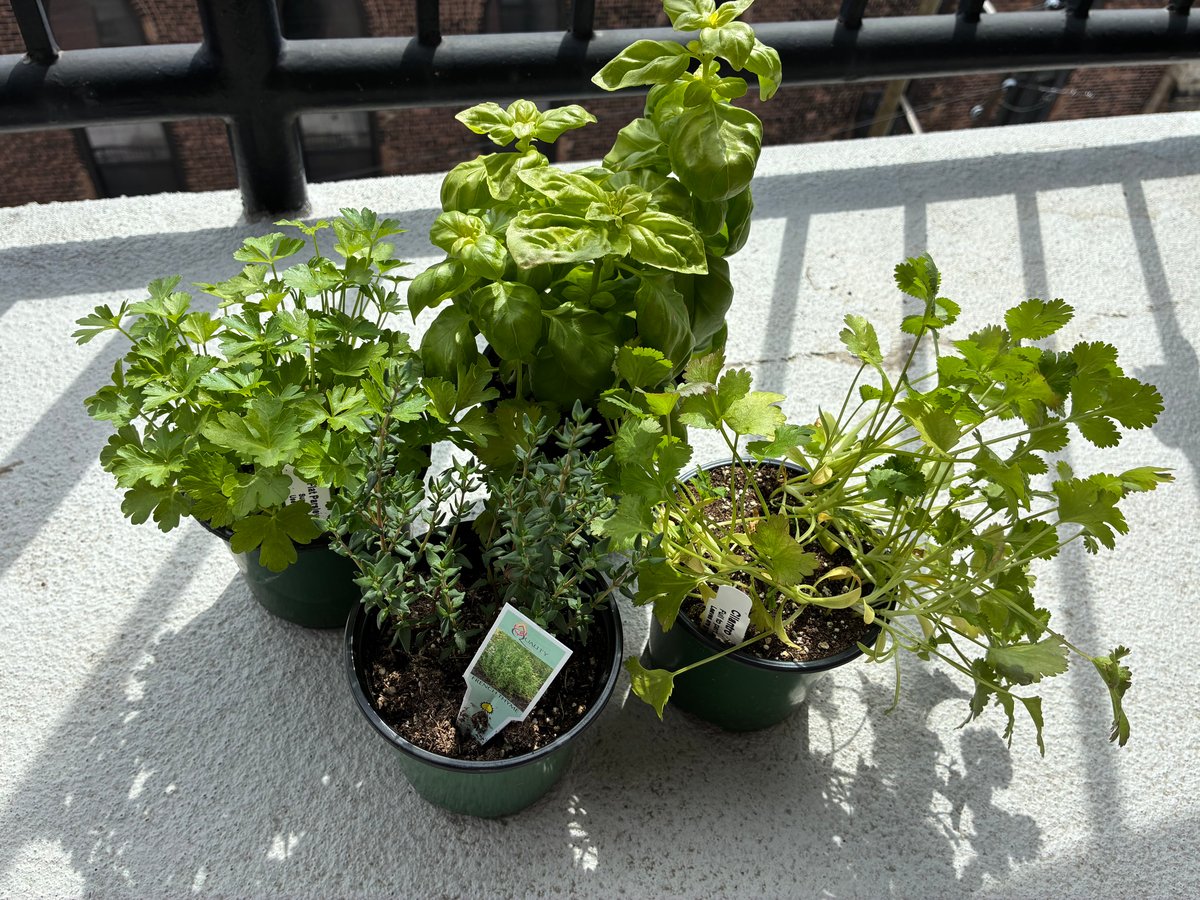
Mother’s Day has passed, which means the Chicago growing season has officially begun! This weekend I took a field trip to a local nursery and brought home my first haul of plants since I moved to the city last summer. I didn’t realize how much I truly missed gardening, and even though I have to alter my strategy a bit by growing everything in containers now, I’m so excited to get back in the dirt.
If you’re a home cook interested in expanding your culinary skills (which is hopefully what brought you to our blog in the first place), starting your own herb garden is a great way to do that. It opens so many more avenues to get creative with your cooking, plus it gives you a glimpse into farm to table cooking, allowing you the freedom to know exactly what’s landing on your plate. If you find that you enjoy gardening as much as I do, this might be your segue into growing more of your own produce.
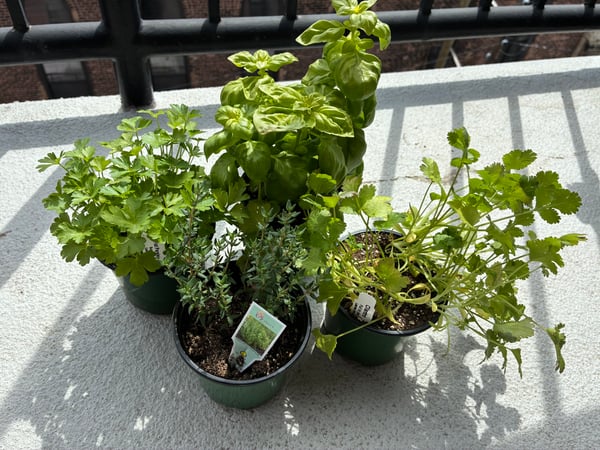
Regardless if you live in a house or a high-rise, growing your own herbs is an easy, cost effective way to broaden your culinary horizons. So I’m going to share with you four common herbs I plan to grow this year, along with some tips on how to properly care for them.
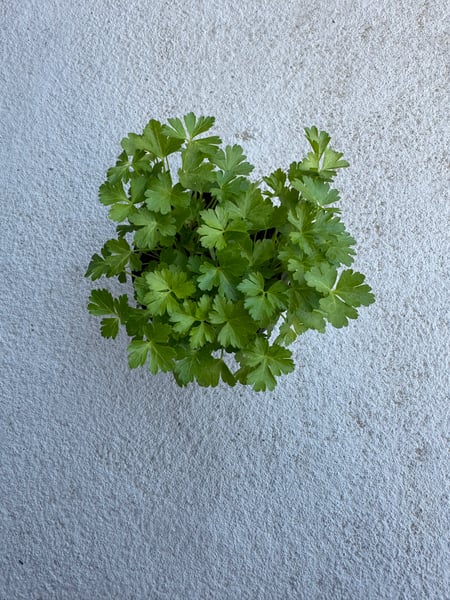
Parsley
Most of the chefs here at The Chopping Block would agree that dried parsley is probably the most useless herb out there. It’s tasteless, smells kind of weird, and adds absolutely no flavor to your food. If you have any in your cabinet, do yourself a favor and throw it out. You won’t miss it, I promise.
Fresh parsley, though? Absolutely divine. Whether you use curly or Italian flat-leaf, the flavor is herbaceous and fragrant and adds some nice brightness to your food. Though its most common use is garnishing, it’s also the foundation of several herb based condiments, like chimichurri and gremolata. You can also use it to flavor compound butter, which is simply, as one of our chefs David likes to call it, “butter with stuff in it.”
Parsley is incredibly easy to grow and doesn’t require much maintenance outside of regular watering, though you can prune it to yield a larger harvest. It thrives in cool temperatures, and can handle full sun in early spring and late fall. As temperatures climb in the summer, it’s best to move it inside if you can, as the high temperatures will cause it to bolt, or flower and go to seed. This isn’t a bad thing, but the plant will start focusing its energy on flower and seed production and stop producing the leaves we eat. You can delay this process by pinching off any flower buds that start to form, but once it happens there’s no stopping it. Let it go to seed, and then you can harvest those seeds for future planting!
Cilantro
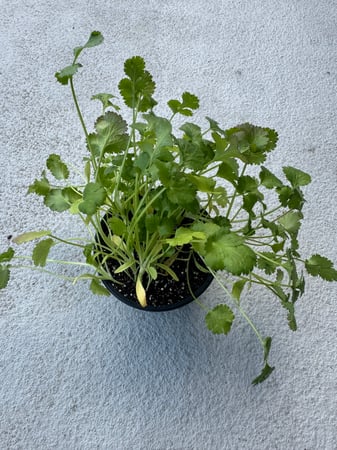
Delicious, beautiful cilantro. If you’re one of the unfortunate souls cursed with the ‘tastes like soap’ gene, you’re not going to like this part of the post. I’m sorry. This is a cilantro love post, and I won’t tolerate any slander.
Cilantro is by far my favorite herb to cook with, if that’s not obvious yet. It’s used in so many different cuisines, yet has such a distinct flavor. It’s bright, it’s zesty, and in my opinion it elevates every dish that uses it. And, like its cousin parsley, it’s very easy to grow.
Cilantro basically calls for the same conditions as parsley, though partial shade can be more preferable in warmer climates or areas that get a lot of afternoon sun. Like parsley, high temperatures will cause it to bolt, and once this happens the leaves become incredibly bitter. You can harvest these seeds for future planting, or you can add them to your spice cabinet!
Coriander, which is most commonly used in Asian, Middle Eastern, and African cuisine, is literally just cilantro seeds, and is a great spice to have on hand if you’re looking to branch into more international cooking.
Basil
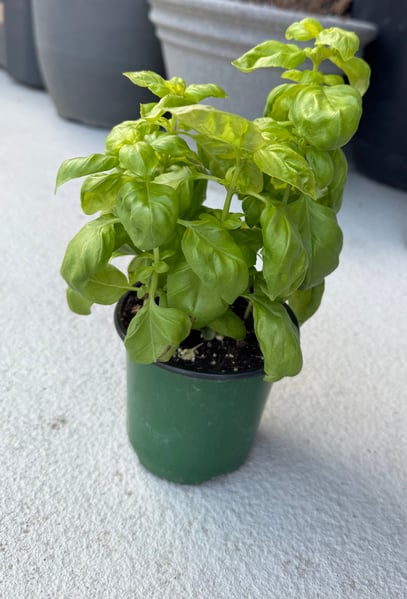
This is an obvious choice for any home gardener. Who doesn’t love basil? It smells as incredible as it tastes, and is a foundational herb in Mediterranean and southeast Asian cuisine.
Basil, while still relatively easy to grow, is more demanding than cilantro and parsley. It thrives in heat and full sun, and will die in temperatures below 45°F. Since it prefers hotter temperatures, it also requires more frequent watering, maybe 2-3 times a week depending on weather conditions. Basil is good at telling you if it’s thirsty: if the leaves start to droop or wilt, it needs water.
Along with additional watering, another good practice for caring for basil is pruning. Unlike parsley, which can thrive just fine without pruning, basil pretty much requires it. Pruning greatly extends the life of the plant and keeps it from becoming “leggy”, or growing long stems without many leaves. If you’re looking for a bountiful basil harvest, I recommend pruning your basil every two to three weeks, cutting back about a third of the plant each time. You want to focus on trimming the topmost leaves, and cut just above a leaf node (where two leaves grow on either side of the stem). This will encourage the stem to form new branches.
Like all plants, basil will eventually flower and go to seed, so you want to keep an eye out for any buds that start to form and pinch them off as soon as you can.
Thyme
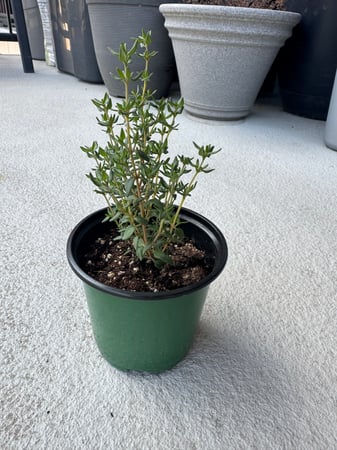
Thyme is one of those herbs I don’t use quite as frequently as the others, but I miss it every time I don’t have any. Out of all the herbs in this list, it is by far the hardiest and requires the least amount of maintenance. It’s also a perennial, which means it will come back every year if it’s well protected during the winter, with a lifespan of 4-7 years depending on the variety. With all this in mind, having a thyme plant in your herb garden is kind of a no-brainer.
Since thyme is a perennial, that means it’s incredibly cold hardy, surviving temperatures well below freezing. It also prefers drier soil, so it doesn’t require much watering. In the winter, it’s especially important to make sure the soil is dry to ensure the roots don’t freeze, especially if growing in containers. If you can’t bring your container inside, you need to take extra precautions to ensure the roots don’t freeze, such as moving it to a sheltered location, either against a wall or grouped with other pots. You can also wrap the pot itself with burlap or bubble wrap to provide some insulation. I would also recommend covering the soil and base of the plant with a layer of mulch before the first frost.
If your thyme is growing in the ground, a layer of mulch should be enough to protect it, as long as temperatures don’t drop below -15°F. If this happens, I recommend covering the plant with a frost cover.
If you take all of these precautions to protect your plant, it should survive the winter and resume its growth in the spring!
Okay, so you’ve started your herb garden, and now you have all these fresh herbs at your disposal. Now what?
Now comes the fun part! Having fresh herbs at your disposal gives you the chance to really get creative with your cooking. It’s more than just using them as garnishes. Even if a recipe doesn’t call for a specific herb, there’s nothing stopping you from adding a bit to see how it impacts the flavor. Throw some parsley into your salad for some added freshness. Put some basil on your next Italian sandwich. Add some thyme sprigs into your next batch of soup. Make some herb sauces like chimichurri, gremolata, or chutney, and pair them with your next dish to elevate it. Remember that compound butter I mentioned earlier? Make a batch with some parsley, thyme, rosemary and oregano and top it on your next piece of grilled meat or roasted veggies. Whatever you decide to do with your herbs expands your knowledge and your palette that much more, and that, more than anything, is the type of growth we encourage at The Chopping Block.
Plus, there’s nothing more satisfying than going out to your garden to gather ingredients for your next meal.
If you’re looking for more guidance on how to cook with fresh herbs, check out these previous blog posts:
- Beyond Pesto: Meet My Go-To Herb Sauce
- 10 Things to Make with Too Many Herbs
- A Beginner's Guide to Fresh Herbs and Spices
- Too Many Herbs? Try These Tips
- Drying Herbs and Using Dried Herbs
