
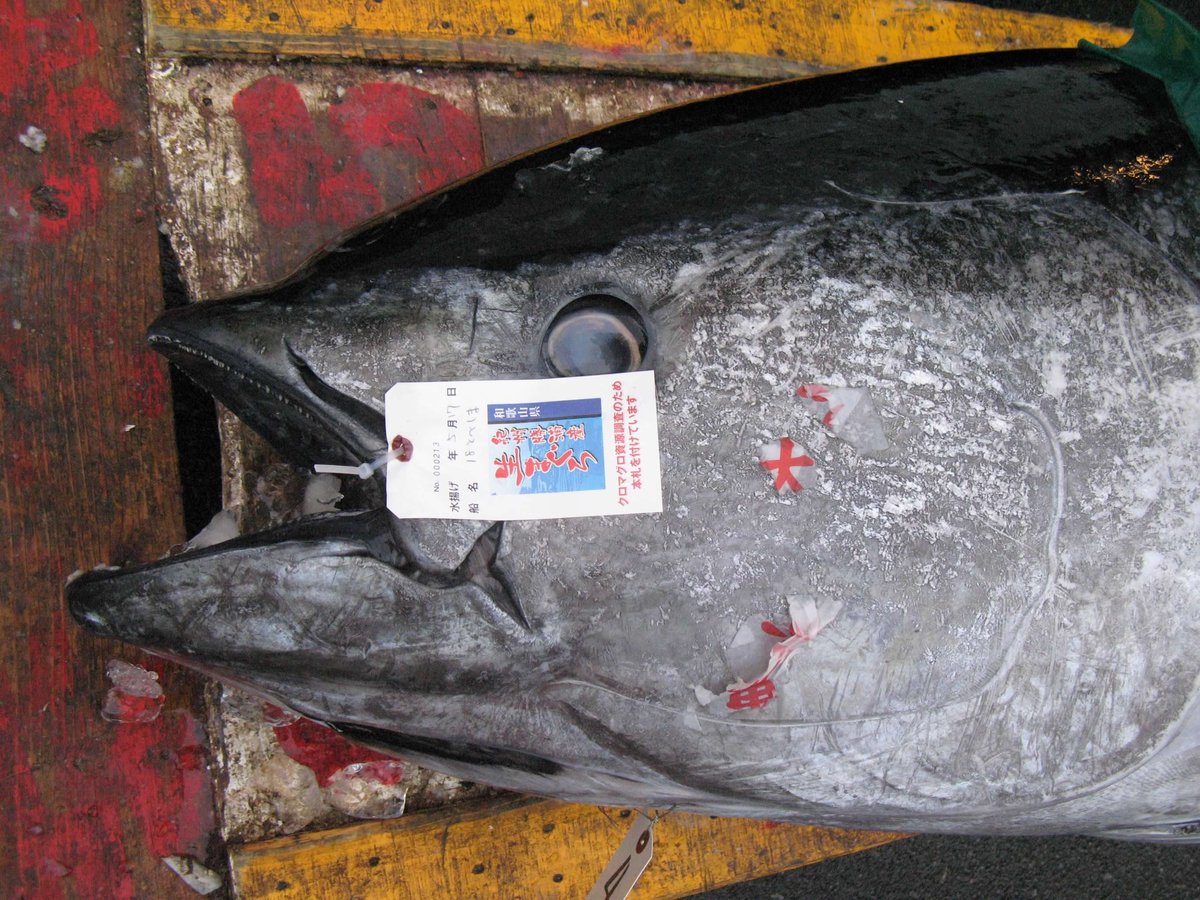
I visited Japan in 2006. Nearly twenty years later, I’m preparing to return to the Land of the Rising Sun at the start of summer with my family—a memorable international trip before my son heads off to college. With that return on the horizon, it feels like the right moment to reflect on one of my most vivid memories of Japan: a day spent at the legendary Tsukiji Fish Market.
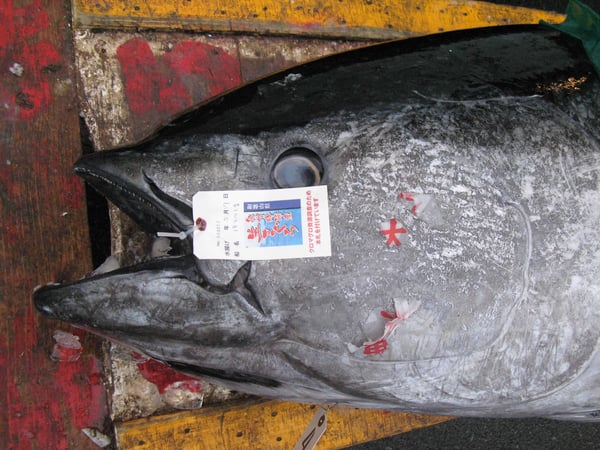
Our goals were simple: soak in the market, witness the famed tuna auction, and eat at the world-renowned Sushi Dai. We knew it would be a long day, but we had no idea how deeply this pilgrimage would shape our understanding of Japan.
Trip to the Market
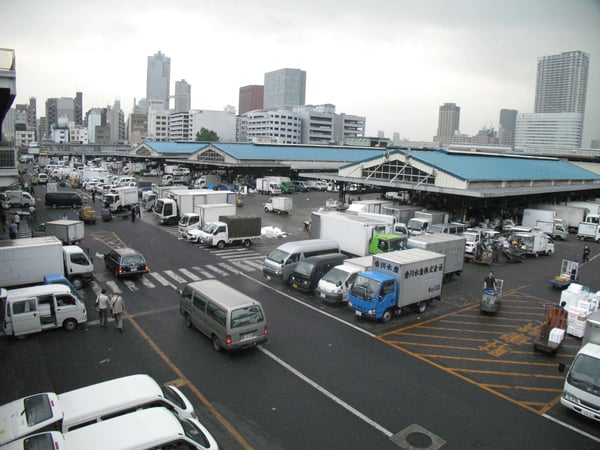
I woke my wife at 3am like a maniac. We were staying in Shinjuku, roughly five miles from the market, and while 3am may have been extreme, I was determined not to miss the tuna auction. We were out the hotel door before 4 and arrived at Tsukiji around 4:30am.
From the cab drop-off, it was a twenty-minute walk to locate the wholesale tuna auction area. The market was eerily quiet. Most retail and wholesale stalls were still closed, though trucks slipped in and out of alleyways, and a few vendors quietly set out their catch of the day.
The Tuna Auction
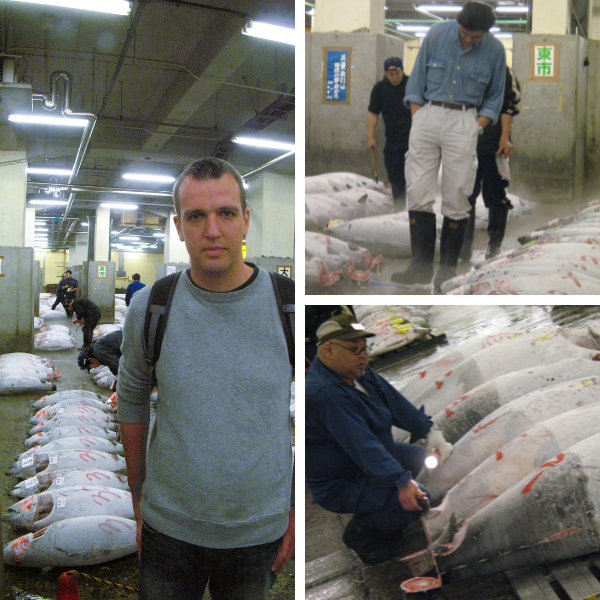
After some wandering—and some broken Japanese—we found the auction inside an airplane-hangar-sized walk-in cooler. Tourists were confined to a cordoned-off area, penned in like cattle. Before us lay rows of frozen tuna “bullets,” a word that perfectly describes their appearance: sleek, silvery, uniform, stripped of fins and tails for efficient shipping, flash-frozen at sea.
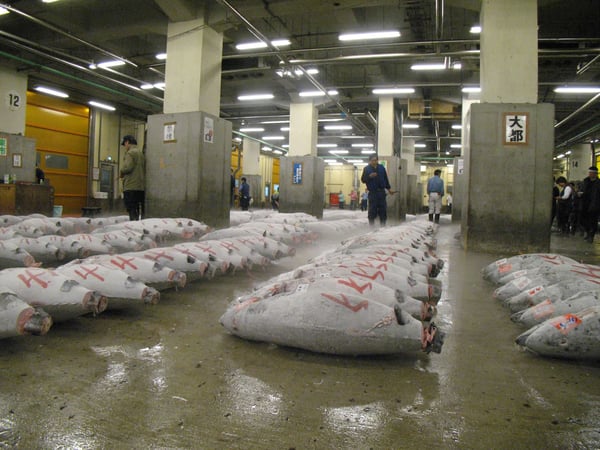
Buyers and sellers in knee-high rubber boots moved methodically through the aisles. This was not the loud, theatrical auction one might expect. There was no auctioneer’s chant or gavel. Instead, it was hushed and deliberate. Buyers squatted, shined flashlights into small incisions at the base of the tail—okiri—to inspect the flesh. Decisions were made through a few nods and subtle hand signals. Fewer words were exchanged.
The Retail Market
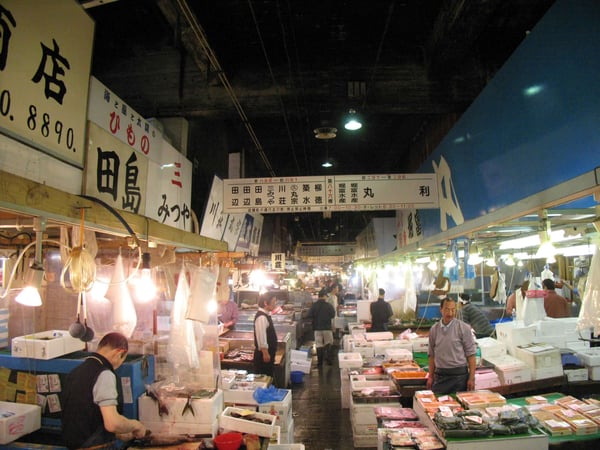
From there, we explored the rest of Tsukiji, now fully awake. Not only awake, it seemed a living organism. The tuna auction served as its heart, sending signals through cobblestone arteries where runners with rickshaw carts and forklifts darted past with purpose. I felt like a 6’4” Yankee pathogen clogging the bloodstream, constantly dodging traffic.
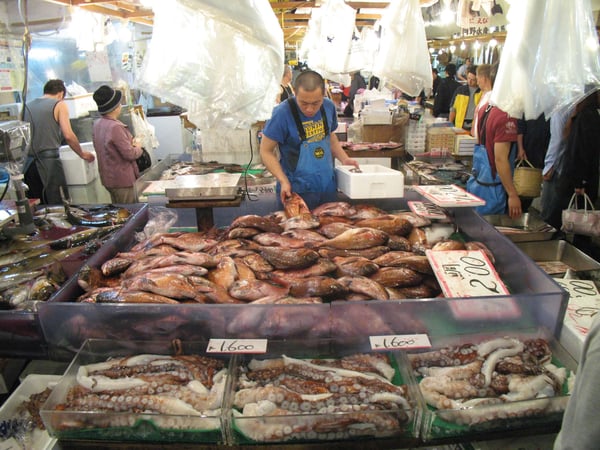
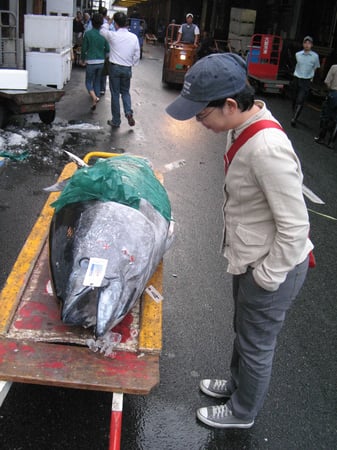
Trying to catalog the market’s offerings would be futile. Familiar seafood sat beside the alien and extraordinary.
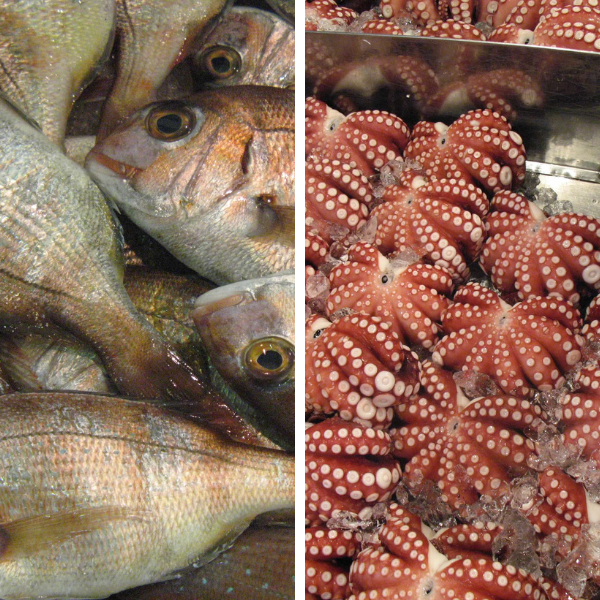
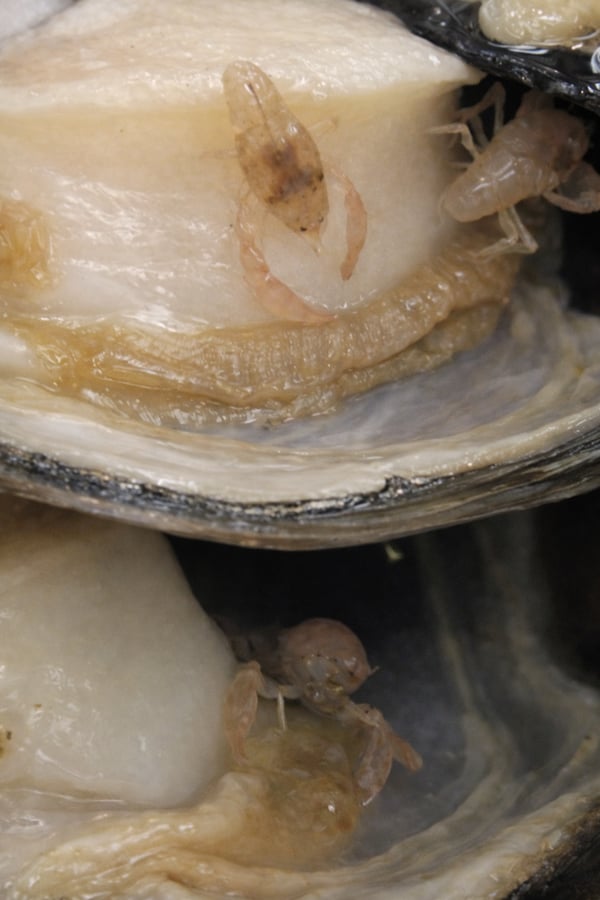
Frozen tuna and swordfish were sliced into saku blocks on band saws. Live abalone wriggled in seawater. Blanched octopus lay in neat rows for takoyaki vendors. Oysters, crab, snapper, sea bream, live sea urchins, and pristine uni packed into cedar boxes filled every stall. Even scallops came with tiny symbiotic crustaceans—nature’s quality control.
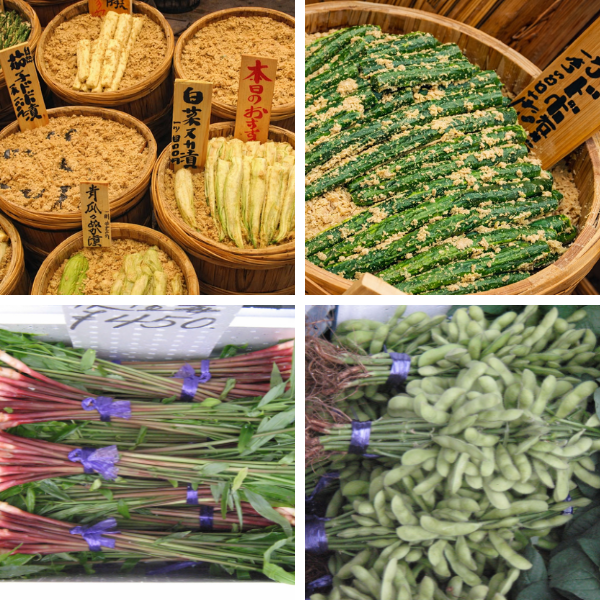
The smell of sea brine anchored everything, always fresh. Layered above were drifting aromas: toasted bonito flakes, soy and sesame from seaweed salads, earthy miso pickles, and bursts of freshness from nearby produce stalls. Despite the chaos, the market was spotless.
Sushi Dai
I first read about Sushi Dai in a Tokyo guidebook. Its proximity to the market and endorsements from chef friends sealed its reputation long before it appeared on television shows like Food Trip with Todd English in 2007.
By 6:15am, hunger and anxiety pushed us toward the restaurant. At first glance, the line looked manageable—only a dozen people. Then we learned the line was split to avoid blocking neighboring businesses. The real wait was triple what we expected.
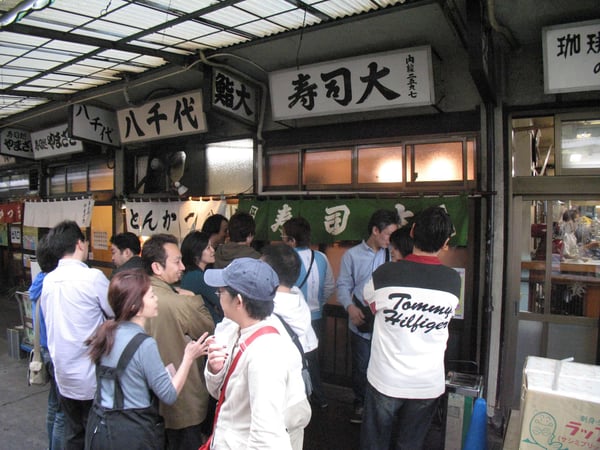
The front of the Sushi Dai line
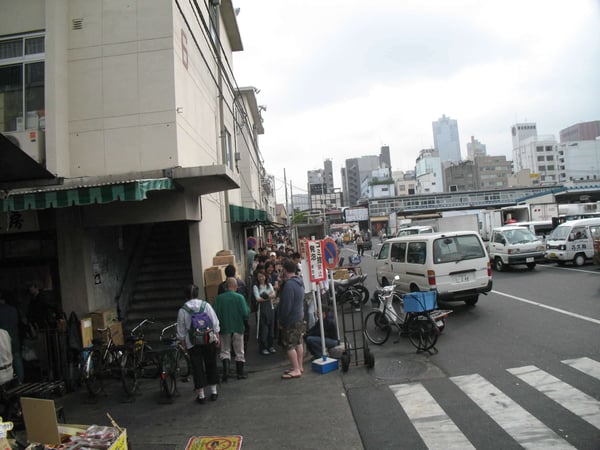
The back of the Sushi Dai line
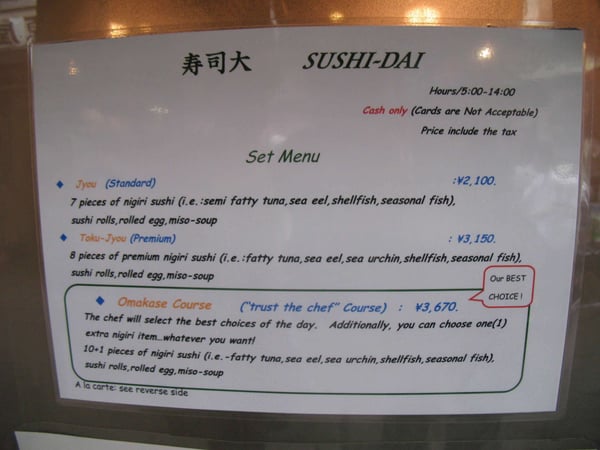
By 7:30am, we reached the front. A menu posted in the window offered three options: Standard, Premium, or “Trust the Chef.” A no-brainer if I do say so myself.
Inside, we were greeted with a thunderous IRASSHAIMASE! – a welcome greeting in most Japanese restaurants. Twelve seats wrapped around the counter, serviced by three sushi chefs. The crowd was a mix of locals, tourists, and a few clearly over-served businessmen from the night before. Hot green tea was a blessing after hours in chilled seafood rooms.
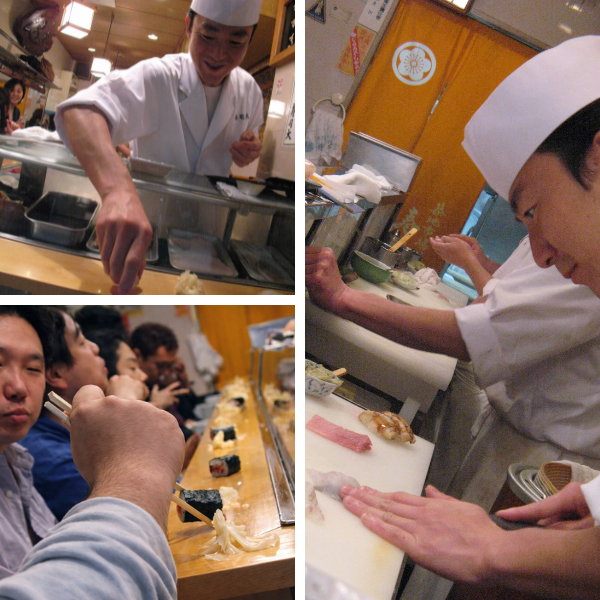
The sushi was unlike anything we had ever experienced. We ate at many respected sushi restaurants in the States, but this was different. The precision, balance, and restraint were revelatory. The rice was cooked perfectly—slightly warm, each grain distinct yet cohesive. Simple ingredients, immaculate technique. No plates—each piece was placed directly on the counter at eye level.
While chopsticks were provided, eating nigiri by hand was encouraged. Another first: eating sushi before 8am. With a few beers the night before and a hollow stomach, I felt briefly queasy, but stopping was not an option. Bite after bite arrived until tamago—the traditional final course—was placed before me. My wife noticed my pale expression and gently suggested I slow down. A few deep breaths, some tea, and I finished strong. What happened after that barely matters. It was only 9am, and the day already felt complete.
Looking Back—and Ahead
Tsukiji Fish Market remains my most vivid memory of Japan. Operating from 1935 until 2018, the market eventually moved to the modern Toyosu facility due to aging infrastructure and evolving food-safety standards. Today, Tsukiji lives on through its vibrant outer market, filled with restaurants, knife shops, and vendors.
When we returned to the States, I knew two things for certain: I wouldn’t eat sushi in America for a while (that lasted nine months), and we would return to Japan.
Now, we are. And Toyosu Market—Japan’s new seafood hub—is firmly on the list.
For more personal inspiration and knowledge from our chefs at The Chopping Block, check out one of our Tasting Tables. Our talented chefs design and demonstrate a menu pulling from their own experiences. This month, Chef Neal will be showcasing his talents.
To find one of our sushi classes at The Chopping Block, check out our class calendar. These classes fill quickly, so be sure to join the waitlist.
Lastly, I encourage you to travel and explore this new year. We have two culinary tours in 2026: Ireland and Tuscany. Come and join us!
