
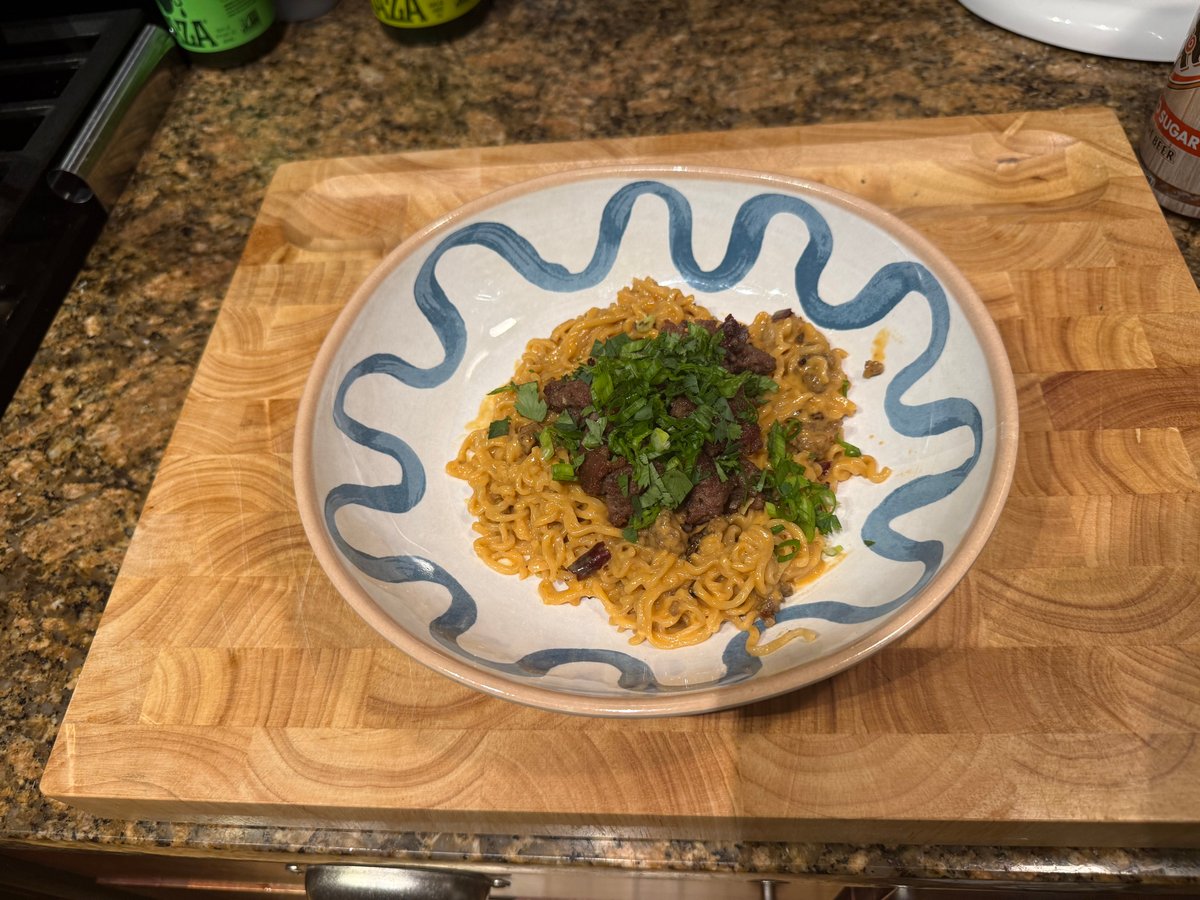
Another home cook I know coined the term "belly warmer" for certain dishes, and that's exactly what this recipe is. Deep, spicy, umami, fresh, and filling, this is a weeknight staple in my house and a tasty way to use up that ground beef hiding in the back of your freezer. Today, we're making Spicy Peanut Noodles with Crispy Ground Beef. This meal never fails to impress, comes together in less than 30 minutes, and chances are you already have most ingredients in your pantry.
The preparation for this dish has two main components: the beef and the sauce. While simple, both elements showcase techniques that can be applied to countless recipes going forward. Let's start with the beef.
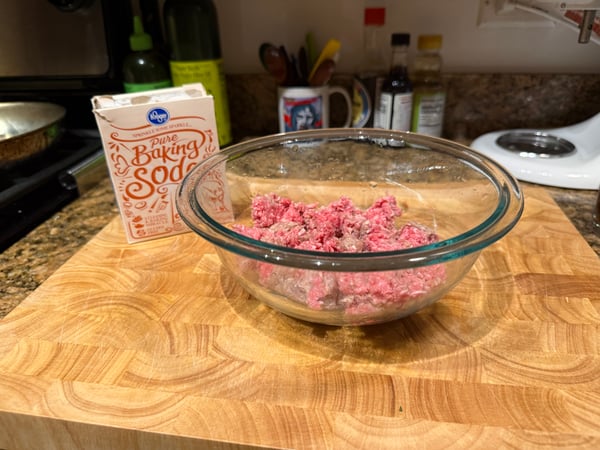
No one likes gray, soggy, chewy ground beef. I'm going to walk you through an easy technique that will give you crispy, flavorful, and tender ground beef every time. Enter one of the kitchen's secret weapons: baking soda. There are a million and one ways to use this magic white powder, and promoting the Maillard reaction is one of them. As outlined in the recipe below, we're going to add 1/2 teaspoon of baking soda to our beef before cooking.
Why are we doing this? I thought baking soda was for baking? I’m so glad you asked. The baking soda raises the pH of the beef and creates a more alkaline surface. Typically, when cold beef is added to a hot pan, the protein strands contract, squeezing moisture out of the meat. Often, this causes the beef to steam in a sad gray broth rather than fry and brown properly. A higher pH causes those protein strands to repel one another when exposed to heat instead of contracting. This reduces moisture loss and results in a juicier, more tender interior.
An alkaline surface also promotes a faster Maillard reaction, which is responsible for the flavorful browning and crust on cooked food. The Maillard reaction doesn't favor excess surface moisture. By keeping more moisture inside the beef rather than in the pan, the baking soda helps the meat brown more efficiently while maintaining a juicy interior. In summary, the addition of baking soda helps retain moisture, and moisture retention leads to better browning.
Now, onto the sauce. You may have heard chefs refer to pasta water as "liquid gold," but why? Well, where there's pasta, there's sauce, and pasta water contains a magical ingredient that helps make a great sauce possible: starch.
The fats in our sauce (the peanut butter, sesame oil, and chili crisp) naturally want to separate from the water-based ingredients like soy sauce and vinegar. When fats and water successfully combine into a stable mixture, it's called an emulsion. The starchy pasta water acts as a natural emulsifier, helping the oil and water bind together into a smooth, silky sauce. Think of starch as a bridge. One side of the starch molecule is attracted to water, while the other attracts fats. Zoom out, and this allows everything to stay together instead of separating into an oily mess. If you ever find yourself with a broken or overly oily sauce, a splash of starchy pasta water may be exactly what you need to bring it back to life.
This is a simple recipe, but it introduces some powerful concepts that can seriously level up your confidence in the kitchen.
Spicy Peanut Noodles with Crispy Beef
Yields: 2 servings
Prep time: 20 minutes
Cook time: 15 minutes
Total time: 35 minutes
For the noodles:
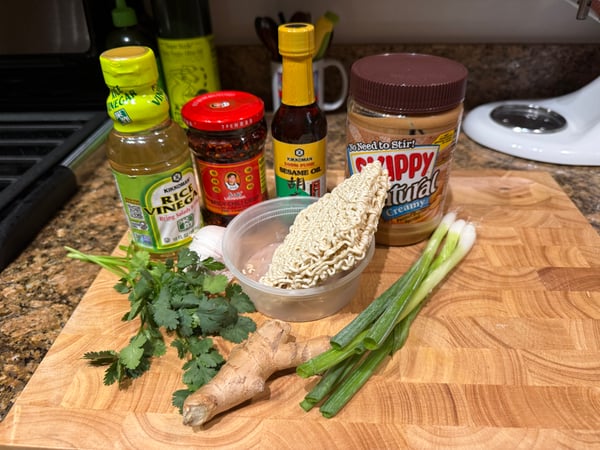
1 pack ramen noodles (or any spaghetti style noodle)
For the beef:
1/2 lb ground beef
1/2 teaspoon baking soda
1 tablespoon water
1 teaspoon grated fresh ginger
3 stalks thinly sliced green onion (separate the white from the green part)
2 tablespoons neutral oil
For the sauce:
2 tablespoons peanut butter
2 tablespoons soy sauce
1 tablespoon chili crisp
1 teaspoon rice wine vinegar
1 teaspoon sesame oil
1/4 cup noodle cooking water (as needed)
1 clove garlic, finely grated
For garnish (optional):
Fresh cilantro, finely chopped
Finely sliced green onion
Sesame seeds
1. In a small bowl, dissolve the baking soda in 1 tablespoon warm water. Add the mixture to the ground beef and combine thoroughly. Let sit for 15 minutes while you prepare the remaining ingredients.
2. Thinly slice the green onions, separating the white portions from the green portions. Reserve the greens for garnish, the whites will be cooked with the beef.
3. Finely grate or mince the ginger and garlic and set aside.
4. In a large bowl combine peanut butter, soy sauce, chili crisp, rice wine vinegar, sesame oil, and garlic. Stir until well combined and set aside.
5. Bring a pot of water to a boil and cook the noodles according to package directions. Before draining, reserve about 1/4 cup of the noodle cooking water.
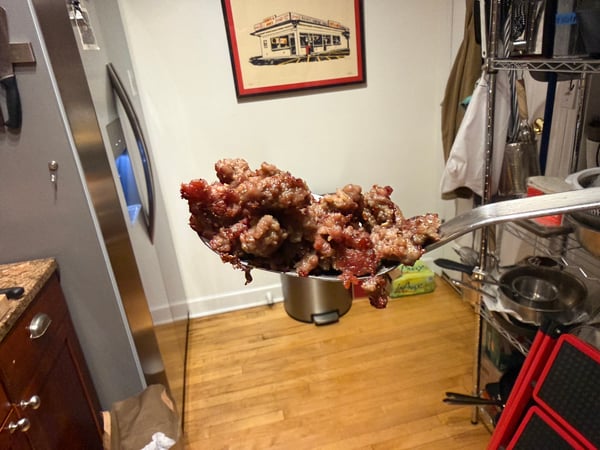
6. While the noodles cook, heat neutral oil in a skillet over medium heat. Add the ground beef in chunks, arranging in a single layer as pictured below.
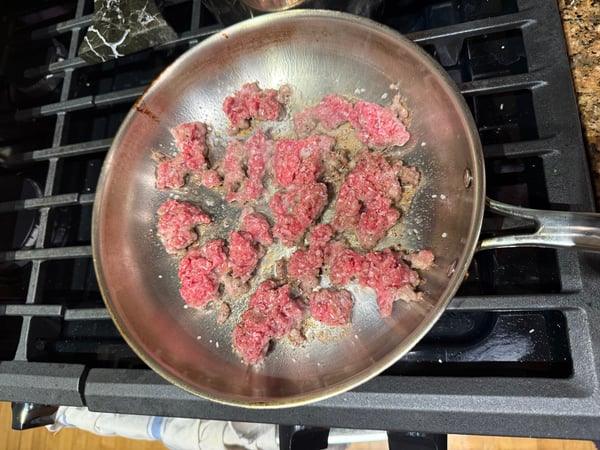
7. Cook for 2-3 minutes undisturbed to allow for adequate browning.
8. Add the white portions of the green onions and the ginger. Continue cooking, breaking up the beef and stirring occasionally until cooked through, about 4-5 minutes.
9. Directly to the bowl with the peanut mixture, add the hot cooked noodles. Toss to coat, add reserved noodle water, 2 tablespoons at a time, until sauce becomes glossy and reaches desired consistency.
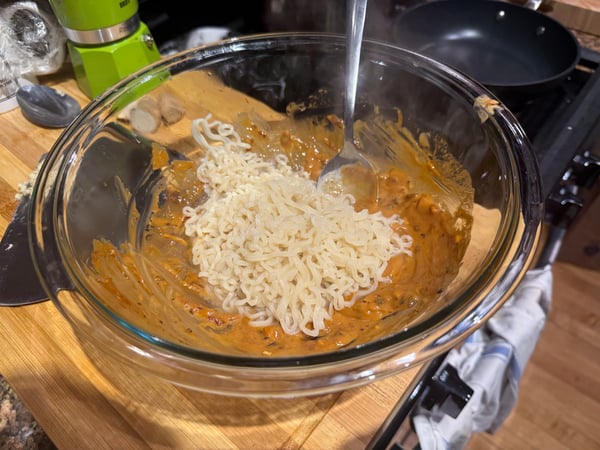
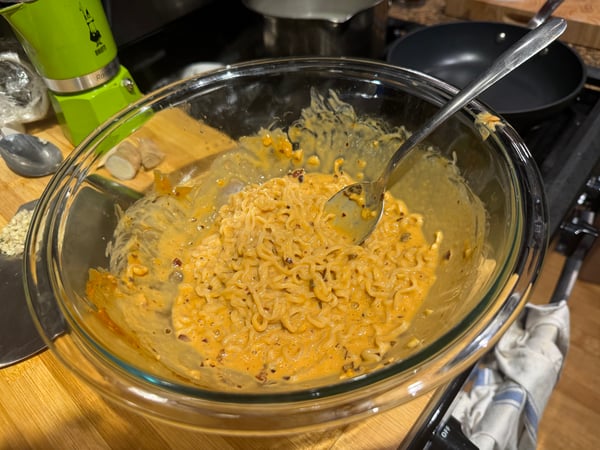
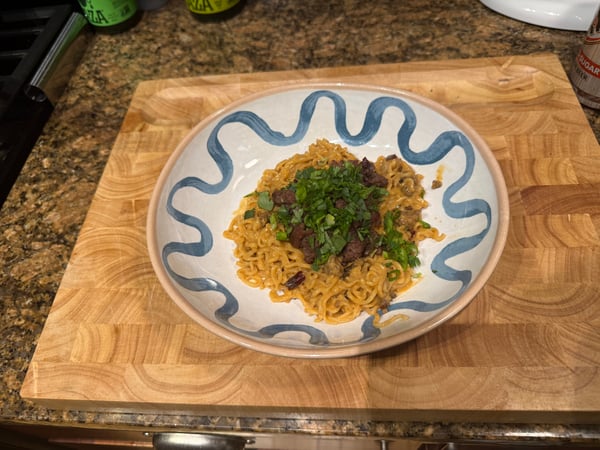
10. Divide noodles into serving bowls, top with cooked beef. Garnish with reserved green onions, cilantro, and sesame seeds.
Want to understand more of the “why” behind great cooking? Our Essential Building Blocks class goes beyond recipes to help you understand fundamental techniques, cooking methods and flavor building so you can become a more confident, intuitive cook. If tips like using baking soda for better browning and starchy pasta water for a silkier sauce make you curious about what else you can do in the kitchen, this class is a great place to build your skills. Join us for our next session on Saturday, September 19 from 9am-3pm.
