
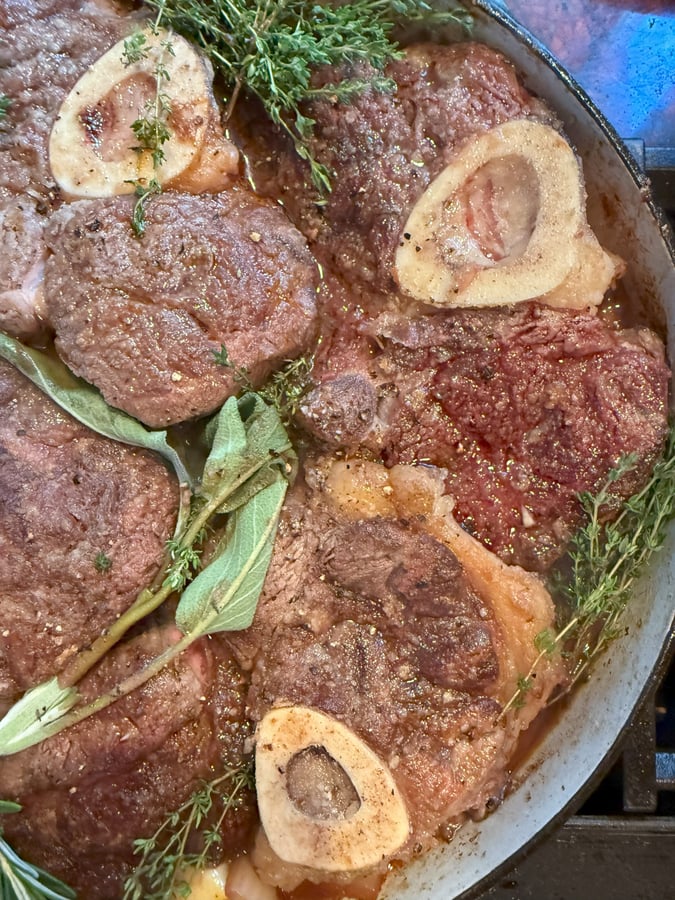
Some of my favorite cuts of meat to cook are the ones that often get overlooked in the grocery store - the ones that are cheap and are difficult to cook. I think knowing how to deal with these off-cuts is a sign of a good cook.
One of my favorites of these off cuts are beef shanks. A beef shank is muscle that comes from the lower leg of the cow. At the store or butcher, they are almost always sold as cut as cross sections of the muscle that include the bone.
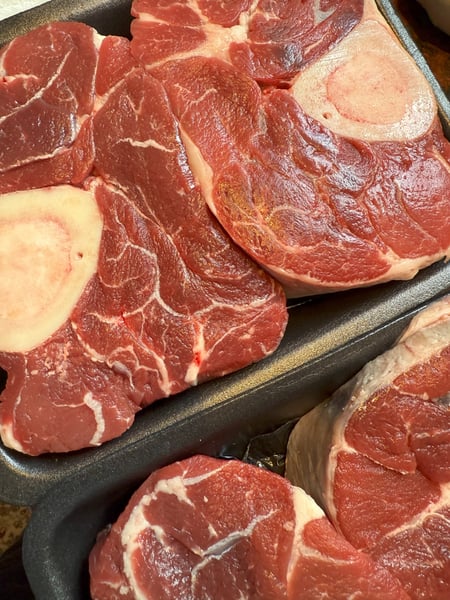
The toughness of a cut of beef generally comes down to how much connective tissue is in the muscle. This connective tissue is built up from muscle use, especially bearing the weight of the animal. The tender cuts we usually think of like tenderloin, ribeye, and strip steak all come from muscles that run down the back of the cow. As you could imagine, these muscles don’t work very hard as they’re on the top of the animal. On the other hand, pretty much the entire weight of the animal rests on the shanks, making them very tough.
This kind of cut requires a little extra attention and care, and that care is in the form of low and slow cooking. There’s multiple forms of low and slow cooking, but my favorite is braising. I’ll share the recipe for these beef shanks at the end, but I want to focus on the technique first. Once you understand the technique, you can swap out any of the ingredients, and get the most bang for your buck with any cheap, tough cut of meat.
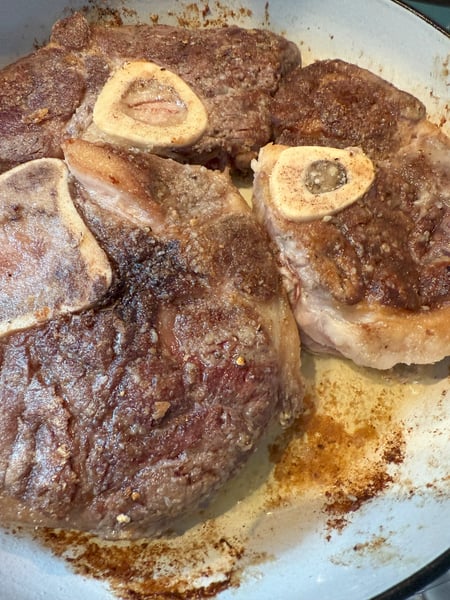
The first step of any braise is searing. The meat is usually going to be seared in the vessel that all of the cooking will take place in, so I usually reach for my braiser or my Dutch oven. Sear your meat using a high smoke point fat like avocado oil or beef tallow until it’s brown on both sides, this will develop beautiful flavor in your dish.
Once your meat is seared, add your aromatics to the pot. I used carrot, onion, mushrooms and garlic. These aromatics can be anything and will depend on what you’re making. If you’re making a Chinese braised pork, they might be ginger, garlic and scallion as well.
One thing I also like to do at this point is to add some tomato paste and flour to coat the aromatics towards the end of their cooking. The flour will create a roux with the fat from searing which will give your braising liquid a nice sauce consistency. The tomato paste adds some body to the sauce and a great depth.
Now it’s time to deglaze, I used a nice red wine for this. It’s important to take a wooden spoon at this point and scrape the bottom of your pot to get all the brown bits “fond” off.
Next, the rest of the braising components go in which are the remaining liquid, which is often stock, and any other flavorings you may want to add. In my case, I’m adding chicken stock. Whatever the liquid is in your recipe, it should come about halfway up your protein. Lastly I’m adding resinous herbs such as rosemary, sage, bay leaf, and thyme.
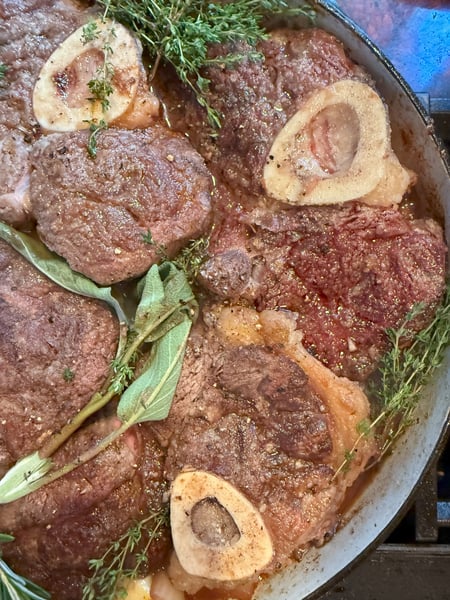
Now all there is to do is bring it to a boil, drop it to a simmer, throw the lid on and pop it in the oven between 300-350 degrees F depending on your oven. The liquid should remain at a gentle simmer the whole time. If you’re short on oven space, this can also be done on the stove top. My shanks took around 3 hours to reach that fork-tender texture I was looking for. Other cuts may require less or more time.
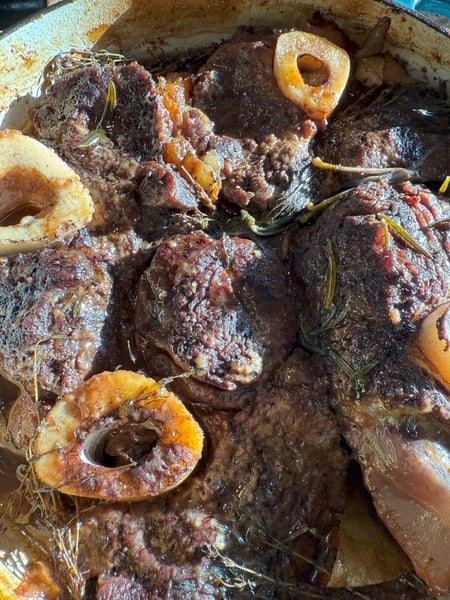
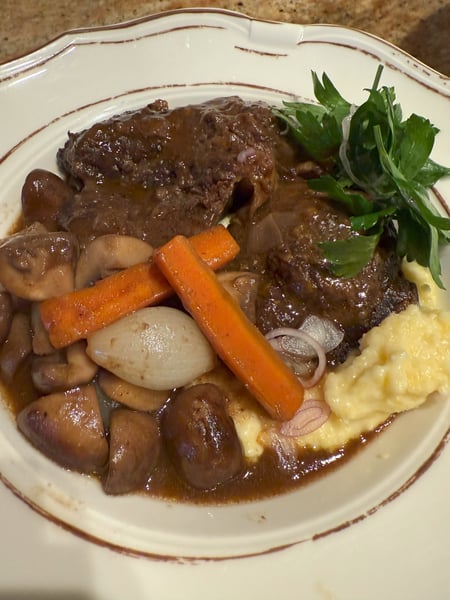
Once they’re done, all I do is remove the shanks from the pan and skim some of the fat from the liquid. My sauce was a bit thick so I just added a splash of chicken stock to thin it out. This needs something to soak up all the liquid. I went with polenta, but mashed potatoes would be great also.
If you want to gain even more knowledge about foundational cooking techniques, join us for Hands-on Essential Building Blocks on Friday, October 10 at 11am.

Braised Beef Shanks
Servings: 4 - 6
Prep Time: 30 minutes
Cook Time: 3 hours
Total Time: 3 hours 30 minutes
2–4 beef shanks, bone-in (about 1.5–2 inches thick)
Salt and pepper
2 tablespoons avocado oil
1 large onion - large dice
2 carrots, peeled - large dice
8 oz mushrooms - quartered
3 garlic cloves - minced
2 tablespoons tomato paste
2 tablespoons all-purpose flour
1 cup dry red wine
2–3 cups chicken stock
1 sprig rosemary
1 sprig thyme
2 fresh sage leaves
1 bay leaf
1. Sear the Beef Shanks
- Season the shanks with salt and pepper.
- Heat braising pan or Dutch oven with avocado oil on high.
- Sear shanks until well-browned on both sides (about 3–4 minutes per side).
- Remove shanks and set aside.
2. Cook Aromatics
- Lower heat to medium. Add onions, carrots, and mushrooms to the same pot.
- Sauté until softened and lightly browned, 5-7 minutes.
- Stir in tomato paste and garlic and cook for 1–2 minutes.
- Sprinkle flour over the vegetables and stir to coat. Cook for another minute to form a light roux.
- Pour in the red wine to deglaze and use a wooden spoon to scrape up all the browned bits (fond) from the bottom of the pot.
4. Braise the Shanks
- Return seared shanks to the pot.
- Add enough stock to come halfway up the sides of the shanks.
- Toss in rosemary, thyme, sage, and bay leaf.
- Bring to a boil, then reduce heat to a simmer.
5. Oven Braise
- Cover the pot with a lid and transfer to a 300–350°F oven.
- Braise for about 2.5–3.5 hours, or until the meat is fork-tender.
6. Finish the Sauce
- Remove the shanks and set aside.
- Skim excess fat from the surface of the liquid.
- If sauce is too thick, loosen it with a bit of stock.
- Taste and adjust seasoning.
