
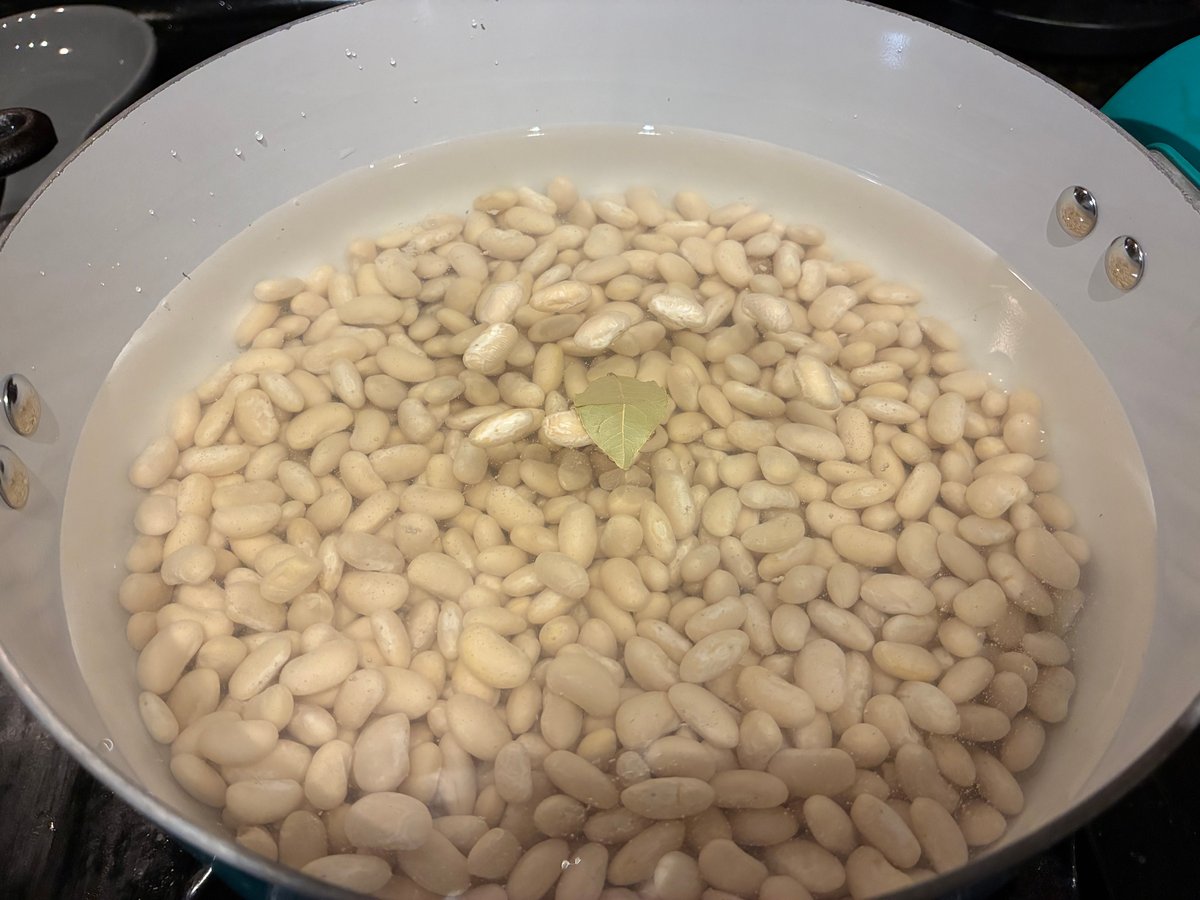
If you’ve ever cooked a pot of dried beans at home, you’ve probably heard the advice to avoid adding salt until the end, or else the beans will become tough or take longer to cook. This is what I was always taught, and a hard rule all of the chefs here at TCB follow.
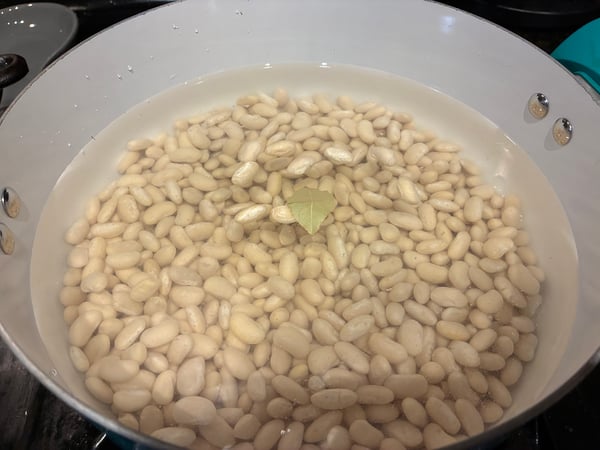
One day recently when I was making my own pot of beans, I realized I didn’t actually know why this happened and I got curious. I did a little deep dive on the Internet to research this, and in doing so I found something interesting: a lot of Internet sources claim this salt rule is actually a myth, and that, in fact, salt actually tenderizes beans instead of toughening them.
Uh, what?
I try not to give too much credence to online cooking advice because a lot of it can be inaccurate. But I was seeing this particular claim too often for it to be a coincidence, and I was intrigued. I decided to run a little test on my own to see what would happen.
If you’re a chef or a bean enthusiast, buckle up. This post might ruffle some feathers.
First, a little disclaimer: I am not a scientist! This experiment is likely flawed in ways I’m unaware of. In researching this topic, I found other sources with differing conclusions whose own experiments yielded different results. I'm not going to claim any one method is more accurate than others. I’m just here to share my findings.
For this test, I simply made two separate batches of Great Northern beans. I cooked the same amount in each batch and soaked them for the same amount of time. I kept the flavors simple, only using salt and bay leaves as seasonings.
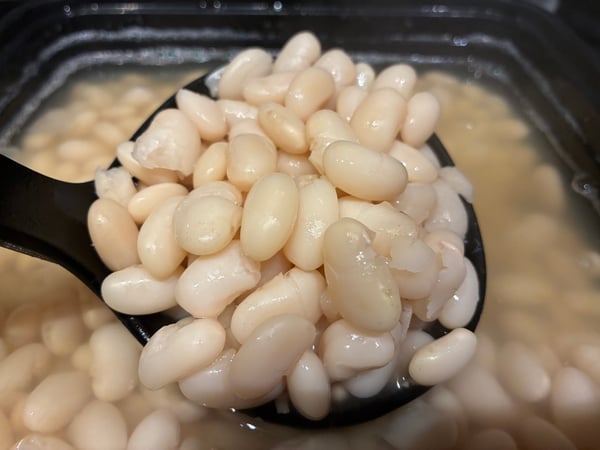
Beans Batch 1
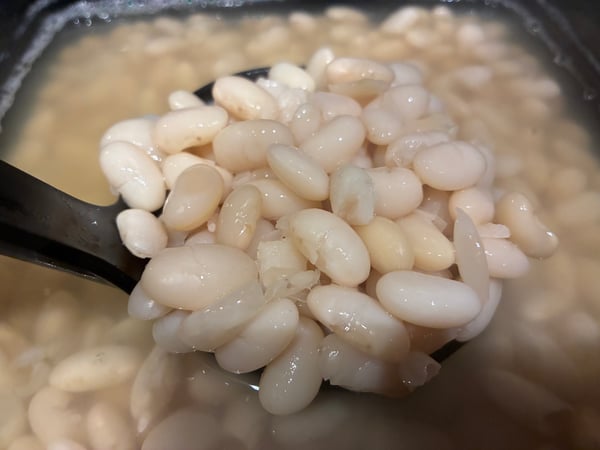
Beans Batch 2
The batch in the first photo was made the usual way: simmered without salt added until the last 15 minutes of cooking. The batch in the second photo was made with salt added in the beginning.
Visually, there aren't many differences between these two photos. You could argue that the second batch had more split beans than the first, but side by side the batches as a whole didn’t look too different.
There were, however, some slight differences in taste and texture. The beans that were salted in the beginning had a more rounded flavor — you could really taste the salt throughout. The other batch, on the other hand, had mostly surface level flavors. Both batches were tasty, but I could definitely tell the difference between the two.
I also noticed that the beans salted at the beginning had a bit more bite to them. I wouldn't describe them as “tough” necessarily, but I did notice the skins were slightly firmer. Also, though the photo doesn’t show it very well, I did notice there were more bean skins floating in the second batch. This made me wonder if the absorption of salt so early in the process caused more of the skins to burst. Chef Drake actually mentions this in his post about beans and is his reason for recommending you wait until the end to salt.
Aside from these minor differences, both batches were pretty evenly matched in texture. So, where did this advice come from? I understand there’s a massive margin of error here since I only ran this experiment once, but I would have thought there would be more noticeable differences between the two batches if the salt theory were true. In fact, this experiment gives more weight to the opposing theory of salt actually tenderizing the beans.
So, to answer the age-old question of whether you should salt your beans at the beginning or end: it’s really up to you. The differences are not that noticeable, and whatever method you choose will yield delicious results. Follow your heart. Follow your palette.
I’ll only judge you if you don't add salt at all.
We spend a whole day of Culinary Boot Camp working with legumes, vegetables, grains and eggs. We discuss the use and cooking of dried beans, the importance of soaking, and adding flavor to beans during the cooking process as our students make and enjoy a delicious white bean bruschetta.
