
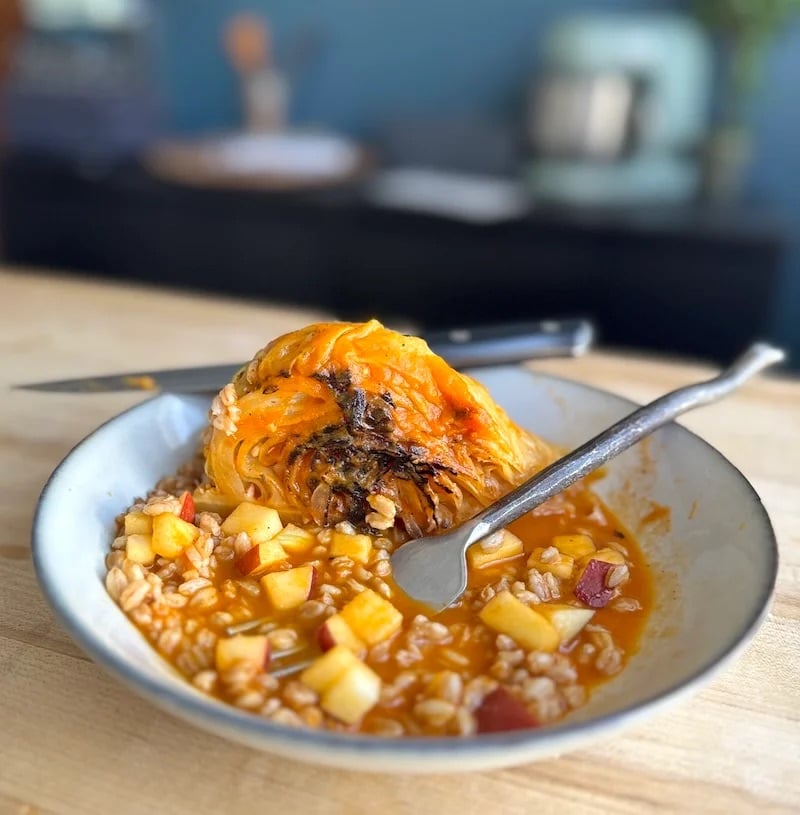
There is something comforting about a meal that doesn't require a long grocery list, expensive ingredients or hours in the kitchen to feel like something special. And with grocery prices continuing to climb, finding ways to make simple, affordable ingredients shine has become more important than ever.
This braised cabbage with farro is a perfect example. Cabbage is one of those often-overlooked vegetables that can transform into something incredibly tender, flavorful and satisfying with just a little time and a handful of pantry staples. Paired with hearty farro, a savory roasted vegetable sauce and fresh, sweet apples, it becomes a meal that feels far more special than its modest ingredients might suggest.
Cooking on a budget doesn't have to mean sacrificing flavor, variety or the enjoyment of sitting down to a really good meal. Sometimes, it simply means looking at familiar ingredients a little differently. Cabbage is an excellent place to start.
Why Cabbage Deserves a Place on Your Grocery List
Cabbage might not be the first thing that comes to mind when you're planning a satisfying dinner, but it's one of the most versatile vegetables you can buy. It has a long shelf life, works in everything from soups to stir-fries and can take on an entirely different personality depending on how you cook it.
Raw cabbage is crisp and slightly peppery, but when you sear and braise it, it becomes tender, almost buttery and naturally sweet. A single head also goes a long way. Pair it with a grain like farro and a few everyday vegetables, and you've got the makings of a hearty meal without relying on expensive ingredients.
If you're trying to incorporate more vegetarian meals into your routine, this is a great place to start. There are no meat substitutes or specialty ingredients here. Instead, the recipe lets everyday vegetables do what they do best.
What Makes This Braised Cabbage with Farro So Special?
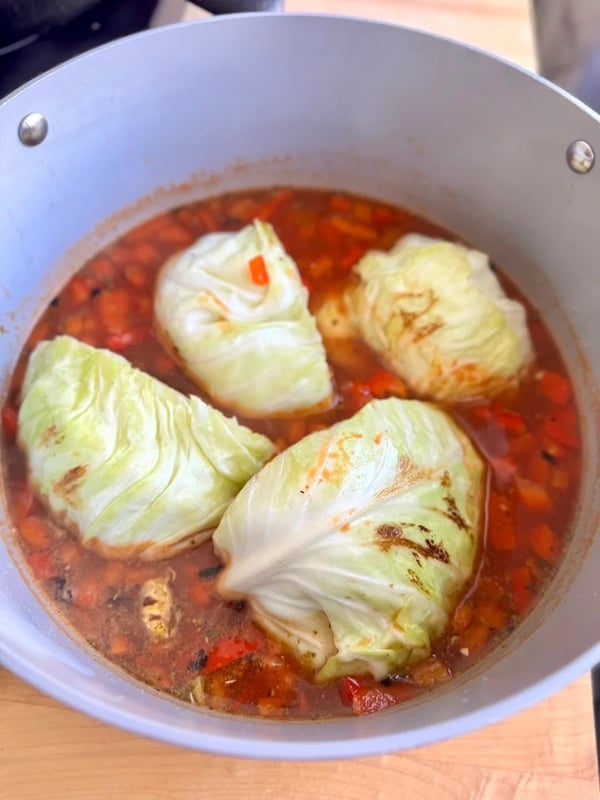
Searing the cabbage before braising gives it a beautiful golden exterior and brings out its natural sweetness. It then slowly softens in a flavorful broth with carrots, bell peppers, garlic and herbs. Once the cabbage is tender, the vegetables and cooking liquid are blended into a smooth sauce that brings everything together.
Farro adds a chewy texture and makes the dish more substantial, while fresh diced apple provides sweetness and crunch. It's an unexpected addition that works beautifully against the savory cabbage and sauce.
The end result feels like something you might order at a cozy neighborhood restaurant, despite being made with simple ingredients you can easily find at the grocery store.
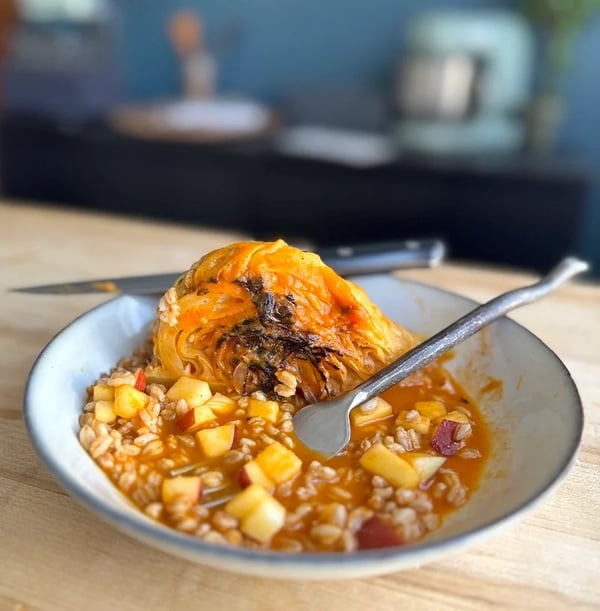
Braised Cabbage with Farro
Makes: 4 servings
Prep Time: 10 minutes
Cook Time: 50 minutes
Total Time: 1 hour
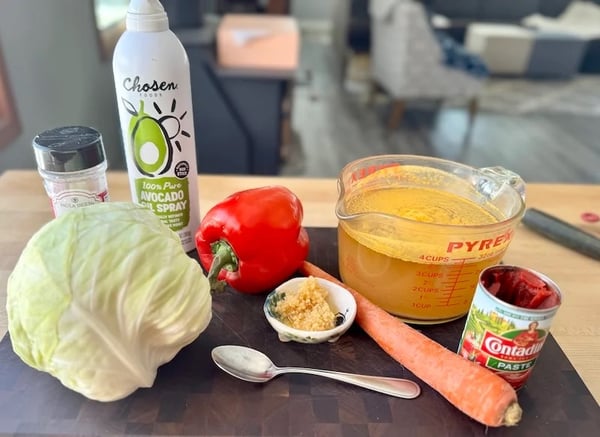
1 head cabbage, quartered (keeping stem intact)
1 large carrot, diced
1 medium bell pepper, diced
1 tablespoon tomato paste
3 cloves garlic, minced
1 teaspoon dried oregano
1/2 teaspoon garlic powder
1/2 teaspoon onion powder
1/2 teaspoon paprika
1/4 teaspoon salt
1/4 teaspoon black pepper
4 cups vegetable broth (or chicken broth if you're not making this vegetarian)
2 cups cooked farro
1 cup apple, finely diced
Avocado oil spray, for searing
- Preheat the oven to 325°F. Lightly coat an oven-safe skillet with avocado oil spray and heat over medium heat. Place the cabbage quarters on one flat side and sear for 5 to 6 minutes. Flip and sear the other flat side for another 4 to 5 minutes, until nicely browned. Remove the cabbage from the pan and set aside.
- Add a little more avocado oil to the skillet, followed by the diced carrot, bell pepper and minced garlic. Cook for 3 to 5 minutes, stirring occasionally, until the vegetables begin to soften. Add the tomato paste, oregano, garlic powder, onion powder, paprika, salt and pepper. Stir and cook for about 30 seconds, until fragrant.
- Pour in the broth, scraping up any browned bits from the bottom of the skillet. Nestle the seared cabbage quarters into the broth and vegetable mixture.
- Cover the skillet with a lid and transfer it to the oven. Bake for 20 minutes, then carefully remove the lid and bake for another 20 minutes, or until the cabbage is tender.
- Carefully remove the cabbage from the skillet and set aside. Transfer the remaining vegetables and cooking liquid to a blender and blend until smooth. Strain the sauce for a silky texture, if desired.
- Return the cabbage to the skillet and add the cooked farro. Spoon or drizzle the roasted vegetable sauce over everything and finish with the freshly diced apple. Garnish with fresh dill or parsley, if desired, and serve warm.
Tips for Making the Best Braised Cabbage
Don't skip searing the cabbage. Browning adds depth and brings out the cabbage's natural sweetness. Those golden edges also give the finished dish better texture.
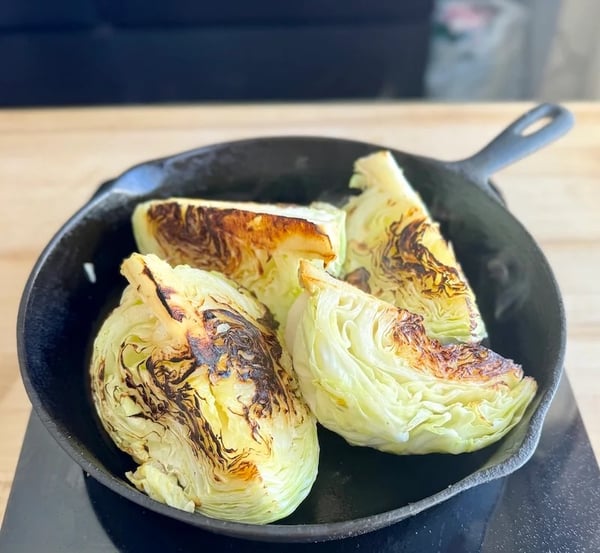
Keep the stem intact. Cutting the cabbage into quarters while leaving the core attached helps the wedges hold their shape as they cook. Without it, the leaves can separate and become difficult to handle.
Give the vegetables time to soften. You don't need to cook them until they're completely tender in the skillet, but allowing the carrots, peppers and garlic to soften before adding the broth helps build flavor in the sauce.
Don't rush the braising process. The cabbage should be fork-tender but still hold its shape. Depending on the size and density of your cabbage, it may need a little extra time in the oven.
Taste your sauce before serving. Broths vary in saltiness, and vegetables vary in sweetness. Taste the blended sauce and adjust the salt, pepper or herbs as needed. A small splash of apple cider vinegar or lemon juice can brighten the flavors if the sauce tastes flat.
Make extra farro. If you're already cooking farro, consider making a larger batch. It's an inexpensive grain that works beautifully in grain bowls, soups and salads throughout the week.
Frequently Asked Questions About Braised Cabbage
What kind of cabbage should I use for braising?
Green cabbage is the best choice for this recipe. It's widely available, affordable and holds its shape well when braised. Red cabbage can also be braised, but it has a slightly different flavor and will change the appearance of the finished dish.
How do I know when braised cabbage is done?
The cabbage should be tender enough to pierce easily with a fork, but the wedges should still hold together. If the center is still firm, give it another 5 to 10 minutes in the oven and check again.
Can I make braised cabbage ahead of time?
Absolutely. You can braise the cabbage and prepare the sauce a day or two in advance. Store them in an airtight container in the refrigerator and reheat gently in a covered oven-safe dish. Keep the farro separate until you're ready to assemble the meal, and add the diced apples just before serving so they retain their crisp texture.
Can I freeze braised cabbage?
Yes, although the texture will soften further after freezing and thawing. The braised cabbage and sauce can be frozen in an airtight, freezer-safe container for up to three months for best quality. Thaw in the refrigerator before reheating and add fresh apples before serving.
Is this recipe vegetarian?
Yes, as long as you use vegetable broth rather than chicken broth. Check the ingredients on your broth and farro packaging if you're following a strict vegetarian diet.
A Little More Comfort, a Little Less Spending
One of the most rewarding things about cooking is discovering how much you can do with a few simple ingredients. This braised cabbage with farro is a reminder that inexpensive ingredients can still make a meal worth looking forward to.
Whether you're trying to incorporate more vegetarian dinners into your week, stretch your grocery budget or simply find something new to do with a head of cabbage, this recipe is a good example of how a few techniques can completely change the way you think about an everyday ingredient.
If you'd like to take that experimentation further, join us for our Hands-On Vegetarian Boot Camp on Saturday, October 10 at 10am. This one-day immersive class will help you become more confident working with vegetables, grains and vegetarian proteins while learning techniques you can apply to all kinds of meals at home.
Sometimes, all it takes is one new recipe or technique to make everyday cooking more interesting.
