
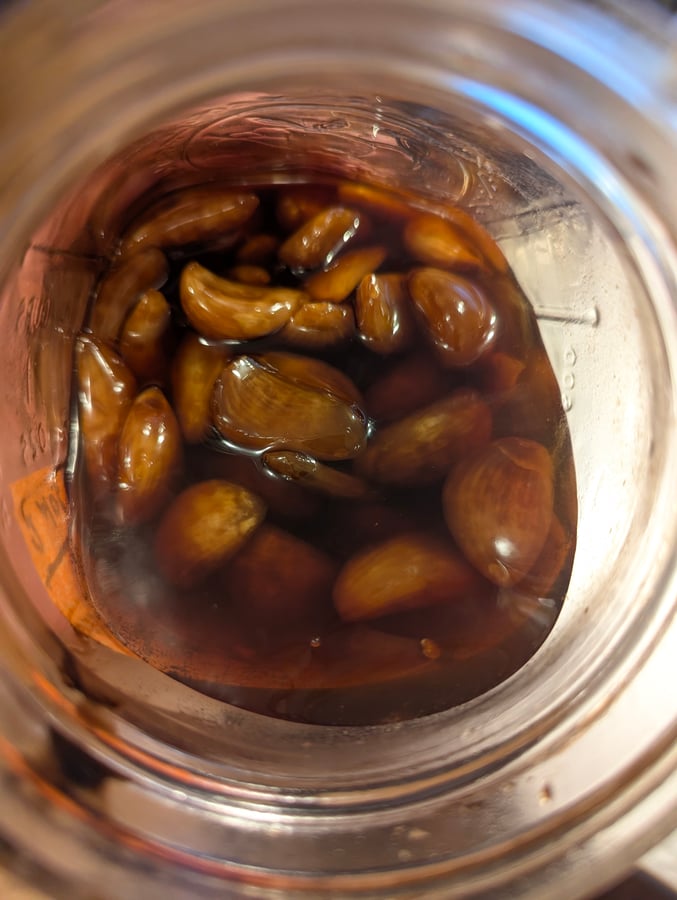
If our recent look at Parmesan cheese taught us anything, it’s that time is often the most powerful ingredient in your pantry. Today, we’re leaning further into that philosophy with a project that is part science experiment, part culinary magic, and entirely delicious: Honey Fermented Garlic.
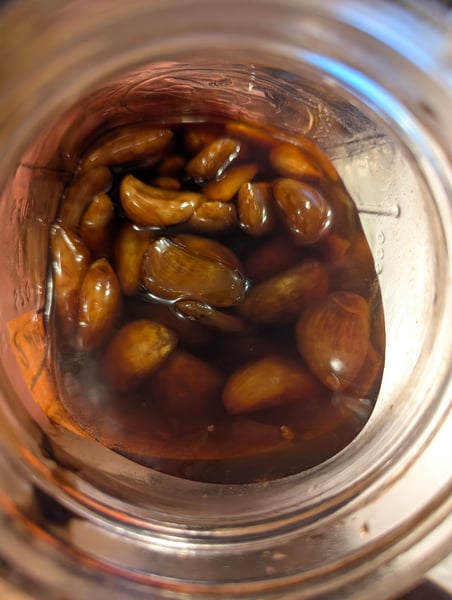
This is a personal pantry favorite of mine and one that will have you taking tremendous pride in anything it touches. Though it’s usable throughout the fermentation process, something remarkable happens at the year mark that creates a depth and complexity that most chefs only dream of finding in their pantry ingredients.
If the idea of "fermenting" at home sounds like something reserved for sourdough experts or lab coats, let us put your mind at ease. This is perhaps the easiest fermentation project you will ever tackle. There is no heating, no stretching, and no flipping involved—just a bit of prep and a healthy dose of patience.
The Beauty in the Bubbles
So, what exactly is happening inside that jar? It’s a fascinating bit of biological chemistry. When you submerge raw garlic in raw honey, you are initiating a wild fermentation, perhaps the oldest form of food preservation and cooking.
Raw honey is packed with natural yeasts and enzymes, but it’s normally too low in moisture for them to "wake up." However, garlic is roughly 60% water. Through a process called osmosis, the honey draws that moisture out of the garlic cloves. As the honey thins out, the moisture content reaches a "sweet spot" (pun intended) that allows the wild yeasts to begin consuming the sugars.
This creates a few key results:
- Carbon Dioxide: You’ll see tiny bubbles forming—that’s the yeast exhaling as it works.
- Acidity: The yeasts produce organic acids that drop the pH of the mixture.
- Melanoidins: Over time, the garlic turns a deep amber or even brown. This isn't rot; it’s a slow-motion version of the Maillard reaction (the same thing that browns a steak), where sugars and amino acids react to create deep, savory flavors.
The addition of apple cider vinegar in our recipe isn't just for flavor; it’s a safety net. By adding a bit of acid upfront, we ensure the pH is immediately lowered, creating an environment where "good" microbes thrive and "bad" ones can’t get a foothold. In addition you’ll notice we measure ingredients by weight here, which is standard with ferments to help with accuracy.
A Recipe in "Slow-Motion"
This recipe scales perfectly and fits beautifully into a quart-sized mason jar.
Yield: 1 quart jar
Active Time: 5 minutes
Start to finish: 6 months+
345g Garlic cloves (peeled)
45g Apple Cider Vinegar
645g Raw Honey (it must be raw, as pasteurized honey lacks the necessary wild yeasts)
- Prep the Garlic: Peel the garlic cloves. You can leave them whole, but giving each clove a very slight "crush" with the flat of your knife helps speed up the release of those juices.
- Combine: Place the garlic cloves into a clean glass jar. Pour in the apple cider vinegar, then pour the raw honey over the top. Make sure there is a gap between the surface of the honey and the top of the jar of at least a couple inches, as this ferment can get very active and bubble up.
- Submerge: Ensure the garlic is fully covered. The cloves will likely float at first; don't worry, as the honey thins out, they will eventually sink.
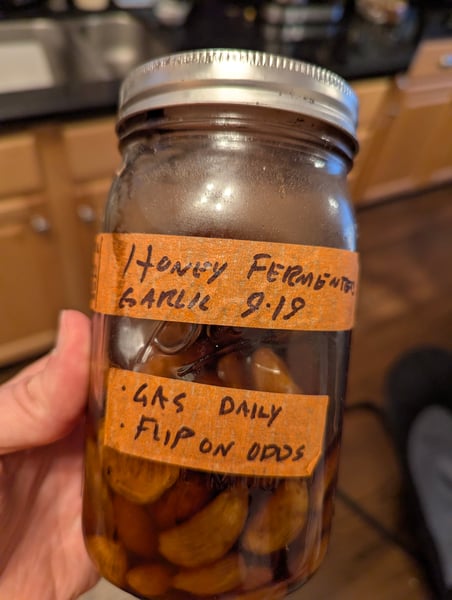
- Wait and "Burp": Seal the jar and give it a shake. Place the ferment on a shelf somewhere out of the way, between 18-25°C (64-77°F) for 2 months. You may wish to sit it on a small plate, as sometimes the honey can escape with the pressure and drip down the jar. Open the jar daily for the first 2-3 weeks to release carbon dioxide, and every other day, flip the jar upside down. This will make sure no garlic is left floating above the liquid for long enough time to spoil.
- Store: After 2 months you can start eating the garlic and honey, but my recommendation is to wait 4 more months. It can be tough, but this ferment gets better and better with time.
How to Use Your "Liquid Gold"
Once the bubbling subsides, you’re left with two incredible products. Drizzle the infused honey over a block of warm goat cheese or use it as a glaze for roasted pork. As for the mellowed garlic, smash it onto a piece of crusty bread with a little salted butter—perhaps that rustic loaf we used for our mussels?
It’s a slow-burn kitchen project that pays massive dividends. Plus, there’s a certain satisfaction in watching your pantry transform itself while you sleep.
Now that you’ve started stocking your pantry with professional level ingredients, learn to master them from our chefs at The Chopping Block in our five-day Culinary Boot Camp!
