
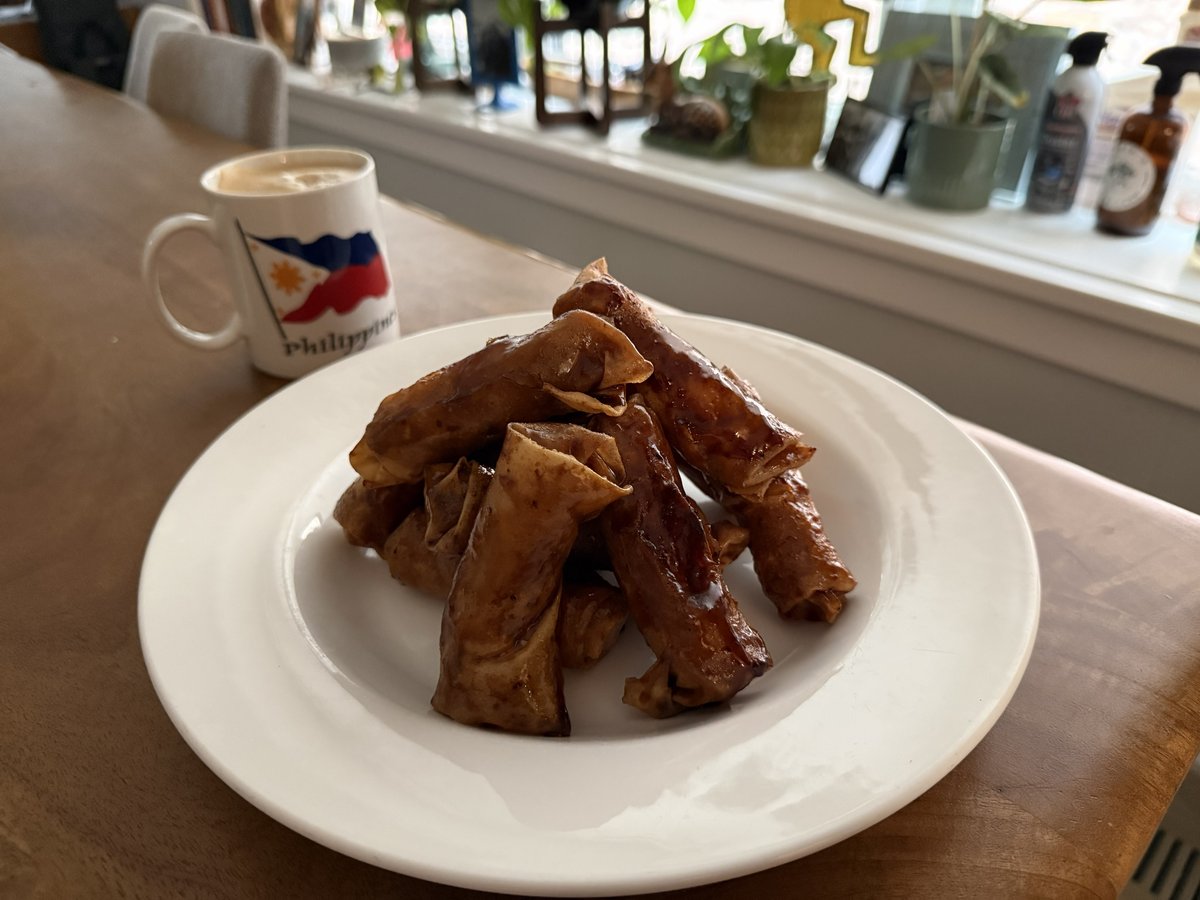
Earlier in the summer, I was fortunate enough to travel overseas and spend some time in the Philippines. The trip was long awaited. I’ve been planning on visiting for many years now, but somehow life always got in the way. Both my children had milestone graduations this past spring, senior year and 8th grade. We felt it appropriate to celebrate their accomplishments and explore some of their culture.
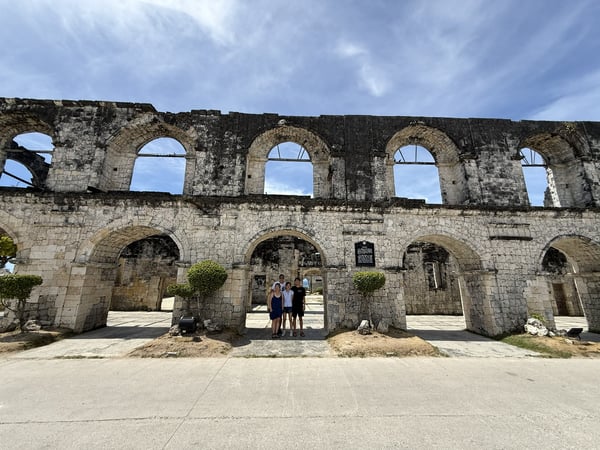
Cuartel Ruins, Oslob, Cebu
The Province of Cebu
Cebu is a vibrant province in the central Philippines known for its beautiful beaches, historic Spanish-era landmarks, lively cities, and distinctive food culture. Cebu City is a major urban center, while the surrounding islands and coastal towns offer a relaxed tropical atmosphere. There is no shortage of amazing things to see and explore.
In the south near Oslob, you can swim with whale sharks. On the east coast, there are several picturesque waterfalls to explore. Further north in Cebu City, you can find nightlife, art, culture, and history. It is home to the oldest Roman Catholic Church in the Philippines – The Basilica Minore del Santo Nino founded by the Spanish in 1565. If nightlife is more your thing, IT Park in Cebu City is alive with trendy restaurants, clubs, and an outdoor food market worth checking out.
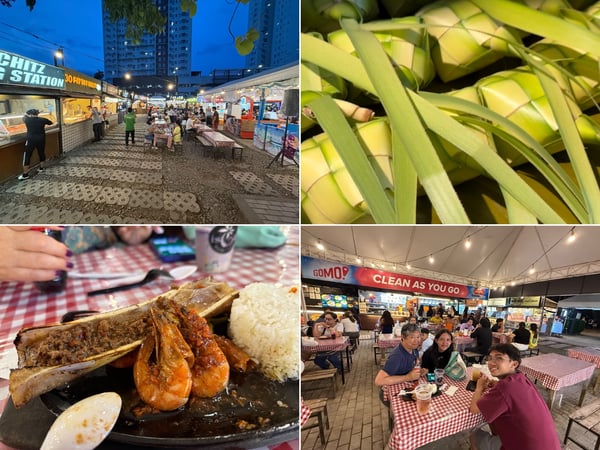
Sugbo Night Market, Cebu City
Plantation Bay Resort
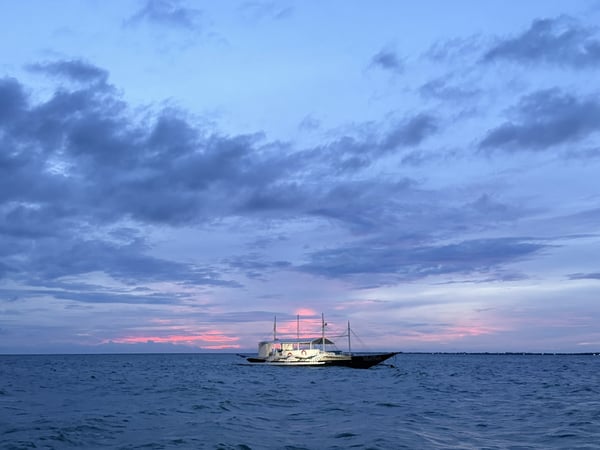
We stayed about 1 hour outside of Cebu City along the coast in a beautiful beach resort called Plantation Bay. The resort was tucked far away from chaotic energy of the city and was the perfect setting to get some real rest and relaxation – something that doesn’t come easy to me when traveling. I often get restless and feel the need to explore as much as I can. A trip into the city or beyond required a driver and wasn’t super convenient. No problem. I submitted to my surroundings. I slept in. I inched my way to breakfast with my family. I waded into the salt-water pool outside our room. I bellied up to the pool bar. I slept in a hammock. Lunch time… whenever. Dinner… later I guess.
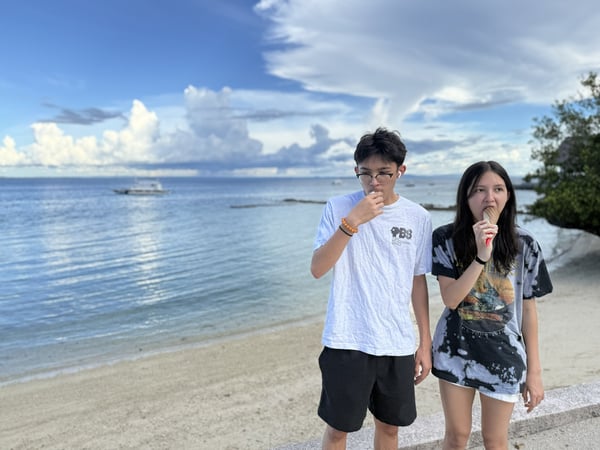
The beach in Lapu-Lapu
Resort activities
The resort had an array of activities for all ages. Among those was a cooking class my wife was intent on taking. As a chef instructor, I’ll admit I was initially hesitant about taking a cooking class while in Cebu. Cooking is already such a large part of my professional life, and after days of enjoying the warmth and generous hospitality for which Filipinos are so well known, I wasn’t quite ready to roll up my sleeves and get back to work. But I also knew that experiencing Filipino cuisine through the eyes of a local cook could teach me something no cookbook or restaurant meal could – and I’m glad to have kept an open mind. The setting was a makeshift, beachside kitchen. Enrollment consisted of myself, my wife and my children. The instructors were the executive chef and sous chef. On the menu – Sizzling Sisig and Turon de Cebu.
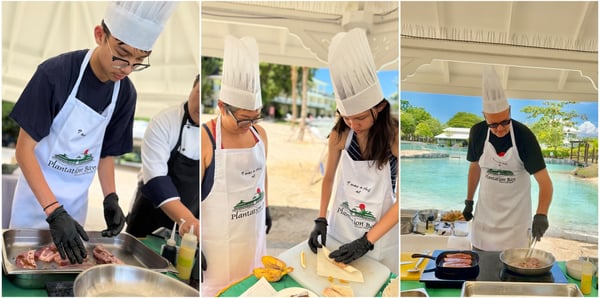
Sizzling Sisig
Sisig is a dish traditionally made with the entire pork head – cheeks, ears, snout. Often, chicken livers will be employed and act as a binder for the chopped meat. The entire head is boiled and grilled. The meat from the head is picked clean off the bone. Nothing goes to waste. The meat is crisped up a final time and added to onions and peppers and served “fajita” style on a sizzling platter. An egg is then dropped on the top and stirred in by the guest until it is well scrambled. It is garnished with calamansi – a small, sweet and tart citrus fruit that tastes like a cross between a mandarin orange and a lime. The entire dish is a real treat.
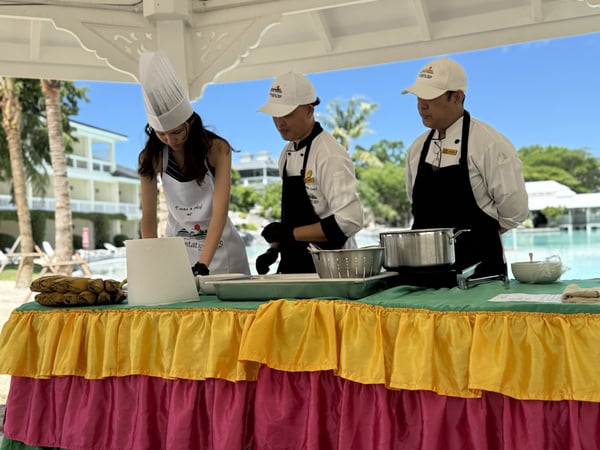
Turon de Cebu
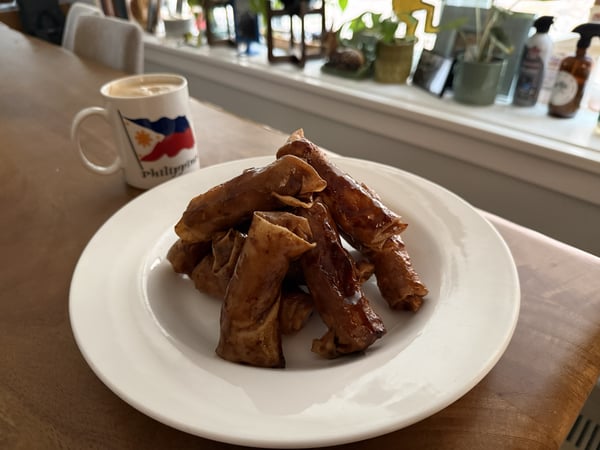
Turon is a delightful Filipino dessert made by wrapping sweet banana, jackfruit and sugar in a thin spring roll wrapper and frying until golden and caramelized. Like a sweet, caramelized banana egg roll, it's simple, sweet, addicting.
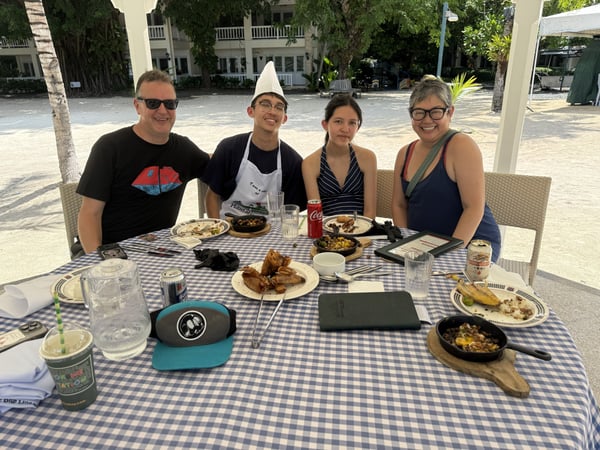
Philippine Takeaways
What began as an activity I was hesitant to join became one of the most memorable experiences of our time in Cebu. Cooking alongside my wife and children in that makeshift beachside kitchen gave us a chance to experience Filipino food in a more personal way. Even as a chef and instructor, there is always something new to learn—especially when the lesson comes from local cooks sharing the food and traditions of their home. The sisig was delicious, the turon was wonderfully crisp and caramelized, and the experience reminded me that cooking is as much about generosity and connection as it is about technique.
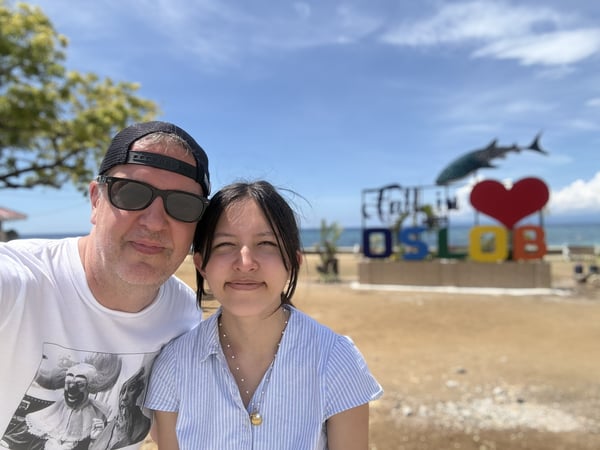
The beach at Oslob, Cebu
The warmth of Filipino culture was evident everywhere we went. We were welcomed with genuine kindness, generosity and hospitality that made us feel less like visitors and more like family. After waiting so many years to make this journey, I’m grateful that my children were able to experience this part of their heritage firsthand. I left the Philippines with wonderful memories, a deeper appreciation for its people and food, and a sincere hope that this will not be our last visit.
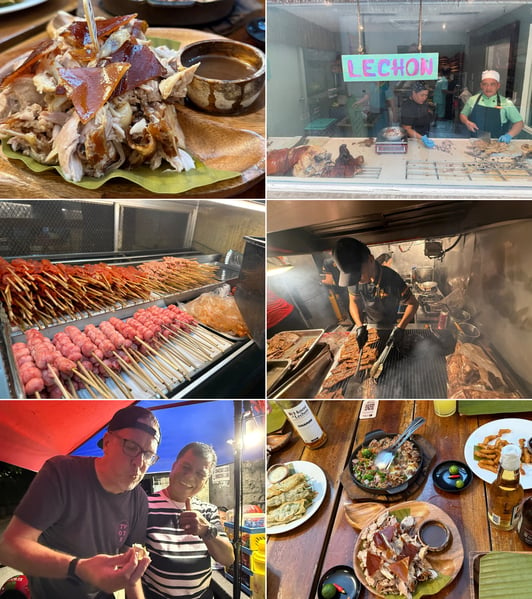
Street foods of Cebu
Until then, I’m happy to share one small taste of our journey with this recipe for Turon de Cebu. You may be able to find the small, sweet Cardaba bananas in some ethnic grocery stores. They should be ripe, but not green. In addition, they should not be over ripe with a lot of brown spots. A good substitute is frozen peeled saba bananas from a Filipino market. The langka (or jackfruit) is also sold in Filipino and Asian markets. It is canned and you can find whole or cut into thin strips. I prefer the strips.
Turon de Cebu
Yields: 10 portions
Prep time: 30 minutes
Cook time: 10 minutes
Total time: 40 minutes
5 saba (Cardaba banana), cut in half lengthwise
10 pieces spring roll wrapper
1/2 cup canned jackfruit (langka) cut into strips, drained
2 cups dark brown sugar
2 tablespoons cornstarch with water for a slurry
Oil for frying
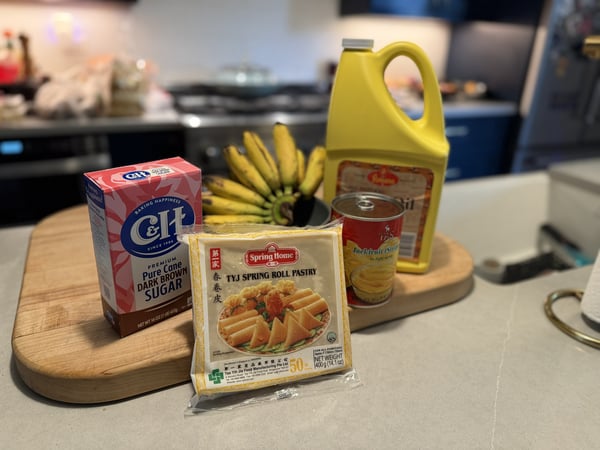
1. Heat oil in a heavy pot to about 2” from the bottom. Heat oil to 325° F.
2. Place a spring roll wrapper on a cutting board so that the edge is perpendicular to the board.
3. Roll banana half in brown sugar and place it on the wrapper about 1/3 the way up from the bottom edge. Sprinkle with 1 tablespoon dark brown sugar. Place 1-2 tablespoons of sliced jack fruit on the top side of the banana.
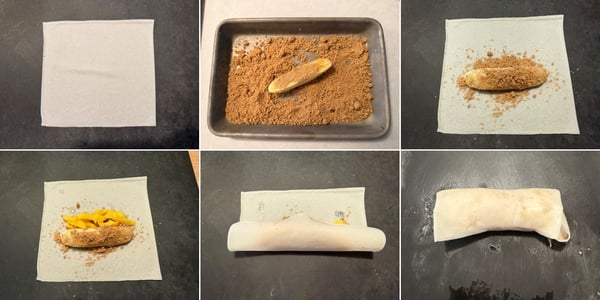
4. Begin to roll the edge closest to you over the banana, sugar and jackfruit. Cinch the wrapper tightly on the farther edge of the banana.
5. Fold the sides gently, but tightly over the sides of the banana and continue to roll.
6. Use a scant amount of cornstarch slurry to moisten the top edge before rolling turon completely over the top. Set aside, seam side down while rolling more.
7. Once all turon are rolled, gently place them in the fryer oil. Separate into 2 batches if needed. Do not crowd the pot.
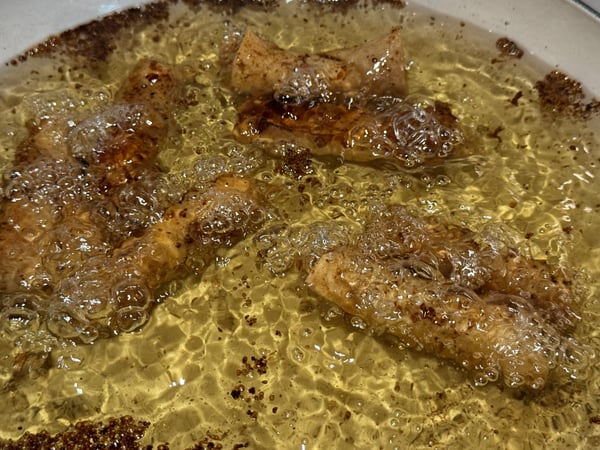
8. Fry until golden brown in color and crispy.
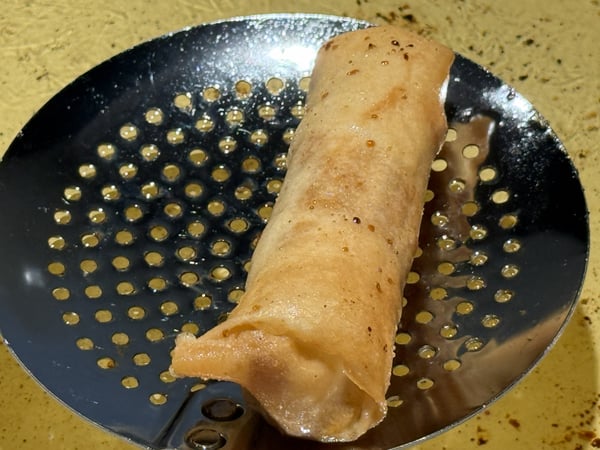
9. Remove from the pot and place on a baking rack to cool slightly.
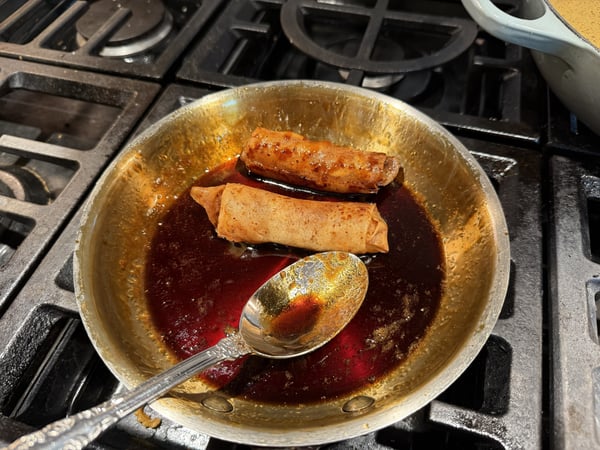
10. In a separate pot, add 1 cup brown sugar and 1/4 cup water. Bring to a boil, lower to a simmer until you have syrup consistency. Once the turon have cooled slightly, roll them in the syrup and spoon some over the top until they are well coated. Return to the baking rack to rest.
Serve with strong coffee and ube ice cream. They can be rolled ahead and stored in the freezer if needed.
Come join us for a hands-on class and challenge yourself to explore different cultures and flavors. From Mediterranean Mezze to Korean BBQ on the Grill, we are sure to have a class that suits your curiosity.
In addition, Chef Lucio is hosting a Tasting Table tonight showcasing flavors of his native Peru and there are just a few more spots left.
Also, check out our blog for more information, travel tips, and recipes. For more about the Philippines, read my blog on Filipino Food and on Filipino Pancit.
Salamat Po!
