
I put seasoning in quotes in the title for a reason. This isn’t seasoning in the traditional sense… at least not the kind we associate with cast iron or carbon steel. You’re not building up a protective layer over time. What I’m talking about is a temporary method for reducing sticking in stainless steel pans. It’s a one time trick that mimics the benefits of seasoning without the long-term maintenance.
Seasoning usually means the polymerization of fats. Oil breaks down under high heat and bonds to the surface of a pan, forming a hard, slick coating. This happens slowly and cumulatively with cast iron or carbon steel, resulting in that blackened surface people get oddly protective about.
Stainless steel doesn’t behave like that (it won’t retain seasoning over time) but you can still do something similar when you need it. It’s a quick fix that works surprisingly well.
Stainless is a great material: it’s non-reactive, holds heat evenly, and can do just about everything. But it can also be unforgiving, especially with foods like eggs or fish. For those situations, this method adds a little nonstick insurance.
Here’s how it works:
- Start with a clean, dry stainless steel pan.
- No moisture, no old oil, no food bits.
- No moisture, no old oil, no food bits.
- Heat it over medium-high heat.
- Let it go for a couple minutes until it’s really hot.
- Let it go for a couple minutes until it’s really hot.
- Test for the Leidenfrost effect.
- Flick a few drops of water onto the surface.
- If they sizzle and evaporate immediately, it’s not hot enough.
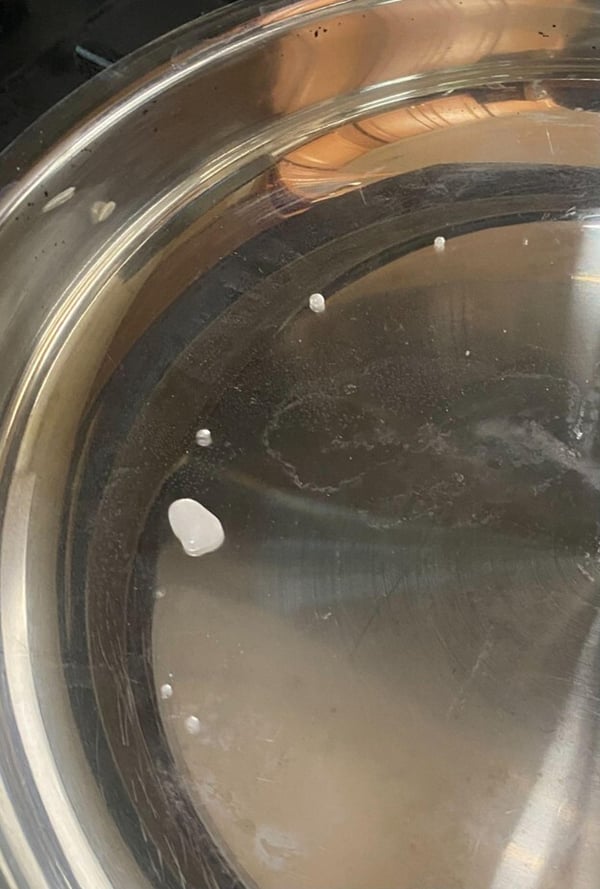
- If they bead up and skate across the pan like little water marbles. That’s the Leidenfrost effect.
- What’s happening: the water is vaporizing fast enough to create a cushion of steam between the droplet and the pan. That cushion prevents direct contact, which is why it glides instead of sticking. It’s also your signal that the surface is hot enough to bond oil effectively.
- Flick a few drops of water onto the surface.
- Turn off the heat.
- Add a small amount of high smoke-point oil.
- Grapeseed, canola, or avocado oil work well.
- Just a few drops will do.
- Grapeseed, canola, or avocado oil work well.
- Wipe the oil into a thin film.
- Use a folded paper towel.
- The goal is to leave behind the thinnest possible layer. It should look like you’re wiping it off more than you’re putting it on.
- Use a folded paper towel.
- Let the pan cool for a few minutes.
- That’s it. It’s now “seasoned” for short-term use.
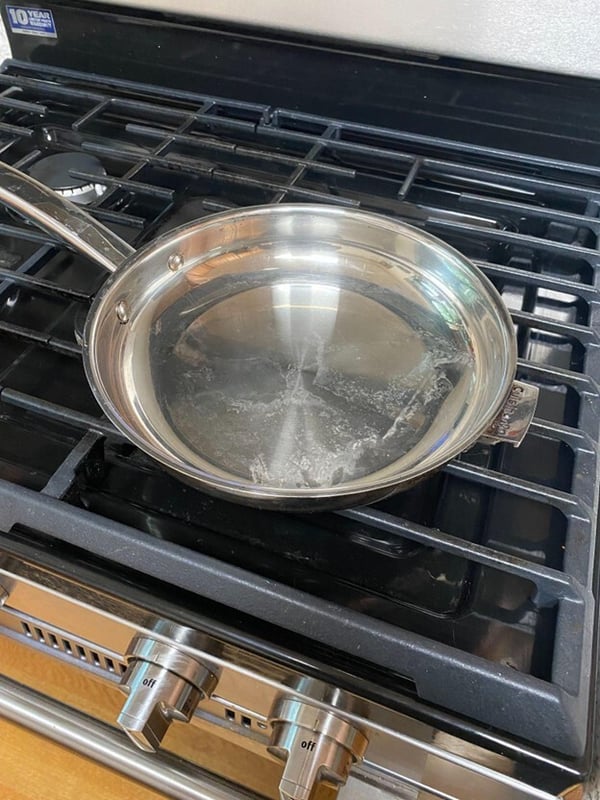
- You will most likely see some streaks or dark/ cloudy patterns form on the surface of the pan. Do not be alarmed, that’s all part of it.
- That’s it. It’s now “seasoned” for short-term use.
 Some foods really benefit from this method:
- Eggs, scrambled or fried
- Fish, especially delicate white fish
- Pancakes, crepes, or blini
- Tofu, if you’re using minimal oil
- Breaded or battered items that might otherwise glue themselves to the pan
Here are a few things to avoid:
- Skipping the preheat. Without the Leidenfrost effect, the oil won’t bond.
- Using too much oil. More is not better. Excess oil just burns and gets sticky.
- Not wiping the oil. Leaving a puddle won’t do anything helpful.
Once you’re done cooking, wash your pan like normal with soap and water. Yes, even if it were cast iron (I’ll die on this hill. Seasoning isn’t allergic to soap.) This is a temporary trick, not a protective layer you need to baby. And if any residue builds up over time (burnt oil, carbon, that sticky amber stuff) give it a quick polish with Bar Keepers Friend and start fresh.
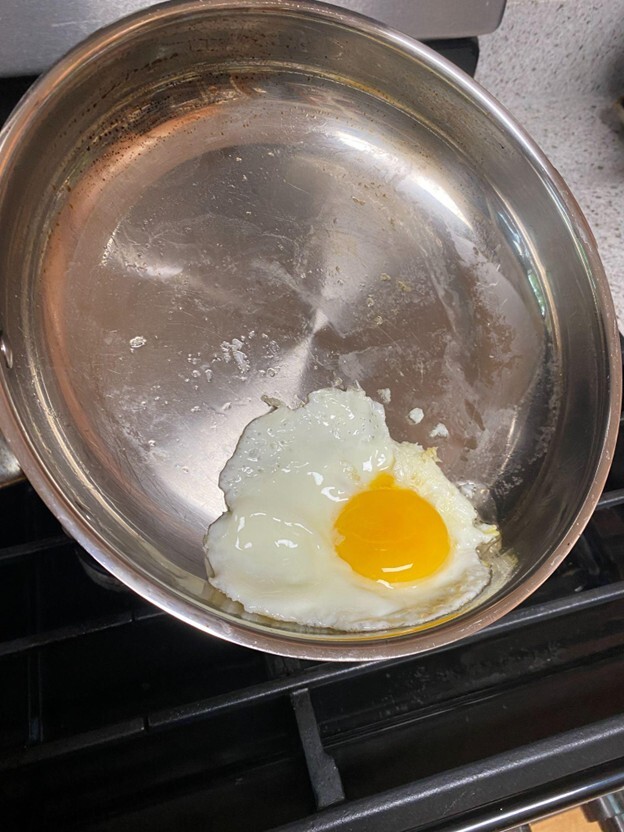
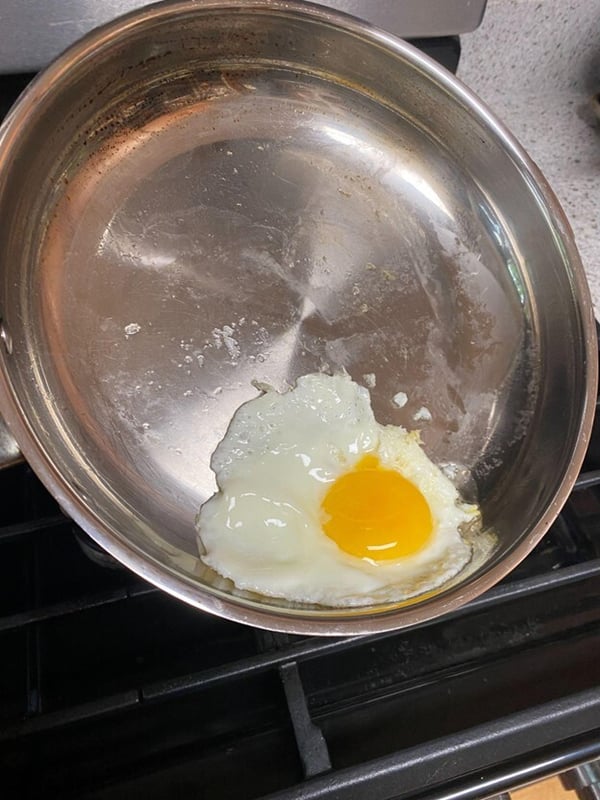
To show how well this works, I cooked an egg in the pan after doing this. I don’t usually recommend eggs in a hot stainless steel pan, but for this purpose, it made the point. The egg released cleanly and slid when it should’ve stuck. That’s all the proof I need.
 Now, all that said, you might be wondering if this is even necessary.
And the answer is… not always.
If you’re searing a steak, chicken thighs, pork chops, anything fatty or protein-heavy, you’re basically already doing this. The process of heating the pan, adding oil, and introducing food to a hot surface naturally creates polymerization as you cook. You’ll also have more fat present, which helps conduct heat and creates a natural barrier. So in those cases, you don’t need to “season” your pan ahead of time. The act of cooking is doing the work for you.
In other words: if you’re cooking properly (hot pan, hot oil, leave it alone) you’re already halfway there.
The seasoning method is more useful when:
- You’re cooking something lean or sticky.
- You want to use less fat.
- You’re working with delicate textures.
- You just want a little extra insurance.
It’s not mandatory, and it’s not a cure-all. But it’s a helpful tool when you need it. Knowing when to use it is part of becoming a better cook. As always, let me know if you try it in the comments.
One way to become a master at properly heating and cooking in different types of pans is to take our Culinary Boot Camp. In this five-day course, you'll learn all of the major cooking techniques professional chefs use every day. It's a fast-track to becoming a great home cook!
