
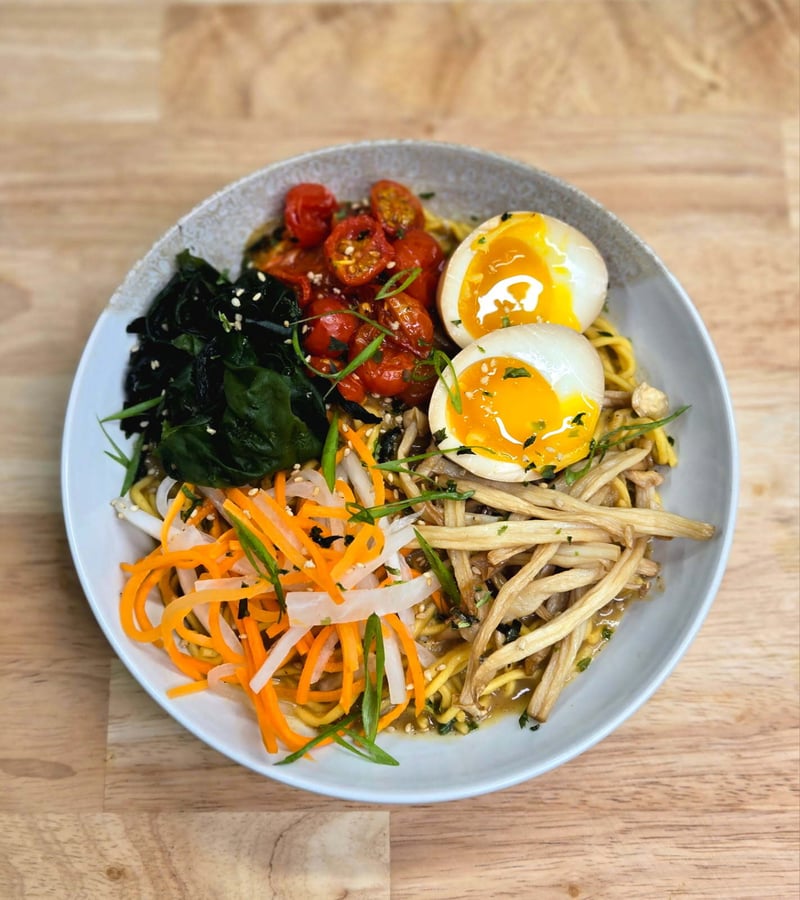
The word "curry" is deceptively simple. Most people think of it as a single dish or flavor profile, but it's actually a broad term encompassing incredibly diverse dishes, spice blends, and cooking techniques across Asia.
An Indian curry from one region looks nothing like one from another. A Thai curry tastes completely different from a Japanese one. Yet, we call them all curry. These are points our chefs like to cover in day 5 of Culinary Boot Camp at The Chopping Block, and it's why I always tell students that this class fundamentally changes how you approach cooking.
What ties all curries together is layering spices, herbs, and aromatics to build complex flavor. Most curry powders and pastes contain turmeric, cumin, coriander, and various chiles, but the ratios and additional ingredients vary wildly by region. Some use fresh herbs like cilantro and mint. Others rely on dried spices. Some incorporate coconut milk, while others use yogurt or tomatoes.
For home cooks, you don't need 20 different spices to make curry. A quality curry powder or paste from the region you're interested in gives you a shortcut. Understanding what goes into that blend helps you use it better and modify it for your taste.
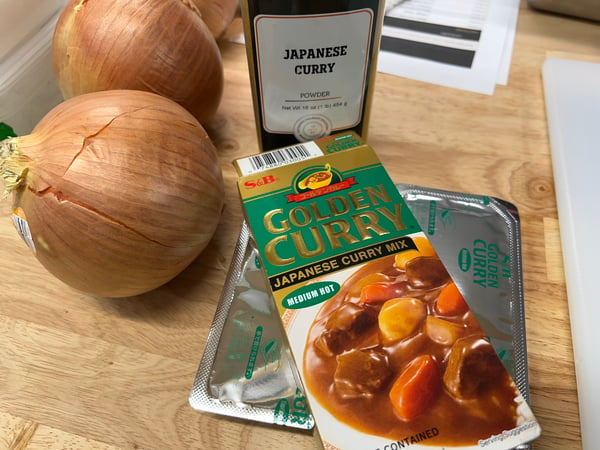
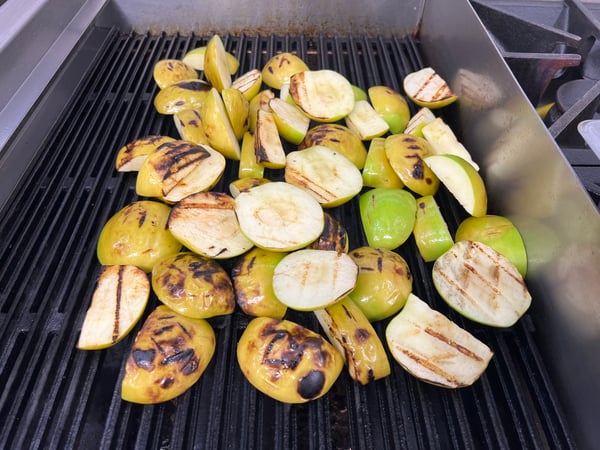
At Fork & Coin, we favor Japanese style curry, which is sweeter and less spicy than Indian versions. Our signature curry is made by charring green apples and garlic, adding depth and subtle sweetness that complements the warm spices.
The beauty of curry is it's a global tradition that belongs to everyone while celebrating specific regional identities. Learning to understand curry teaches you how food travels, adapts, and transforms across cultures. And once you grasp these principles, you can create your own variations with confidence.
Fork & Coin's Signature Curry
Yield: Approximately 8 cups
Prep Time: 20 minutes
Cook Time: 45 minutes
6 Granny Smith apples, quartered and cored (about 1.5 cups)
1/2 cup garlic cloves
1/3 cup ginger, peeled and cut into planks
2.5 cups onion, thinly sliced
1/4 cup chopped carrots
1/4 cup curry powder
1/3 cup golden curry bricks (or 1-2 bricks, depending on brand)
2-3 cups dashi stock (recipe follows)
2 tablespoons oil (for sautéing)
2 tablespoons soy sauce
Salt to taste (season throughout cooking)
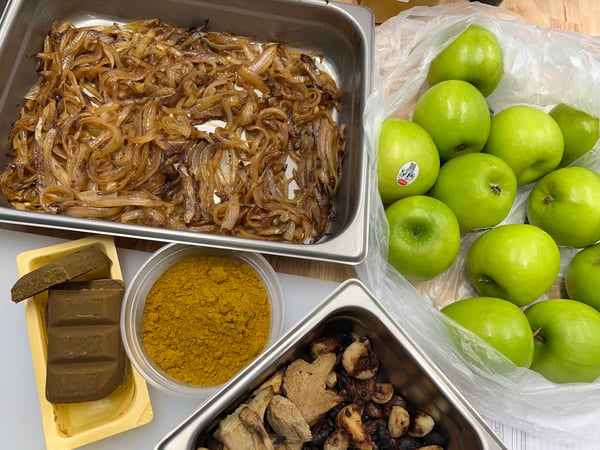
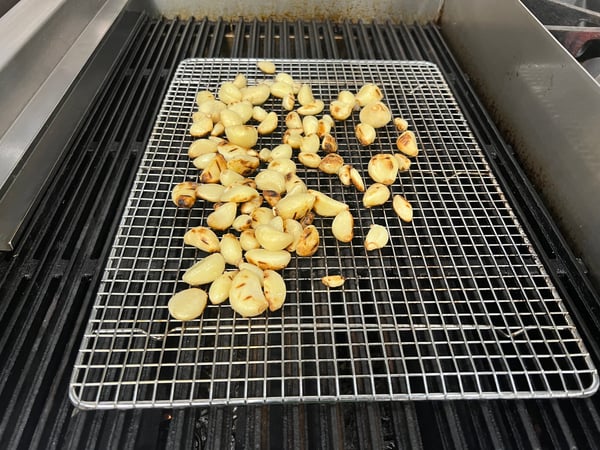
1. Place garlic cloves, ginger planks, and apple quarters on a sheet pan. Season lightly with salt. Place under a preheated broiler or on a grill, charring for 12-15 minutes until edges are blackened and caramelized. Work in batches if needed. Set aside.
2. Heat oil in a large pot over medium heat. Add sliced onions and a pinch of salt. Stir occasionally, cooking for 20-25 minutes until deep golden brown and very soft. This is essential for building the curry's depth.
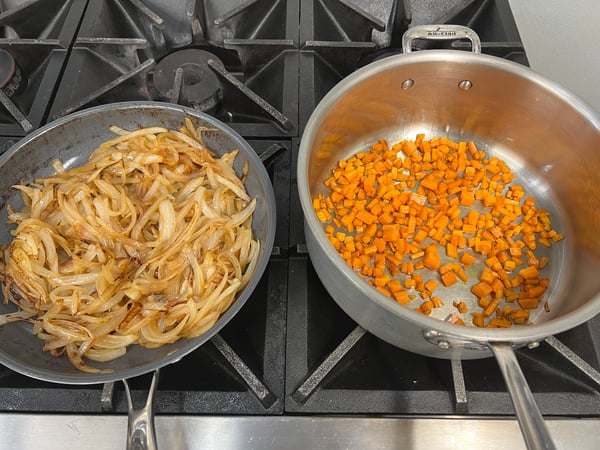
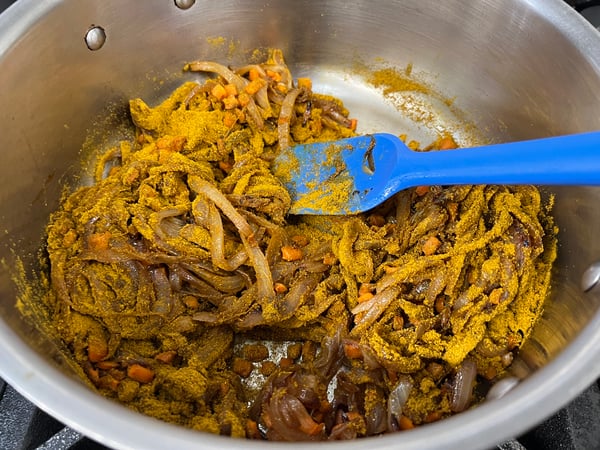
3. Once onions are caramelized, add curry powder and golden curry bricks to the pot, stirring constantly for 2-3 minutes to bloom the spices and allow the bricks to dissolve. Add carrots and stir to coat with the curry mixture. Cook for another 2 minutes.
4. Pour in 2-3 cups of dashi stock slowly, stirring to combine. The amount depends on desired consistency—start with 2 cups and add more if needed. Bring to a gentle simmer.
5. Roughly chop the charred apples, garlic, and ginger. Add to the pot and stir well. Simmer for 5 minutes.
6. Remove from heat and let cool slightly. Using an immersion blender, blend the curry until smooth. Alternatively, transfer carefully to a blender in batches. Pour through a fine mesh strainer into a clean pot, pressing solids to extract all flavor.
7. Return strained curry to heat on low. Season with soy sauce and additional salt to taste. Simmer gently for a few minutes. The curry should be silky and balanced—warm spices with subtle sweetness from the charred apples.
Dashi
Yield: 4 cups
Cook time: 5-8 minutes
Inactive time: 15 minutes
Total time: 20 mins
1qt water
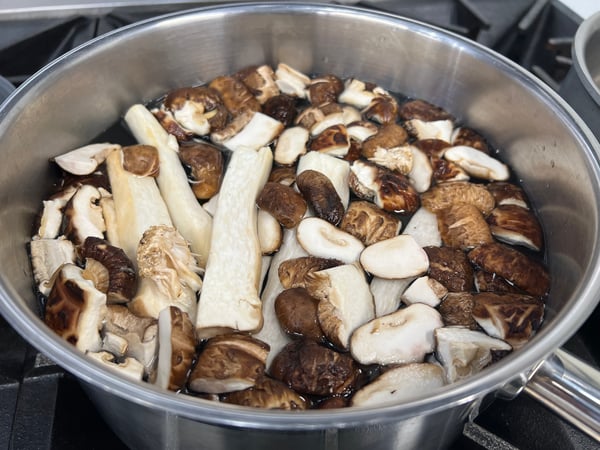
4 dried shiitake mushrooms
4x6 sheet of kombu
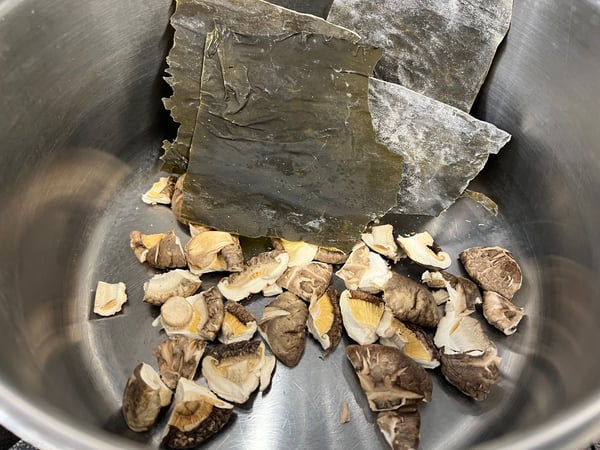
- Bring all ingredients to a simmer, remove from heat and steep for 15 mins. Strain dashi.
Uses
Serve this versatile curry over steamed rice, as a broth for ramen, or as a sauce for grilled or braised meats.
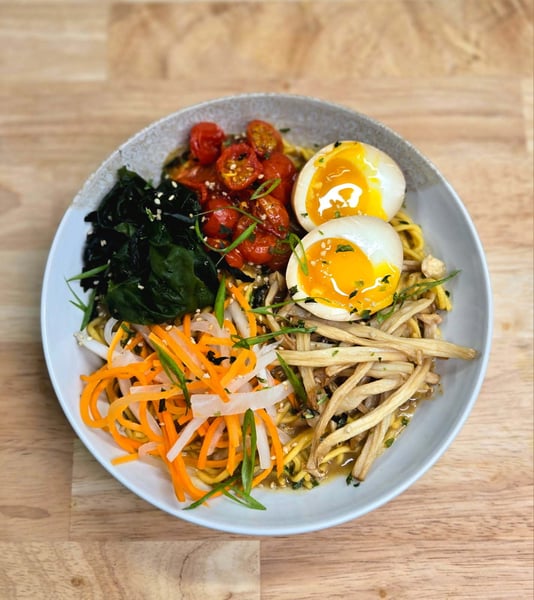
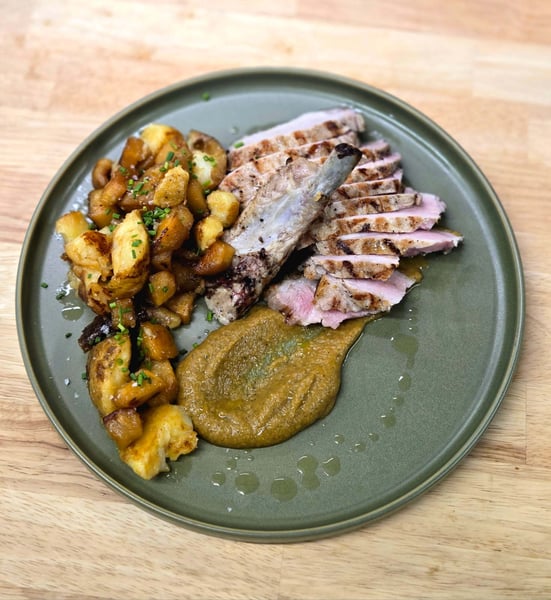
We're making curry in the new menu of our popular class Weeknight Wins: Cook Once, Eat All Week on Wednesday, September 23 at 6pm. I love this class because students learn how to prepare four versatile, flavor-packed base ingredients and transform each one into a finished dish. It takes the guesswork out of weekday meals!
