
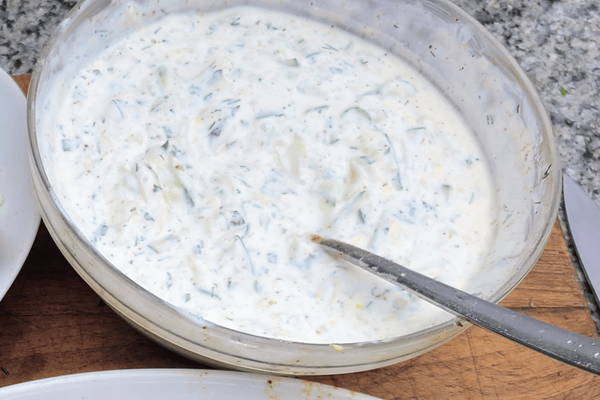
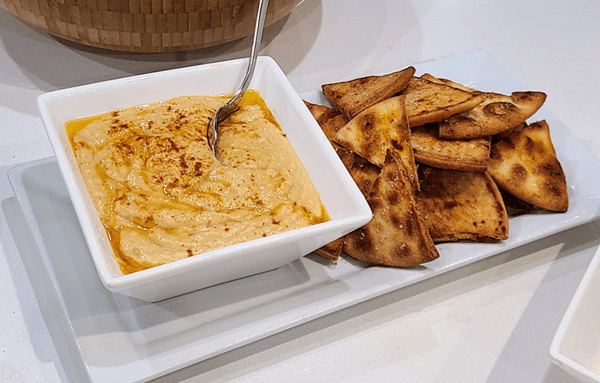
My ideal snack, lunch or even dinner, is a whole meal consisting of various dips paired with pita, crusty sourdough, or veggies. That is all I need to be satiated. Have you ever watched the show Only Murders in the Building? The character Oliver Putnam, played by Martin Short, is obsessed with dips for dinner and he claims to not having eaten a normal meal in years! I fully relate to this character in real life. His dips of choice on the show are hummus and tzatziki which are probably the most well-known Mediterranean dips.
Of course, they are super delicious and are in constant rotation in my own house but there are so many more global dips that deserve the same recognition. Too many in fact for just one blog, but in this edition, I’d like to introduce you to Toum, Muhammara, Skordalia, and Tirokafteri.
We have such a wide range of Mediterranean classes at The Chopping Block. Some classes are a specific country or region like Greece, Tuscany, or Sicily. One class that features hummus and tzatziki is our Mediterranean Mezze class. One of my absolute favorites to teach is our Mediterranean Boot Camp that features an assortment of recipes from all around the sea.
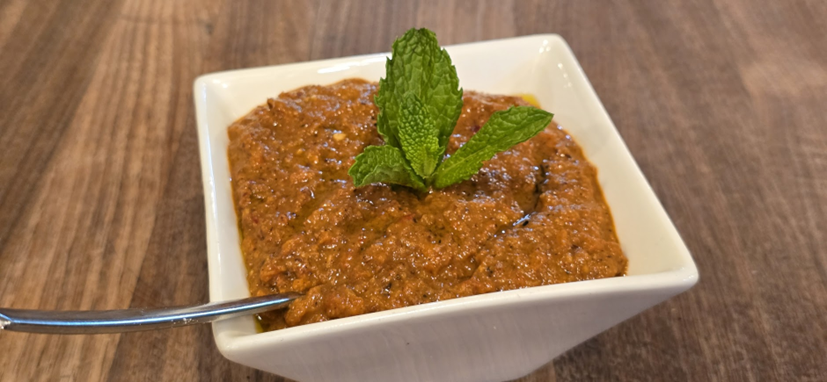
I am super excited for our new Turkish Kitchen class that features Muhammara. If you have never heard of this dip, Muhammara is a rich, savory, and slightly spicy roasted red pepper and walnut dip originating from Aleppo, Syria. It is a staple in Middle Eastern cuisine as well as the Mediterranean, featuring a complex flavor profile that is sweet, tangy, and smoky, often described as a bolder alternative to hummus. To me, it is almost like a cousin to a romesco sauce which I would say is still more widely know than this flavorful dip that is popular in Turkey.
I found this fun fact: in 2022, Gaziantep, Turkey, received a geographical indication from the Turkish Patent and Trademark Office for muhammara, recognizing the dish as a registered regional specialty associated with the city. The patent's listed ingredients are: fresh red peppers or red pepper flakes, olive oil, walnuts, rusks or breadcrumbs, pomegranate molasses, lemon juice, cumin, and parsley or walnut halves for garnish.
Here is the recipe that I came up with taking inspiration from a handful of recipes I found online. This recipe is slightly different from the one you'll make in our class…. just to keep it interesting!
Muhammara
Yield: 2 cups
Prep time: 10 minutes
Cook time: 15 minutes
Total time: 25 minutes
2 roasted red bell peppers
1/4 cup panko, toasted
1/2 cup walnuts
3 tablespoons extra-virgin olive oil
1 1/2tablespoons pomegranate molasses*
2 teaspoons fresh lemon juice
1 Tablespoon tomato paste
1 teaspoon Aleppo pepper or cayenne
1/2 teaspoon red pepper flakes
1/2 teaspoon ground cumin
Freshly ground black pepper
Fresh mint, for garnish
Pita bread, for serving
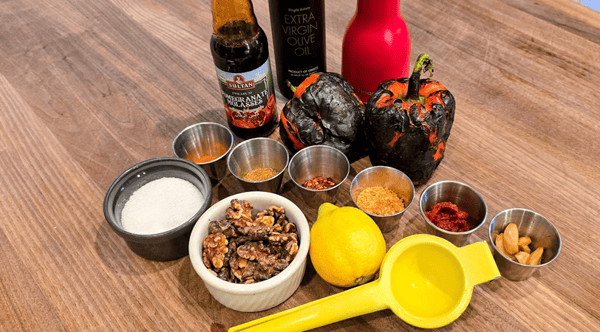
1. Roast the red peppers over a flame until charred, cover until cooled and peel off the skin and discard the seeds.
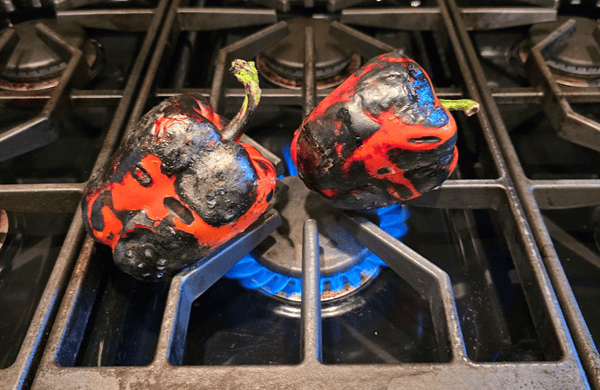
2. Toast the bread crumbs in a 350 degree oven until golden brown.
3. In a food processor, place the red peppers, breadcrumbs, walnuts, olive oil, pomegranate molasses, garlic, lemon juice, tomato paste, Aleppo pepper, cumin, and several grinds of pepper.
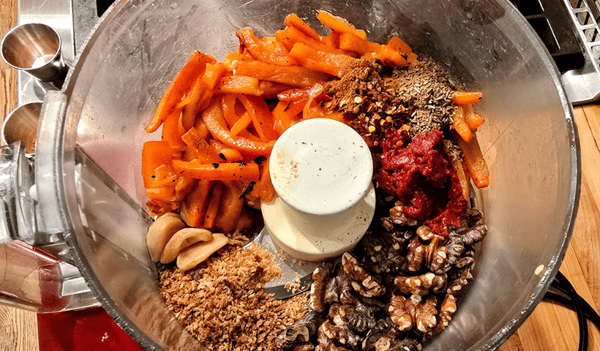
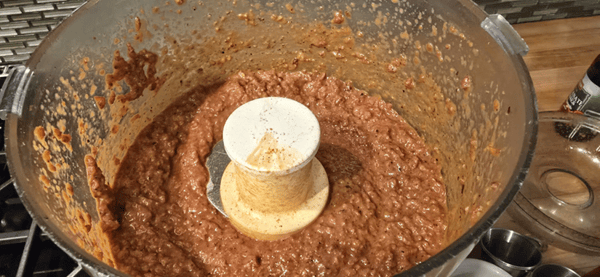
4. Pulse until creamy and season to taste.
5. Garnish with fresh mint. Serve with pita bread or veggies. It can be used and a spread for sandwiches as well.
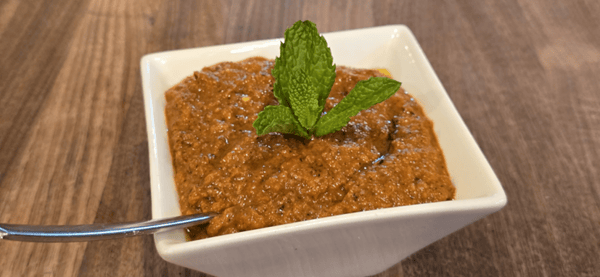
This dip will last in an airtight container for 1-2 weeks in your fridge.
Now that you know how to roast peppers, we can travel over to Greece and learn all about Tirokafteri! This dip is a popular Greek dip or spread known for its creamy, spicy, and tangy flavor, often referred to in English as "spicy feta dip." It is made by blending feta cheese with hot peppers (like chilis or jalapeños), roasted red peppers, olive oil, and lemon juice or vinegar, frequently served as a mezze with pita bread.
- Meaning: The name literally translates to "cheese" (tyri) and "hot/spicy" (kaftero).
- Key Ingredients: Feta cheese (often sheep's milk), roasted red peppers, spicy chili peppers, olive oil, and red wine vinegar or lemon juice.
- Variations: Sometimes includes Greek yogurt for a smoother texture, garlic, or oregano. It is also known as Htipiti or Ktipiti in some regions.
- Serving: Served cold or at room temperature, typically with warm pita bread, crackers, or as a side to grilled meats.
- Texture: Creamy yet slightly chunky, with a bold flavor balance of salty, smoky, and hot
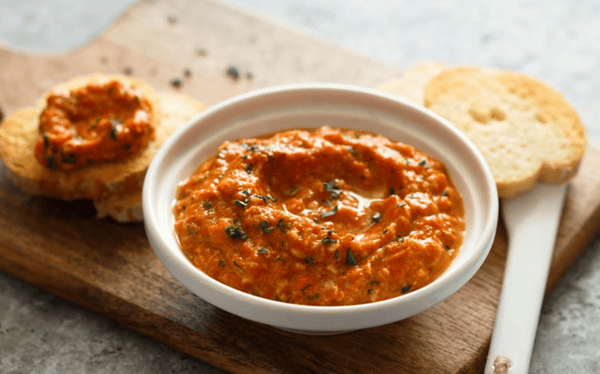
Speaking of Greece, another bold dip that’s rich in garlic flavor that you will also find on a mezze platter or accompanying grilled meats is called Skordalia. This sauce/dip is a thick and creamy mixture made by emulsifying raw garlic with a base of mashed potatoes, soaked stale bread, or nuts (walnuts/almonds), along with olive oil and vinegar or lemon juice. This is a great way to utilize left over mashed potatoes! By blending these simple ingredients, you can transform them into a flavor packed dip.
- Meaning: The name is derived from the Greek word skordo, which means "garlic," combined with the Italian agliata (garlicky).
- Usage: It is traditionally served as a dip for fried fish (especially cod), fried vegetables (eggplant/zucchini), and boiled beets.
- Ingredients: Common variations include potatoes, bread, walnuts, almonds, garlic, olive oil, and white wine vinegar or lemon juice.
- Flavor Profile: It is known for being intensely garlicky, bold, and creamy.
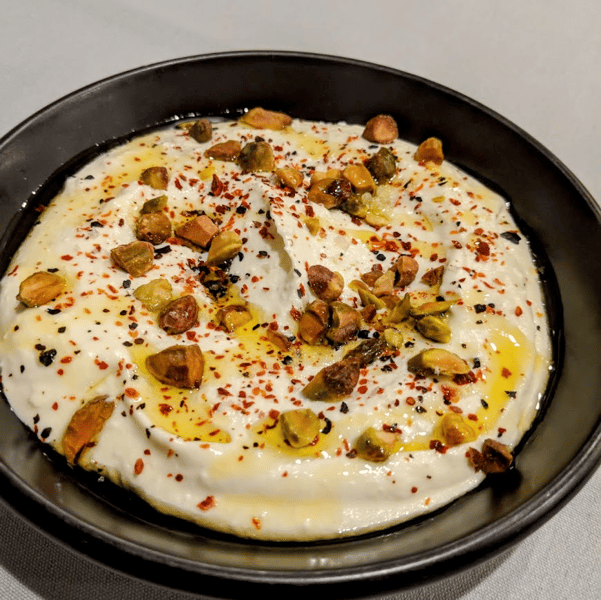
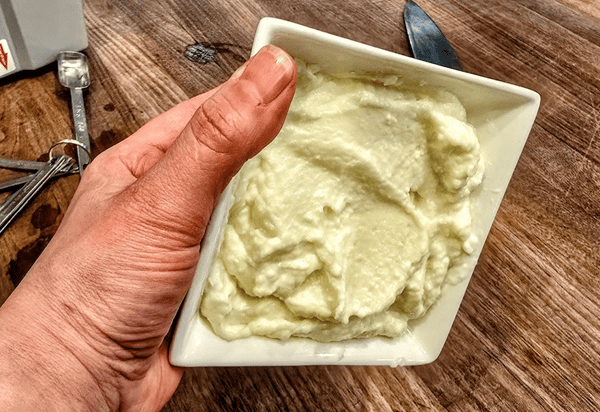
My favorite garlic based dip is called Toum. This recipe consists of only a few ingredients but when prepared properly it makes for an excellent dip that will last for months in your refrigerator…. if you can make it last that long!
This recipe made one full quart, and I have been using it on everything from breakfast eggs, snacking dip, to garlic bread and finishing my pasta cream sauce. This versatile recipe will soon become a staple in your cooking repertoire.
Toum, which is the Arabic word for garlic, is a pungent, fluffy Lebanese garlic sauce (and condiment) made by emulsifying garlic, neutral oil, lemon juice, and salt. It is a staple in Middle Eastern and Mediterranean cuisine, specifically paired with grilled meats like chicken shawarma, and acts as a potent, dairy-free, and vegan alternative to mayonnaise.
Toum
Yield: 1 quart
Prep time: 20 minutes
1 cup garlic cloves
2 teaspoons kosher salt
1/4 cup fresh lemon juice from about 2 lemons, divided
1/4 cup ice water, divided
3 cups neutral oil, such as grapeseed or canola oil, divide
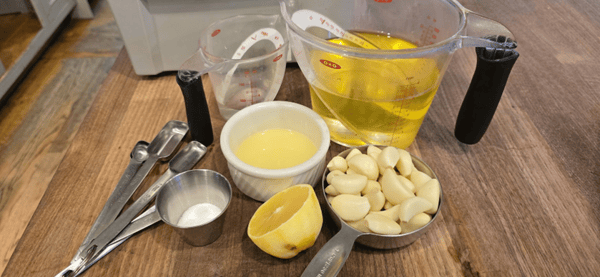
1. Using a paring knife, split each garlic clove in half lengthwise. With the tip of the knife, remove the germ from each garlic clove half. (I admit, I did not do this step! But I hear it cuts down on any bitterness that may occur.)
2. Place the de-germed garlic and kosher salt in the bowl of a food processor.
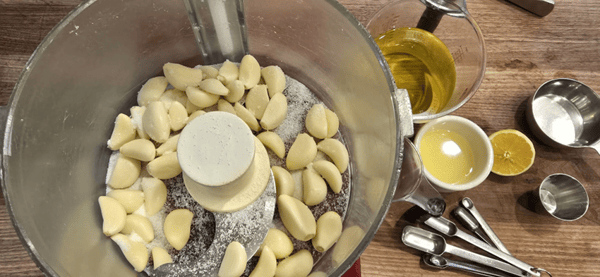
3. Pulse garlic in short bursts until finely minced, occasionally removing the lid to scrape down the sides of the bowl with a flexible rubber spatula.
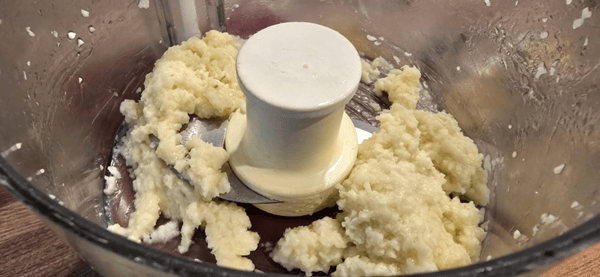
4. Add 1 tablespoon lemon juice and continue processing until a paste begins to form.
5. Add another tablespoon lemon juice and process until completely smooth and slightly fluffy.
6. With the food processor running, slowly drizzle in 1/2 cup oil in a very thin stream, followed by 1 tablespoon lemon juice.
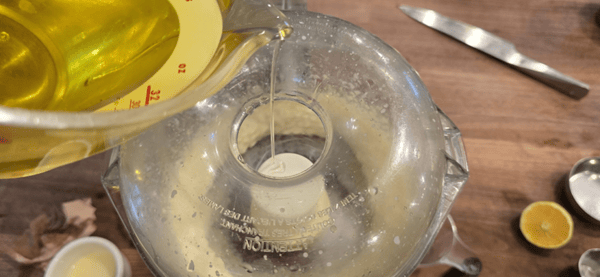
7. Repeat with another 1/2 cup oil and remaining 1 tablespoon lemon juice.
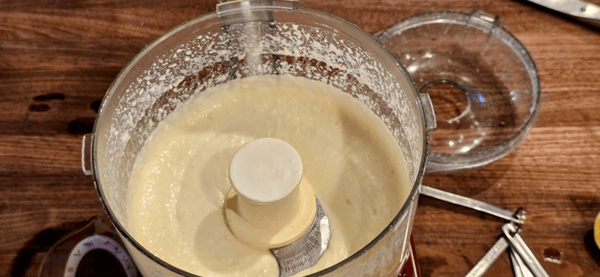
8. Continue the process, alternating 1/2 cup oil and 1 tablespoon water, until all the oil and water have been incorporated.
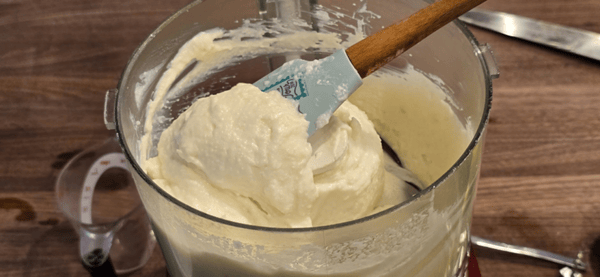
9. Transfer toum to a container and store in the fridge for up to 1 month.
Why this emulsion works:
- Fresh, firm garlic with the germ removed gives toum a bold, smooth flavor without bitterness.
- Blending the garlic into a smooth paste releases natural emulsifiers that stabilize the sauce without eggs.
- Slowly streaming in the oil ensures a stable, fluffy toum without greasiness.
- Alternating the addition of oil with small amounts of lemon juice and water keeps the emulsion from breaking.
I hope you enjoyed learning about all these other global dip phenomenons and incorporate them into your home cooking rotation besides eating hummus all of the time! Be sure to check out our class calendar for all upcoming Mediterranean classes.
