
Don’t you love a good charcuterie board? I know I do – both from a hosting standpoint, as well as that of a grateful guest. When hosting, it’s an easy grazing appetizer to put together with (mostly!) whatever I have on hand. I don’t have to worry so much about personal likes or dislikes (allergies notwithstanding, of course), just putting a board full of delights out there to satisfy everyone.
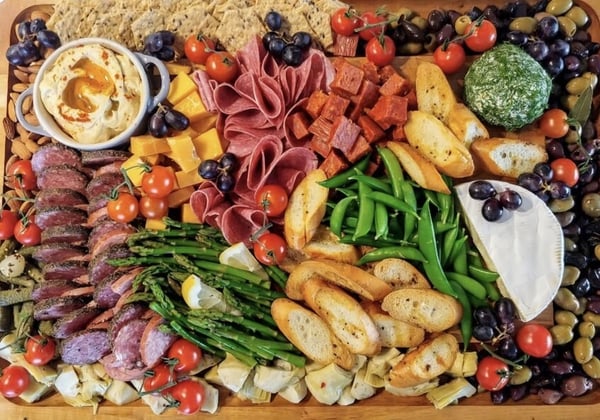
Sometimes a board is big and abundant for a crowd, like the one above. I made this one for “drinks & nibbles” gathering, where I didn’t know quite how many were coming or their personal tastes. Sometimes it’s a simpler outlay as a starter for a larger meal. And every once in awhile, it’s a just two or three of our favorites along with a salad, and we call it dinner!
Recently, I started seeing online posts about combining focaccia (a personal favorite) with a charcuterie board and I was intrigued! I’m not talking about putting together a charcuterie board with focaccia on the side as an addition to my cracker assortment. No, no; I’ve done that. I’m talking about the focaccia actually being the board. And not just focaccia with cheeses and meats placed on top, but focaccia with small indentations to actually hold what you’ve decided to include. What a fun presentation!
And, in my mind, it also meant two things: First, I wouldn’t need to worry about crackers (which are often left behind anyway); secondly, my concerns over other ingredients on the board getting soggy or greasy with oils or brine from olives, artichoke hearts, or pickles (and so, the need for little bowls) would be much less of an issue since the focaccia would act as a sponge and absorb them. And well, let’s face it, the focaccia would only become even more delicious with these flavors!
I decided to give it a go – I’m actually writing this as my first-time effort and bringing you along for the ride! I will include thoughts and tips as to what I would do differently when I do this again, hopefully saving you a bit on the learning curve. And I won’t edit out my mistakes – no glossed-up images on this post! If you’ve never made focaccia, it’s really fun. I’m including the entire process using a tried-and true recipe from The Chopping Block for the dough that we use in classes. Let’s get started!
Let me start by saying the original recipe makes a quarter-sheet pan size focaccia. Since I was going to be creating indentations in the surface, I knew I would need a larger area. So I doubled the recipe to make a half-sheet pan size, which is your standard “cookie sheet” size pan. You will see in the details of the recipe that it has already been sized up. I also decided to keep the recipe as simple as possible, since the focaccia would be providing a sort of backdrop or canvas for the rest of my ingredients. To that end, I used only some rosemary for flavor.
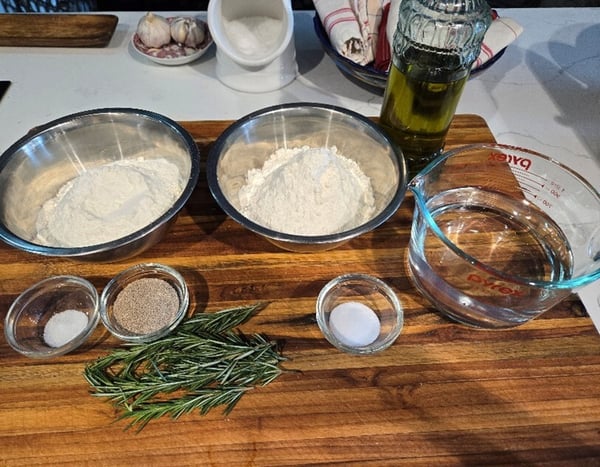
You will need:
-
2 Tablespoons active dry yeast
-
2 generous pinches of sugar
-
2.5 cups water, 110⁰-115⁰F
-
1/4 cup extra virgin olive oil, plus more for the pan and drizzling
-
2 2/3 cups bread flour
-
2 2/3 cups all-purpose flour
-
2 teaspoons fine sea salt
-
Several sprigs of rosemary (or other herb of choice), stemmed and roughly chopped
Before you get started be sure to have a large mixing bowl on hand, generously oiled with extra virgin olive oil. You will appreciate having this at the ready when you need it later!
First, mix the yeast and sugar together in the bowl of a stand mixer. Add the water by slowly pouring it down the side of the bowl, then gently stir the mixture for a few seconds until everything is dissolved.
Just a note on the water temperature. If the temperature is a couple of degrees warmer than recommended, it’s fine. Your bowl is likely quite cool and the temperature of the water will come down when it makes contact with the bowl.
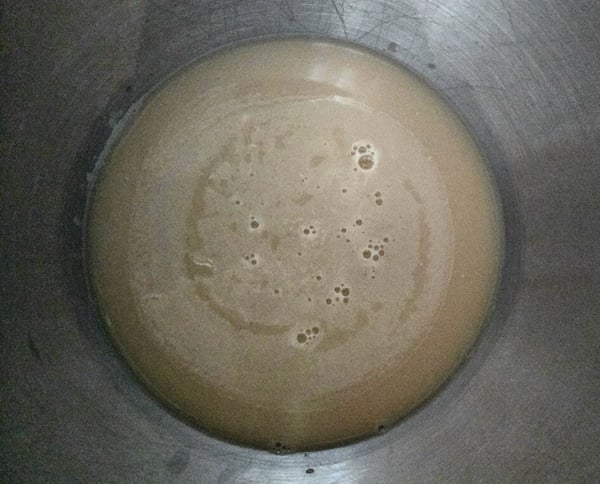
Now allow the yeast to “bloom”. The sugar actually feeds it and the warm water will provide the perfect environment for it to begin proofing. This is a test to make sure your yeast has not expired and is still alive. Just walk away for about five minutes. When you return, assuming all went well, the mixture will smell very “yeasty” and you’ll see something like this.
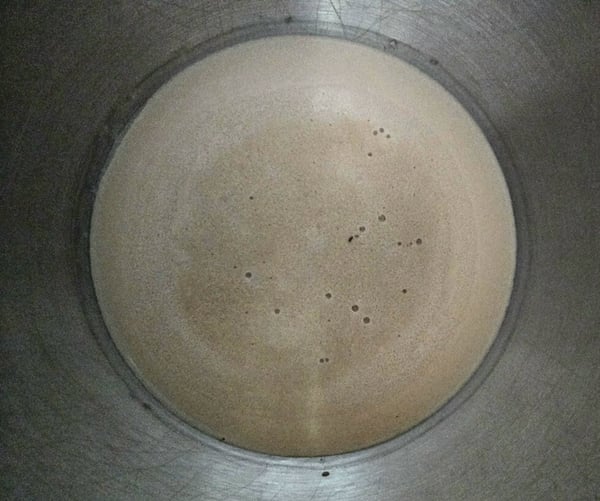
It may be a little hard to tell from the photos, but the top has become almost velvety in appearance, with the lines and swirls from the first photo having smoothed out. In addition, there are tiny bubbles scattered along the edges of the mixture. Finally, if you watch closely, you will likely see small bubbles pop here & there across the top. All these are indicators that your yeast is alive and well – and ready for flour!
Now add the 1/4 cup of extra virgin olive oil, about half of each of the flours (no need to measure, an estimate works), and all the salt. Using a dough hook, mix everything together on low speed until everything is blended. Be sure to scrape down the sides, as necessary. Turn the mixer off and add in nearly all of the remainder of the flours, keeping about 1/4 cup aside of each (again, no need to measure). This is because humidity can make a difference in how much flour is absorbed. Continue mixing until the dough becomes smooth, 5-6 minutes. Note that this will be on the wet side when finished. While you want it to have a bit of body and elasticity to it, it will not be an easy dough to pick up in your hands. Add some or all of the rest of the flour if the dough looks and feels too wet and combine well. Keep in mind that it’s better to have a dough that’s a bit too wet than too dry. That said, I can tell you that any time I have made this recipe here in Chicago, I have always ended up using all the flour.
Please don’t let this last bit confuse or frustrate you! While craft bread-baking is truly an art, focaccia is kind of an outlier, in that it’s very nearly foolproof. It allows for a lot of leeway. You’ve probably heard, “Trust the process”? Well, that definitely applies here!
The recipe calls to turn the dough out onto a lightly-floured surface and to knead it a few turns by hand.
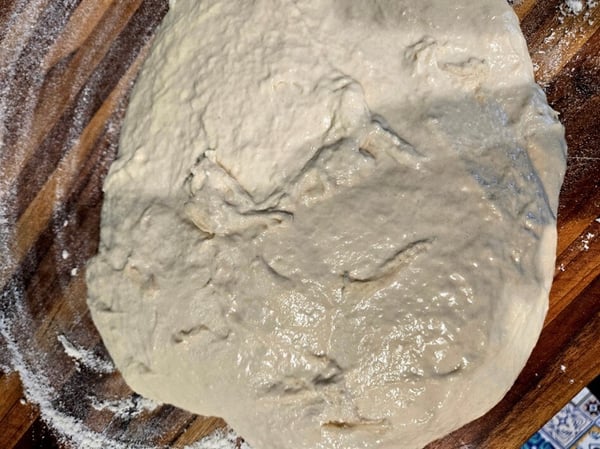
As you can see, the dough is still quite wet, but since I didn’t take a photo of it when I was done mixing, I wanted you to see how it looks here. You can see how it just spreads out on my board. I find it cumbersome to “knead” dough that is on the wet side, so even though I worked with it on the board, my preference is to simply reach into the mixing bowl to lift one side and fold it over on itself a few times. The idea is to incorporate some air to get the proofing process started. Go with whatever method works best for you.
Regardless of whether you have decided to turn the dough out onto your board or work it a bit inside the bowl, you will now place the dough into the oiled bowl you set aside at the beginning. I like to turn the dough over once in the bowl so there is a coating of oil on top of the dough. Cover the bowl with plastic wrap, making sure it is not touching the dough and set it aside to rest and rise (proof). After 60-75 minutes, you will see the dough will have doubled in volume. (Alternatively, you can let it rise in the refrigerator overnight.)
Note that you’ll want a comfortable room temperature, with no drafts for your dough to rise. I find that turning my oven light on & setting the bowl inside creates a great environment – just enough warmth & definitely no draft. Just be sure you haven’t had your oven on recently or it will be too warm.
While your dough is proofing, it’s the perfect time to decide how you will want your charcuterie board to look.
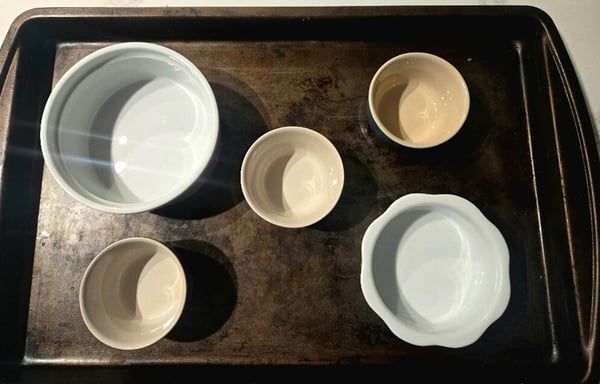
The indentations on your focaccia will be made by placing oven-safe bowls into the dough prior to baking. I wanted a variety of sizes of indentations in my focaccia, so I used a 4-inch ramekin, a 3-inch ramekin and three 2-inch ramekins. I used the same pan I will be baking the focaccia in to sort out how I wanted the ramekins arranged. I found I agreed with what I read online, that there should be at least one inch of space between the sides of the pan and the ramekins. Likewise, there should be the same spacing between the ramekins. This will allow for stability between the indentations in the focaccia. While I took this photo to show here, I found that I referenced this photo later – so it’s something I recommend doing even if you’re not writing a blog post!
I also knew that one of the elements I wanted to include on my focaccia board was a “salami rose” – it’s a presentation that’s simple to make and looks like you really fussed! So, just for fun, here’s a short video showing how easily you can prep one at this point and let it sit in the fridge until you’re ready for it.
Finally, if you haven’t already done so, now is the perfect time to chop your rosemary (or other herb of choice) for scattering on top of the focaccia before it goes into the oven.
Once your dough has finished proofing, oil your pan – generously! – with extra virgin olive oil.
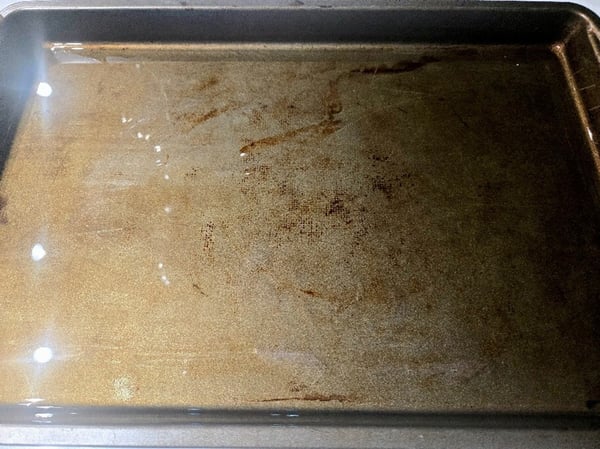
You can see this is more than just a skim-coat of oil. I didn’t measure, but used about 6-8 tablespoons of oil in this pan. This is what is going to give you that classic crunch crust on your focaccia. If it comes up over the top of the dough in the pan, that’s fine since you’ll be drizzling more over the top anyway.
Now scrape your dough from its bowl onto the prepared pan.
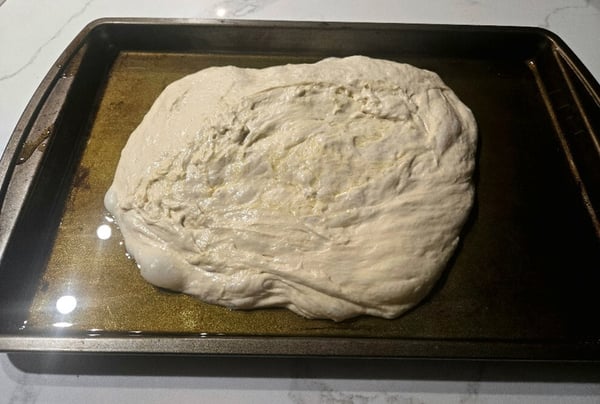
With your hands, push the dough out across the pan toward the corners and edges, creating an even layer, sprinkle the chopped rosemary over the top, and drizzle with extra virgin olive oil.
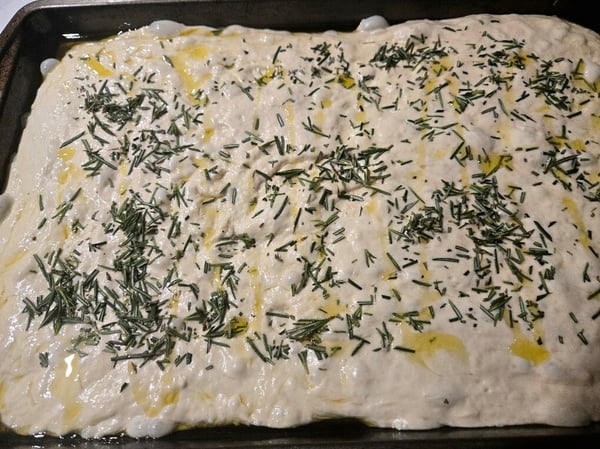
Can you see those air bubbles popping up here & there? That’s the yeast working! You may not be able to get it all the way to the corners or edges, but getting “almost there” will work just fine. Remember when I said to, “Trust the process”? It will fill in, I promise.
Now cover the dough with plastic wrap and set it aside to rise one more time for about 30 minutes. It will again double in size. Note that if you used the “oven light hack” the first time, leave it out on your counter this time since you now need to preheat your oven to 400⁰F.
Once your dough has finished rising, remove the plastic wrap.
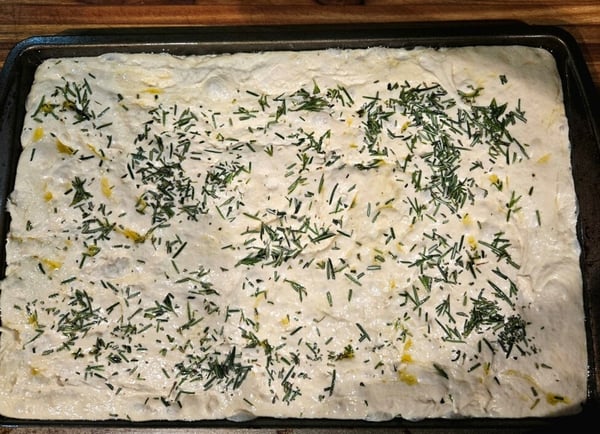
Look at how that dough spread out to fill the pan! Now grab your bowls and take a peek at your layout photo. Oil the outside of the bowls – especially the bottoms! – and press them into the dough according to your plan.
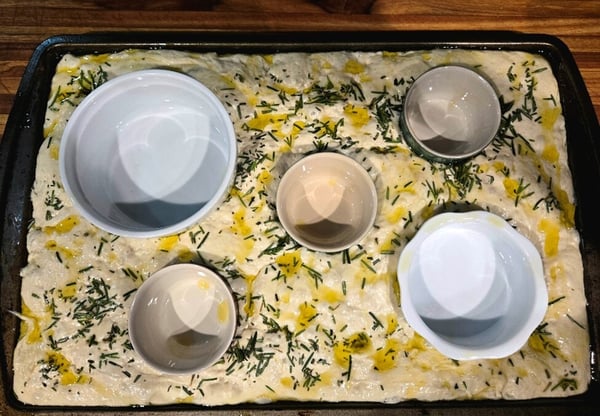
One thing I learned is that you don’t want to press the bowls all the way down through the dough – you don’t want them touching the pan (you’ll see why later). Press them in, stopping maybe about 1/4" from the pan. Drizzle a bit more extra virgin olive oil on the exposed parts of the dough.
Now comes the fun part! Using your fingertips, “dimple” the dough. Just randomly press the fingertips of both hands down through the exposed parts of the dough.
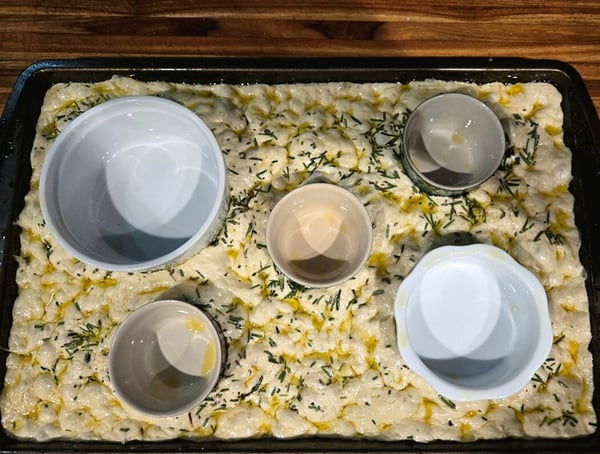
This dimpling is what gives the focaccia its classic bumpy appearance. Sprinkle the exposed parts of the dough with a large-flake sea salt, such as Maldon salt. Put the pan into the preheated oven and bake until it is a light golden brown, about 25 minutes.
When the focaccia is done baking, remove it from the oven to a cooling rack and let it cool for about five minutes.
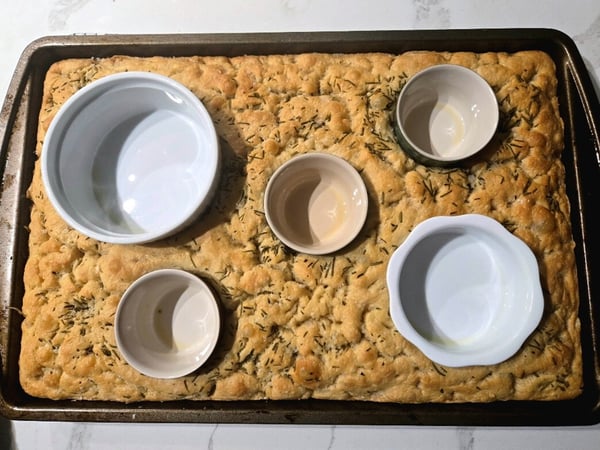
Using pot holders or small kitchen towels to hold the bowls (never forget they are hot!), run a small spatula (I like using an offset spatula) around their sides to loosen them from the focaccia. If they don’t lift out right away, the bowls may be stuck just a bit on the bottom. Again, holding onto the bowl, use the spatula to gently scrape the bottom as you lift.
Now get ready for a good chuckle!
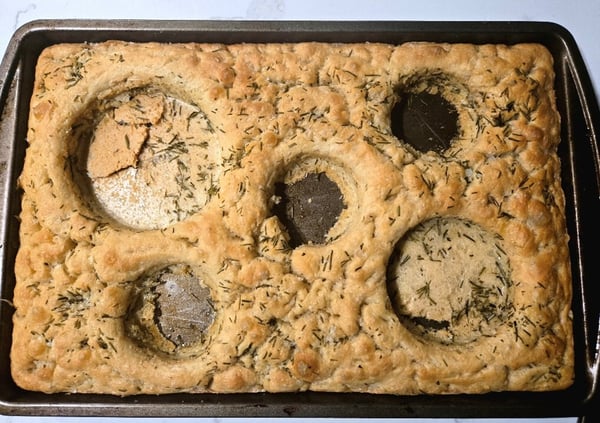
Remember when I said there wouldn’t be any glossed-up photos in this post? Well, here you go! You may remember I also said I learned the bowls shouldn’t be pressed all the way to the pan. This is exactly why. Since this was my first time doing this, that’s exactly what I did, and the layer of dough between the bowls and the pan was way too thin. I do think about 1/4” of dough in between should work. All that said, this is not the end of the world – even though I did have second thoughts about including this photo! Once these areas are filled in with your goodies, no one will be the wiser.
Now you can run that same spatula around the edges of the pan, making sure nothing is sticking. Normally (without the inserted bowls), focaccia will turn out of the pan easily when inverted. But since the bowls were here, heating the dough surrounding them, it won’t hurt to slide your spatula in from the edges underneath the focaccia, just to make sure it will release freely.
Before I show you the final photo of my finished “focaccia board”, let me just show you how that “salami rose” gets placed into its spot once the focaccia has completely cooled:
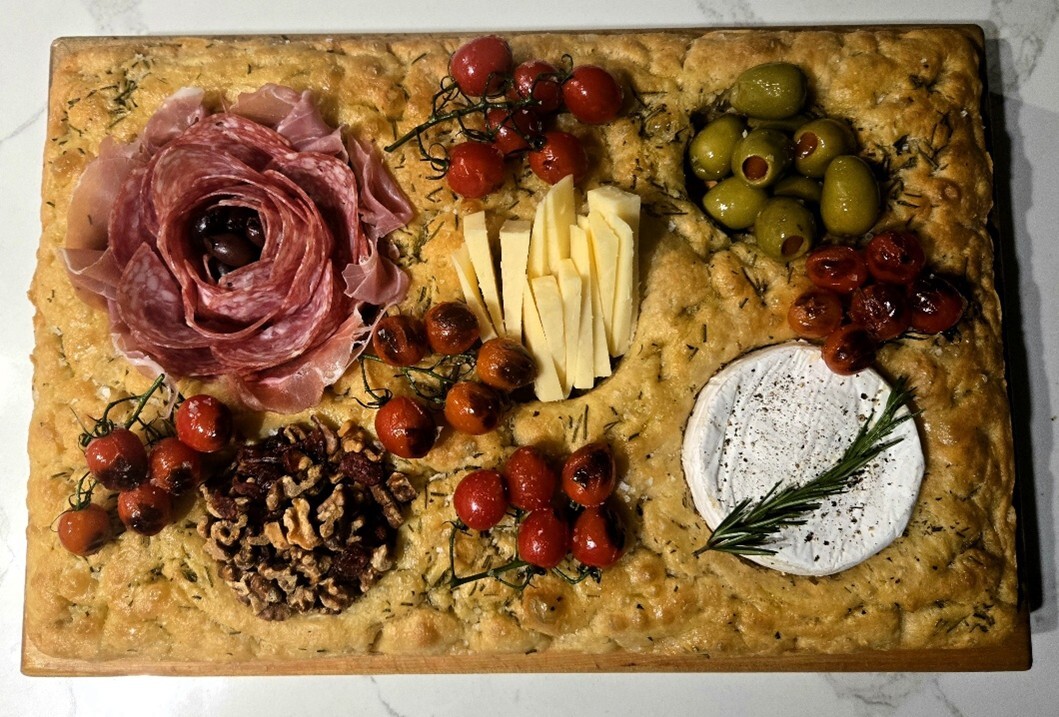
Here is how my focaccia board turned out.
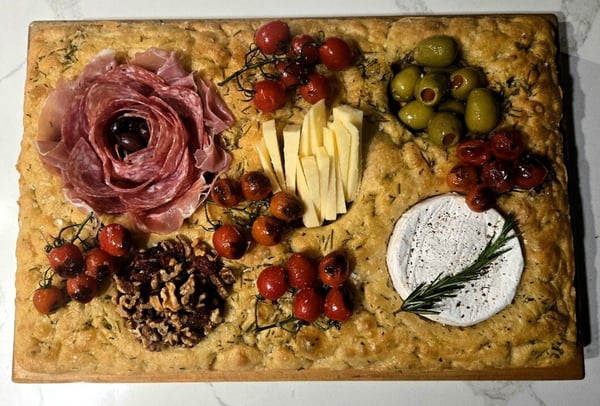
I placed it on a wood cutting board to move it around more easily – not to mention that some of my indentations had no bottoms, so I needed a base! I very lightly brushed the top with a bit of extra virgin olive oil, just to give it a slight sheen. It turns out that a small Brie fit perfectly in the 3-inch space and I sliced some white cheddar for the center. I added a few slices of prosciutto around the outside of the salami rose because there was a little bit of a gap, and I filled its center with some kalamata olives. Below the salami is a mixture of toasted walnuts and dried cranberries (I always think something crunchy makes a nice contrast). In the upper right corner are large green pimento olives and I scattered blistered cherry tomatoes to add color and interest, just laying them on top of the focaccia.
I hope you love this concept as much as I do – no crackers required! Please do comment and let me know if you try it.
In addition to our hands-on Artisanal Breads Boot Camp (all bread, all the time!), The Chopping Block features bread-baking in several other classes, so always take a peek! For example, making flatbread is featured in our hands-on Mediterranean Boot Camp and Olive Focaccia is included as part of our hands-on Homemade Soups and Breads from Scratch class. Not to mention that if you want to try a different approach to a savory dough our Chef/Owner Lisa Counts is featuring gougères as part of her Tasting Table Demo. Take a look at our class calendar to see it all!

The Chopping Block’s Focaccia Recipe
Notes: Original recipe doubled for a half-sheet pan and where Karen used a slightly different technique, it is noted in italics.
Yield: One half-sheet tray
Active time: 40 minutes
Start to finish: 2 hour, 45 minutes
2 Tablespoons active dry yeast
2 generous pinches of granulated sugar
2 1/2 cups water, 110º to 115º
1/4 cup extra virgin olive oil, plus more for the pan and drizzling
2 2/3 cups bread flour
2 2/3 cups all-purpose flour
2 teaspoons fine sea salt
Several sprigs of rosemary
- Measure together the yeast and sugar in the bowl of a stand mixer. Pour the warm water into the bowl, and stir gently until dissolved.
- Allow to proof until slightly foamy and aromatic to ensure the yeast is alive, about 5 minutes.
- Add the oil, half of each flour and salt. Mix on medium-low speed with a dough hook until incorporated, scraping down the sides as necessary.
- Add most of the remaining flour, and knead on low speed until the dough is smooth and elastic, 5 to 6 minutes. If the dough is too wet, sprinkle in flour as needed. Note: It’s better to have a dough that’s a bit too wet than dry.
- Turn the dough out onto a floured surface, knead a few turns by hand, and then shape into a ball. (Note: If the dough is too wet to comfortably handle, Karen flips it over on itself inside the mixing bowl.)
- Place the dough in an oiled bowl and cover with plastic wrap on top of the bowl, not touching the dough.
- Allow the dough to rise at room temperature until doubled, 60 to 75 minutes, or in the refrigerator overnight.
- Rub a sheet tray, including the sides, generously with about 4 tablespoons of the olive oil. (Note: Karen used 6-8 Tablespoons)
- Transfer the focaccia dough to the sheet tray and use your fingertips to gently stretch the dough until it is an even thickness of about 1/4 inch and fills the pan.
- Sprinkle the rosemary onto the dough and drizzle with olive oil. Cover it with plastic wrap, and allow to rise for about 30 minutes at room temperature, or until doubled in size.
- Preheat the oven to 400°.
- Remove the plastic, and drizzle with olive oil. Dimple the dough all over with your fingertips and sprinkle with large flake sea salt. Bake until light golden brown, about 25 minutes.
- Allow to cool, and then cut into squares to serve.