
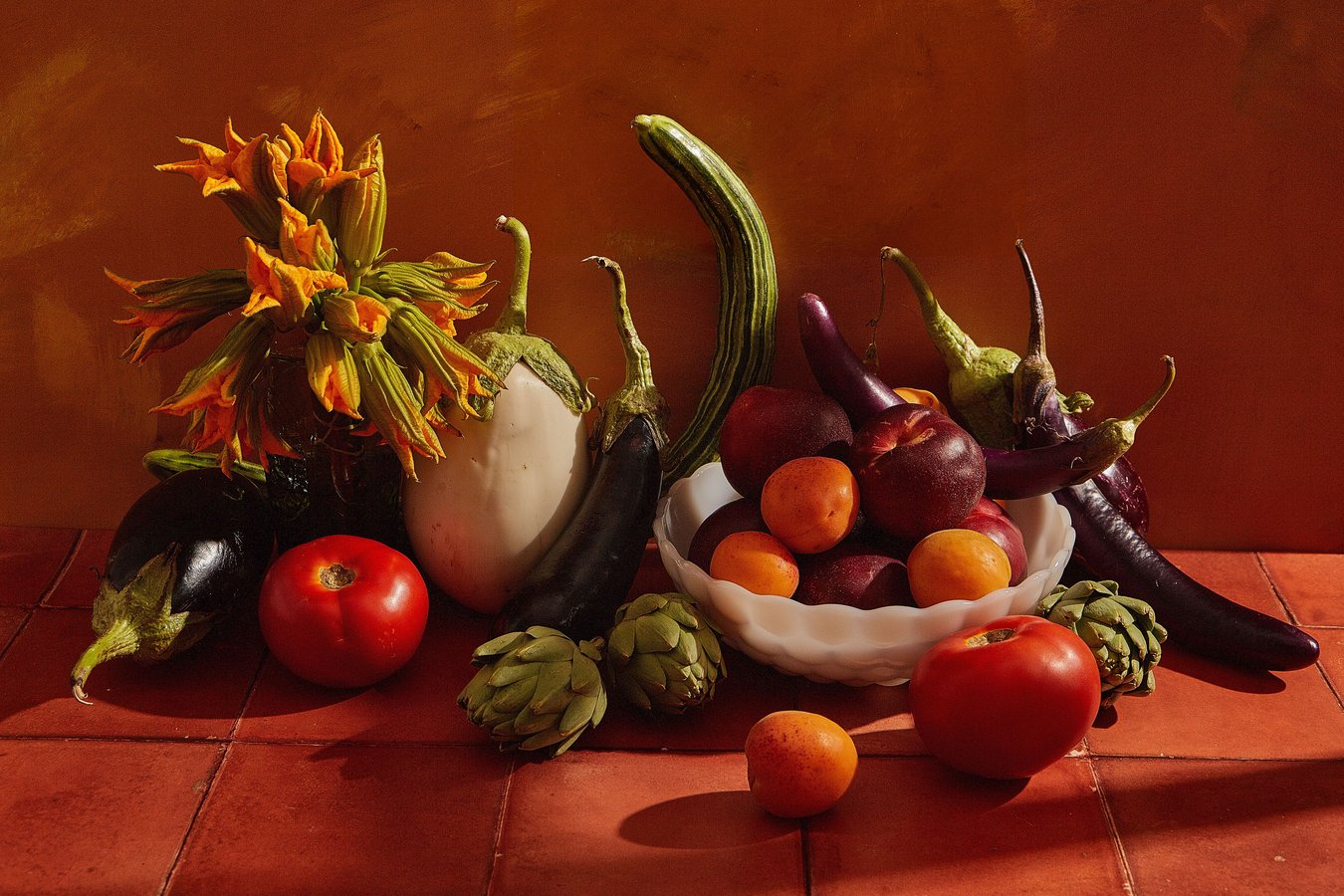
This morning at the farmers’ market, piles of fresh produce beckoned, stacked high at every stall as far as the eye could see. I watched my fellow shoppers filling totes to bursting, and juggling bags of peaches bigger than their kids. It’s the Midwest’s most abundant season, and I know I’m not the only one who falls prey to the magic of the market, buying too much and then watching in dismay as my beautiful summer produce goes to waste.
Preserving is amazing, of course, but it only gets you so far. Plus, some summer produce shouldn't be preserved—it should be eaten fresh (or as close to fresh as you can get it!). Here are my best ideas for using up a lot of summer veggies, fast.
How to Use Up Lots of Tomatoes
From heirlooms that look like sculptures to perfect baskets of sungolds that sparkle like jewels, the tomatoes are what get me the most. And towards the end of the summer, when the big boxes of canning tomatoes start appearing? Hold me back. My appetite is insatiable! The reality is, though, that I simply can’t eat as many tomatoes as I’d like. That’s when I start getting creative. One of my favorite ways to reduce the volume of summer tomatoes while retaining all of the flavor is slow-roasting them. Some, I keep just like that and others I roast and then stir into a signature sauce that gets frozen and put away for dark winter days. Coring, seeding, and reducing liquid is the key to saving tomatoes, and what I always think about when I come home with pounds of tomatoes in my bags.
How to Use Up Lots of Zucchini and Other Summer Squash
As anyone who has ever grown zucchini knows, one plant gets you a lot of squash. I’ve noticed that at least a couple of booths in my market start discounting it the longer that the season goes on, as if they’re tired of the overabundance too! For most of the summer, when I use zucchini, I’m slicing it and roasting or sauteeing it. But when I end up with more than I could possibly eat, I grab my grater and reduce those big squash down to piles of grated veggies that get salted and drained. I make fritters, baked goods, and even soups with the grated zucchini. I’ve even figured out that I can freeze some for winter, but that works best for baked goods in which the texture doesn’t matter as much.
How to Process Corn
Corn is a personal weakness of mine. I simply don’t eat it in the winter—canned doesn’t even come close to the taste of fresh sweet corn on the cob. One thing that I’ve started doing to preserve the beauty of summer corn is a trick that my dad taught me: just shuck the corn, then cut the kernels off of the cob while it’s raw. Freeze them, then use that instead of store-bought frozen corn all winter long. As a bonus, I like to save the cobs in the freezer, too. As a vegetarian, it’s my secret to hearty, complex vegetable stock.
How to Get Through Bunches of Herbs
Over the summer, chances are good that there’s a bunch of herbs getting brown in my refrigerator. This year, though, I made a pledge to buy those beautiful, flower-like bouquets of green as often as I could because I cracked the code for using it all up at once: the art of the dip. It never ceases to amaze me how quickly a huge bunch of herbs shrinks down when it’s blended into a pesto, chimichurri, or yogurt-based sauce, which are perfect for grain bowls. Blending these herbs with acid also lets you use them a little longer, especially when you freeze the sauces that you make with them.
