
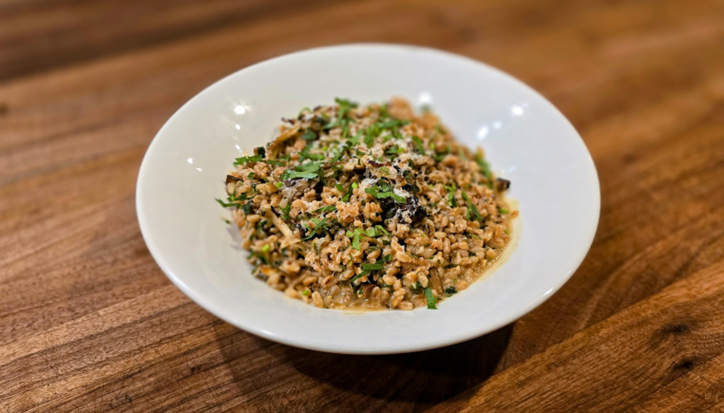
I am sure at some point in your life you have tried risotto. It is a very common menu item at restaurants, but most home cooks have not tried to make it for dinner because it seems very difficult or time consuming. But it is not as scary as it seems!
When most people think of risotto, they conjure up images of a creamy rice dish that needs to be stirred constantly and it takes forever to make. We make risotto in various classes at The Chopping Block, and there are numerous blogs on the subject on our website. This dish doesn’t have to be daunting, and we love teaching our guests that! It can be a very easy and impressive dish.
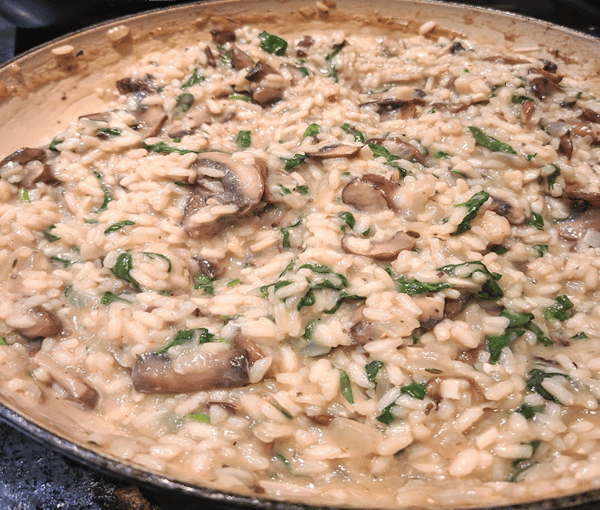 Once you have mastered a classic risotto, you may want to try these three recipes which include the process of making traditional risotto but use other grains besides the usual suspects of arborio or carnaroli rice. These types of rice are commonly used in risotto because they are short fat grain rice that yield an incredible amount of starch which leads to a creamy velvety finished dish. One of my favorite teaching points is that for every recipe, there can be substitutions or swaps of similar ingredients to utilize what you have on hand instead of racing to the store for a specialty ingredient you may not have or to just change up the flavor profile.
What matters most in cooking is understanding the technique behind the use of ingredients. For example, switching out a different vinegar for vinaigrettes, dried fruit or nut in a chutney, vegetables in stir fry, or in this case, using a different grain for risotto.
These substitutions aren’t bad or wrong, just different, though Top Chef judge Chef Tom Colicchio disagrees with me on this. In the recent season 22 finale of the show, the final four chefs landed in Milan and faced a risotto-focused Quickfire, a classic risotto "curse" since risotto has famously tripped up the chefs. Two chefs followed traditional routes and the other two chefs (including Chicago's Cesar Murillo) used non-rice ingredients with risotto-style technique, including Cesar's celery-root "risotto." Colicchio clarified mid-challenge: “Risotto literally means ‘of rice’… the star starch of the dish should be rice, period, end of statement.”
That is why I love cooking - rules are meant to be broken for the sake of experimentation of new ideas! For my own risotto trials, I made a “farrotto” or a risotto made with the grain farro, a potato risotto made with diced russet potatoes, and a sweet oat risotto.
First, let’s understand the very broad and basic rules/steps of cooking a standard risotto so we can be comfortable breaking those rules later.
- Sauté: vegetables, protein, aromatics, spices
- Toast: arborio rice, farro, barley, oats
- Deglaze: wine, vinegar, citrus, water, spirits
- Add cooking liquid: stock, water, dairy
- Finishing touches: butter, cheese, purees, herbs, mix ins
There are so many possibilities hidden within these five steps to customize and play around with! In each of the following recipes, I will share what I used in relation to the steps and other inspirational ingredients.
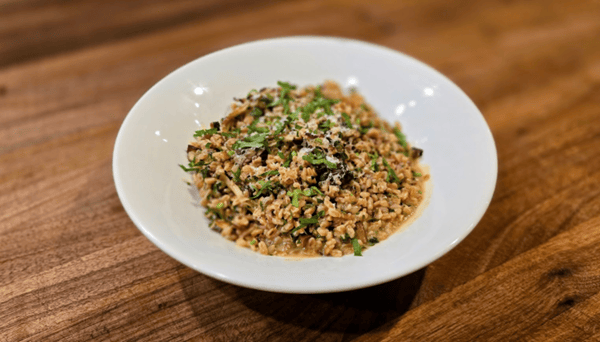
Farrotto (Farro Risotto)
Yield: 4 cups
Prep time: 10 minutes
Cook time: 30 minutes
Total time: 40 minutes
8 oz mushrooms, sliced
1 cup farro
1/2 cup white wine
4-6 cups stock
1/2 cup cheese, grated
1/4 cup herbs, chopped
1/2 stick butter
Salt and pepper throughout the process
1. Sauté the mushrooms of your choice in the fat of your choice. I used Maitake mushrooms for this recipe, but any other mushroom would be delicious, and it is critical to season them well. I took my mushrooms out of the pan once they were nicely browned and crisped. When sauteing other veggies like onions, garlic, fennel, or even butternut squash, you can leave them in the pan and continue to the next step. Alternatively, you may cook or roast your veggies separately and fold them in at the end.
 2. Toast the farro until golden brown and fragrant, about 2 minutes. This step really helps bring out the nuttiness and depth of flavor of the farro and helps break open the hull in order to cook evenly when receiving the liquid.
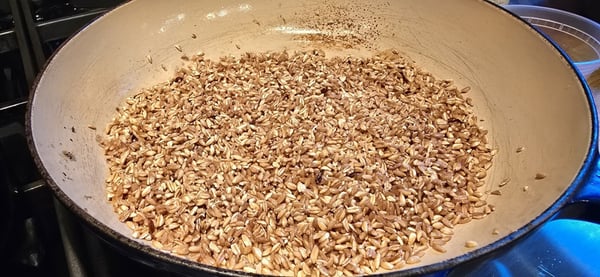 3. Deglaze with the white wine and reduce down until almost dry. This helps clean off the bottom of the pan and give the farro a lovely acidic background taste. You could also use vinegar cut with water or another wine or spirit would do the trick.
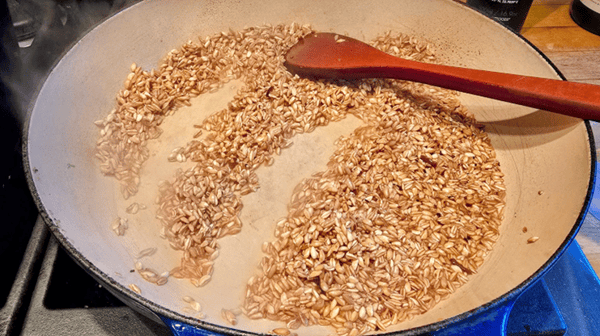 4. Add cooking liquid. I used chicken stock because I had some floating around, but it can be any flavorful liquid. The key here is that you add just enough liquid to cover the grain and slowly simmer until the liquid is absorbed and then keep adding liquid in batches until your desired preference of chew is reached. I prefer my farro to be al dente and have a bit of toothiness to it. There is a range of liquid listed because depending on how fast you are simmering and how cooked you prefer your grain could vary the amount of liquid you use. Your cooking liquid must always be warm and not cold to ensure even cooking of the grain.
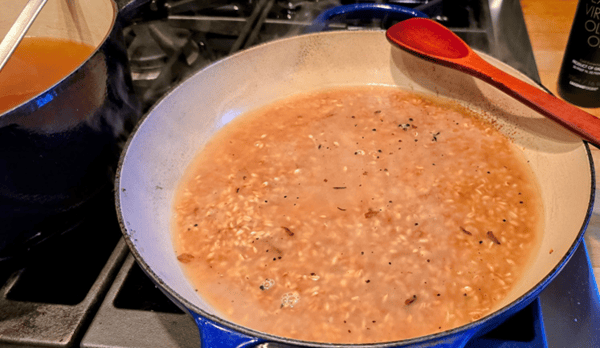 5. Finishing touches should be added when the grain is 99% cooked and over low or no heat. I like to make sure that I have enough liquid in the pan to ensure a creamy and not gloopy finished product. I used Fontanella cheese, butter and parsley for my finishing touches. Any meltable cheese can work -Parmesan is most traditional. The butter helps make it creamy, but I have also finished risottos with mascarpone or other purees. We finish with these items so the fats don’t separate out and the herbs stay vibrant and flavorful.
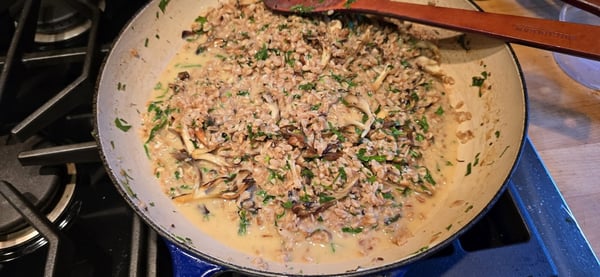
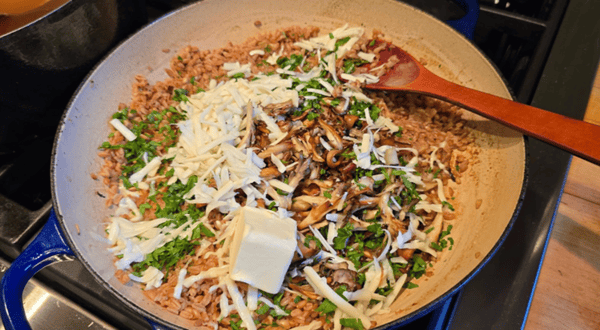 As you can see, these steps are very simple and can work in a variety of ways. Farro would probably be the most similar to the arborio rice in a regular risotto in relation to the amount of liquid it needs to absorb in order to cook through and not be crunchy. This recipe didn’t come out as creamy and decadent as a typical risotto but depending on the finishing touches added, I believe it can get there.
 I often reference in my classes that risotto is not just a side dish, but rather a process, and I wanted to see if I could use this method with something other than a grain. Enter the potato! I figured potatoes have a high starch content so maybe by using the risotto technique it would make for an interesting side dish in its own right. Cheddar, bacon and scallion is a classic combination and this flavor profile could work on the farro risotto, too.
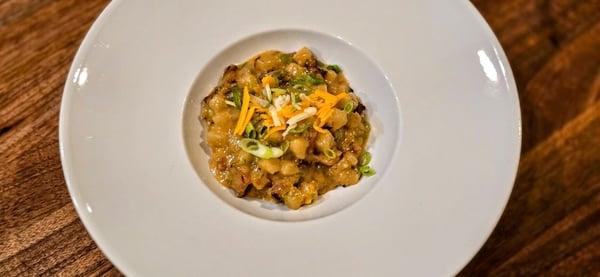
Potato Risotto
Yield: 2 cups
Prep time: 20 minutes
Cook time: 20 minutes
Total time: 40 minutes
2 slices bacon, diced
3 scallions, sliced on bias, separate green and white
2 Russet potatoes, peeled and cut into a small dice
1/4 cup wine
2-4 cups cooking liquid
1/2 cup cheese
1. Sauté bacon, starting in a cold pan to render down as much fat as possible. When making a risotto you can also start by cooking a protein in the pan before other veggies or going straight to toasting the grain. I have done this with shrimp, pancetta, and even ground meats. In this instance I removed the bacon and then added the scallion whites for just a moment. Shallots are a good option here as well.
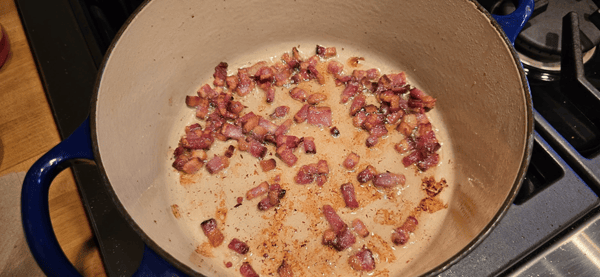
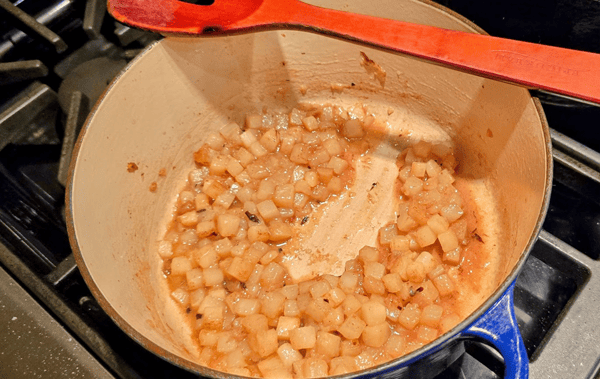
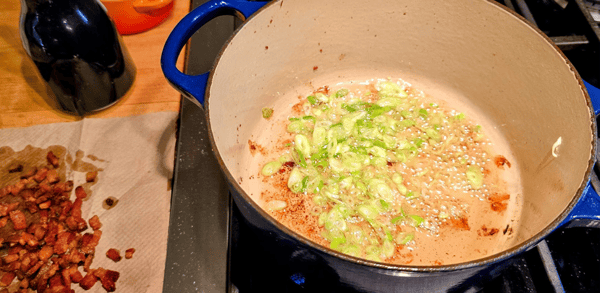 2. Toast (in this case, browning or crisping the potatoes may be a more appropriate term) but we are still doing the same thing - developing flavor and texture. Once I see golden brown crispiness on 50 percent of the potatoes, I am ready for the next step. Pro tip: do this step on high heat in order to prevent sticking. But even if the potatoes do stick the next step will help.
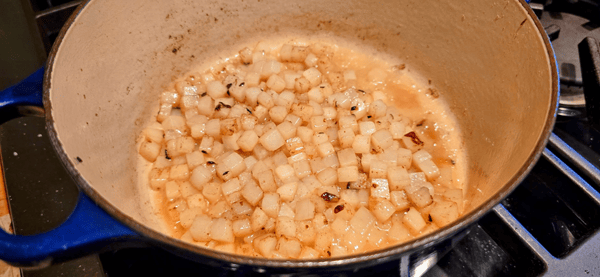 3. Deglaze with wine of choice. Be careful when stirring and try to scrap the bottom of the pan as to not tear up the potatoes. I wanted to keep this process similar to the one above with the only variable being the starch and protein addition, but I think next time I will deglaze with beer!
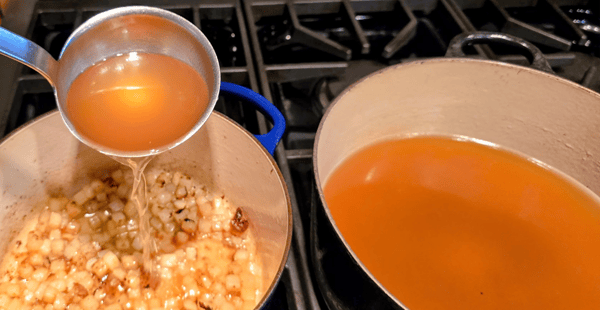
 4. Cooking liquid: I used the same chicken stock as I mentioned before. Add one 8 oz ladle at a time, simmering very low and slow until the liquid was gone before adding another ladleful. You want to make sure your liquid is seasoned and flavorful because with every addition the potato is absorbing that liquid. Potatoes do not need as much liquid as farro or arborio rice so make sure to taste for preferred doneness often.
 5. Finishing Touches: once the potatoes were cooked, I added the bacon back in, a cheddar/Chihuahua cheese mix and the green scallions at the end. You can adjust consistency by adding more liquid and if it becomes too loose, you can cook the liquid off over very low heat.
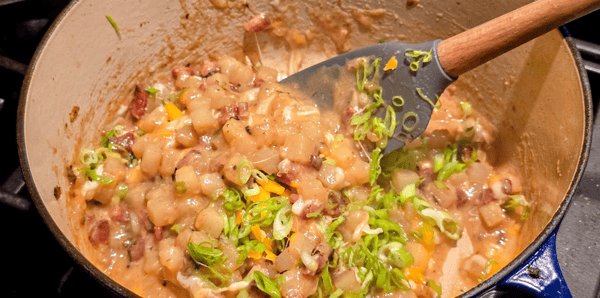 I was very impressed by the final product of this bacon, cheddar, scallion potato risotto trial! It was creamy, the potatoes were cooked through but fluffy on the interior and the bacon created a welcoming contrast in texture.
The last grain I tested out was old fashioned oats. Full disclosure: I originally wanted to make this recipe savory with all of the farro ingredients above and make the farro a sweet version but I grabbed the wrong container when I went to toast after the mushrooms were cooked!
But using the risotto system we have established, these oats resulted in the best oatmeal I have ever eaten! Think of it this way - usually you add the grain and liquid together like you would with white rice and those never have the same texture as a risotto would, right? So, I am excited to go through this process and maybe change the way you make your morning breakfast.
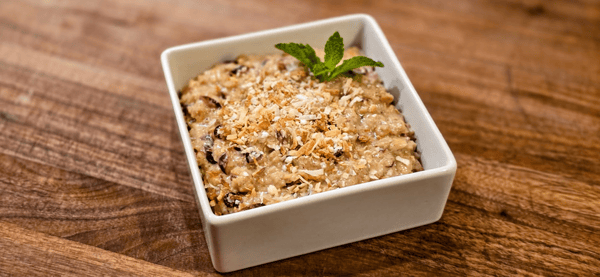
Risottoed Oats
Yield: 1.5 cups
Prep time: 5 minutes
Cook time: 10 minutes
Total time: 15 minutes
4 Tablespoons butter
1 cup oats
1/2 cup nuts, dried fruit, seeds, coconut
1/4 cup water
1-2 cups dairy
3 Tablespoons Sweetener of choice
2 Tablespoons whipped cream or butter
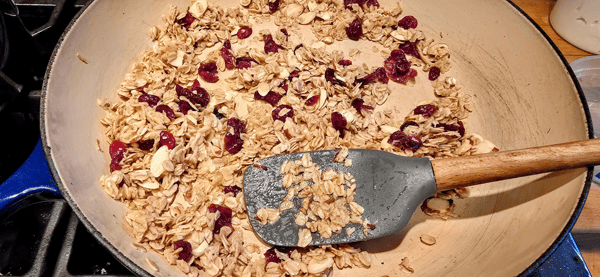
1. Sauté/Toast the oats in butter until golden brown and aromatic. I didn’t have anything to cook ahead of the oats for this specific version, but you could make breakfast sausage or any of the previous savory ingredients listed in the other recipes. You could also toast the nuts and plump the dried fruit in this step or just mix in at the end. Either way it is delicious. I let the butter get a tad browned to bring out the nuttier flavor and added some optional grated nutmeg.
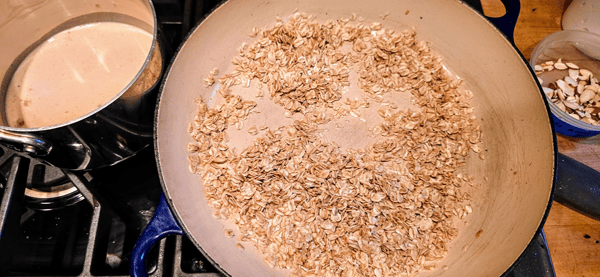 2. Deglaze with water. I add water as to not use too much dairy but that is preferential. You could go straight to dairy or do half water and half dairy as to not get too thick.
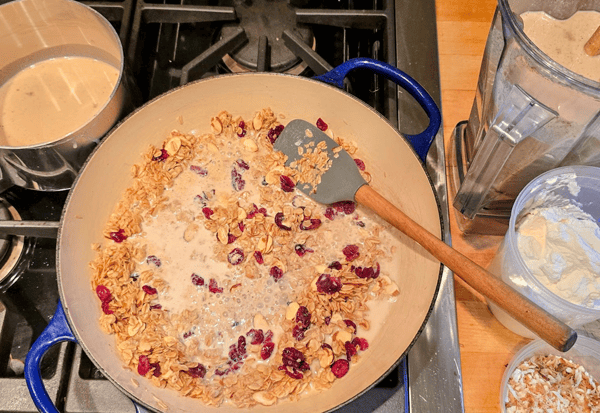
 3. Cooking liquid: I used a chai spiced half and half mixture with sweetened condensed milk that I had made to use for coffee creamer. I understand that it is highly specific but demonstrates the fact that cooking liquid could be anything! Even if all you have is water you can impart flavor in all of these recipes with seasonings, spices, and finishing touches. In this case, brown sugar, honey, maple syrup could work based on how sweet you want it to be.
 4. Finishing touches: I had some whipped cream leftover from an event so I folded that in at the end to create a lighter fluffier oat risotto, but you can finish with butter as well. If you need to loosen up the oats I would add more of the dairy to make it rich and delicious.
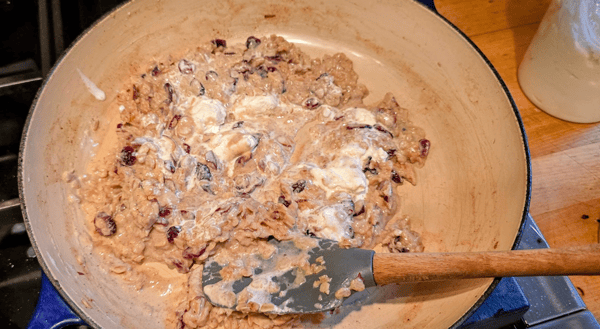 Can you imagine how awesome this would be if I used steel cut oats? Those generally take longer to cook than old fashioned oats and would take more additions of liquid creating a similar result to that of Italian risotto.
Once you understand the techniques behind cooking you will be able to make the most of your pantry and the possibilities become endless. To become a master of all of the basic cooking procedures, check out our Culinary Boot Camp. We cover traditional risotto as well as other grains and cooking styles you need to be confident in the kitchen.
Our class calendar is full of classes to help you on your way to being a well-equipped home chef! I would love to hear other grains or starches that you have given the risotto treatment to, comment below so I can try them too!
