
People often ask me, “What advice would you give to aspiring cooks and chefs?” My answer is always the same. Read cookbooks!
When I was a young cook, I immersed myself in as many cookbooks as I could get my hands on. I often read them like novels, cover to cover. I was fascinated by the chef’s stories, intrigued by the exotic (to me) ingredients and flavor combinations, and excited about the techniques. I wanted to learn every trick I could to become the best cook I could be.
One day, while I was in culinary school, we had a guest chef speak to our class. The chef was Paul Virant, and he brought his book The Preservation Kitchen, with him. He talked about his passion for preserving seasonal produce and how his restaurants used it throughout the year.
The way he talked about food really inspired me. I bought his book on the spot.
I had a chance to chat with him after class, and he invited me to stage at his restaurant, Perennial Virant. A stage at a restaurant is essentially a very short internship, or in some cases, an audition for a job. I just wanted to hang out for a few days and learn what was happening in his kitchen. I was brand new to professional kitchens and was incredibly excited.
I got to work alongside his sous chefs and cooks, and see his stories come to life. Jars of house made pickles and preserves filled the prep kitchen, and they were being used in many of the dishes on the menu.
It was an eye opening experience for me.
The Book
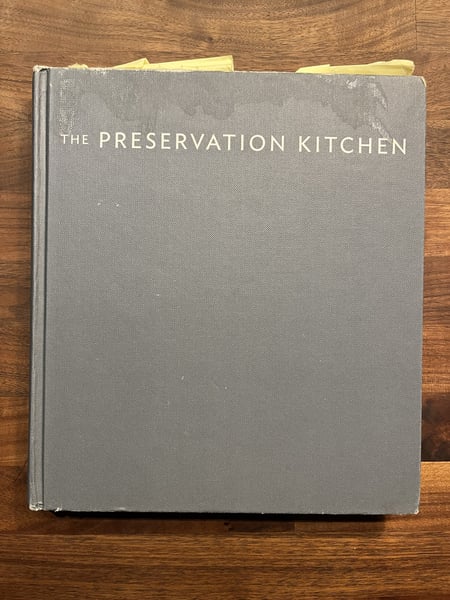
The Preservation Kitchen: The Craft of Making and Cooking with Pickles, Preserves, and Aigre-doux by Paul Virant with Kate Leahy might be the cookbook that I have referenced more than any other in my life.
My copy is worn, earmarked, and tagged with notes. I have taken the techniques and tips given, and used them to develop my own recipes. I still reach for it often when I need inspiration.
The book is split into three parts.
Introduction: Capturing the Year in a Jar
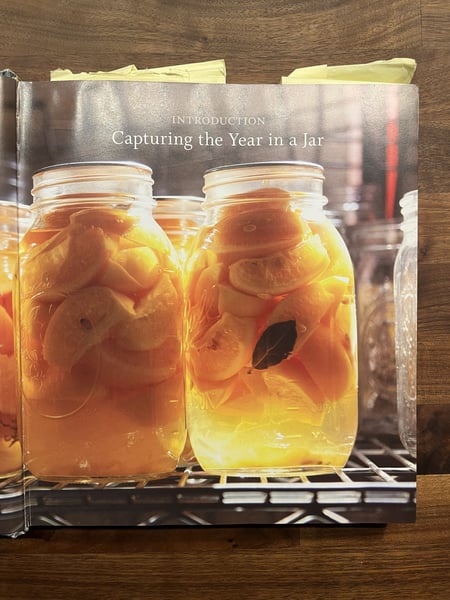
The book opens with Chef Virant describing how preserving and canning became a part of his life. It then goes into great detail about the principles of safe preserving, including the science behind the process and the importance of controlling harmful microorganisms.
There is a pH scale that determines acidity. On the scale, 1 is highly acidic, 14 is highly alkaline, and 7 is neutral. A pH of 4.6 is an important dividing line in food preservation. Sufficiently acidic foods can be processed in a boiling water bath, while low-acid foods require pressure canning for safe processing.
The book focuses mainly on water-bath canning. The combination of heat, acidity, and an airtight seal is crucial to the safety of the contents of the jar.
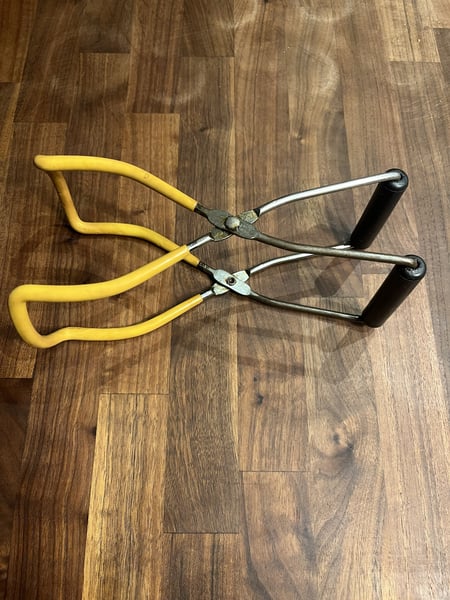
The equipment required is fairly straightforward. You will need clean jars with lids and bands, a large pot, and a few useful tools. Kitchen tongs, or a jar lifter are needed. A wide-mouth funnel with a wide opening is helpful, as is a little stick magnet to draw lids out from hot water. I don’t have either of the latter two so they are not absolutely necessary.
There is also a thorough outline of the water-bath canning process, including each step and what to look out for along the way.
Part One: In the Jar
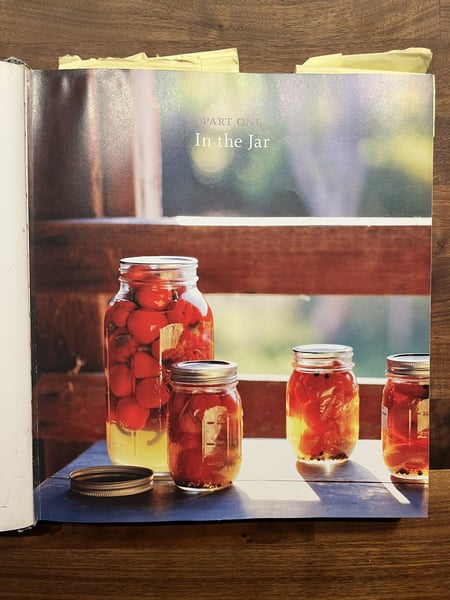
This part is all about the recipes.
There is a section for pickles, relishes and other acidified preserves. Another for jams, marmalades, conserves, and butters. Also, bittersweet preserves, such as aigre-doux and mostarda. This part of the book will also touch briefly on fermentation and pressure canning.
Ingredient amounts are listed in volume, ounces, grams, and percentage. This is especially helpful if you are trying to make things consistent, as you would in a professional restaurant setting, while making it easy enough to decipher for any home cook.
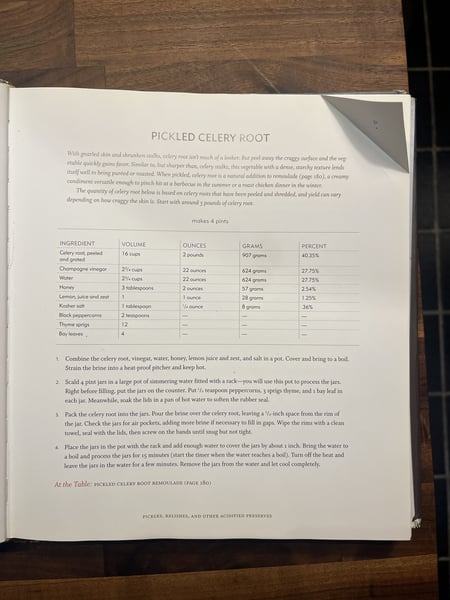
The recipes are grouped seasonally: spring, summer, and fall. Chef Virant provides a brief personal introduction before each pickle and preserve recipe, along with a suggestion of how to use it. The corresponding page number directs you to the next part of the book, where that preserve is incorporated into a dish.
Part Two: At the Table
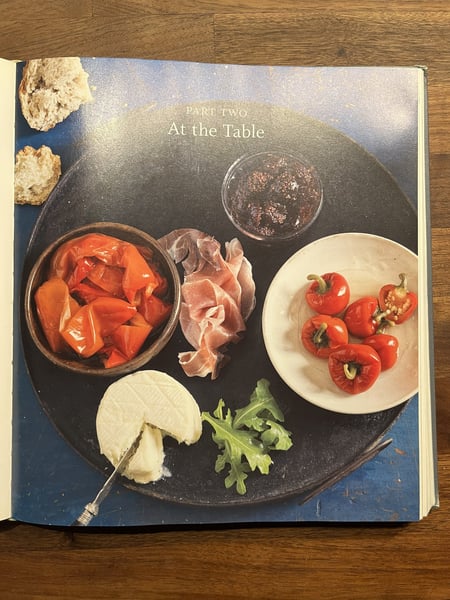
This part shows you where to put your canned goods to use.
The recipes use the pickles and preserves as ingredients in composed dishes and are again organized seasonally. There are unique and interesting dishes ranging from small bites to main courses, along with beautiful desserts, refreshments, and cocktails.
The photos, by Jeff Kauck, are gorgeous. I really like the way Paul Virant cooks, and thinks about food. Every recipe makes sense and looks delicious.
I really do want to try them all.
The Pickle
Sometimes I will replicate someone else's recipe verbatim. I especially did this when I was a young cook, still learning the fundamentals. Now, with some experience under my belt, I can look at a recipe and understand what it entails. I can imagine each step, and taste the ingredients in my mind.
These days, I like to use a recipe as a guide, and develop it to my own preferences.
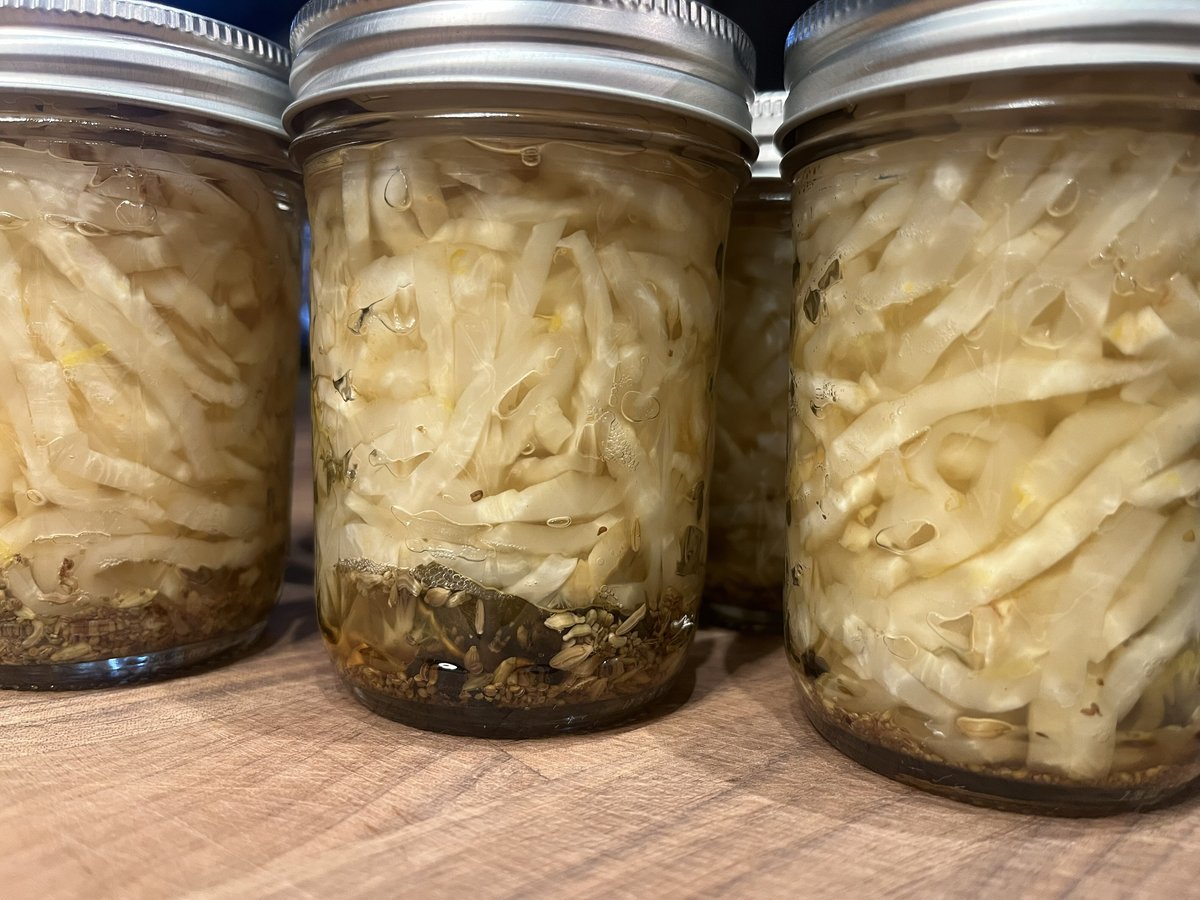
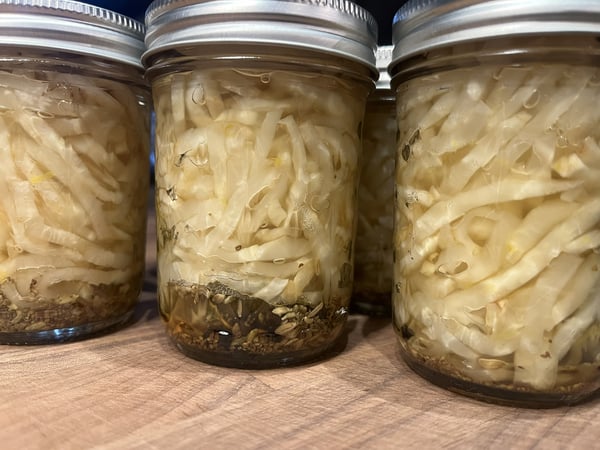
I did this with Chef Virant’s recipe for Pickled Celery Root. I made minor tweaks based on what I was feeling at the time. Celery root is one of my very favorite vegetables. I have actually never pickled it before, so this intrigued me.
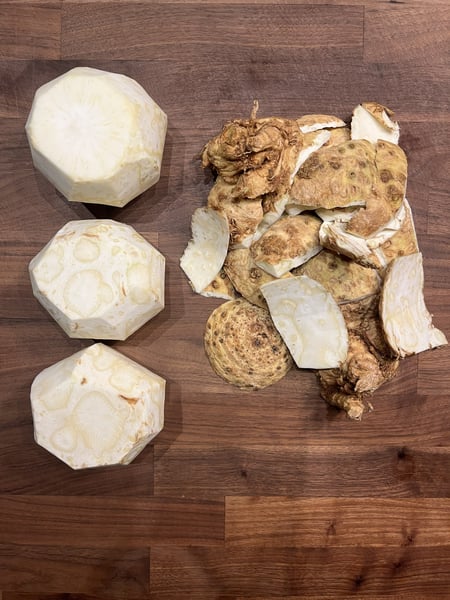
One change that I made was the type of vinegar. The book almost always calls for champagne vinegar. I had white wine vinegar, so that is what I used.
The book also instructs to grate the celery root. I imagine this is because it is approachable for a cook of any skill level. I decided to peel the gnarly root vegetable with a very sharp knife, and cut it precisely into a julienne, or matchstick shape.
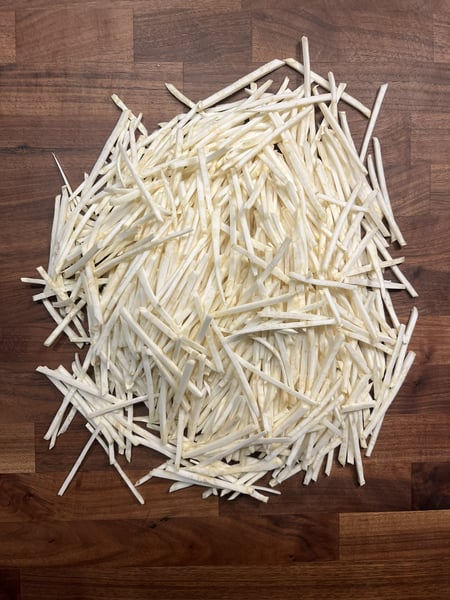
I also added some seasonings that I thought would compliment the subtle celery flavor of the root, including fennel and celery seeds.
Pickled Celery Root
Yield: 8 half-pint jars
Prep time: 30 minutes
Cook time: 30 minutes
Total time: 1 hour
3 large celery root (about 3 pounds), peeled and cut into julienne (about a 2 pound yield)
For the brine:
3 cups white wine vinegar
3 cups water
3 tablespoons honey
2 small lemons, zest and juice
1 tablespoon salt
For the jars, divided among 8:
1 tablespoon black peppercorns
1 tablespoon celery seeds
1 tablespoon fennel seeds
8 thyme sprigs
8 bay leaves
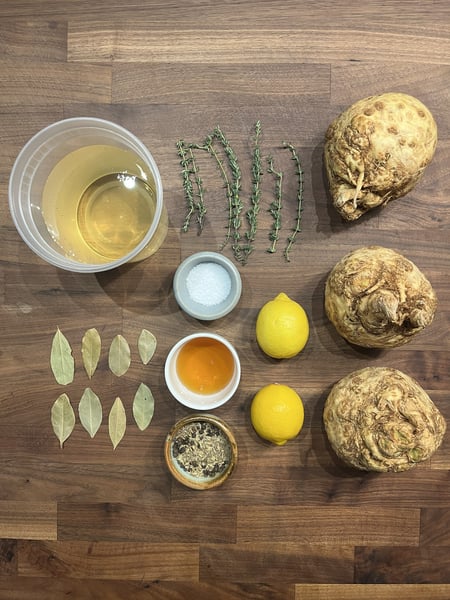
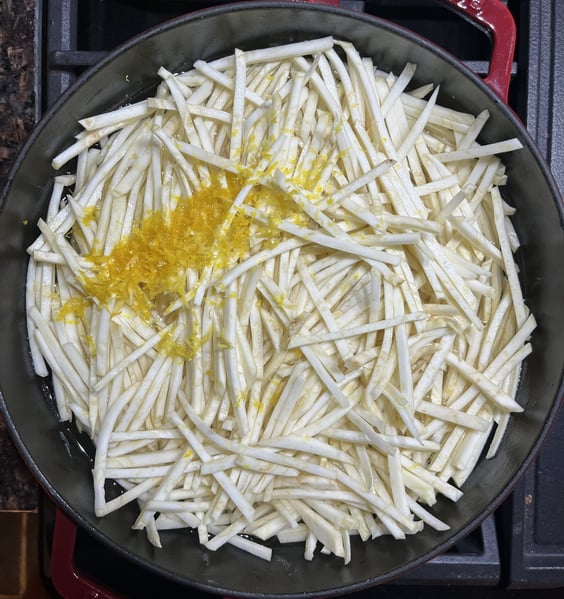
1. Combine the celery root, vinegar, honey, lemon juice and zest, and salt in a pot. Cover and bring to a boil. Strain the brine into a heat-proof pitcher and keep hot.
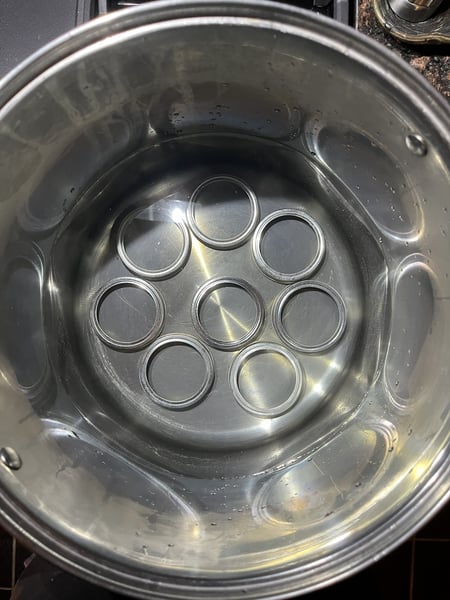
2. Scald 8 half-pint jars in a large pot of simmering water fitted with a rack. You will also use this pot to process the jars. If you don’t have a rack, use extra jar bands to keep the jars from sitting directly on the bottom of the pot. Distribute the spices and herbs into the scalded jars. Meanwhile, soak the lids in a pan of hot water to soften the rubber seal.
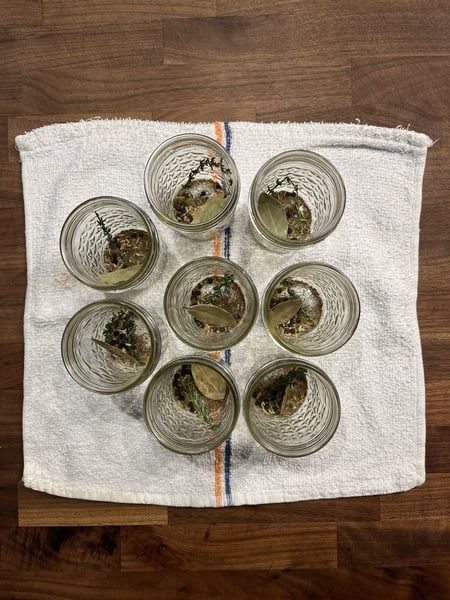
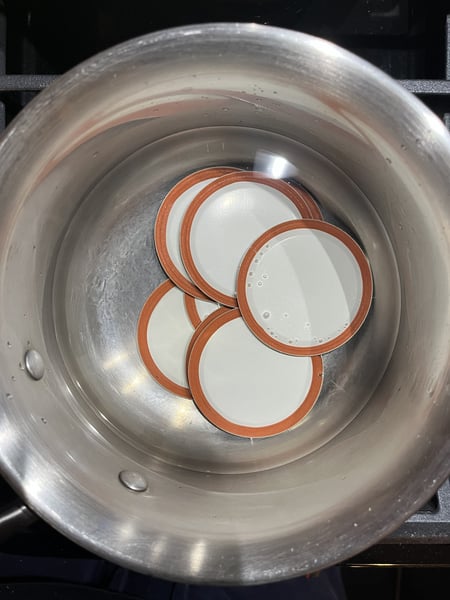
3. Pack the celery root into the jars. Pour the brine over the celery root, leaving a 1/2-inch space from the rim of the jar. Check the jars for air pockets, adding more brine if necessary to fill in gaps. Wipe the rims clean with a clean towel, seal with the lids, then screw on the ring tops until snug but not tight.
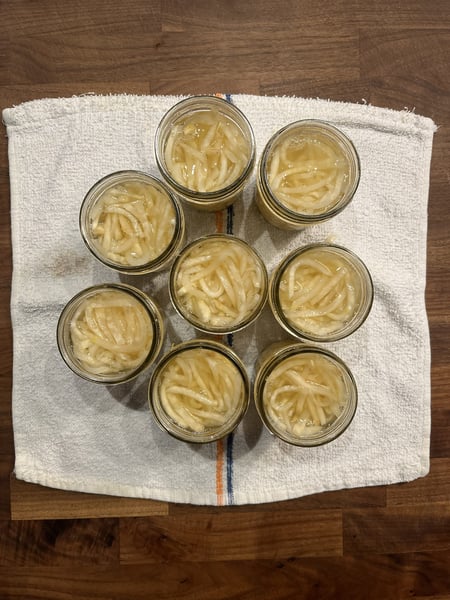
4. Place the jars in the pot with the rack and enough water to cover the jars by about 1 inch. Bring the water to a boil and process the jars for 15 minutes, starting the timer when the water reaches a full boil. Turn off the heat and leave the jars for a few minutes. Remove the jars and let cool completely.
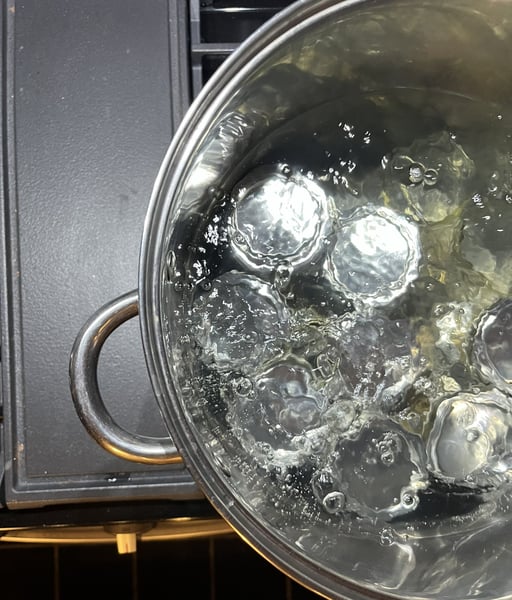
5. Store in a cool, dark, and dry place.
The Dish
There are countless ways to use the celery root pickle. Chef Virant’s recommendation is a pickled celery root remoulade. I want to go in the same direction with a creamy condiment.
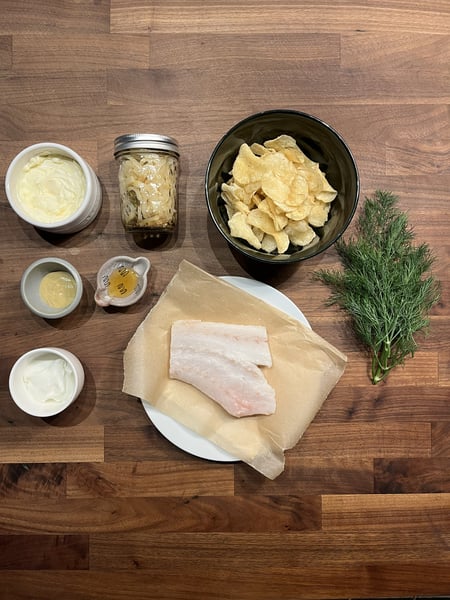
In my freezer, I have a lovely piece of cod. I also have a bag of kettle-cooked sour cream and onion potato chips in my cupboard.
Let’s have some fun!!
“Fish and Chips” with Pickled Celery Root Tartar Sauce
Servings: 1-2
Prep time: 15 minutes
Inactive time: 20 minutes
Cook time: 10 minutes
Total time: 45 minutes
For the tartar sauce:
1/2 cup mayonnaise
1/2 cup plain yogurt
1/2 cup pickled celery root, finely chopped
1 tablespoon pickled celery root liquid
1 teaspoon Dijon mustard
A few drops of honey
2 tablespoons fresh dill, finely chopped
Salt and pepper to taste
For the fish:
1 six ounce cod fillet, cut into strips
Black pepper to taste
1-2 tablespoons mayonnaise
1-2 ounces sour cream and onion kettle-cooked potato chips, crushed
1. Preheat the oven to 400 degrees F.
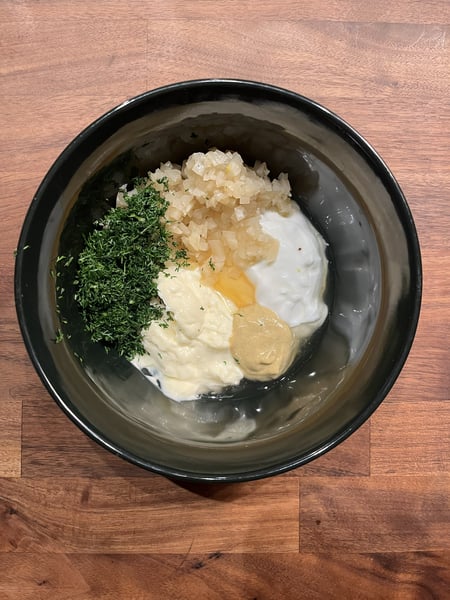
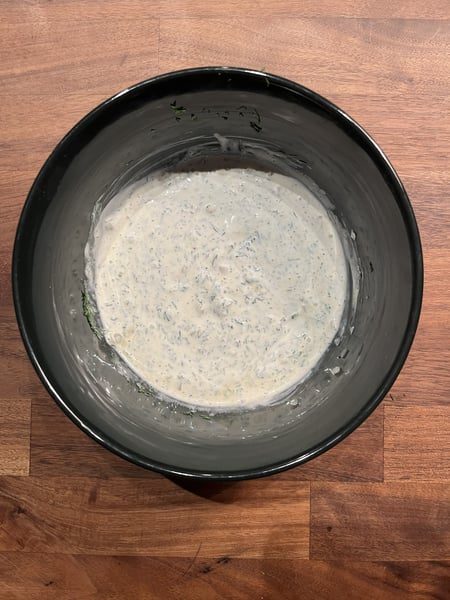
2. In a mixing bowl, combine all ingredients for the tartar sauce. Fold together until thoroughly combined. Chill in the refrigerator for at least 30 minutes for best flavor.
3. Season the cod strips with black pepper. Brush all sides with mayonnaise. Then press the coated cod into the crushed chips until well-covered.
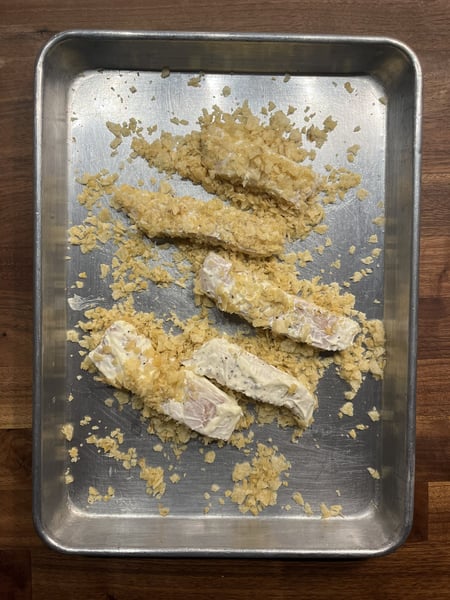
4. Place the crusted cod on a small parchment-lined sheet tray. Bake at 400F for 10-12 minutes, or until the fish is cooked through and the coating is crispy.
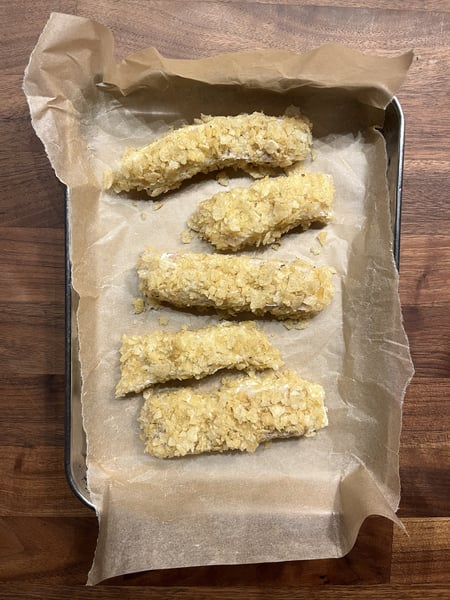
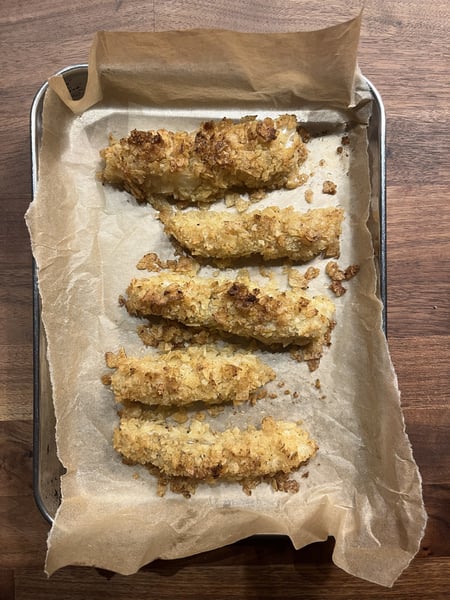
5. Garnish the sauce and crispy cod with additional fresh dill and lemon.
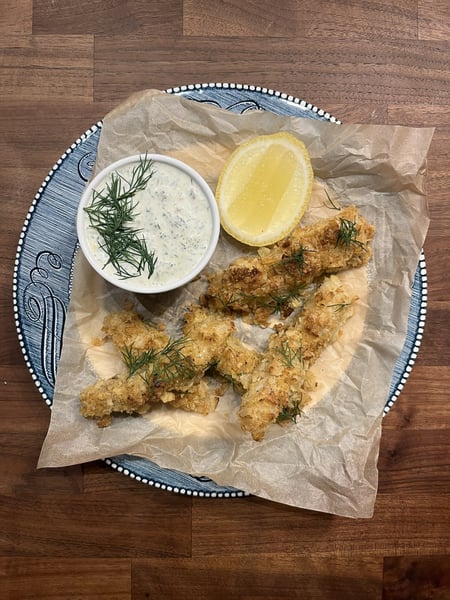
This is such a fun and tasty dish. The celery root in the tartar sauce added a nuanced acidity and texture. It complimented the crispy fish perfectly.
Keep Learning
While our pickling and preserving classes have wrapped up for the season, there are plenty of other ways to keep building your skills at The Chopping Block. If you’re ready to take a deeper dive into cooking techniques, our Culinary Boot Camp offers five intensive days of hands-on learning designed to help you become a more confident, intuitive cook. And if you want to perfect your julienne (and plenty of other essential cuts), sign up for our sign up for our next Knife Skills class today.
