
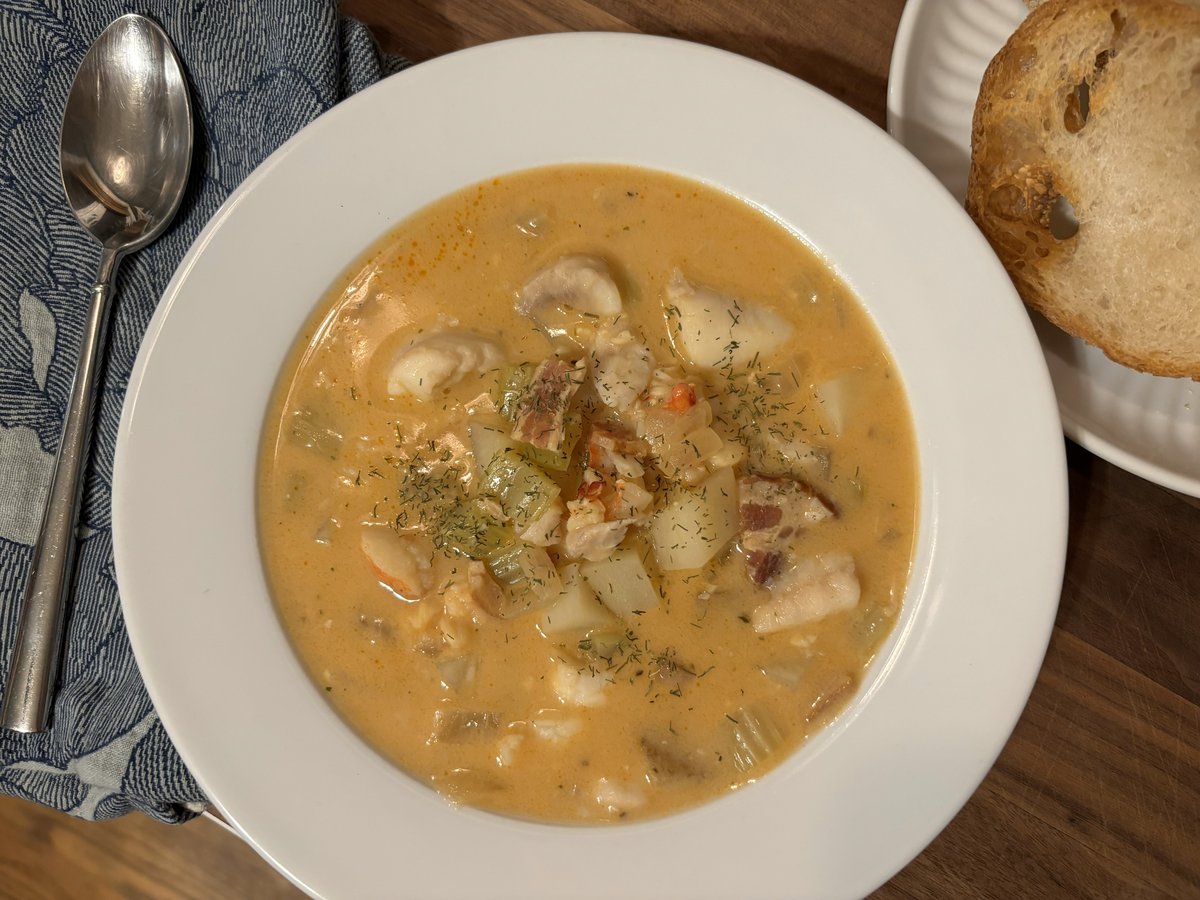
In my 23 years at The Chopping Block, there’s one skill students consistently ask about in class: how to make stock. It’s no surprise—stock is the backbone of soups, stews, sauces and braises, and making it from scratch can elevate a dish from good to great. While chicken and beef stock tend to get the most attention, today I’m going to show you how to make shrimp stock.
What is Shrimp Stock?
Shrimp stock is made by simmering shrimp shells with mirepoix (carrot, onion, and celery), a small amount of tomato product and a bay leaf. As long as you save your shrimp shells when peeling shrimp, it’s quick and easy to prepare. Shrimp stock is commonly used in seafood chowders and bisques, as well as cioppino, gumbo, étouffée and seafood risotto, to name just a few dishes. It’s incredibly versatile and freezes well for up to six months. I’ll be using my shrimp stock to make a comforting seafood chowder, utilizing items from my freezer such as lobster meat and flounder fillets.
How to Make Shrimp Stock
The first step to making great shrimp stock is buying shrimp with the shells on. While peeled and deveined shrimp are certainly convenient, and I use them often, I like to occasionally purchase shell-on shrimp so I can save the shells. I stash them in sandwich-size bags in the freezer, and once I’ve collected a few bags, I know it’s time to make stock.
I start by gently sautéing my shrimp shells in a bit of butter to create a deeper layer of flavor.
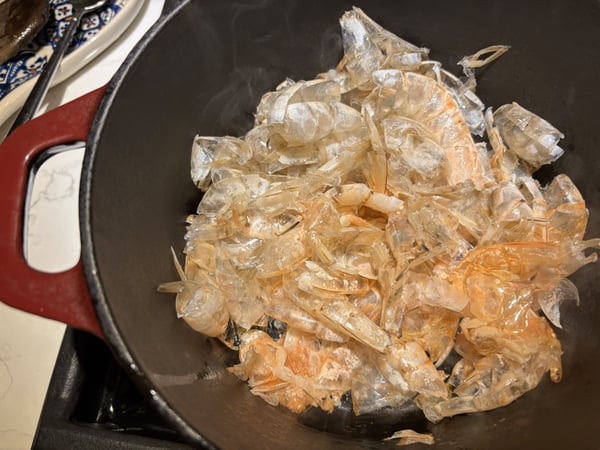
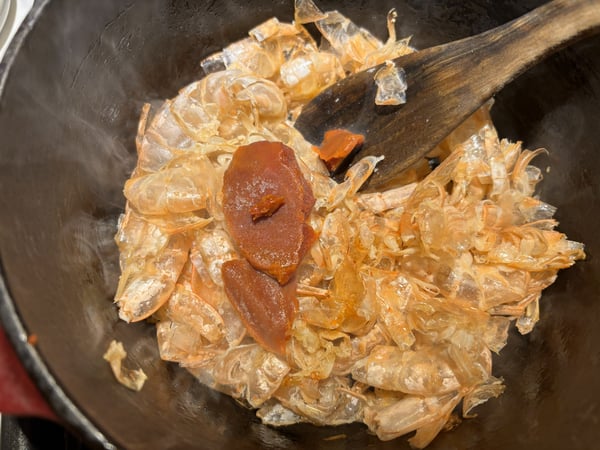
Once they turn pink, I add tomato paste (see tip, below) for richness and color, and allow that to cook for just about a minute to deepen the flavors.
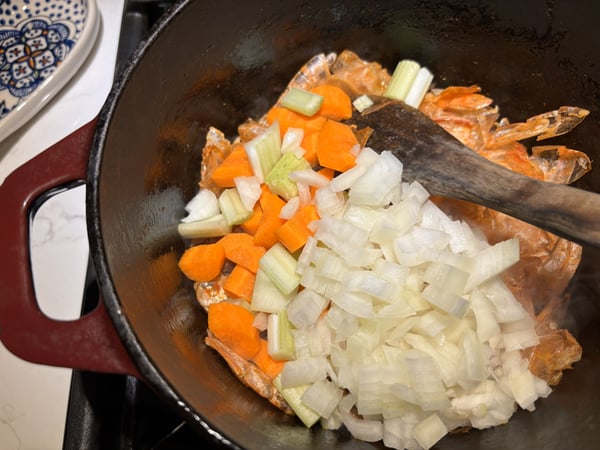
The mire poix then goes in and gets gently sautéed until softened.
Now it’s time to add the water, bay leaf and thyme sprigs.
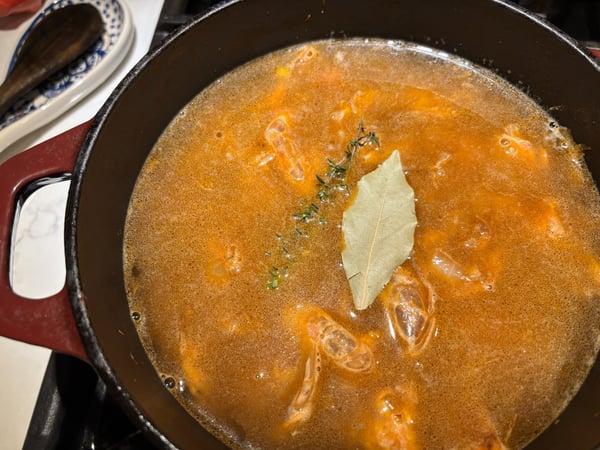
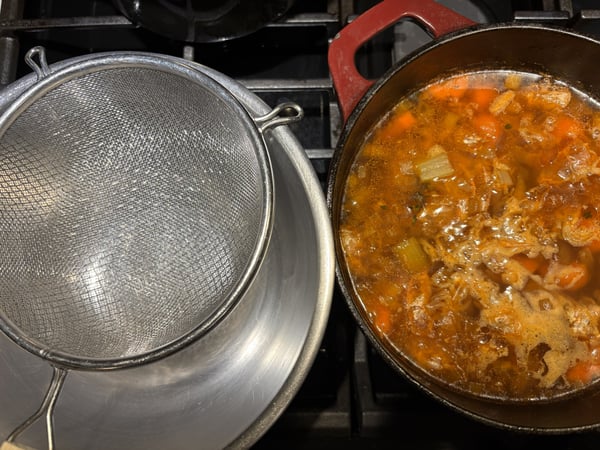
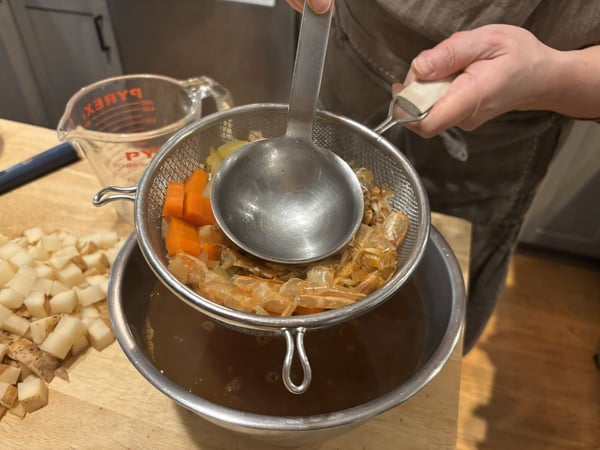
Like all stocks, you want to bring it to a gentle boil and then immediately reduce the heat to a simmer. It doesn’t take long to extract the flavor from shrimp shells, so this stock only needs to simmer for 30 minutes or so. Keep in mind the larger the shells/bones, the longer the stock will need to simmer. For chicken stock you’ll want to simmer it for 4 to 6 hours. For beef stock (big bones!), your simmer time is closer to 8 to 10 hours. Once the stock has simmered for the allotted time, strain through a fine sieve and use as desired.
A tip about storing tomato paste: When you purchase a can of tomato paste, portion it into a few disposable snack or sandwich-size bags, press the tomato paste flat and then freeze the paste. You can then break off however much you need.
What is Chowder?
Now that the stock is strained and ready to go, it’s time to start making the seafood chowder. Chowder is classified as a comforting and hearty soup made with pieces of potatoes, seafood and sometimes corn. The soup is typically thickened with flour (roux) and finished with milk or cream. There are many variations (read my blog on how to make Roasted Corn and Poblano Chowder for a delicious variation), but the above definition, originating from fishermen's stews, is the most common.
How to Make Seafood Chowder
I love any recipe that starts with bacon, so of course, we’ll start there! Cook the bacon until it’s golden brown and crispy (if you prefer not to use bacon, gently sauté the vegetables in butter instead of the bacon fat).
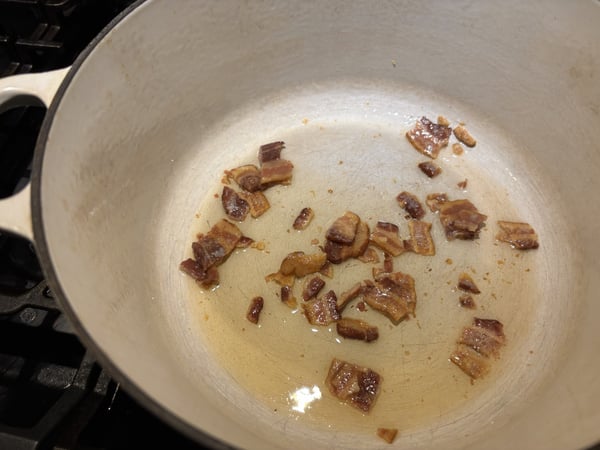
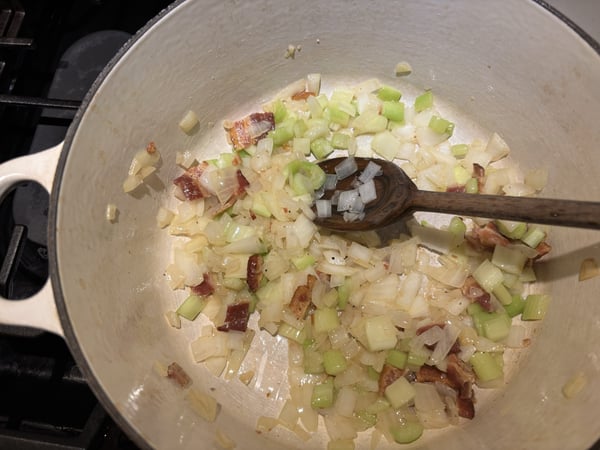
Sauté the onions and celery until softened, making sure that you’re seasoning with salt and pepper as you go. When cutting your vegetables, make sure they are small enough so when you take a spoonful of the chowder, you’re getting a piece of everything on your spoon. This creates a more complex flavor on your palate. Once the onions and celery are tender, add the garlic (always fresh and not from a jar) and cook until aromatic. This takes about one minute.
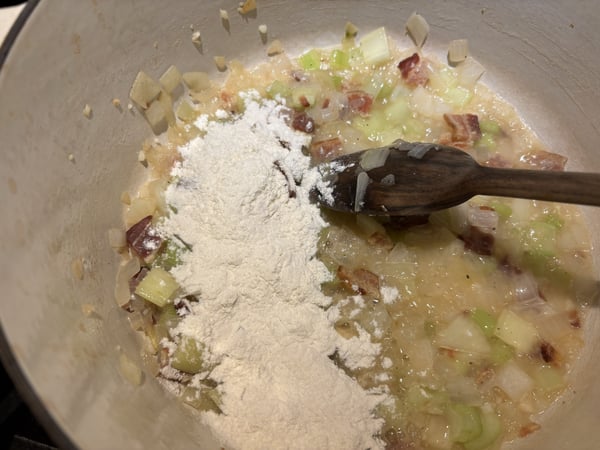
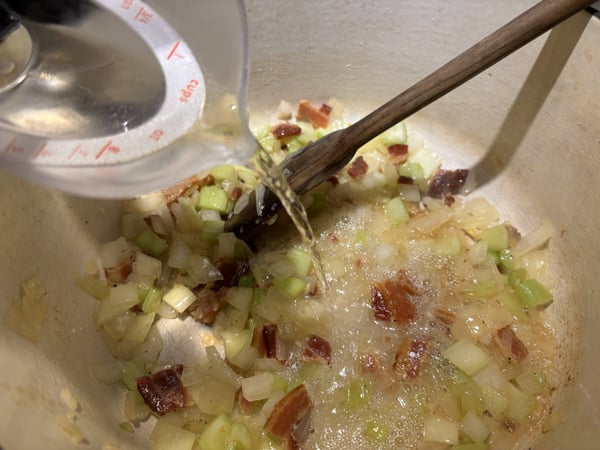
Sprinkle in the flour to make a roux. Roux is a very French technique of cooking equal parts of fat and flour together and is used to thicken soups, stews and sauces. Deglaze with white wine to release the browned bits of goodness from the bottom of the pot… lots of flavor down there!
Add the shrimp stock and potatoes, and simmer the chowder until the potatoes are knife tender, which takes 20 to 25 minutes.
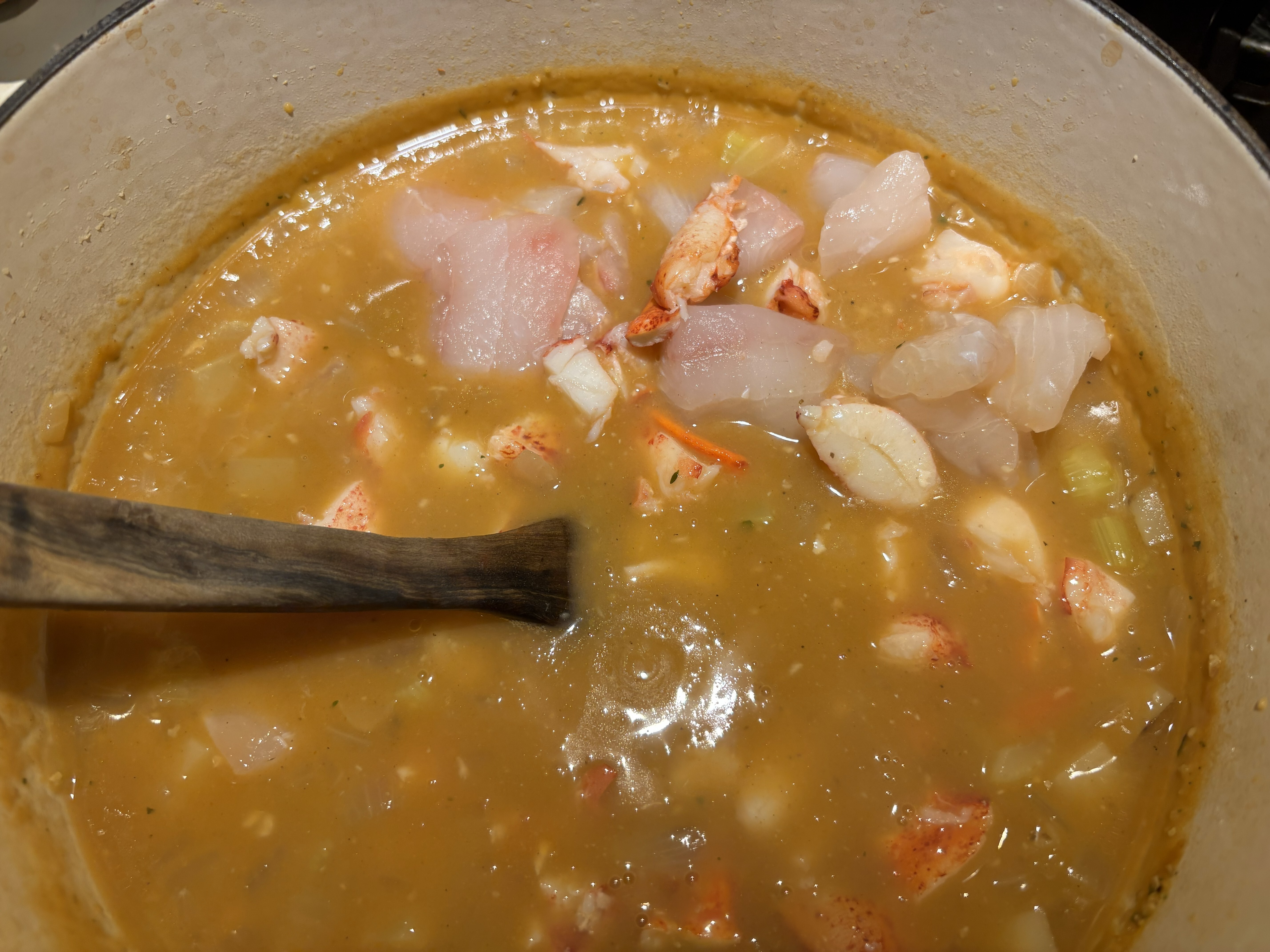
It’s very important to frequently stir the chowder once the potatoes go in to prevent them from sticking to the bottom of the pot- yes, I have learned this the hard way! The last steps in making chowder are to add the seafood and simmer until just cooked through, then add the milk or half and half and heat through.
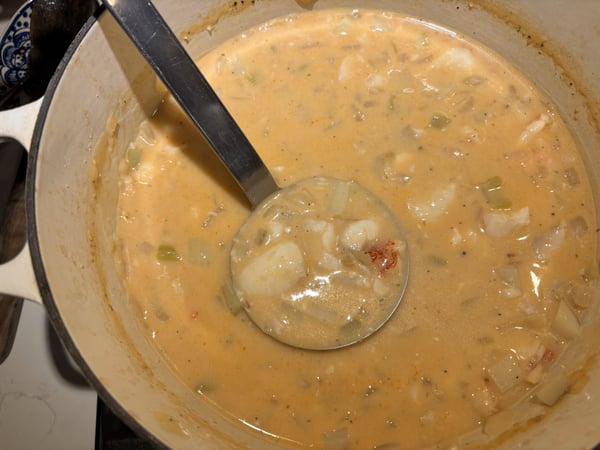
The Finishing Touches
Now it’s time to put the finishing touches on the chowder. Add lemon juice to taste and several dashes of Crystal Hot Sauce. This is nonnegotiable. Crystal is my favorite Louisiana hot sauce (sorry Tabasco) because it has well balanced flavor profile with a complex, tangy and not too spicy finish.
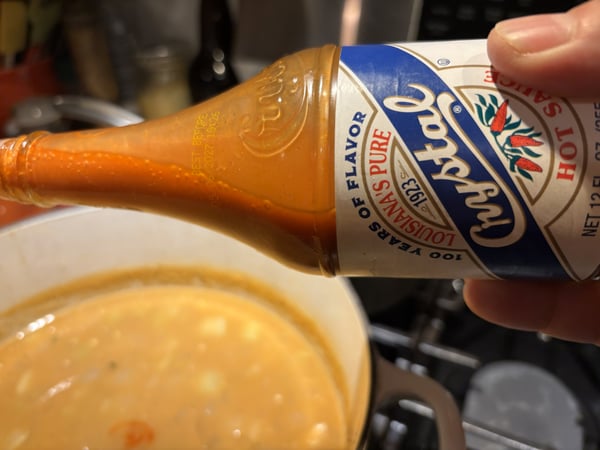
Adjust the seasoning with salt and pepper (my secret is to add a couple dashes of lemon pepper), add fresh herbs if you like and serve with cornbread muffins, rolls, focaccia or crackers for dunking.
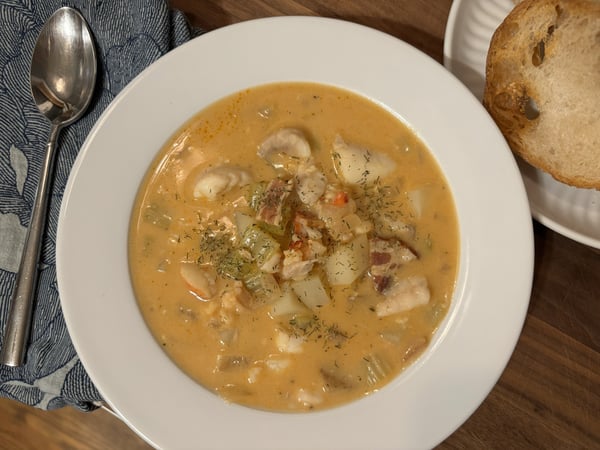
Seafood Chowder
Yield: 4-6 servings
Active time: 45 minutes
Start to finish: 1 hour, 15 minutes
For the shrimp stock:
2 tablespoons butter
Shrimp shells from 2 pounds of shrimp
1 tablespoon tomato paste
1 small onion, medium dice
1 carrot, peeled and cut into medium dice
1 stalk celery, medium dice
6 cups water
1 bay leaf
2 sprigs fresh thyme
For the chowder:
1/4 pound bacon, cut into 1/2-inch pieces
1 onion, medium dice
2 stalks celery, medium dice
2 cloves garlic, minced
1/4 cup all-purpose flour
1/2 cup white wine
1 large or 2 small russet potatoes, medium dice
4 cups shrimp stock
1 1/2 pounds assorted seafood such as peeled and deveined shrimp, lobster meat and/or fish fillets, such as cod, halibut, flounder or bass, cut into bite-size pieces
1 cup whole milk or half and half
1/2 lemon, juiced
Crystal Hot Sauce to taste
Salt and pepper to taste
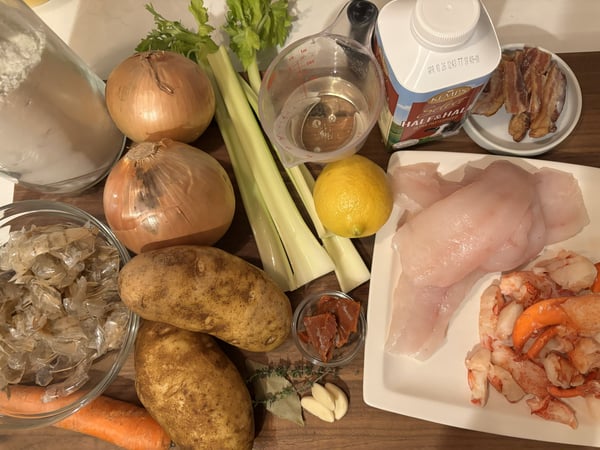
- To make the shrimp stock, heat a large saucepan over medium heat, and add the butter. Gently sauté the shrimp shells until they turn pink, 3 to 4 minutes.
- Add the tomato paste, and cook until lightly toasted, about 1 minute.
- Stir in the onions, carrot and celery, and cook until softened, 4 to 5 minutes.
- Pour in the water, and add the bay leaf and thyme sprigs. Bring to a boil and reduce the heat to a simmer. Simmer the stock for 30 minutes.
- Strain the stock through a fine sieve and set aside for the chowder. Any extra stock can be refrigerated for up to three days or frozen for up to 6 months.
- To prepare the chowder, heat a heavy soup pot over medium heat. Add the bacon, and cook until almost crispy.
- Stir in the onions and celery, and gently sauté until softened, 4 to 5 minutes. Mix in the garlic and cook until aromatic, about 1 minute.
- Sprinkle in the flour, stirring to coat the bacon and vegetables and cook for about 1 minute.
- Deglaze with the wine and cook until evaporated.
- Add the potatoes and shrimp stock, and bring to a boil. Reduce the heat to a simmer and cook, stirring frequently so the potatoes don’t stick to the bottom of the pot. Continue to simmer until the potatoes are knife tender, about 25 minutes.
- Add your seafood to the pot, and simmer until cooked through.
- Pour in the milk, and season with lemon juice, Crystal Hot Sauce, and salt and pepper to taste. Ladle into bowls and serve.
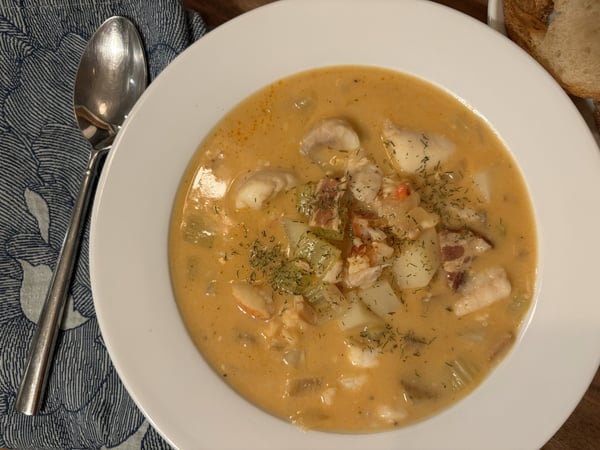
Now you have the know-how to take your skills to the next level and make your own shrimp stock and seafood chowder from scratch. Remember that shrimp stock is the easiest and quickest stock to make. You can also prepare small quantities, making it very approachable. And who doesn’t love a hearty, rich and comforting seafood chowder this time of year?
Learn additional soup-making techniques in our Homemade Soups and Breads class on Wednesday, January 28 at 6pm and Friday, February 6 at 10am.
If you are ready to take your skills to the next level, then don’t miss our popular Essential Building Blocks class where we’ll not only teach you how to make chicken stock, but many other fundamental recipes all rooted in French cooking techniques. We have sessions on Sunday, January 25 at 9am, and Saturday, March 14 at 9am.
