
I know, I know. You already have the world's greatest, undisputed, competition-winning-if-you’d-ever-submit-it chili recipe. You have that special tequnique of stirring counter-clockwise in your custom chili pot made from a WWII ammo box so you can tell everyone your secret ingredient is gunpowder (it’s not, it's probably cinnamon, anchovies, or dark chocolate). I’m not here to tell you that grandpa’s famous Red won’t soon be the new mascot of the Dallas Cowboys, but maybe I have an idea or two for getting a little more flavor in that bowl.
1. Make Your Own Chili Powder
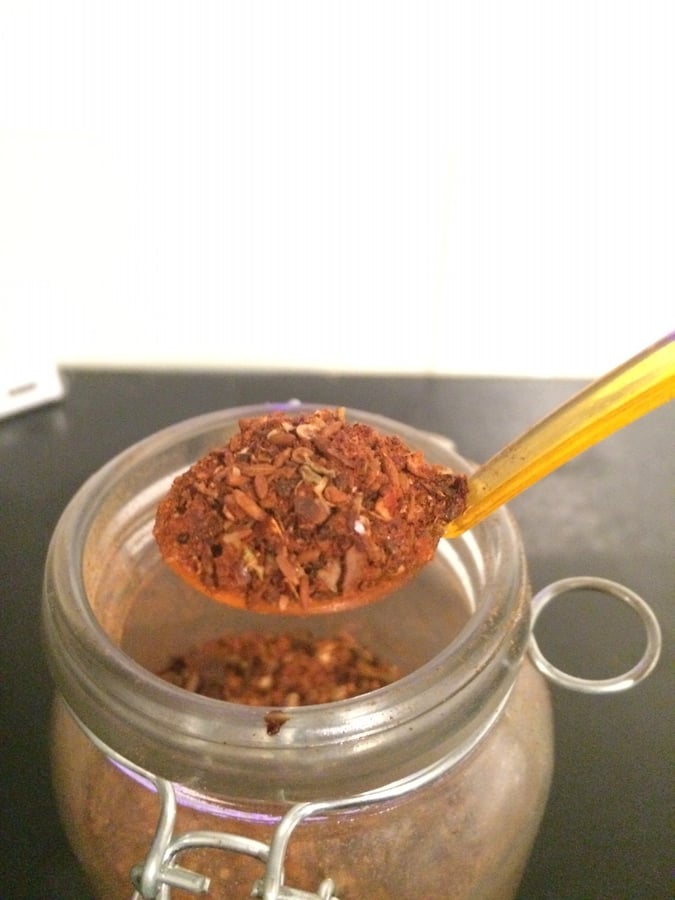
Okay, if you're using a store-bought shaker of “chili powder” please get up from your computer, walk to your pantry, and throw it away. Let’s be honest, you probably bought it during the Regan administration and it's got the flavor content of a brown paper bag. Chili powder, to me, is the American equivalent to curry powder but it's not often given the same respect as its East Asian cousin. In India, many families have their own custom blend of spices and herbs that make up unique curry powders handed down through generations. The pride and tradition in these spice blends results in bold and original flavors even in the same dishes depending on which region or which house you're eating in.
Chili powder should be treated the same way: find your one-of-a-kind blend of dried chilies and toasted spices to make a homemade jar of goodness that will be the base of your signature chili. The first step is to find the chiles you want: Ancho and Mulato chilies for sweetness, New Mexico peppers for freshness, Chipotle and Guajillos for smokiness, and Cascabels and Arbols for heat. Round out your blend with cumin, paprika, garlic, and Spanish oregano. I make a tradition of roasting my spices and crushing and blending them into the perfect chili powder every fall so that I can jar it up and give it out as Christmas presents (keeping one jar for myself, of course.) The blend changes slightly depending on my preferences and what's available but the key as with most things is starting with quality ingredients.
2. Use Beans from a Bag, Not from a Can
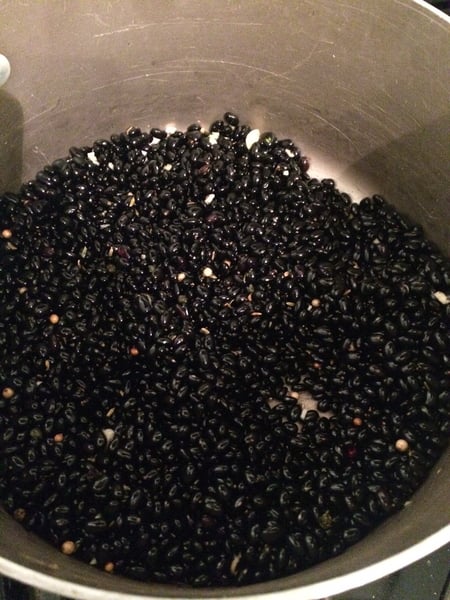
Lots of chili purists will scoff at the idea of beans in the pot but I think if you skip the beans you are missing some serious flavor depth. Not only do beans offer the thickness you want but they also have the ability to absorb spices and balance the dish. I prefer black beans, but you can use pinto or kidney if you like. To make my beans, I pour them into big pot with celery seeds, coriander, garlic, bay leaf, and a little olive oil and let them toast on low heat for about half an hour before I add water. Then it's as simple as filling the pot with water, bringing it to a boil and lowering it to a simmer for an hour or two until your beans are nice and tender. As an added bonus, that bean water will be thick and flavorful and if you make your chili the same day, you can use it as a flavorful base on its own.
3. Roast your Chiles
One of the quickest ways to add depth of flavor when using fresh chiles is to fire roast them before adding them. I like to use a mix of poblanos, jalapeos, and habaneros. Either directly on a gas burner or under the broiler you can blast them with direct heat until they are black and tender. Immediately after you take them off the heat, put them in a large bowl and cover it with plastic wrap. The heat and moisture will steam the skins and allow you to peel off the charred outer layer before chopping them and adding them to the pot. Check out The Chopping Block's Owner/Chef Shelley Young's video on this technique:
4. Vary your Meat
If you are relying on ground beef to be the sole protein in your bowl then you are missing some solid flavor and texture opportunities. I use a blend of shredded taco beef, ground lamb, and fresh chorizo as the meat trio for my chili. Too much sausage or fat will leave your dish too rich and greasy, so I try to create a balance and drain my grease after I brown my meat.
5. A Hoppy Bottle of Beer Brings it all Together
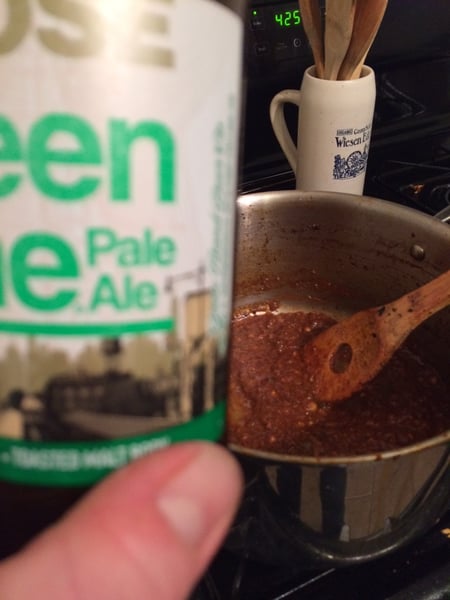
After I brown my meat, I reach for a hoppy IPA (probably my second or third by this point) to deglaze my pan. You want something with some bold flavors on its own to hold up to the spiciness of your chili so I usually find an IPA or a thick Lager does the trick. Plus after you use one for your chili, you get to finish the rest of the six pack at dinner time for a perfect pairing.
The most important ingredient in chili as well as most of those deep savory fall dishes is time. Make sure you have a free day to use fresh ingredients and let them simmer and blend to perfection.
I encourage you to experiment to find your own blend, but here’s my chili powder recipe for your reference.
Chili Powder
3 dried ancho chiles, stemmed seeded and sliced
3 dried Guajillo chiles, stemmed seeded and sliced
3 dried New Mexico chiles, stemmed seeded and sliced
3 dried Cascabel chiles, stemmed seeded and sliced
2 tablespoon cumin seeds
1 tablespoon whole coriander
1 tablespoon whole black peppercorns
2 tablespoons garlic powder
1 tablespoon dried mexican oregano
1 teaspoon smoked paprika
- Pan toast the chiles until aromatic and cool. Use a food processor to create a fine powder.
- Pan toast cumin seeds, coriander, and peppercorns until aromatic. Use a spice mill or food processor to powder fresh spices.
- Combine chiles, milled spices, garlic powder, oregano, and paprika in jar and store in a cool dry place for up to six months.
If you prefer a chili sans beans but all about the meat, try this recipe.
This chili is hearty, a little bit spicy and so indulgent. The main meat in this recipe is short rib and there is honestly no better meat to use for chili than that. Beef short ribs have rich marbling and deep flavor; they're an indulgent treat for anyone who loves beef.
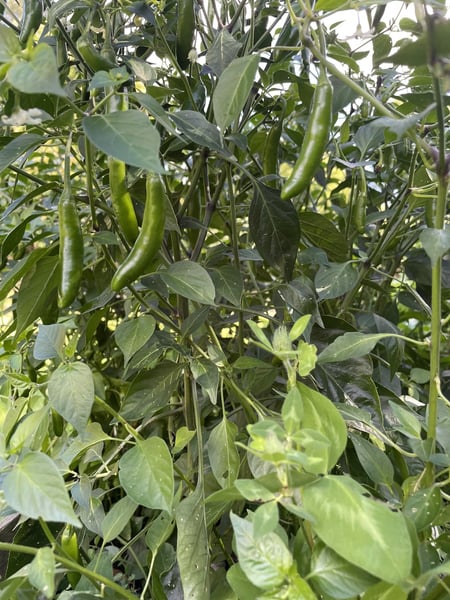
I grow different peppers throughout the summer, and with all of the plants coming to the end of the season, I tend to start putting them in everything. What can I say? I love spicy food! All peppers have different flavors and spice levels. I decided to use serrano peppers when I made this chili the last time, and it was delightful. You can use any pepper you want - if you don't want too much spice then use jalapenos and remove the seeds so you are left with the flavor but not too much heat. If you love spicy food like me, choose a pepper that has more of a kick.
-
Marinating everything together allows all of the flavors to meld together and all of those flavors are absorbed into the meat.
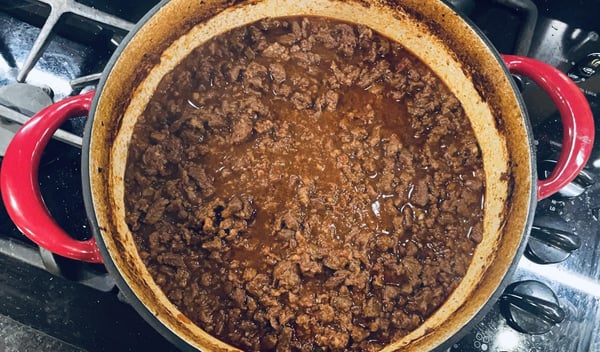
Chili
Serves: 10-12
Prep time: 45 minutes
Cook time: 3 hours
Inactive time: 24 hours
Total time: 1 day, 3.75 hours
2 pounds boneless beef short ribs, finely chopped
1 pound sweet Italian sausage
1 pound chorizo
1 yellow onion, diced
1/2 head garlic, minced
2 jalapenos, chopped
1 can (3.5 oz) chipotle chilies in adobo, chopped
1/8 cup fresh rosemary
1/8 cup fresh oregano
1 tablespoon ground cumin
1/2 teaspoon salt
1 teaspoon freshly ground pepper
1 tablespoon olive oil
1/2 pint Guinness stout
1/4 bottle red wine
1 can (28 oz) crushed tomatoes
1/2 cup bourbon
1/4 cup brown sugar
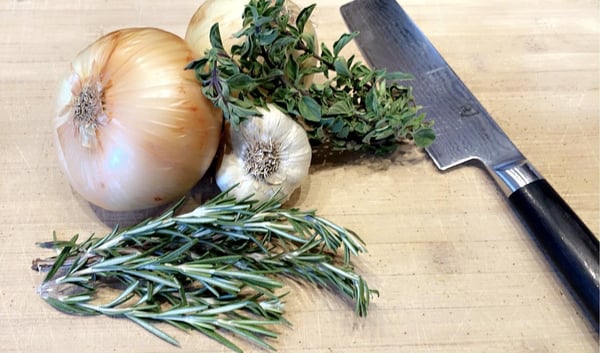
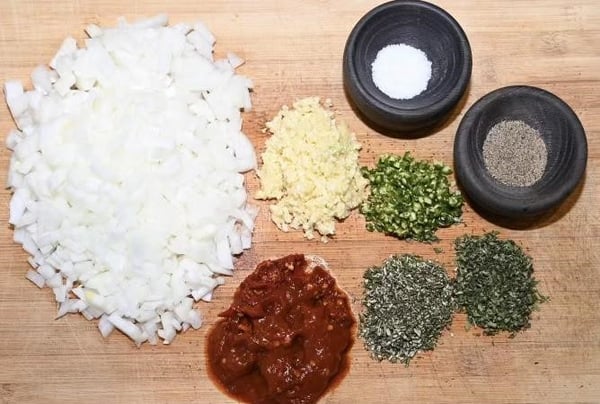
1. Marinate: In a large bowl, add beef short rib, Italian sausage, chorizo, onion, garlic, jalapenos, chipotles (in adobo), oregano, rosemary, cumin, salt and pepper. Drizzle with olive oil and toss. Cover and chill for 2 to 24 hours.
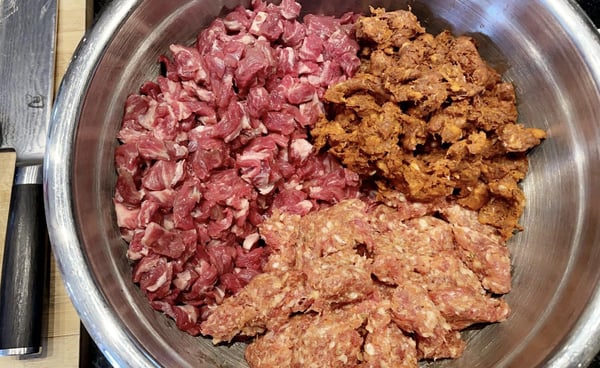
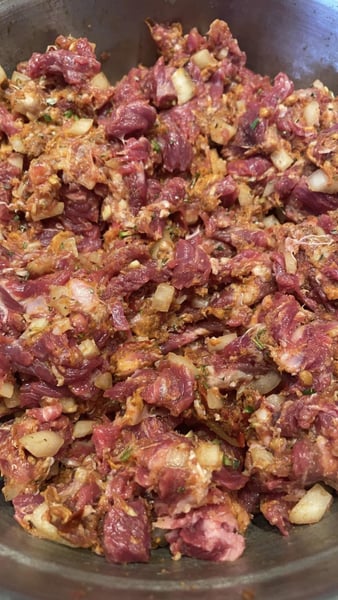
2. Brown: Heat a large, heavy oven-proof pot over medium heat. Tumble in meat mixture, and cook until meat has browned about 20 minutes.
3. Braise: Pour in tomatoes, wine, and Guinness stout, breaking it up with a wooden spoon. Bring to a boil. Cover and place into a 325 degree oven. Cook for 2 hours. Remove from the oven, and skim off any accumulated fat.
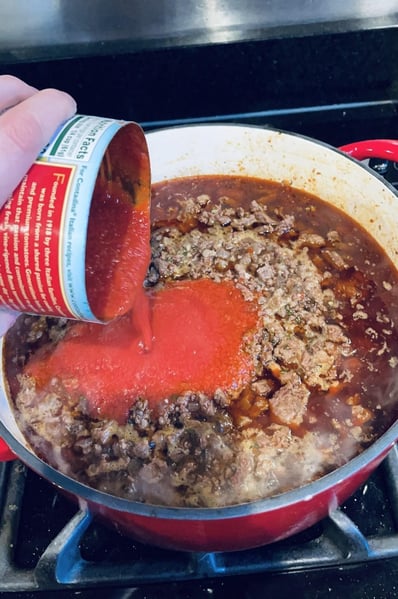
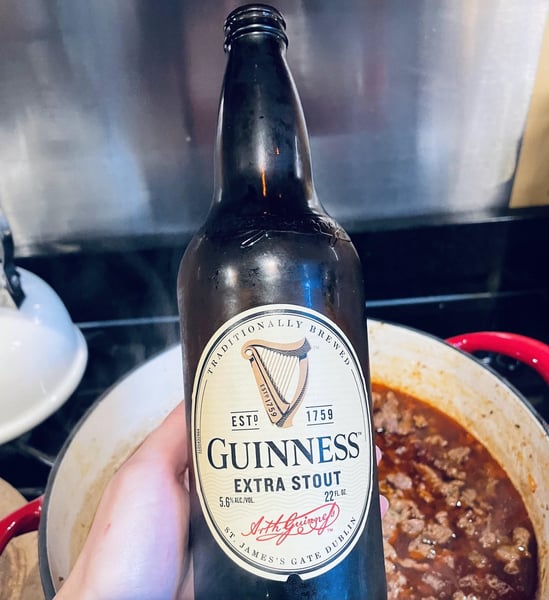
Guinness Stout is a very dark beer with an unmistakable taste. When that rich, roasted flavor finds its way into food, it lends a new dimension to the dish. The function of wine in cooking is to intensify, enhance and accent the flavor and aroma of food. When adding both of these to this dish, it brings out a deep rich flavor.
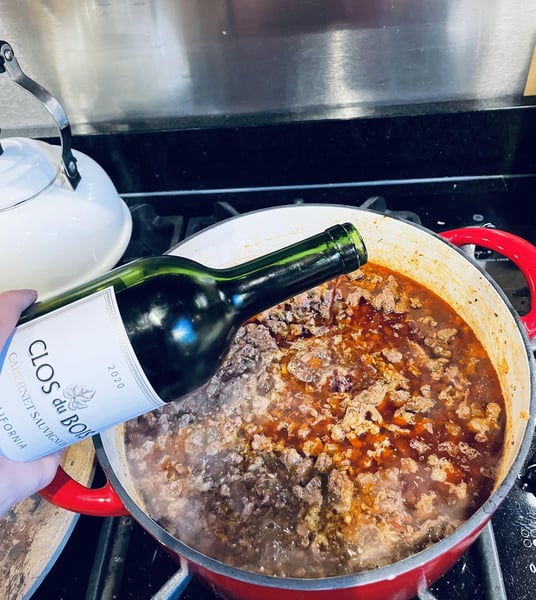
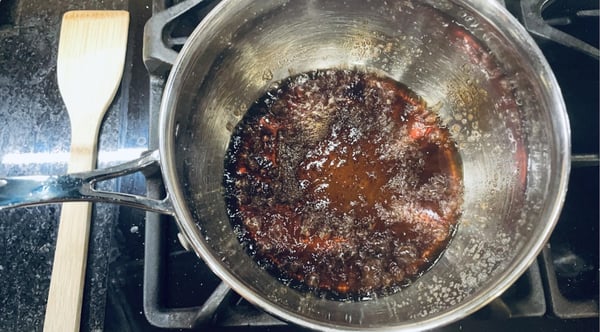
4. Heat bourbon and brown sugar in a small saucepan, bring to a boil, stir the mixture into the chili. Cover and return to the oven for 30 minutes.
When adding bourbon to this dish, it adds a sweetness and depth of flavor. The alcohol will be cooked out and you will be left with an indulgent flavor.
5. Serve with cheese, sour cream, pasta or crackers.
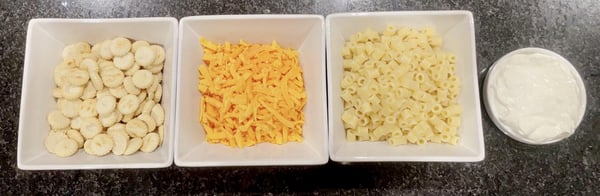
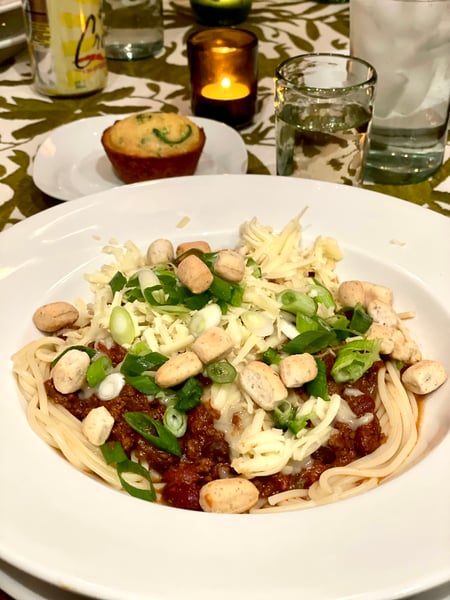
If you prefer Cincinnati Chili, you’re either a Skyline Chili person or a Gold Star Chili fan (the two major venues and competitors). I was always in the Gold Star camp myself. But I would eat either in a heartbeat! After that the only question is whether I want to eat it “5 way” or not (spaghetti, shredded cheese, beans, diced onions, oyster crackers), or simply as a Coney, which is a small hot dog smothered in Cincinnati Chili.
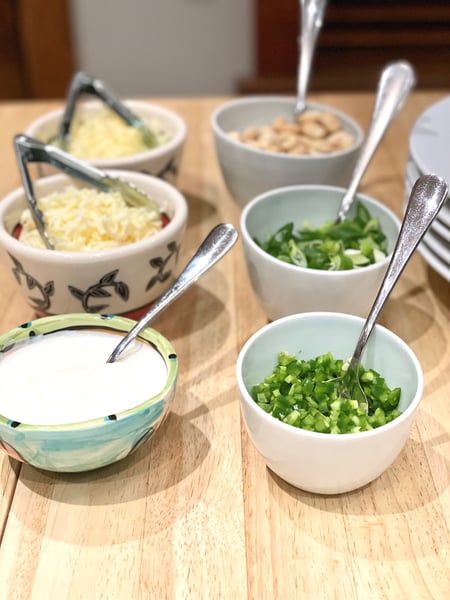
I used to throw a chili party for friends with Cincinnati Chili and other types of chili for those that didn’t care for their chili placed on spaghetti. There would always be several bowls of fixings to garnish the chilis: a couple of types of shredded cheeses, diced onion, sliced scallions, sour cream, red kidney beans, diced jalapenos, oyster crackers, along with a tray of corn muffins. So, when I discovered the Fire and Ice Ohio Chili recipe, I decided to use it as an excuse to have a small intimate dinner party with our niece Vicki, her husband Josh, and our dear friend Sondra.
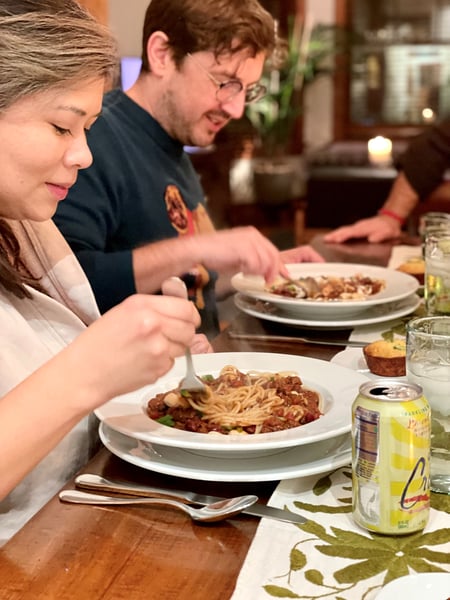 Vicki and Josh
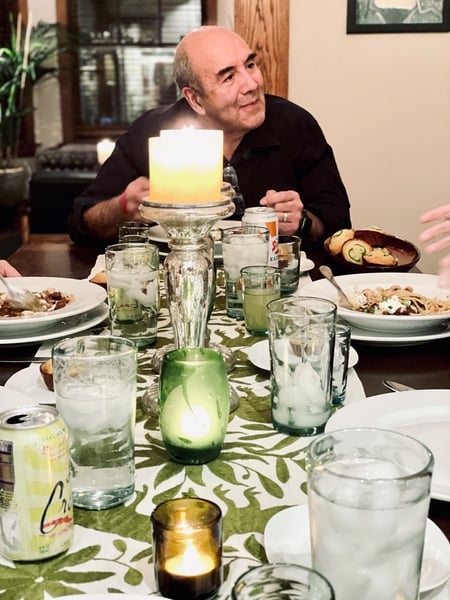 Fernando enjoying our guests
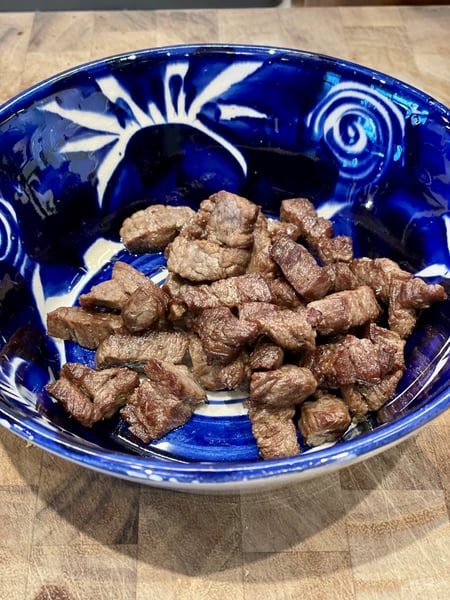
I also didn’t want to make more than one chili, so I decided to make a few changes to the Fire and Ice Ohio Chili recipe and take it a bit out of the Cincinnati Chili vein. I decided to add black and red kidney beans, cut back on the liquid in the recipe, giving it less of a spaghetti sauce consistency, add some sautéed diced jalapenos to the chili, some leftover chili spices that I had on hand, a couple of bay leaves, 2 cups of chicken stock for added richness, and, lastly, 8 ounces of flank steak that I happened to have in my freezer that I defrosted, cut up into a small dice, and seared off. With everything that I included, it made the chili a bit heartier, as well as spicier.
The recipe also called for a 15-ounce can of diced tomatoes. Canned diced tomatoes contain the chemical calcium chloride in order to help them keep their shape. I wanted a smoother consistency to the chili, so I substituted a 15-ounce can of petite diced tomatoes, which break down faster than regular diced tomatoes. During the last 5 minutes of cooking time, you'll get a very spicy and beefy aroma. The aroma only gets more intense when you add in the scoop of dark chocolate ice cream. As is the case with all soups, stews and chilis, if you allow them to sit overnight in the fridge and reheat them the next day, the flavors and smells just intensify. That was definitely the case with this chili as I made it the day before serving.
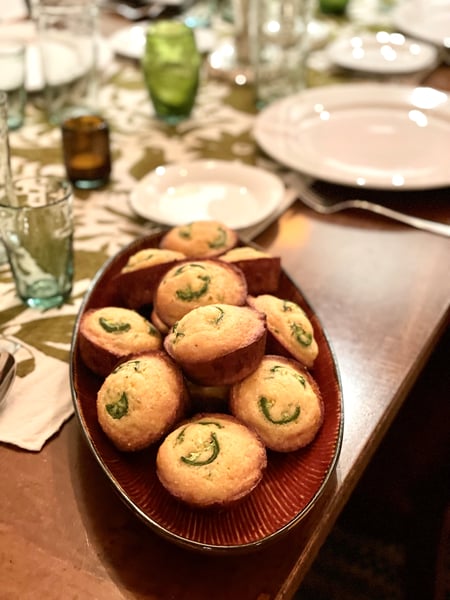
I made a pot of spaghetti for those who wanted to channel Cincinnati. I also had on hand bowls of shredded aged white cheddar and Monterey Jack cheeses, thinly sliced scallions, diced jalapeno peppers, Mexican sour cream (crema), rosemary and thyme oyster crackers and a platter of jalapeno, cheddar cheese, and honey corn muffins.
For any dinner party, I like to start with a specialty cocktail. I received a Christmas gift of a bottle of Journeyman Distillery Pit-Spitter Cherry Flavored Whiskey. I went on the Journeyman Distillery’s website and found the perfect cocktail to make: a “Pit-Spitter Cherry Sour.”

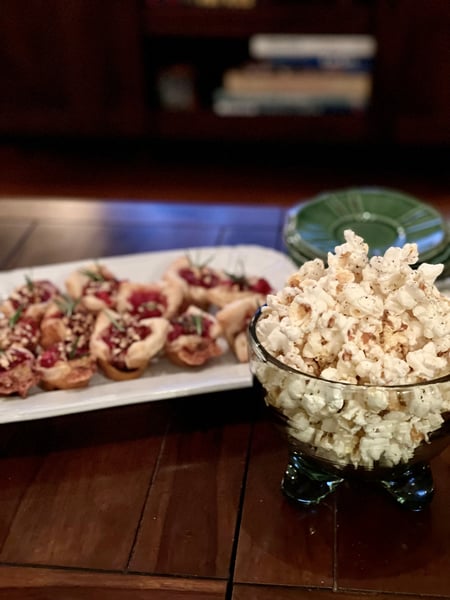
It went perfectly with the appetizers of puff pastry cranberry brie bites, and popcorn topped with a cognac butter, parmesan cheese, fresh cracked black pepper and Maldon sea salt flakes.
This recipe is my modified version of Food and Wine’s “Fire and Ice Ohio Chili” recipe.
If you prefer to make the unmodified version, just omit the beans, jalapenos, flank steak, bay leaves and chicken stock. Whichever version you decide, I definitely suggest you serve it over spaghetti with all the fixings. It’s a very hearty chili, and with the addition of corn muffins, it’s the perfect meal for a cold winter's night.
Quincy’s Fire and Ice Ohio Chili
Yield: 8-10 servings, depending upon if served on top of spaghetti
Prep time: 25 minutes
Cook time: 1 hour 45 minutes
Total time: 2 hours 10 minutes
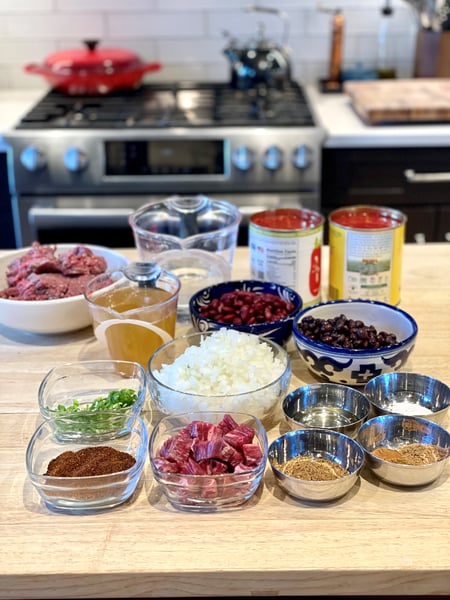
1 tablespoon and 1 teaspoon of vegetable oil divided
2 pounds of ground beef (I used ground chuck which is 80% lean and 20% fat)
8 ounces of flank steak cut into 1/4-inch dice
2 large onions minced
1 diced jalapeno pepper
1 teaspoon of fine sea salt or kosher salt
1/2 teaspoon of ground black pepper
1/4 cup of chili powder (I added 1 tablespoon of homemade chili powder that I had on hand)
1 tablespoon of cumin
1 teaspoon ground cinnamon
1 teaspoon ground coriander
1/4 teaspoon of ground cloves
2 cups water
2 cups low sodium chicken stock
One 15 ounce can tomato puree
One 15 ounce can diced tomatoes, petite if you’d prefer
1 can drained and rinsed black beans
1 can drained and rinsed red kidney beans
2 bay leaves
1 scoop of dark chocolate ice cream
For serving:
Cooked spaghetti
Shredded cheddar or Monterey jack cheese
Thinly sliced scallions
Sour cream
Diced jalapenos
Oyster crackers
1. Heat a large Dutch oven over medium heat, and add the teaspoon of vegetable oil. Add the diced flank steak and sear until golden brown. Using a slotted spoon, remove the browned meat, place on a plate and set aside.
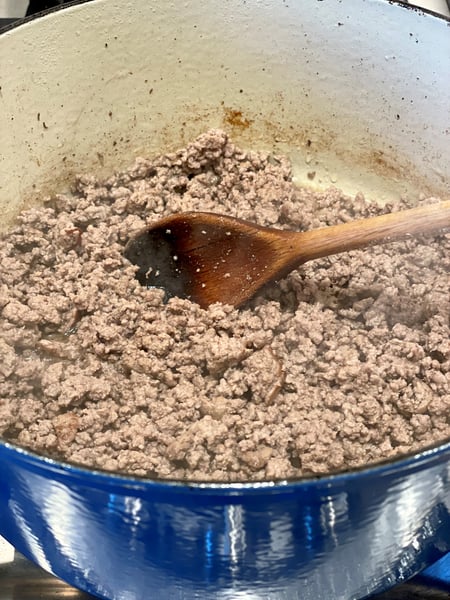
2. Add the tablespoon of oil and the ground beef to the same pan, and cook over medium-high heat, breaking down the meat with a wooden spoon until browned, about 8 minutes.
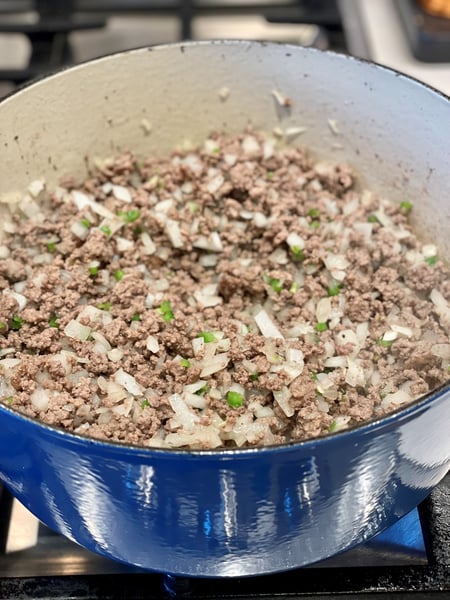
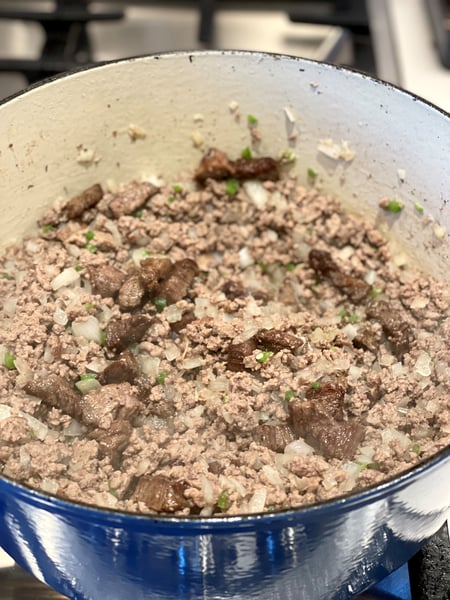
3. Once the beef is brown, add the diced onions, diced jalapenos, salt and pepper, stirring occasionally until softened and translucent, about 8 minutes, then return the seared flank steak to the pot.
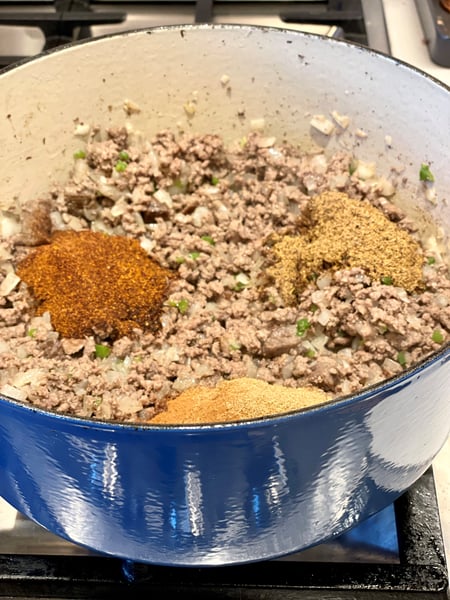
4. Add the chili powder, cumin, cinnamon, coriander and cloves and cook, stirring occasionally, until fragrant, about 2 minutes.
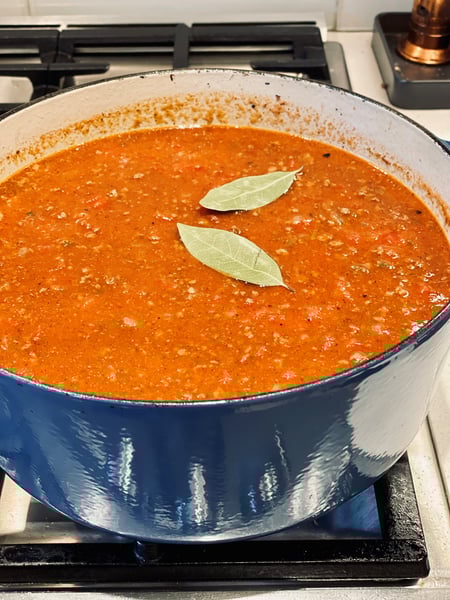
5. Stir in the water, chicken stock, tomato puree, diced tomatoes, drained and rinsed cans of beans, and 2 bay leaves into the beef and onion mixture and bring to a boil.
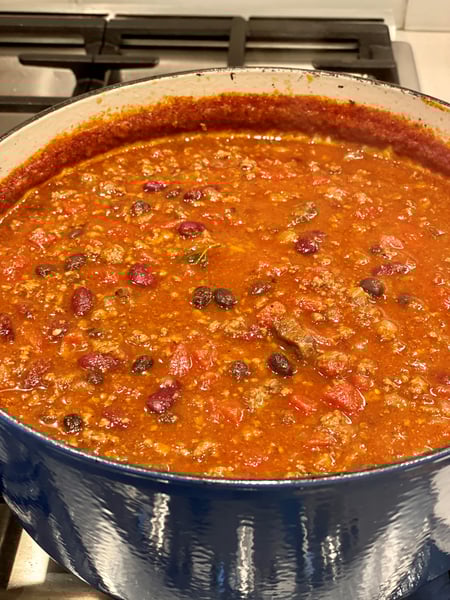
6. Simmer over low heat for 1 hour and 25 minutes, stirring occasionally to prevent scorching and sticking to the bottom of the pot.
7. Stir in the chocolate ice cream and cook until hot, about 5 minutes. Taste for seasoning, and add salt and pepper if needed.
8. Serve the chili in bowls over spaghetti, with shredded cheese, sliced scallions, sour cream, diced jalapenos, oyster crackers and corn muffins.
You can also make it one day ahead of time, as I did, and just slowly warm it back up and enjoy!
