
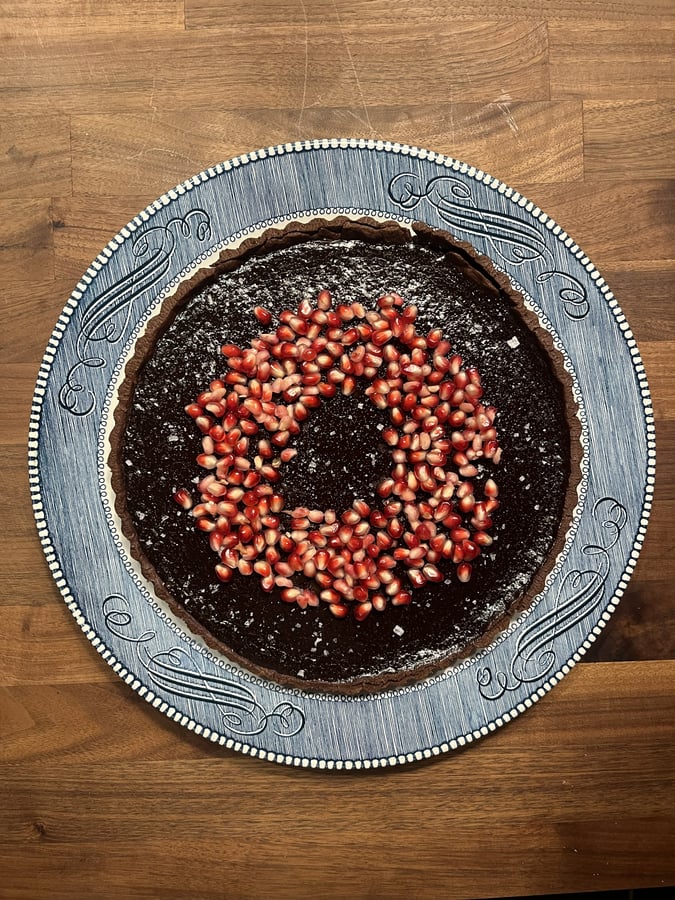
As a personal chef, it is important for me to provide a tailored dining experience for my clients.
I recently met with a new client who is planning a surprise 60th birthday celebration for her mother. They want some small bites to begin the evening, followed by a family-style dinner, and a dessert.
As far as the savory dishes go, I have the utmost confidence in executing a memorable meal. When it comes to dessert, often the client will provide their own, or I will outsource the course to a friend that specializes in pastry.
This time, I want to tackle the pastry project myself.
I have learned that the guest of honor doesn't eat beets, and absolutely despises cinnamon. I also know that she loves chocolate, especially paired with fruit.
I recommended several options, including a chocolate tart with pomegranate and sea salt. This is not something that I have made before, but it sounds amazing on paper.
It is no surprise that the client chose the chocolate tart. It checks all of the boxes for something her mother would love.
My Development Process
When approaching a dessert that’s new to me, I start by reaching out to friends with experience in pastry and desserts. I’ll send a few texts and ask if they have any recipes that they would be willing to share.
I also remember that my favorite restaurant in St. Louis, Little Fox, happens to have a chocolate tart on their dessert menu. And it just so happens that the chef is my best friend.
My friends came through, and I received several recipes. It was surprising how different some of them were.
After examining all of the recipes, as well as doing some additional research of my own, I had some decisions to make.
First, what type of tart crust, or shell, should I use?
There are two traditional doughs used in tart shells. One is a Pâte Sucrée, or sweet dough, that is crisp and sturdy, much like a cookie. Another is Pâte Sublée, or sandy dough, that is more tender and crumbly in texture, like shortbread. Also, some people just crumble up packaged cookies, mix them with a bit of melted butter, and call it a day.
Next, I needed to decide how to approach the chocolate filling.
It would typically be filled with chocolate ganache, which is a smooth mixture of melted chocolate with hot heavy cream. There is a no-bake version, where you would pour in your rich ganache into your shell, then chill for a couple of hours to firm up. The no-bake tart is more beginner friendly, and results in a silky, fudge-like texture.
Other, more advanced recipes, require additional baking after filling the shell. Eggs are whisked together, and the ganache is slowly whisked into the eggs. That mixture would then be poured into the shell, then baked. The result is a more custard-like texture.
After some pondering, I decided that I want a chocolate Pâte Sublée tart shell, and a baked filling with dark chocolate. The crumbly crust and custardy filling seems like the perfect combination. I will add some sea salt to balance the sweetness, and some pomegranate to cut through the richness. I think this will be a challenge for me, but the finished product will be an elegant and delectable dessert.
Dark Chocolate Tart with Sea Salt and Pomegranate
Yield: 8-10 servings
Prep Time: 30 minutes
Cook Time: 50-55 minutes
Inactive Time: about two hours
Total Time: approximately 3 hours 30 minutes
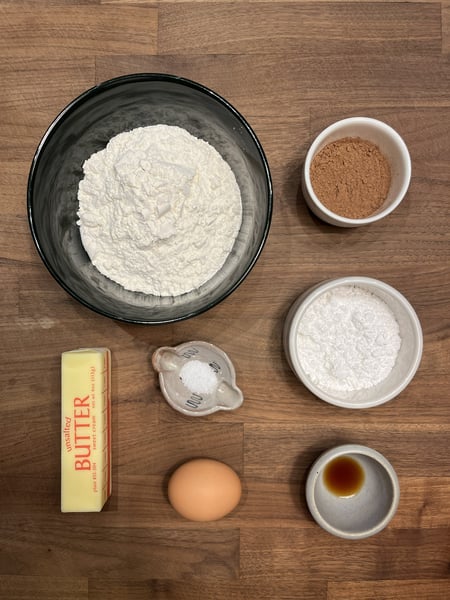
For the shell:
1 1/4 cups all-purpose flour
3 tablespoons dutch-process cocoa powder
1/3 cup powdered sugar
1/4 teaspoon salt
1 stick unsalted butter, cold and cut into cubes
1 egg yolk
1/2 teaspoon vanilla extract
2 tablespoons cold brew coffee, ice cold
For the filling:
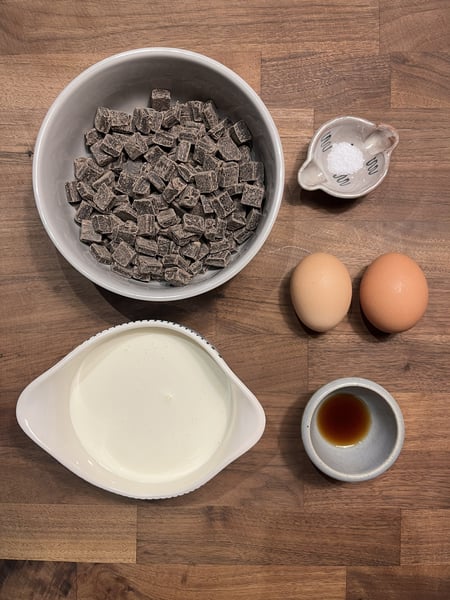
9 ounces dark chocolate chunks (I used 62% cocoa)
1 1/4 cups heavy cream
1/4 teaspoon salt
2 eggs
1 teaspoon vanilla extract
For the shell:
1. Preheat oven to 350F degrees.
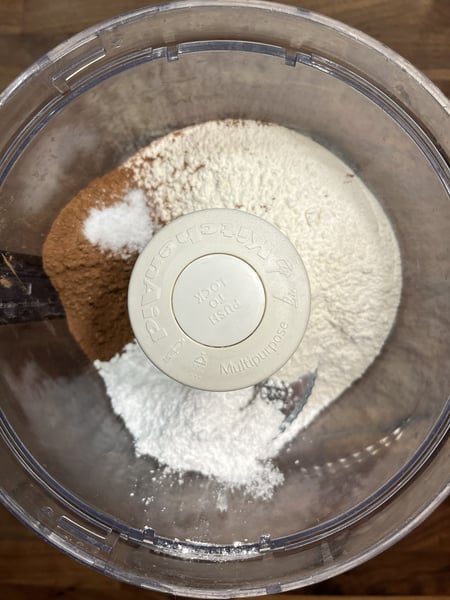
2. In the bowl of a food processor combine the flour, cocoa powder, powdered sugar, and salt. Pulse a few times to combine and break up any clumps.
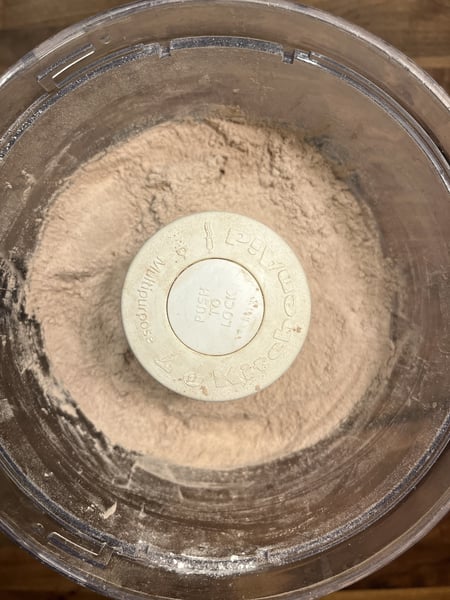
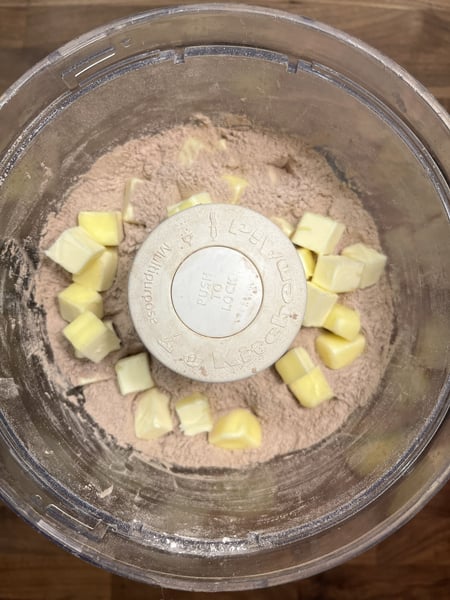
3. Drop the cold, cubed butter into the food processor. Pulse in short bursts until the butter is completely broken down into the flour. The mixture should have a uniform texture that looks like fine sand.
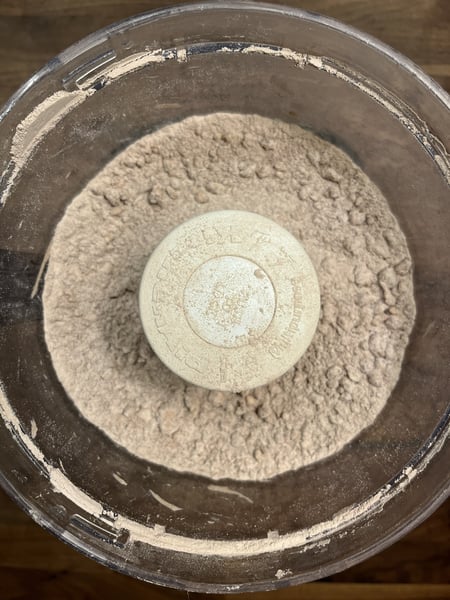
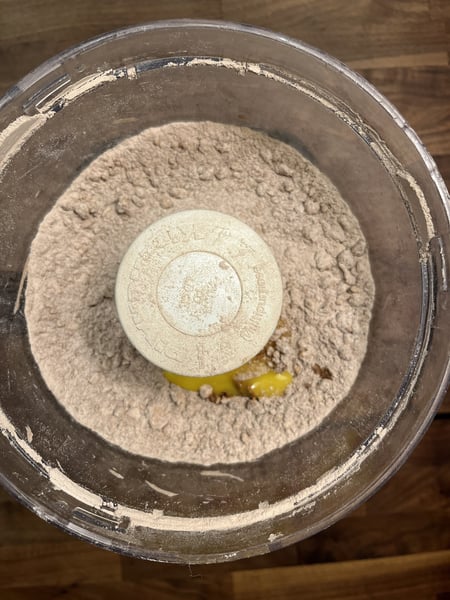
4. Add the egg yolk, vanilla, and cold coffee, then pulse until it begins to come together, but not fully formed.
5. Turn the dough on to your work surface and form into a 1” thick circular disk. Wrap in plastic and refrigerate for at least one hour.
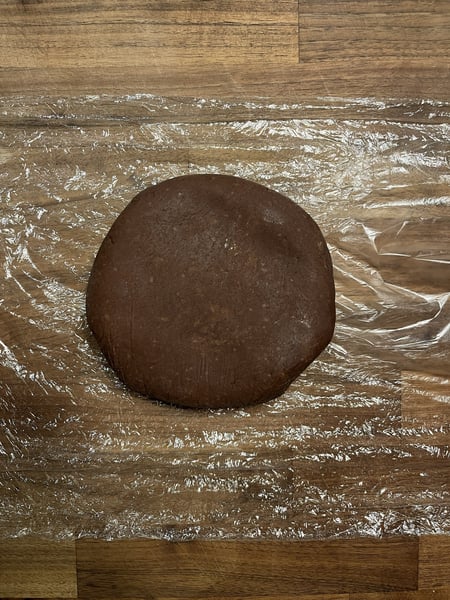
6. Remove the dough from the refrigerator and let it sit at room temperature for a few minutes to make it easier to roll.
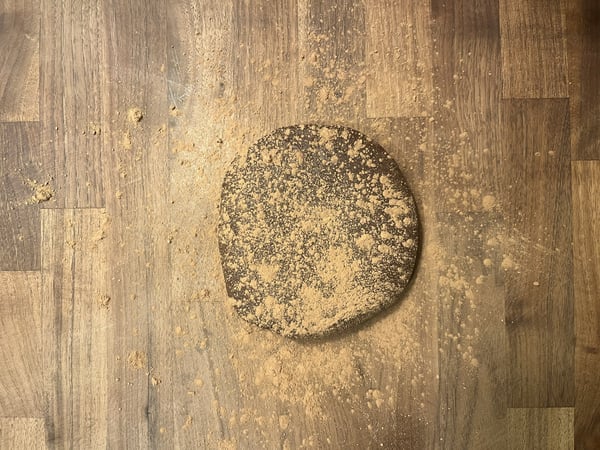
7. Dust your work surface with cocoa powder and, with a rolling pin, begin to roll your dough turning it 90 degrees after every few passes. If the edges start to crack, you can fill them in with dough to even things out. You want to achieve a rough circle about 11” wide and ⅛” thick.
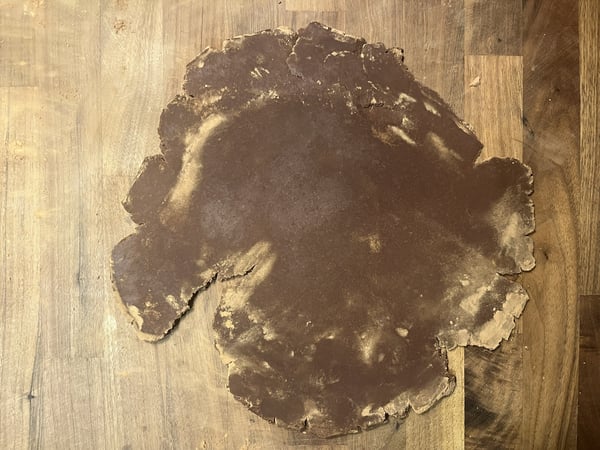
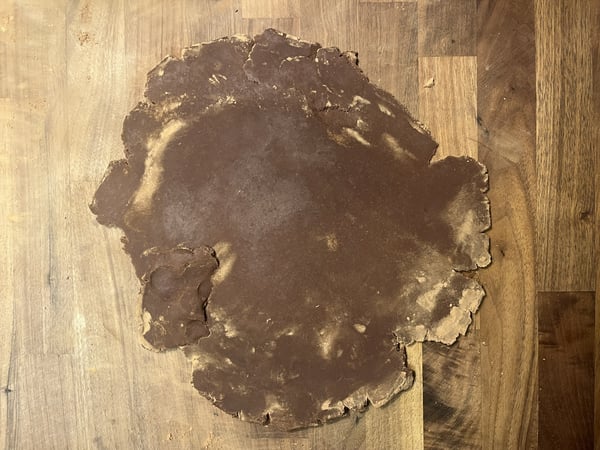
8. Carefully roll the dough “circle” over your rolling pin, then unroll into a 9” tart pan with a removable bottom. Gently press the corners and sides, then roll your pin over the edges of the pan to cut the excess dough off. Patch any holes or uneven sides with excess dough, then use a paring knife to create a neat, even edge.
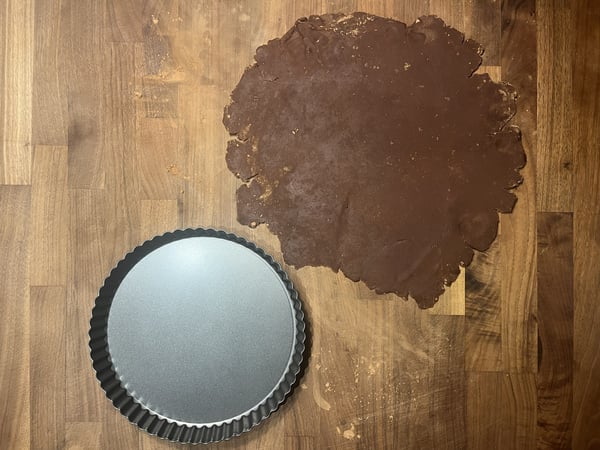
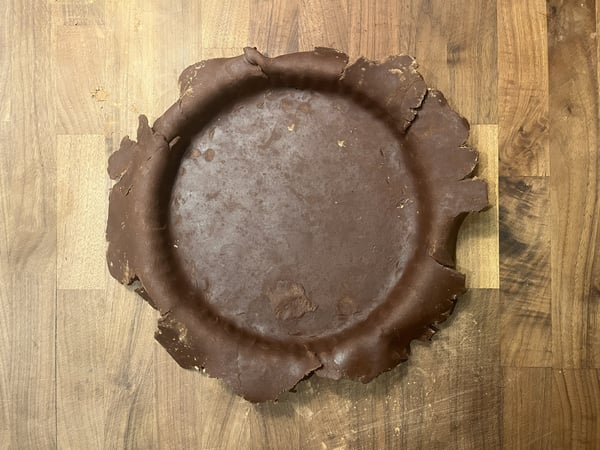
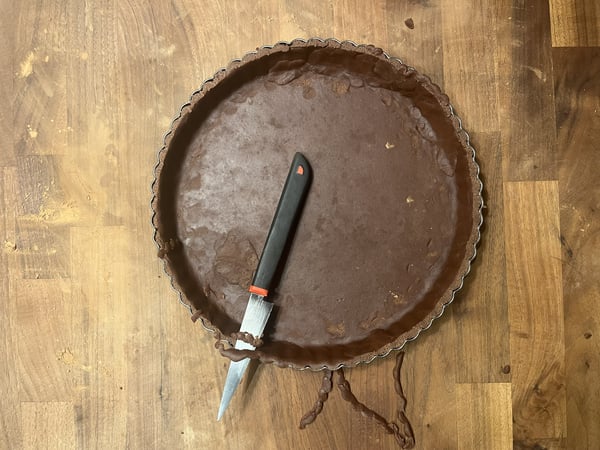
9. Dock, or prick, the bottom of the dough with a fork, then freeze for 20 minutes until it is firm.
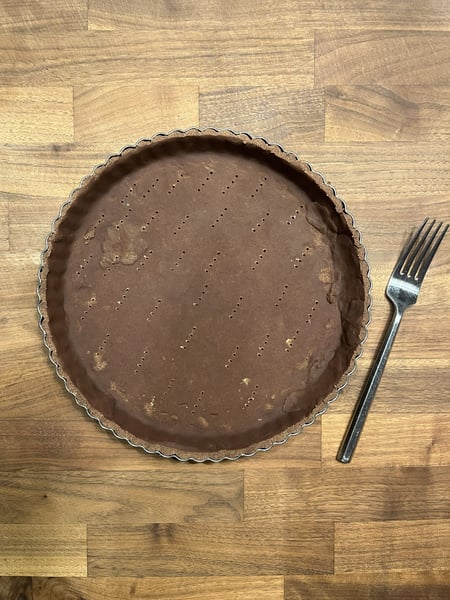
10. Cover the chilled dough with parchment paper, then fill the center with pie weights (or dried beans) and spread evenly to cover.
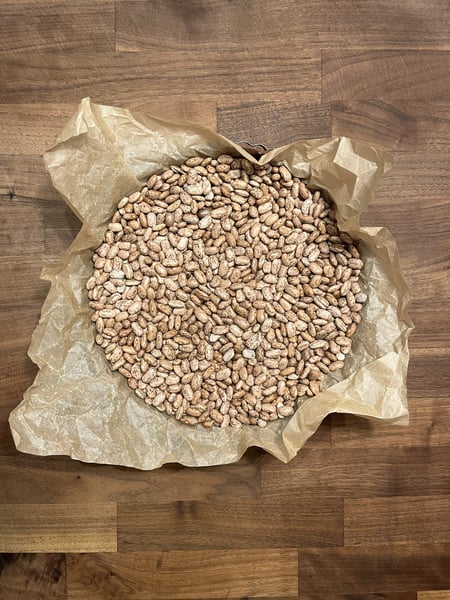
11. Bake the weighted tart shell for 15 minutes. Carefully remove the parchment and weights, then bake for an additional 10 minutes, or until dry and firm.
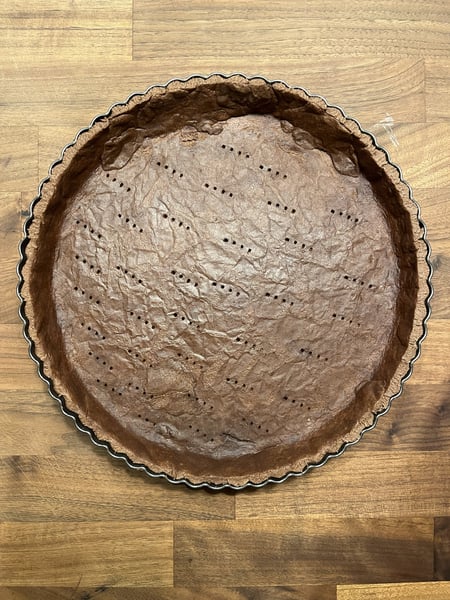
12. Transfer the baked shell to a wire rack and let cool for about 30 minutes.
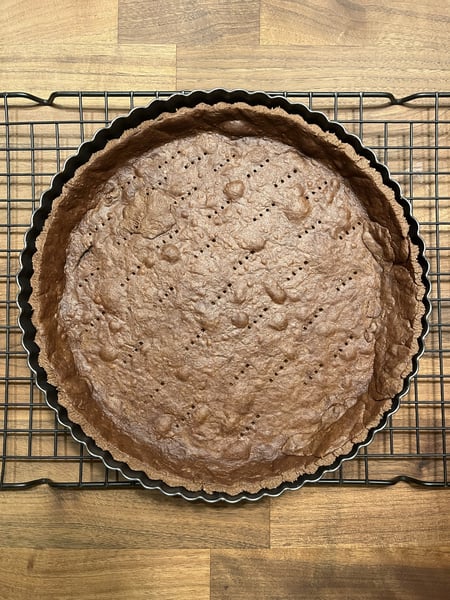
For the filling:
1. Preheat oven to 325F degrees.
2. Combine the chopped chocolate, heavy cream, and salt together in a saucepan over low heat, stirring continuously until melted and perfectly smooth. Remove from the heat and let it cool slightly so it doesn't cook the eggs.
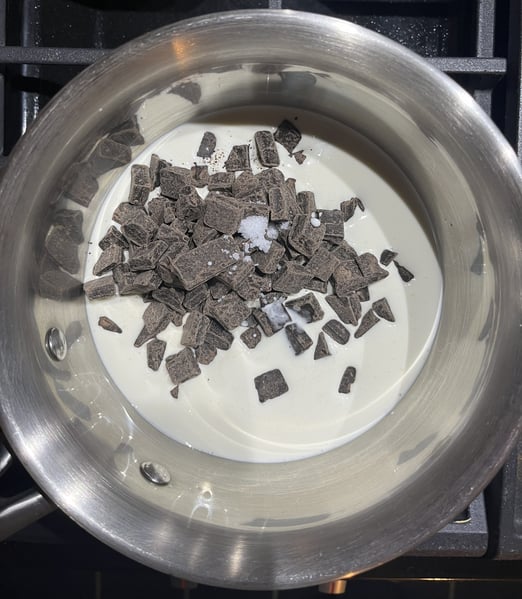
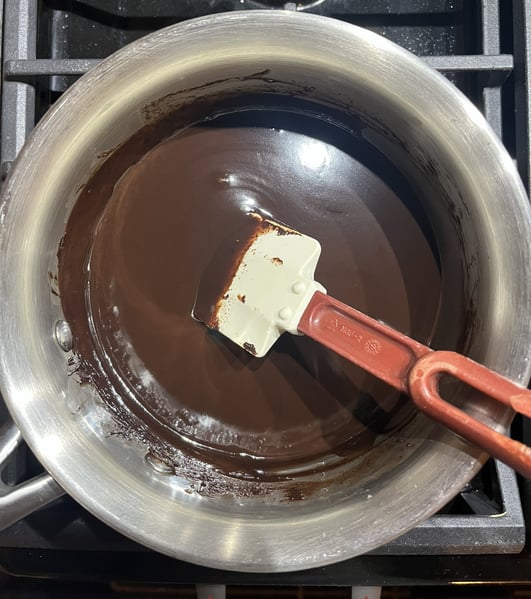
3. In a separate bowl, whisk together the eggs and vanilla.
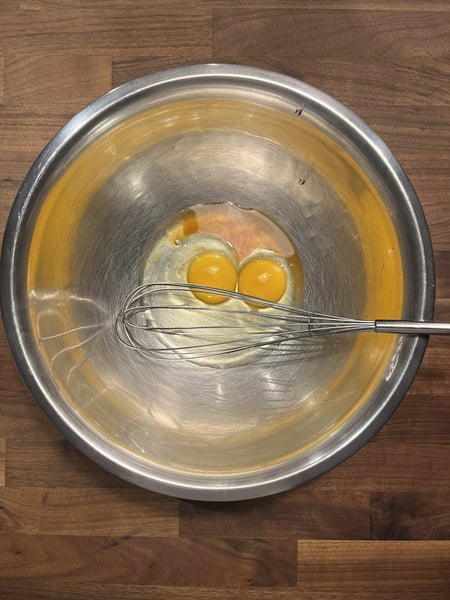
4. Slowly pour the warm chocolate mixture into the eggs while whisking constantly to combine without scrambling.
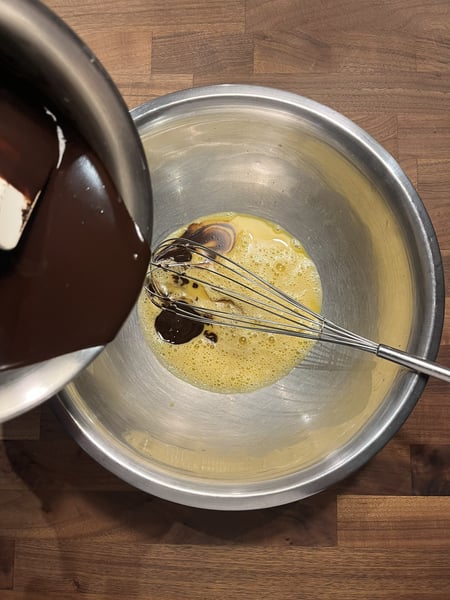
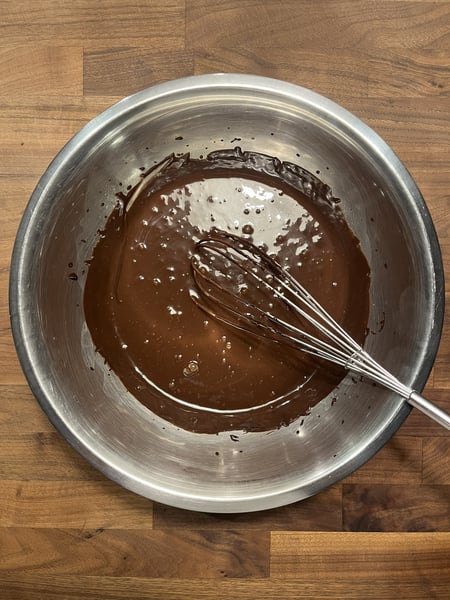
5. Pour the filling into your blind-baked tart shell. Bake for 20-25 minutes. The edges should look set, but the center should still have a slight jiggle when removed from the oven.
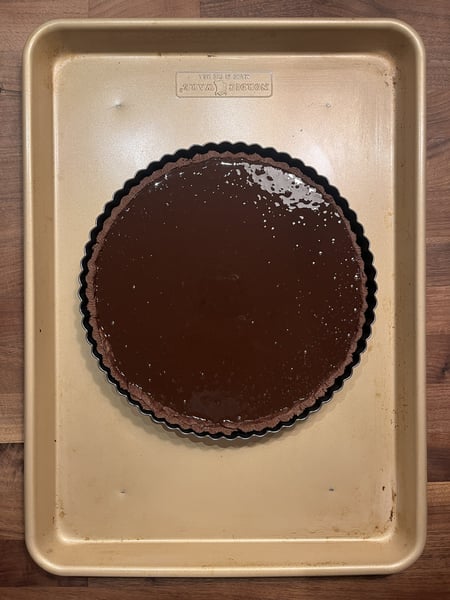
6. Transfer to a wire rack and cool completely at room temperature.
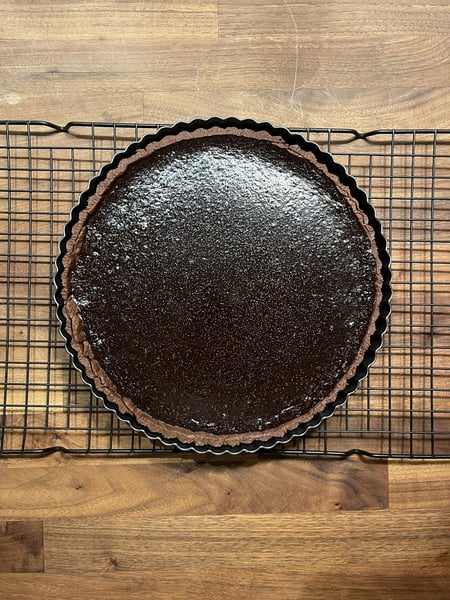
7. Store in the refrigerator for 3-4 days.
Assembly:
Once the chocolate tart is cooled, evenly sprinkle the top with flaky sea salt. Then place pomegranate arils around the surface of the tart in a decorative fashion.
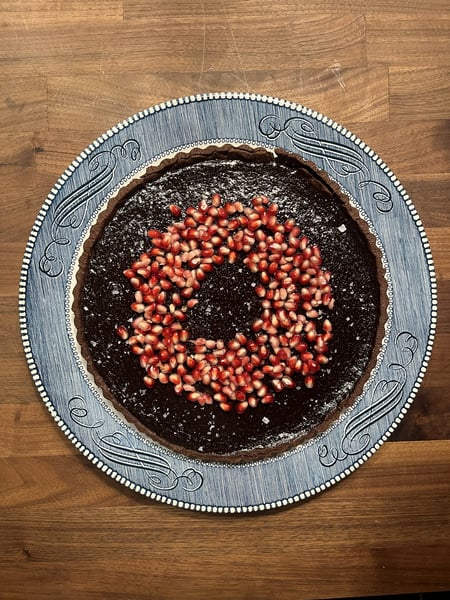
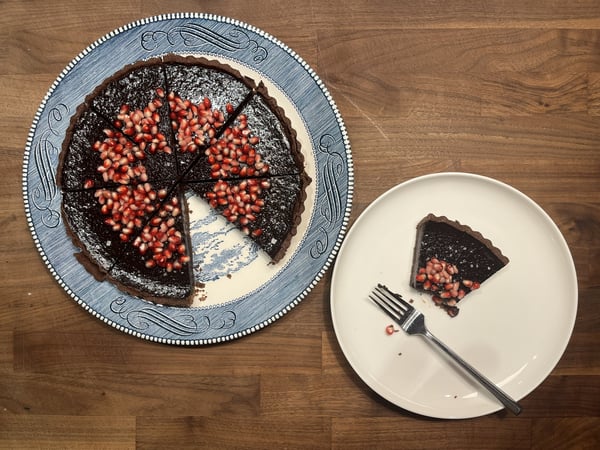
To remove the outer ring of the tart pan, place the pan on top of an inverted bowl and carefully lower the ring. Run a sharp knife under hot water, wipe dry, then slice through the tart to get a clean and smooth slice. Wipe your blade in between each slice. I like to cut the tart in 8 or 10 slices, depending on the crowd.
The Verdict
I am honestly pretty shocked by the outcome. This Dark Chocolate Tart with Sea Salt and Pomegranate exceeded my expectations.
The crust is crumbly in a very pleasant way, and is a great base. The filling is rich and custardy, and not too sweet. The bitterness and sweetness are nicely balanced by the tartness of the pomegranate and the clean salinity of the flaky salt.
I added the coffee to the dough because it was looking dry, and I thought the coffee flavor would complement the chocolate. I believe that it was a definite benefit.
If I were to change anything, I would be more careful when placing the rolled dough in the pan. I feel that it was uneven and fragile in parts. Other than that, I would change very little. I’m glad that I did this test recipe before I committed to serving it to my guests.
Developing this recipe has given me a new appreciation for pastry techniques. Taking on an unfamiliar dessert reminded me that good cooking involves research, practice, and a willingness to experiment.
Do you want to build your own baking skills? Look no further than The Chopping Block. There will be a hands-on Pie and Tart Boot Camp on Saturday, November 14th. And if you don’t want to do the baking yourself, you can order your TCB Thanksgiving pies now.
