
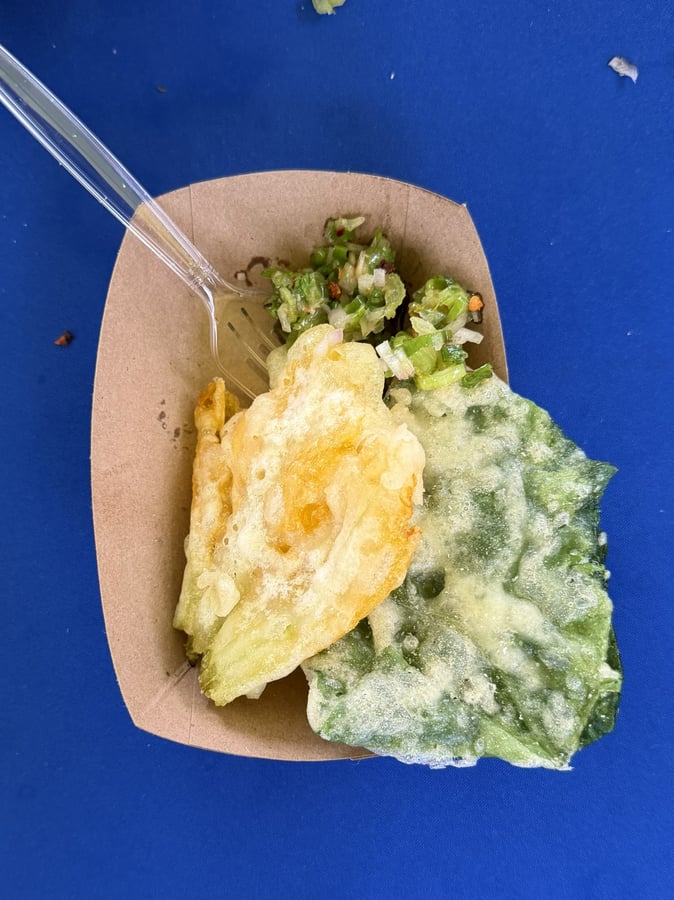
It is an overcast day at the Thursday evening Lincoln Square Farmers Market.
I am setting up my tent to do my every-other-week cooking demonstration for The Chopping Block. I’m positioned next to the Western Brown Line stop. The train chugs by every now and again. It looks like it might rain but the show must go on. Rain or shine!
I am always excited to do the cooking demos for the folks of Lincoln Square and beyond. I have been looking forward to this Thursday market in particular because I am featuring produce that was grown exclusively at Global Gardens Chicago’s vibrant urban farm. I met Haley LeRand, the Executive Director of Global Gardens, a few weeks earlier, and she was interested in collaborating.
Getting to Know Global Gardens Chicago
Located in the Albany Park neighborhood of Chicago, Global Gardens is a unique urban farm that provides much more than fresh produce. I recently had the opportunity to visit the farm and meet with Haley LeRand to learn more about the organization and the refugee farmers who make it so special.
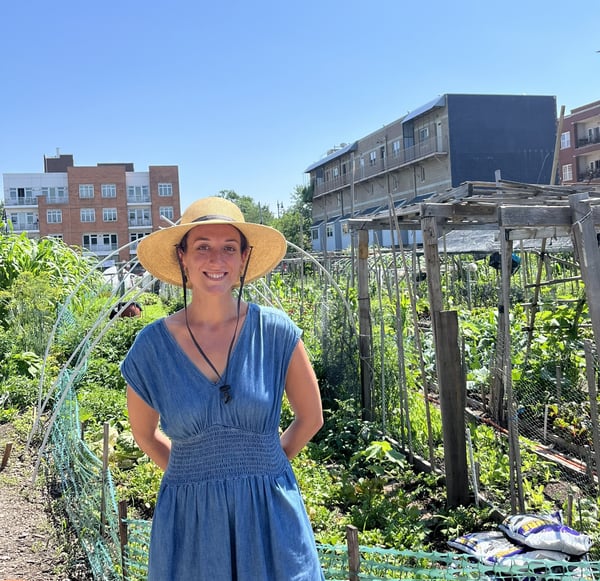
Founded in 2012, Global Gardens currently provides garden plots for 68 refugee families to grow vegetables for their own consumption. Another 10 refugee families currently participate in the Market Farmer Program, where they tend 1,000- to 1,500-square-foot plots and grow produce to sell. Global Gardens provides the land, tools, seeds, and training, while farmers contribute agricultural knowledge and traditions shaped by their lives and experiences back home.
One of my favorite things about visiting farms is seeing what is growing. During my visit, I saw amaranth, sour leaf, and beautiful red-veined sorrel growing alongside more familiar farmers market vegetables.
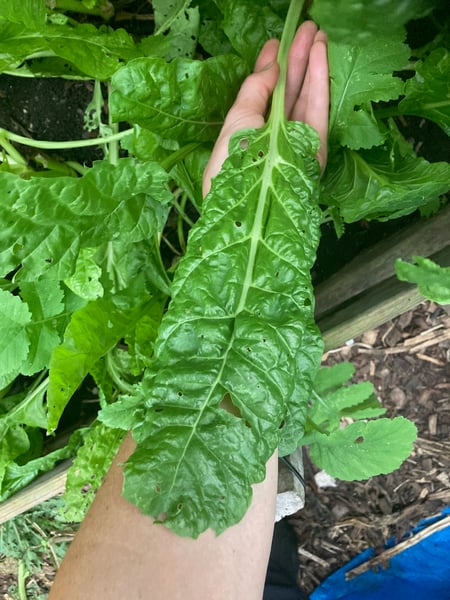
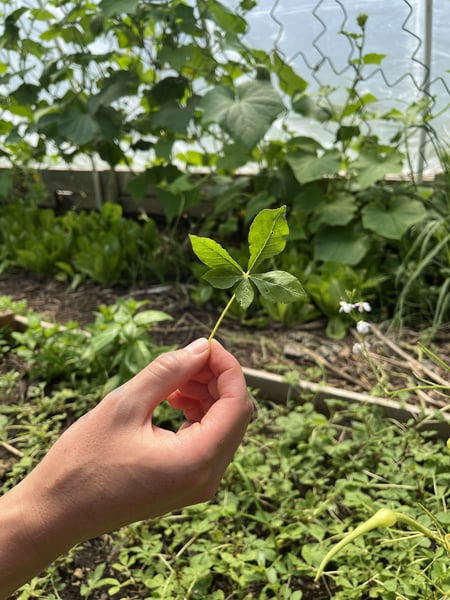
The farmers also grow crops such as water spinach, opo squash, and bitter melon, many of which are culturally important to them.
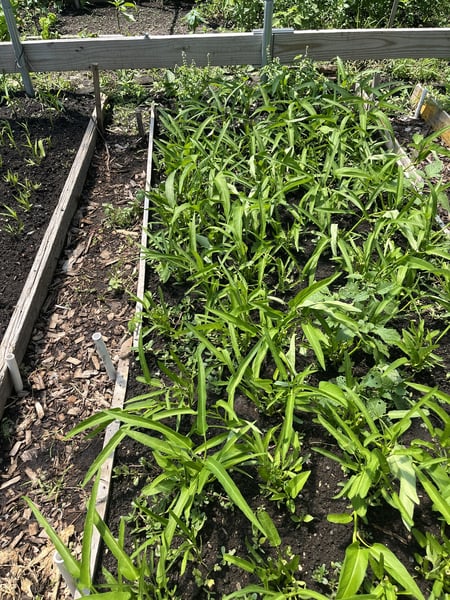
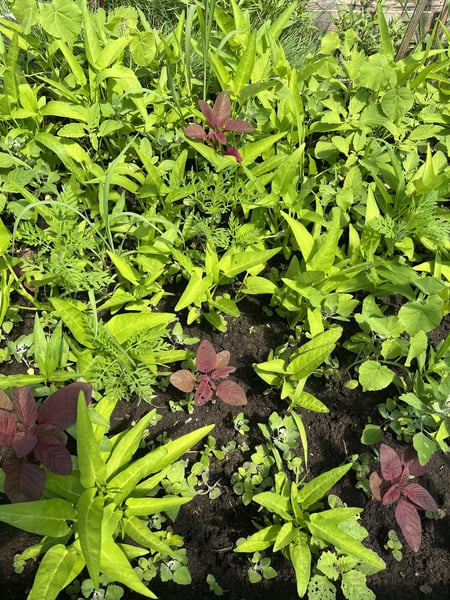
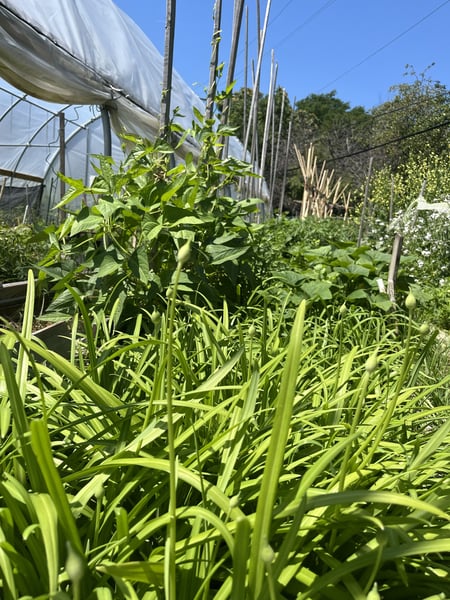
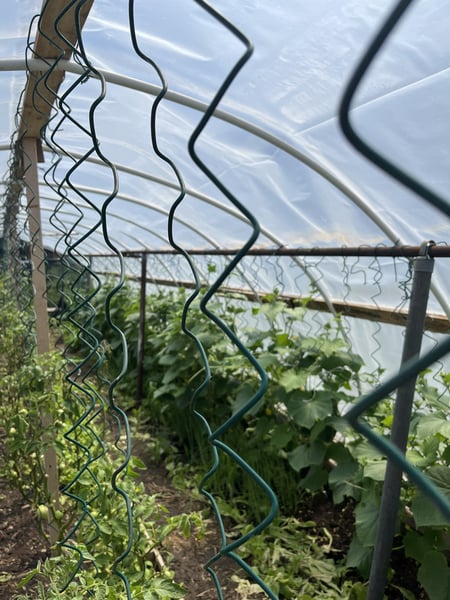
I was also impressed by how creatively the farmers built out their individual plots. They make use of whatever materials they have available to create structures and supports for their crops. I even saw one farmer using an unraveled section of chain-link fencing as part of their growing structure. It was a great example of the resourcefulness and hands-on knowledge that these farmers bring to the garden.
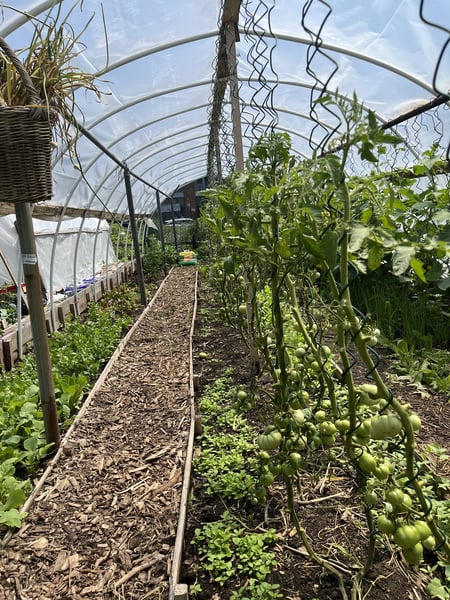
The farmers come from Myanmar, Burundi, the Republic of Congo, and Bhutan. They decide what they want to grow while developing skills in organic vegetable production, record keeping, customer service, and selling their produce. Farming is often a family affair, with multiple generations helping to harvest and process the vegetables. I love seeing that connection between food, family, and tradition.
The farmers rotate between five Chicago farmers markets, including Lincoln Square, Andersonville, Horner Park, Independence Park, and Portage Park. They also sell to a restaurant and wholesale buyer and donate fresh produce to local food pantries.
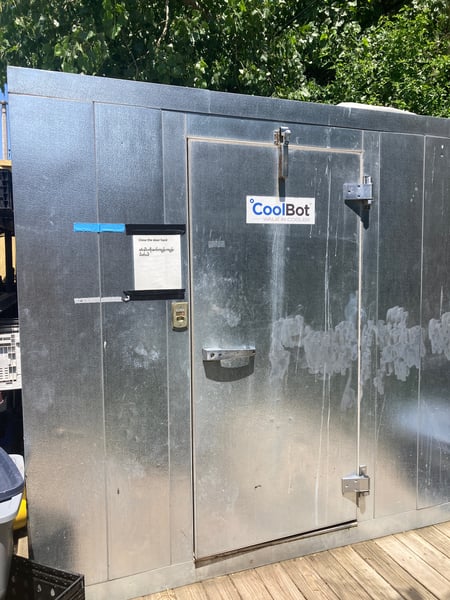
Market preparation starts the day before. Farmers spend hours harvesting, bunching, and preparing their vegetables before storing them in the walk-in cooler for the next day's market. Some of the farmers also have jobs outside of the farm, making their commitment even more impressive.
Another part of the program that I really appreciated is that farmers can be reimbursed for produce they donate. Food rescue organizations pick up leftover vegetables from the markets and distribute them to food pantries. This reduces food waste, increases food security, and provides additional income for the farmers.
For Haley, running a small nonprofit certainly has its challenges. Global Gardens has a staff of only two, plus one seasonal part-time employee. There are also many languages and dialects spoken at the farm, so communication can require patience and creativity.
But Haley told me that the most gratifying part is seeing the healing that happens at the farm. For many refugee farmers, agriculture was an important part of life before coming to Chicago. Global Gardens gives them a place to practice those skills again, grow foods that remind them of home, work alongside their families, and build community.
As chefs, we spend a lot of time talking about ingredients. We talk about flavor, seasonality, and sourcing. Visiting Global Gardens was a great reminder that behind every ingredient is a person and, sometimes, an entire culture.
Back to My Thursday Evening Cooking Demo
I have my tent set up. My table is set with all of my equipment, and my beautiful Global Gardens produce is on full display.
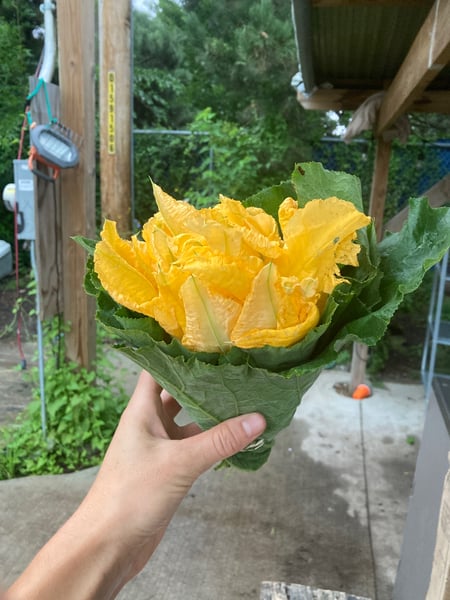
Haley was nice enough to hand pick me some gorgeous squash blossoms. These are the delicate, bright yellow and orange edible flowers that grow on summer squash and zucchini plants. I also snagged some banana peppers, Swiss chard, and green onions.
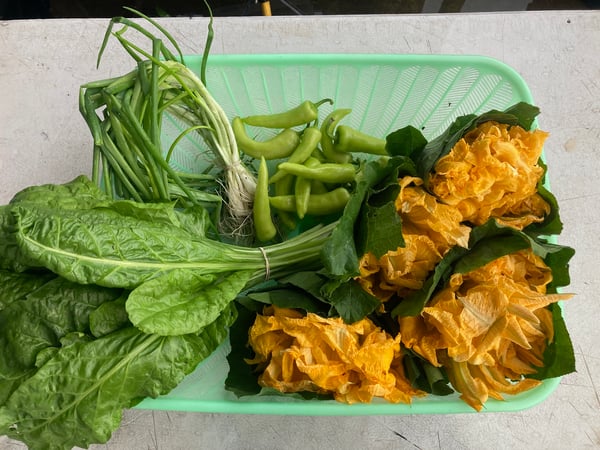
In the days prior, I came up with the idea to make a fritto misto with these beauties. This is a fried treat with a fluffy and crisp exterior. Ice cold sparkling water in the batter creates the fluffy texture. I will be using nearly every part of the produce, from stem to leaf, making a raw relish from the chard stems and the green onion tops.
Fritto Misto with Chard Stem and Green Onion Relish
Yield: 30 tasting servings
Prep time: 15 minutes
Cook time: 10 minutes
Total time: 25 minutes
For the Chard Stem and Green Onion Relish:
1 bunch Swiss chard stems, small dice
1 bunch green onion tops, the green parts, sliced thin
1 shallot, minced
1 teaspoon red pepper flake
1/4 cup extra virgin olive oil
Lemon zest and juice to taste
Salt and pepper to taste
For the fritto misto:
About 4 cups neutral oil for frying
1 cup all-purpose flour
1/2 cup semolina flour
1/2 cup cornstarch
1 teaspoon salt
About 1 1/2 cups ice cold sparkling water
Squash blossoms
Green onions, the white parts
Banana peppers
Swiss chard leaves
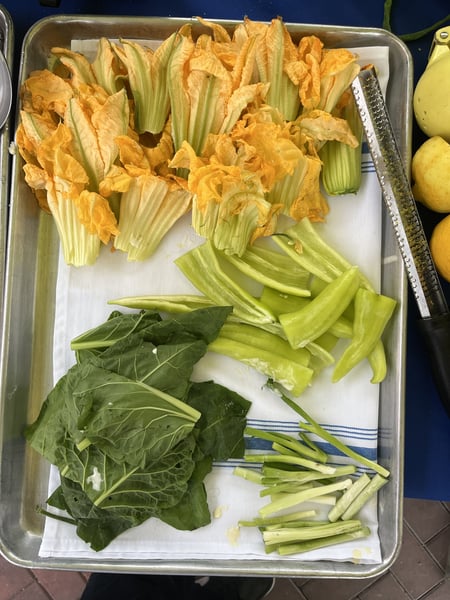
1. For the relish, mix together all of the ingredients, and adjust the seasoning with lemon, salt and pepper.
2. Heat the oil in a deep, heavy pot until it reaches 375F on a deep-fry thermometer.
3. In a mixing bowl, whisk together the flour, semolina, cornstarch, and salt. Gently stir in the sparkling water until you have a wet batter, about heavy cream consistency. Some lumps are okay.
4. Pat dry the vegetables and dip into the batter, allowing excess to drip off.
5. Fry the vegetables, in batches, until golden brown and crisp. About 2-3 minutes per side.
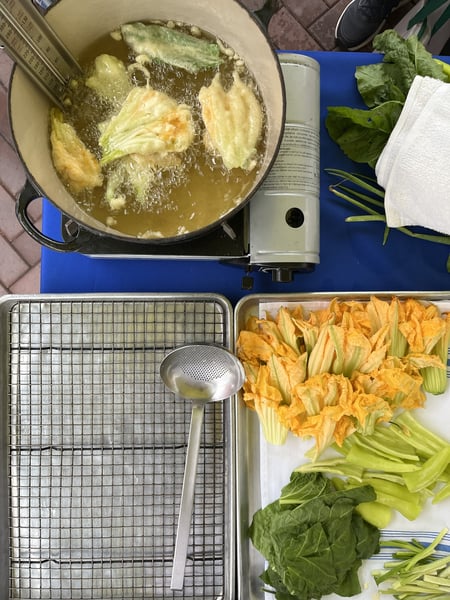
6. Using a slotted spoon, transfer the vegetables to a rack set over a sheet tray. Season with flaky salt. Serve immediately.
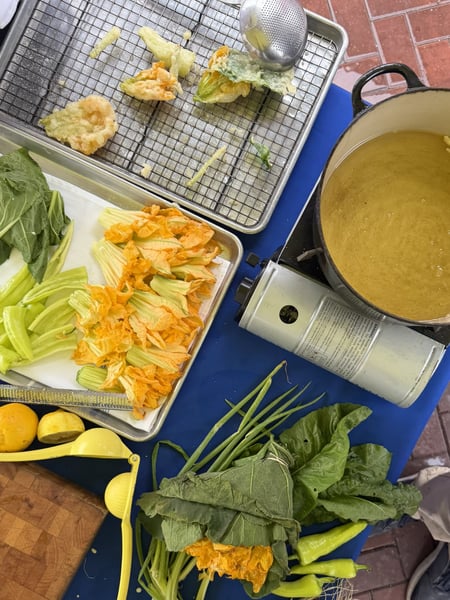
As I was preparing my dish for the market goers, the skies opened up and the rain sent people scattering. There were some that ducked under my tent and stayed for the show. The fried vegetables were crispy and mouthwatering. The relish was fresh and bright. I made some new friends of the brave ones that waited out the storm.
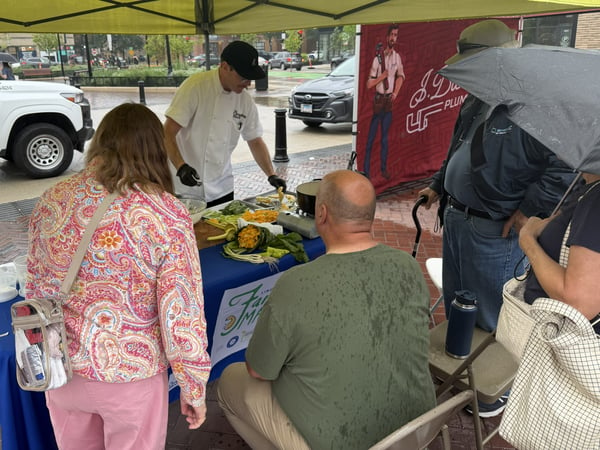
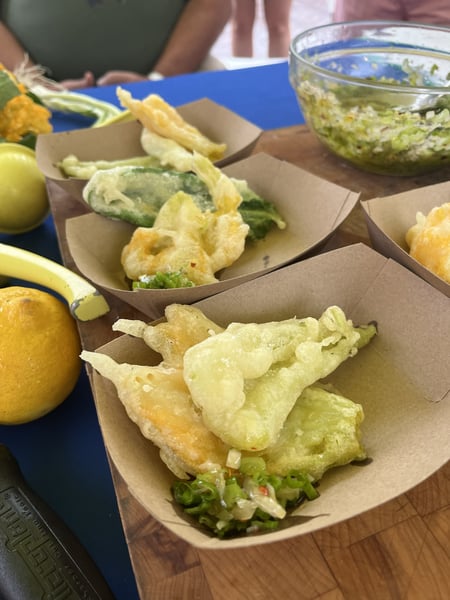
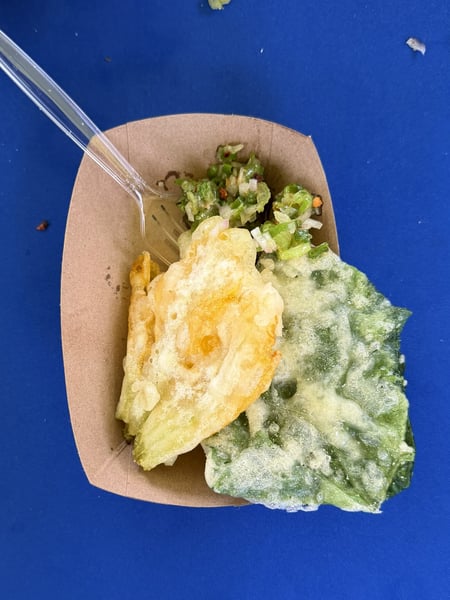
It was truly a pleasure getting to know Global Gardens Chicago and showing their produce the respect it deserves. I wasn't just cooking with vegetables from a local farm. I was cooking with ingredients that carried stories of home, family, resilience, and tradition. And for me, that's what makes the journey from urban farm to urban table so meaningful.
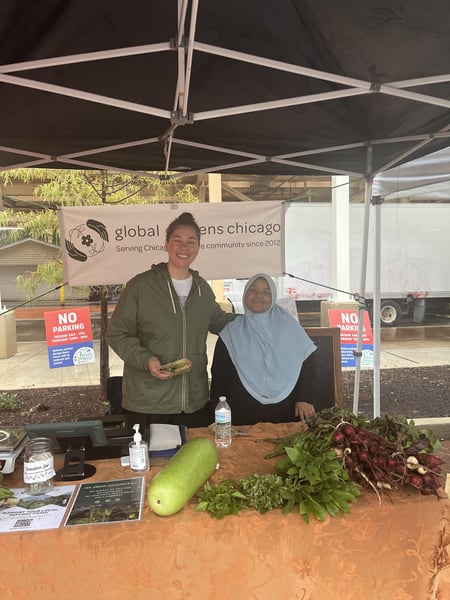
Make sure you visit Global Gardens’ stand at the markets before the season comes to a close. And don’t miss out on The Chopping Block’s future cooking demos - I'll be back next Thursday, August 27. And this Thursday, August 20, I'll be leading a special class where we tour the market and then come back to the kitchen to prepare a meal made with local ingredients from the market. Don't miss Farmers Market Tour and Cooking Demo!
