
The Thanksgiving holiday meal seems mundane at times. The host providing the staples – turkey, gravy, stuffing, and mashed potatoes. Family and friends pitching in on the typical side dishes – sweet potato casserole, green bean casserole, glazed carrots, roasted brussels sprouts. We have all come to love these dishes, but often it seems we may be on an annual and perpetual “Groundhog’s day” with the Thanksgiving menu selection. I submit for your consideration an atypical Thanksgiving offering.
Gravlax. It is a break from the savory and often heavy dishes that may exhibit the earthy and drab color of our Thanksgiving favorites.
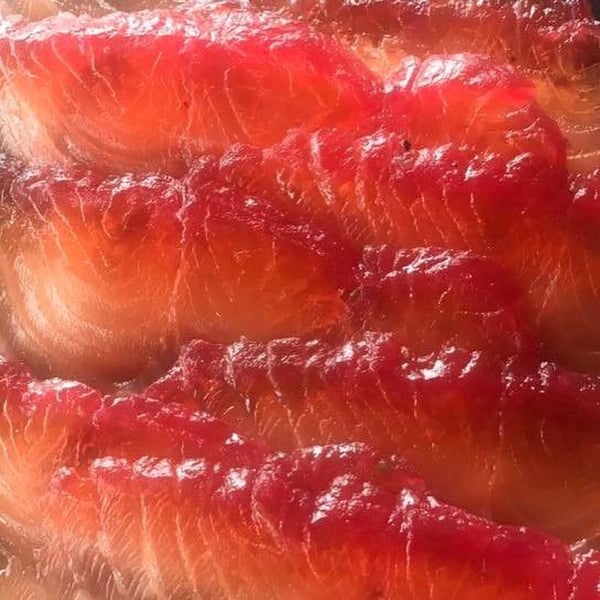
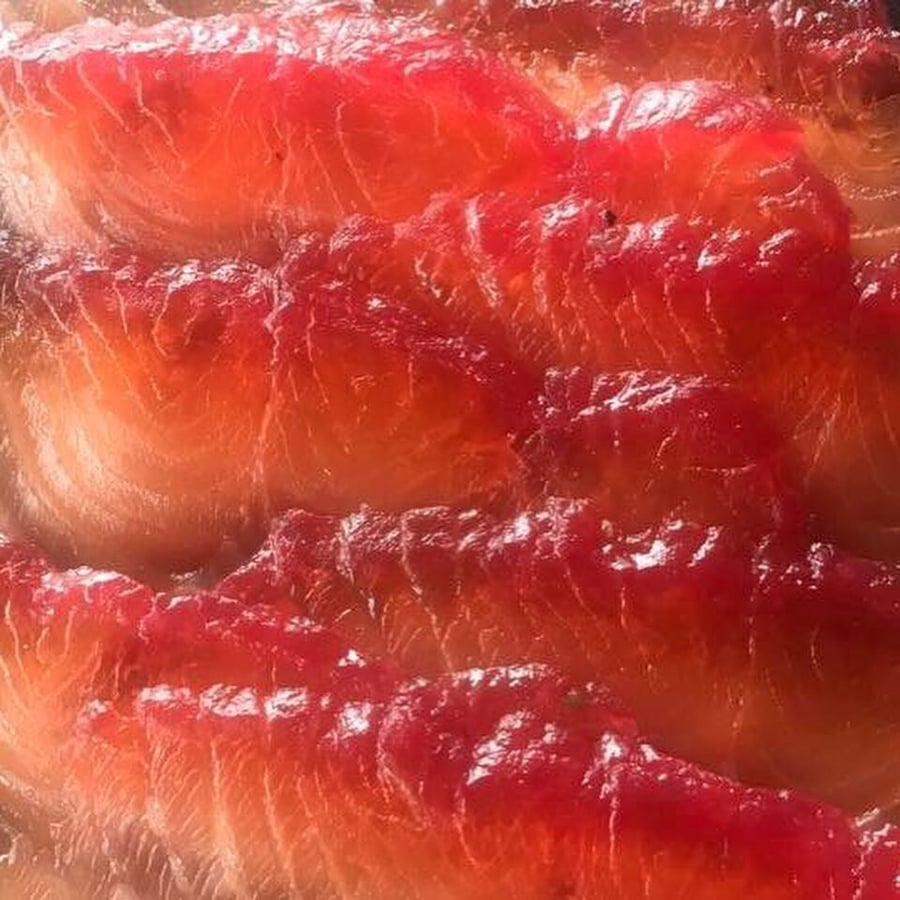
The flavor? Sweet like candy, slightly salty, bright with aromatics, totally addictive. The texture? Firm yet delicate, silky, a bit oily (in a great way). The center cut slices (when sliced paper thin) need no gnashing of the teeth, only the patience of letting the fish dematerialize on your tongue like Holy Communion. The thinner ends and belly are hardened with the texture somewhere between a gummy bear and beef jerky. The hue is bright red, and as in my recipe below, heightened by the addition of red beets to make an intense, candy-like product that will stand out among the usual menu suspects.
The name "gravlax" comes from the Scandinavian words grav or “grave” (referring to the medieval practice of burying the fish to ferment) and lax (salmon). It is a preservation process that has been practiced for thousands of years and predates refrigeration. The preservation or curing process uses salt and sugar to draw moisture out of the fish through osmosis. This denatures the proteins resulting in a firm, silky and dense texture. The fish is “cooked” by a chemical reaction of the cure, not by heat. The preservation helps to enhance the natural flavor of the fish while modifying texture.
Gravlax v. Smoked Salmon
I’d like to address a common misunderstanding. Gravlax (or lox) are not technically smoked salmon. Rather, lox is processed using a cure that typically contains a mix of sugar, salt, dill, juniper, coriander, and a drizzle of gin, vodka, or aquavit. Smoked salmon is a different process of curing fish that focuses on the salt and sugar aspects of the cure, following a focus on the delicate smoking process. Smoked salmon recipes can enlist either a hot smoke or cold smoke process; the former resulting in a flaky, cooked texture and the latter will yielding a raw, sashimi-like texture so often mistaken for lox.
Alternative Flavor Profiles
Gravlax is a versatile method that leaves the cook open to experiment with different aromatic flavor profiles to accompany the sugar and salt. In the past, I have used a more traditional aromatic profile of fresh dill, caraway, juniper and gin. Other times I’ve employed orange zest, thin sliced fennel, fennel seed, and aquavit. A simple lemon zest, black peppercorn, fresh thyme and vodka profile has worked as well. You do you.
Salt to Sugar Ratio
The amount of salt and sugar used is open for experimentation. For this recipe below a 3:1 ratio sugar to salt is used. Depending on your preference, you can cut the sweetness with a 2:1 ratio of sugar to salt. The beets add an additional sweetness that, along with the sugar, can balance the saltiness of the cure. The coriander adds a great citrus punch without becoming easily identifiable like a citrus zest. The juniper adds bittersweet and piney characteristics. Bay leaves employ a woodsy and herbaceous profile. Black peppercorn applies a bit of zip and slight heat to the recipe.
Choosing Spices
A reliable spice shop in your neighborhood can prove to be beneficial to sourcing quality spices that are harvested, processed, and stored in the most optimal manner. The coriander, peppercorn, juniper, or bay leaves that you purchase in a large grocery chain or box store will not yield the same flavors as good spice merchant products. The harvesting, drying, and processing methods used in large scale spice companies are not always optimal for the best product. Often, the seeds are harvested before maturity. The essential oils in the seeds have not yet been developed the colors aren’t vibrant.
Whole v. Ground Spices
I highly recommend using fresh ground, whole spices and seeds as opposed to pre-ground. The fresh ground whole spices and seeds will contain volatile oils and yield much more intense and bright characteristics than you will using pre-ground. The pre-ground products will not have the same flavor complexity as the natural oils quickly dissipate during processing leaving the product much flatter and more flavorless. They may start out intensely flavored when you first open, but those flavors will stale and fade quickly.
Serving the Beet Cured Salmon
For my Thanksgiving gathering, my cured salmon remains in the kitchen on top of a cutting board ready for the next request to slice - a welcome appetizer. It’s there while the turkey is roasting and usually lasts a couple of hours after guests arrive. No frills, just slice and serve, much like a Prosciutto di Parma or Jambon Iberico in a bustling restaurant.
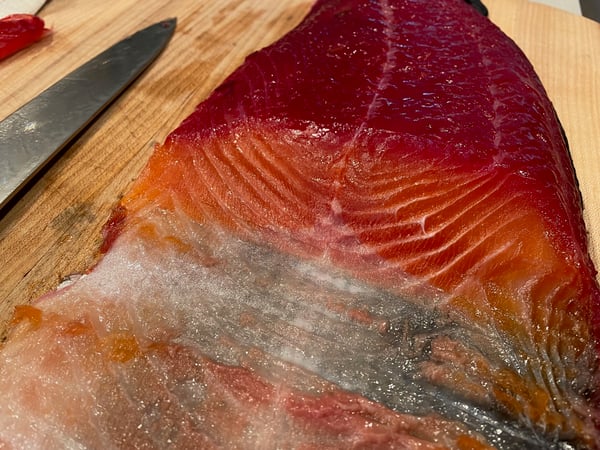
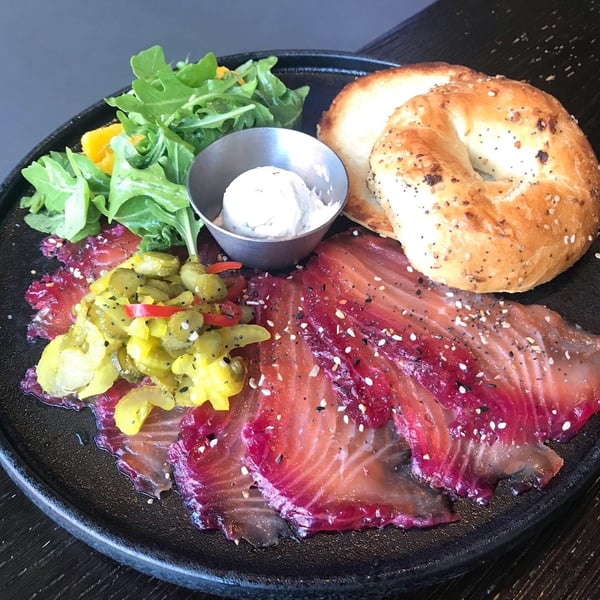
Other applications for this recipe are endless. Slicing thin for a bagel and gravlax platter with spiced cream cheese is a favorite.
I’ve also chopped it finely for a cured “tartare” dish with the addition of capers, lemon zest, chopped egg, and crème fraiche.
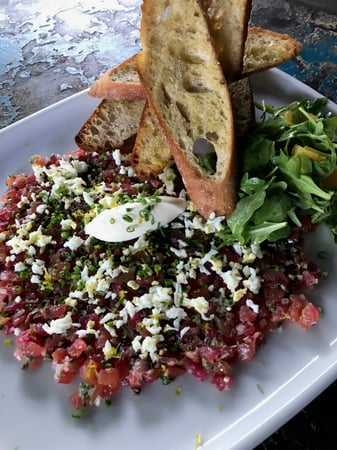
I hope you try this recipe and discover a new and welcome addition to your Thanksgiving table!
Beet Cured Salmon Gravlax
Yields: 3.5 pounds, serves 12 people
Prep time: 30 minutes
Cook time: 36-48 hours to cure
Inactive time: 12 hours to dry
Total time: 48–60 hours
2 each salmon filet, skin on, pin bones removed
1 lb. Kosher salt
3 lbs. granulated sugar
2 each red beets, large, peeled, grated coarsely
3 Tablespoons coriander seed, whole
2 Tablespoons black peppercorns, whole
3 Tablespoons juniper berries, whole
20 each bay leaves
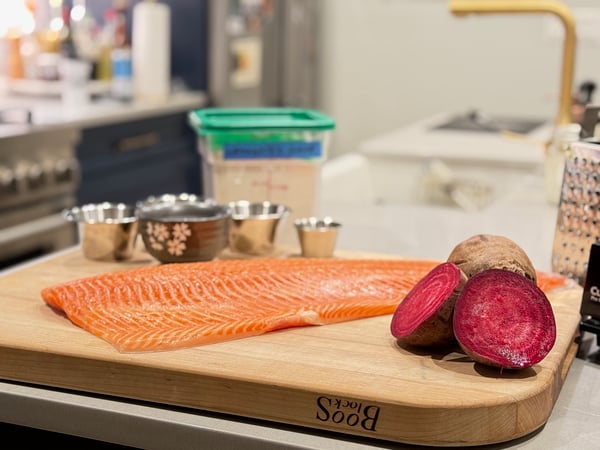
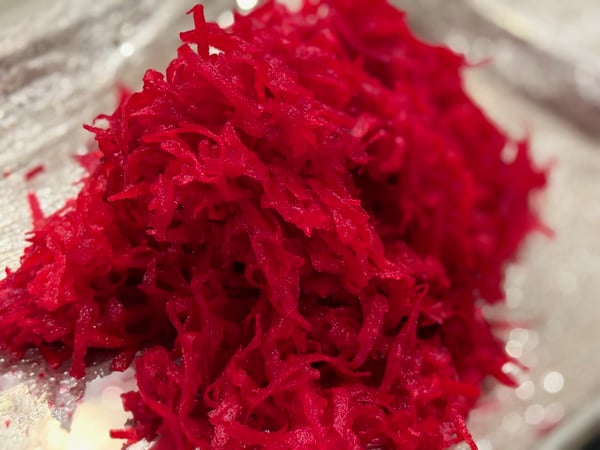
1. Peel the beets. Using a box grater, grate the beets coarsely onto plastic wrap so as to not stain your cutting board.
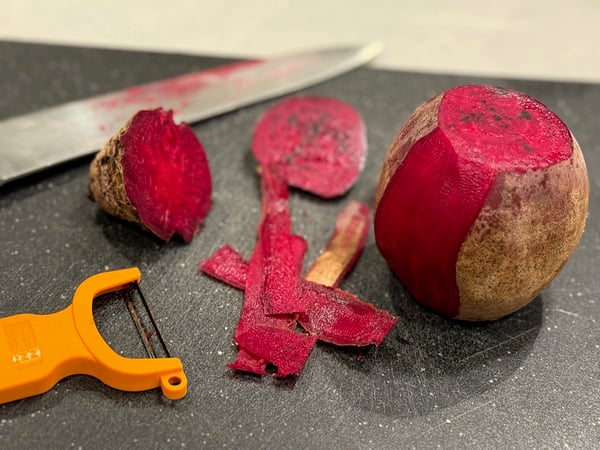
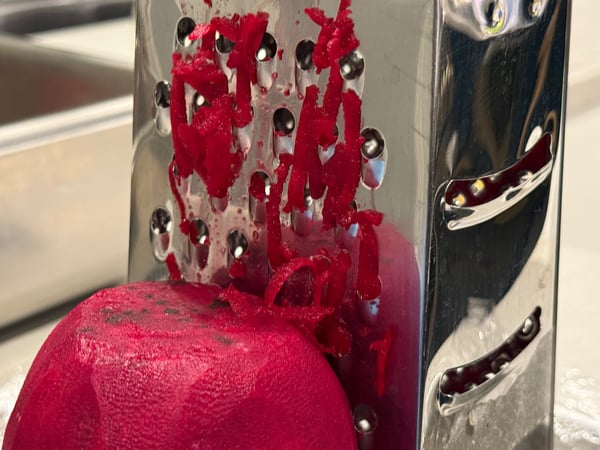
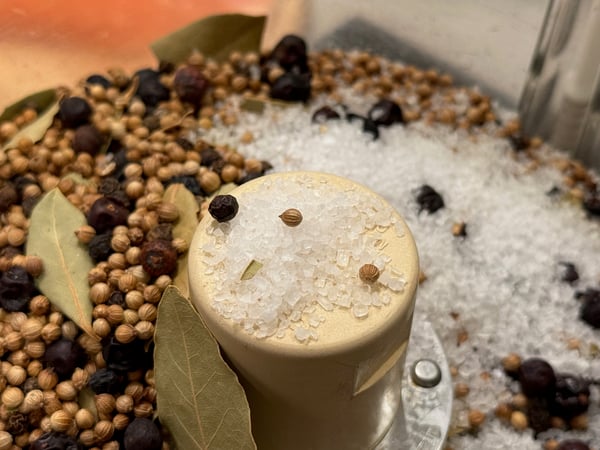
2. Using a food processor, blend 10% of the salt with the coriander, peppercorns, juniper and bay leaves. Process until the aromatics are crushed – about 1 minute. You will see much of the aromatics have remained somewhat whole, this is perfectly fine.
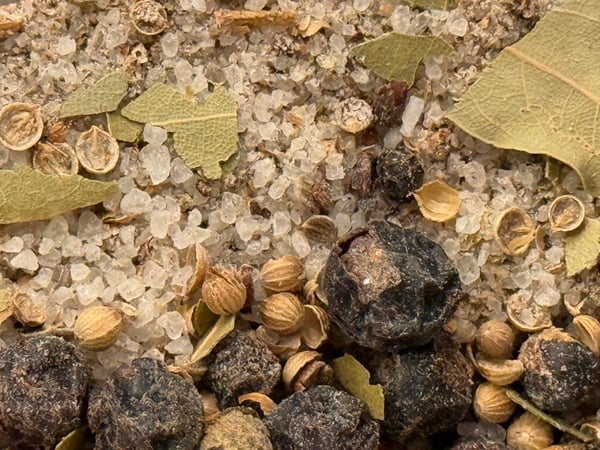
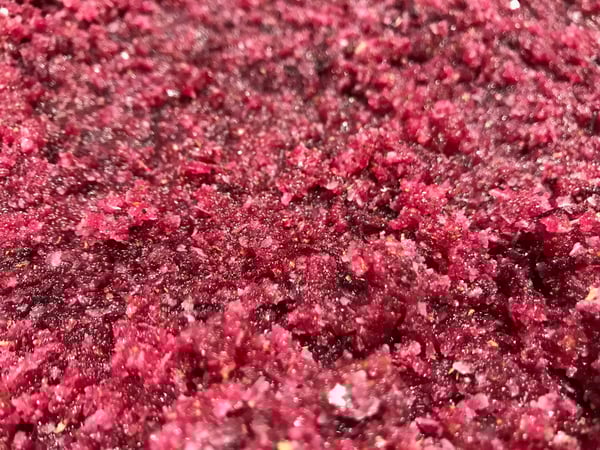
3. Combine the blended aromatics, remaining salt, sugar and grated beets together. Mix thoroughly to create a beet slurry or sludge.
4. Trim the thin belly off the bottom of the filet. (*see note below)
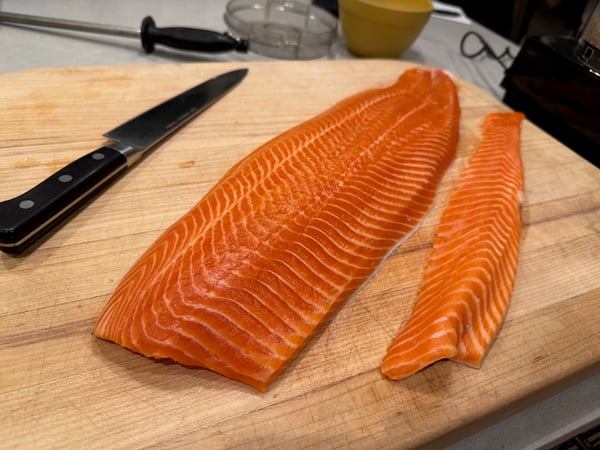
5. Using a large rectangular pan, place the salmon in skin side down. Cover the salmon completely with the beet mixture so that no flesh is exposed.
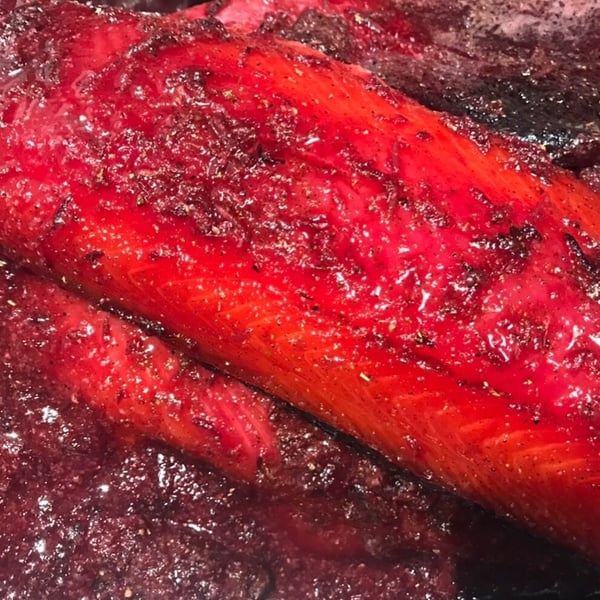
6. Over the next 36-48 hours (*see note below) in the refrigerator, spoon more of the cure over the filet every 12 hours.
7. Rinse the salmon, pat dry with paper towel, and dry in the refrigerator unwrapped for at least 12 hours to create a firm skin that will aid in the ease of slicing.
8. When ready to serve, use a thin slicing knife to slice the salmon on the bias from the top of the filet, aiming your knife at about 30° and slicing toward the front of the filet. One reaching the skin underneath, curl the blade forward and parallel to your cutting board as to not cut through the skin.
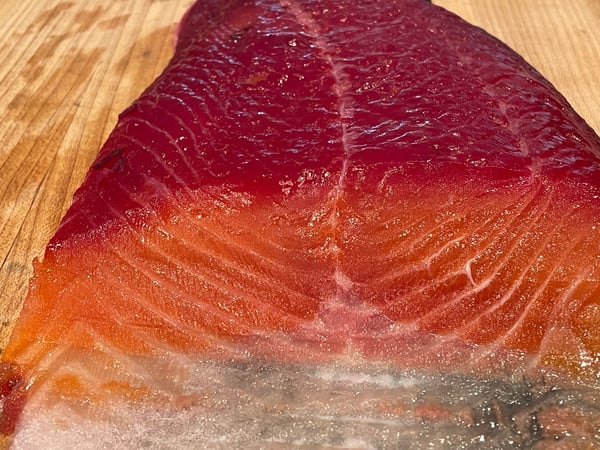
*Note: Trimming the belly off the bottom will accomplish a couple of things:
- The curing filet will have a more uniform size making it easier to slice consistent sized pieces.
- The belly meat will be cured as well offering a sort of side snack of cured salmon. This can be cut into slightly thicker pieces that are similar to beef jerky. Again, delicious and addictive!
*Note: The amount of time on the cure is completely up to the cook. Leaving on less than 36 hours may result in a product that is not fully cured, may be soft, and may spoil quickly. Leaving on too long will result in an over cured product that is tough and possibly too inundated with salinity masking the natural flavor of the fish.
With the holidays quickly approaching, do not miss the opportunities to experience all that The Chopping Block has to offer you this festive season!
We are accepting Thanksgiving pie orders up until 3pm today.
And we have so many fun classes that will help you prepare for the holidays. Here are just a few:
- Holiday Cake Decorating Workshop Sunday, November 30 11am
- Supper Club: Rib Roast Feast Friday, December 5 6pm
- Boozy Bites: Cooking with Wine and Spirits Saturday, December 6 6pm
- Fabulous Fall Baking Saturday, December 13 11am

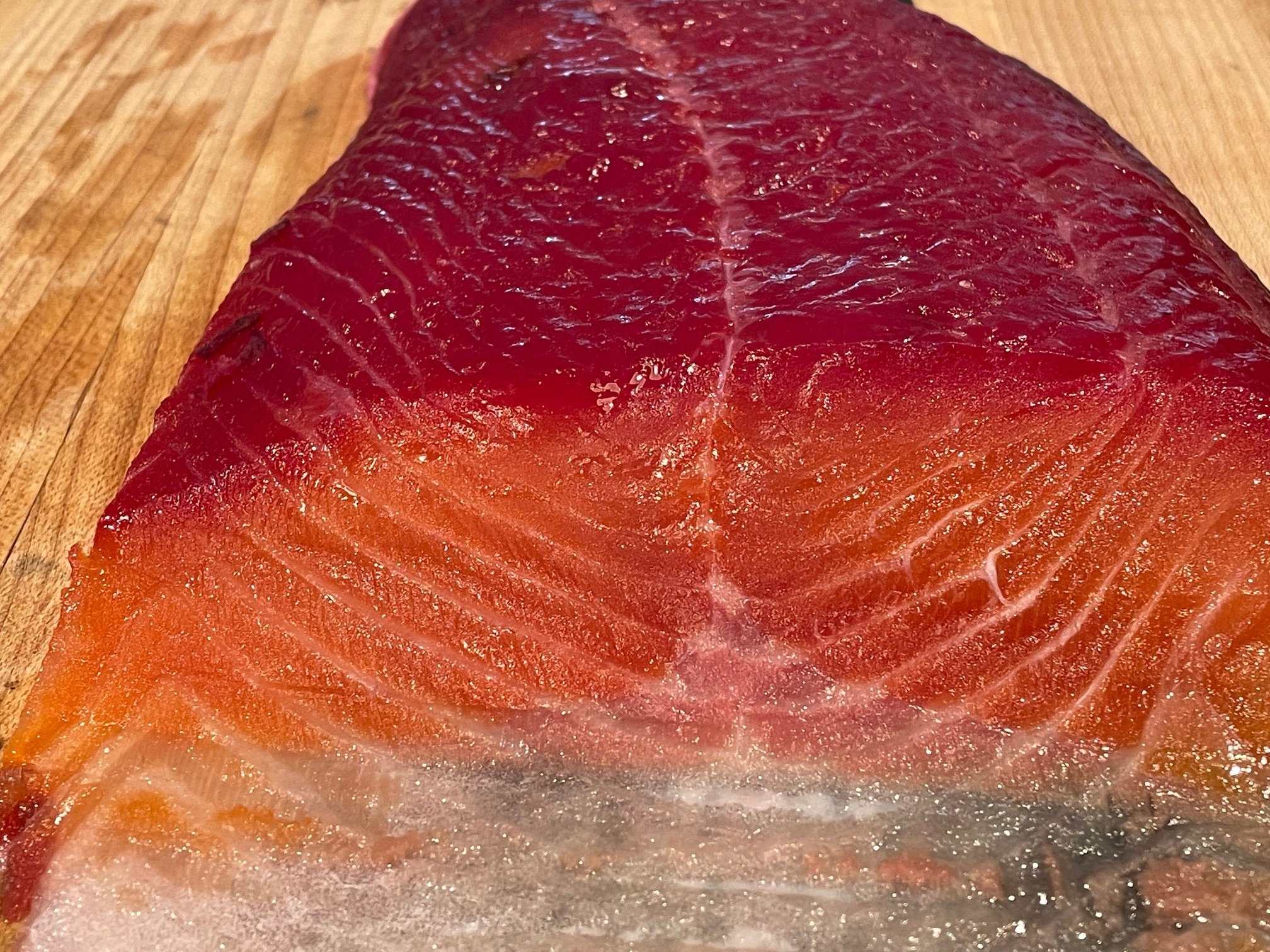
Beet Cured Salmon Gravlax
Ingredients
- 2 each salmon filet, skin on, pin bones removed
- 1 lb. Kosher salt
- 3 lbs. granulated sugar
- 2 each red beets, large, peeled, grated coarsely
- 3 Tablespoons coriander seed, whole
- 2 Tablespoons black peppercorns, whole
- 3 Tablespoons juniper berries, whole
- 20 each bay leaves
Instructions
- Peel the beets. Using a box grater, grate the beets coarsely onto plastic wrap so as to not stain your cutting board.
- Using a food processor, blend 10% of the salt with the coriander, peppercorns, juniper and bay leaves. Process until the aromatics are crushed – about 1 minute. You will see much of the aromatics have remained somewhat whole, this is perfectly fine.
- Combine the blended aromatics, remaining salt, sugar and grated beets together. Mix thoroughly to create a beet slurry or sludge.
- Trim the thin belly off the bottom of the filet.
- Using a large rectangular pan, place the salmon in skin side down. Cover the salmon completely with the beet mixture so that no flesh is exposed.
- Over the next 36-48 hours, spoon more of the cure over the filet every 12 hours.
- Rinse the salmon, pat dry with paper towel, and dry in the refrigerator unwrapped for at least 12 hours to create a firm skin that will aid in the ease of slicing.
- When ready to serve, use a thin slicing knife to slice the salmon on the bias from the top of the filet, aiming your knife at about 30° and slicing toward the front of the filet. One reaching the skin underneath, curl the blade forward and parallel to your cutting board as to not cut through the skin.