
Homemade condiments and sauces are one of the easiest ways to put quality ingredients on your table. You save money at the store, and you know exactly what is going into your food: no preservatives, no high fructose syrup, no mystery fillers. Today I want to focus on mirin, a Japanese staple that most home cooks have never made themselves.
Mirin is a sweet rice wine used to add gloss, balance, and depth to sauces, glazes, and marinades. Traditionally, it is made by fermenting glutinous rice with koji, a mold that also drives the making of sake and miso. Shochu, a distilled spirit, is added to stop the fermentation and keep the sugars from the rice in the finished liquid. The result is a mellow, lightly sweet seasoning with a low alcohol content.
Mirin has been part of Japanese cooking for centuries. Early versions were sweet sakes enjoyed on their own, and over time, cooks started using them in the kitchen. By the Edo period it had become a staple in home cooking, and it still anchors dishes like teriyaki, sukiyaki, and many simmered recipes today.
The challenge is finding the real thing. Good mirin is expensive and hard to find in most grocery stores. Many bottles labeled mirin are actually seasoning blends made with corn syrup, salt, and additives. They work in a pinch, but they lack the depth of the traditional product and can leave a sharp, artificial sweetness in your food.
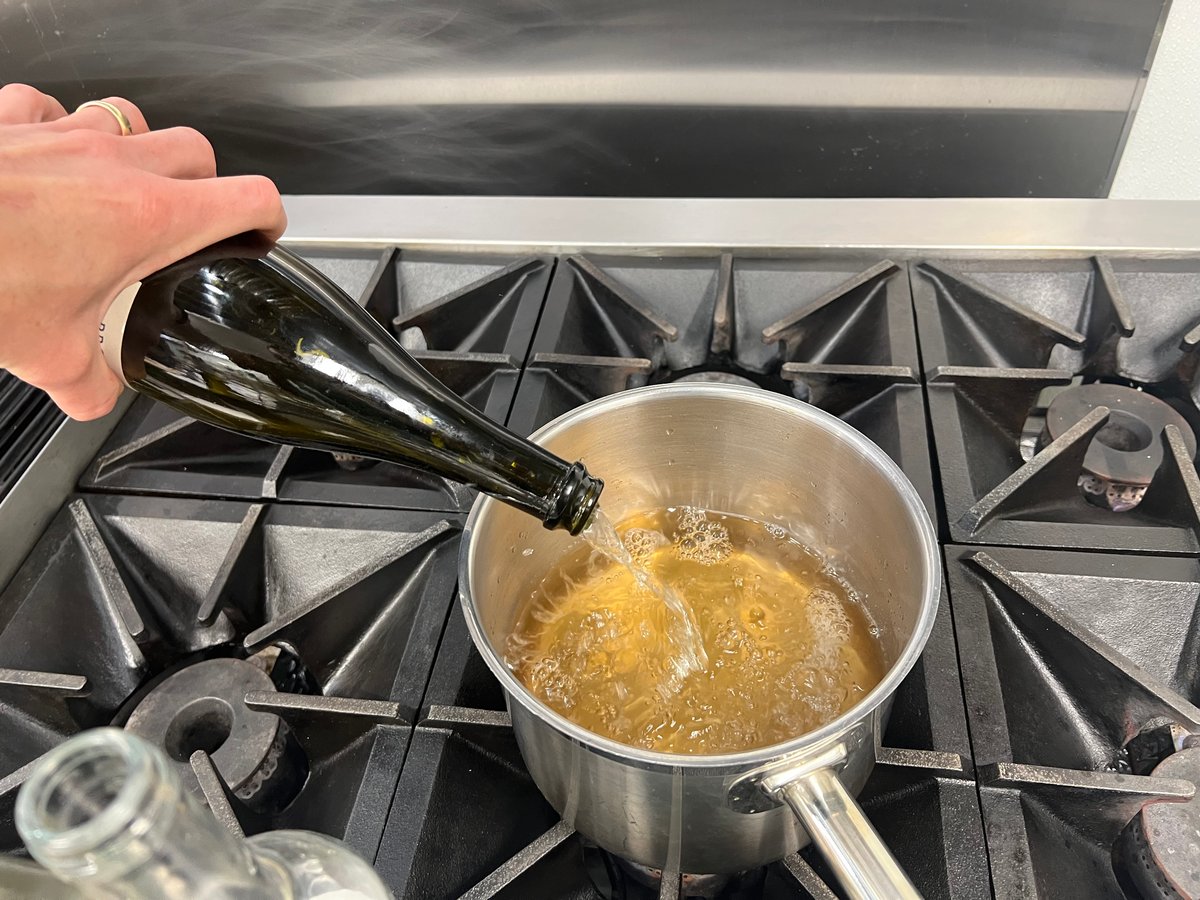
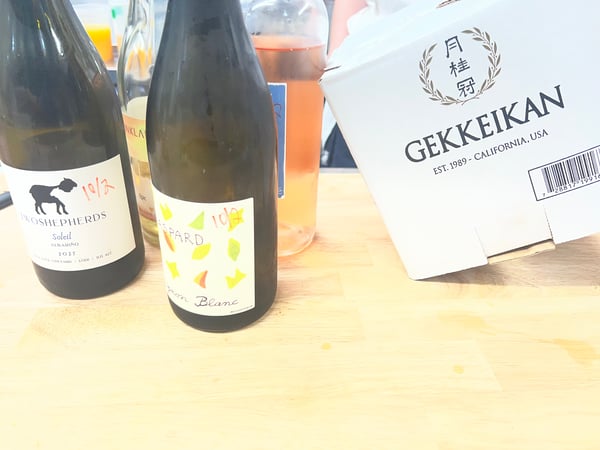
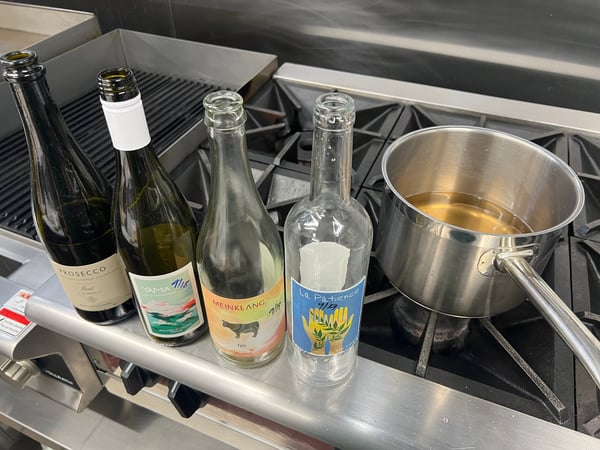
At Fork & Coin, we needed a practical solution. Buying high quality mirin in the amounts we go through would get expensive fast, so we developed a shortcut. We use white wine that is a few days past its prime and will not be served to guests, combined with sake and cane sugar. We also add a small piece of kombu, a dried kelp, for a subtle savory depth. It is not identical to traditional mirin, but it gives us the sweetness and body we need at a fraction of the cost, and we control every ingredient.
The same thinking led us to make our own Japanese barbecue sauce. My favorite brand has excellent ingredients, but the cost adds up quickly when you are feeding a full dining room. Making it ourselves lets us keep the flavor we want while avoiding the preservatives and high fructose syrups found in many bottled sauces.
You can make a version of our shortcut mirin at home, too.
Shortcut Mirin
Yields: 1 pint
Prep time: 5 minutes
Cook time: 20 minutes
1 cup dry white wine (unoaked wine like pinot grigio or sauvignon blanc works well, even if it is a few days old)
1 cup sake (not cloudy)
1/2 cup cane sugar
Pinch of salt
1 small piece kombu, about 2 by 3 inches
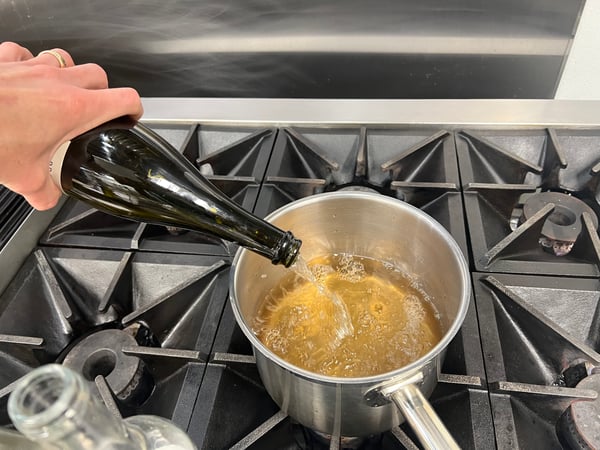
- Combine the wine, sake, sugar, salt, and kombu in a small saucepan over medium heat. Stir until the sugar fully dissolves.
- Remove the kombu as soon as the mixture begins to simmer so it does not turn bitter. Lower the heat to a gentle simmer and cook for 15 to 20 minutes, until the liquid reduces by about a quarter and turns slightly syrupy. This will also cook off a good amount of the alcohol.
- Let it cool completely, then transfer to a clean glass bottle. Store in the refrigerator for up to four weeks.
Mirin is a key ingredient for Fork and Coin's Karaage and Fried Cauliflower.
The Chopping Block's soups and sauce-related classes are the perfect way to up your condiment and sauce skills at home! We also have an amazing variety of condiment recipes here on the blog:
