
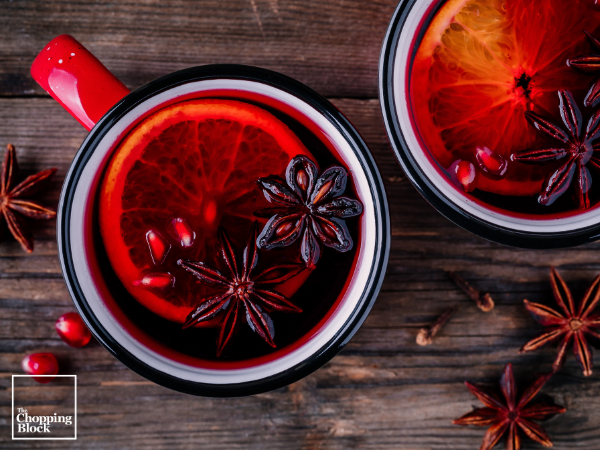
If a recipe has been around thousands of years, you might think the results are pretty delicious. If you learn that the recipe has travelled around the world, you can assume it’s adaptable to various ingredients. And if it’s still popular today, you’ve got to know it’s convenient, easy to make in advance and freezable if not polished off in one sitting.
Delicious, adaptable and easy - that’s mulled wine.
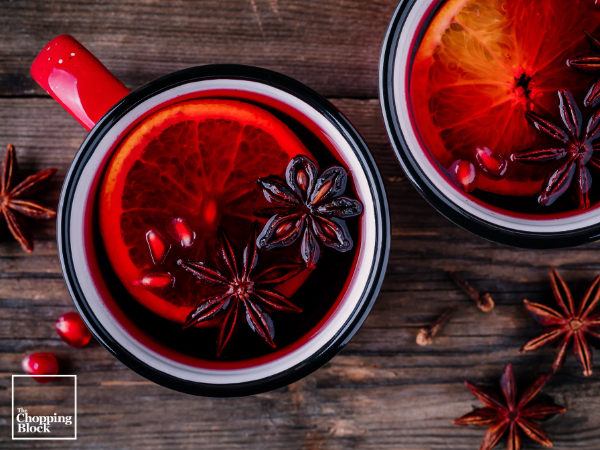
First recorded in ancient Rome, hot spiced (or mulled) wine traveled with legionnaires throughout Europe. In the 16th century, mulled wine was dubbed Hippocras, both for its accepted medicinal properties and for the Hippocratic sleeve, (the cloth sieve used strain out spices), devised by the Greek physician Hippocrates.
Today, mulled wine is dubbed wassail or the smoking bishop (in Great Britain), glühwein (Germany), glögg (Scandinavia), candola or navega'o (Chile) and krasomelo (Greece). Germany’s Feuerzangenbowle (fire tongs punch) involves a rum-soaked sugar cube, flamed and dripped into each mug.
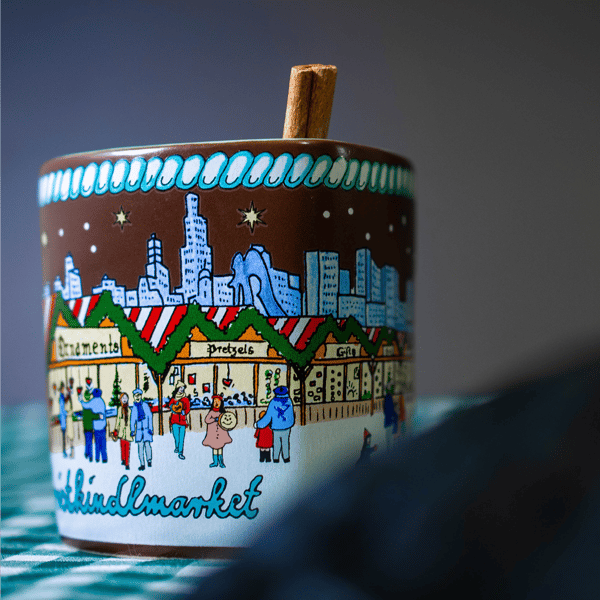
Ingredients may include wine, apple wine (i.e. cider), distilled spirits such as brandy, honey or sugar, and a variety of fruit and spices.
The basic recipe is the same as one published in Medieval England, with instructions to blend “cinnamon, ginger, galangal, cloves, long pepper, nutmeg, marjoram, cardamom, and grains of paradise ("spykenard de Spayn", rosemary may be substituted)” then mixed with red wine and sugar, and heated.
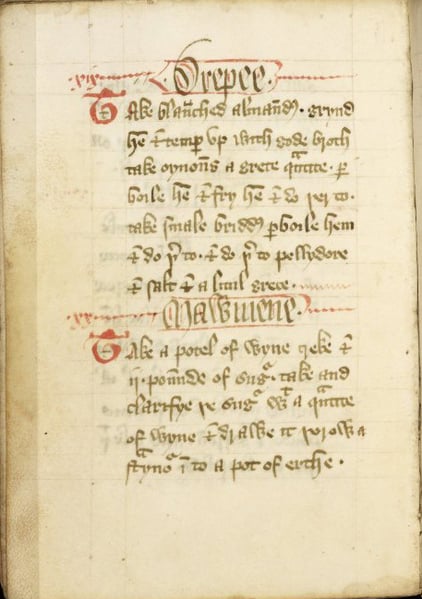
“The Forme of Cury” cookbook, dated 1390 by Master chef of Richard II of England
For a modern interpretation, here’s The Chopping Block’s recipe:
Gluhwein (Warming Red Wine Punch with Orange and Spices)
Yield: 6-8 glasses
Active time: 10 minutes
Start to finish: 30 minutes
1 (750 ml) bottle of red wine
1/4 cup brandy or orange liqueur
1 orange, sliced into rounds
8 whole cloves
2 cinnamon sticks
2 star anise
2 to 4 tablespoons honey
1 orange, cut into half moons for garnish
- In a saucepot, measure together the wine, brandy or orange liqueur, orange slices, cloves, cinnamon, star anise and honey.
- Set over medium-low heat until steaming, remove from the heat and cover. Right before serving, gently reheat.
- Strain the wine through a fine sieve and ladle into mugs. Garnish with a fresh orange slice and serve.
Here are some tips for your own mulled wine:
1. Use wine that you enjoy drinking, not the best and not the worst.
2. Choose a red that’s rich in fruit but low in oak and tannin, such as Cotes-du-Rhone Rouge (France), Barbera (Italy), Tempranillo (Spain) or a U.S. Merlot labelled “naked.” For large parties, consider a well-made boxed wine.
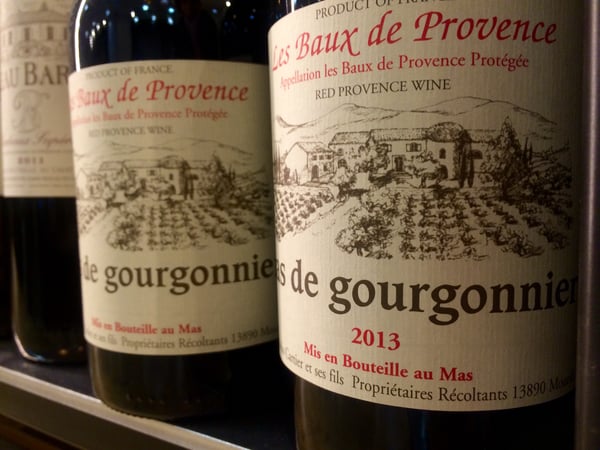
At TCB, we use Mas de Gourgonnier “Le Baux de Provence”, a south of France blend including Grenache, Syrah and Cabernet Sauvignon.
3. Use fresh fruits and whole spices.
4. To avoid bitterness, strain out spices and citrus after initial heating.
5. Don’t boil out the fun! Alcohol boils at a lower temperature than water, so heat the wine only to a gentle simmer, then keep warm in a slow cooker.
6. To zhuzh up service, garnish with fresh citrus, herbs and/or spices such as a fresh orange round, a cinnamon stick and rosemary sprig.
7. You may make your mulled wine several days in advance and refrigerate until use. After service, you can freeze left-overs, but if distilled spirit was added, it will only freeze to a slushie.
8. Mulled wine is so delicious, you may forget that it’s alcohol. Watch your intake and eat before, during and after consumption.
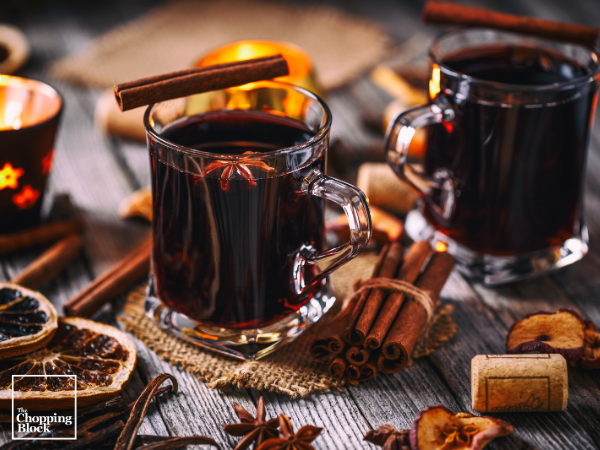
Charles Dickens and his A Christmas Carol forever associated mulled wine with Christmas, re-enforced by Frank Capra’s movie “It’s a Wonderful Life” and angel Clarence’s preference “heavy on the cinnamon and light on the cloves.” For Twelfth Night, Brits bless their apple trees with mulled apple cider and the spirited songs of wassailing. In South America, navega'o is a staple during asados (outdoor barbeques), not unlike Chicagoland’s tailgating festivities, warmed by mulled wine.
Another cold weather staple is a wine and cheese party. Join me on Friday December 5th, 6:30 p.m. to 8 p.m. for Wine and Cheese Tasting: The Perfect Pairing to mix-and-match five prominent cheese styles with five international wines. To register, visit: Wine and Cheese Tasting: The Perfect Pairing