
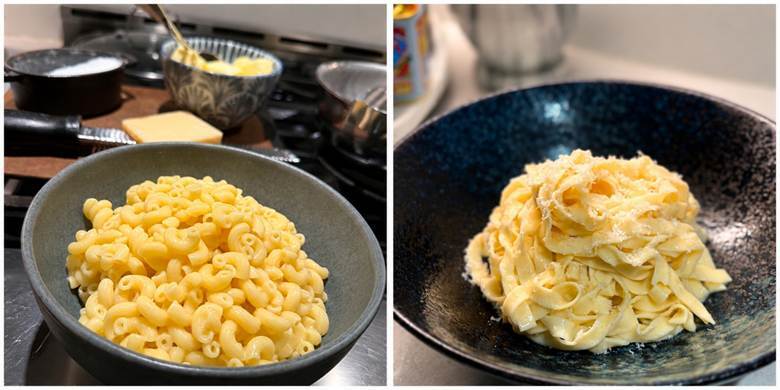
Few things are more comforting to me than a good bowl of buttered noodles. I share this sentiment with my wife and children, and it is always a welcome addition to our dinner table. But what is it about a dish so simple that keeps us coming back? Three common ingredients most of us have in our kitchens – store-bought pasta, butter, and salt. When put together with the proper technique these ingredients create a comforting treat. It’s simple, warm and satisfying.
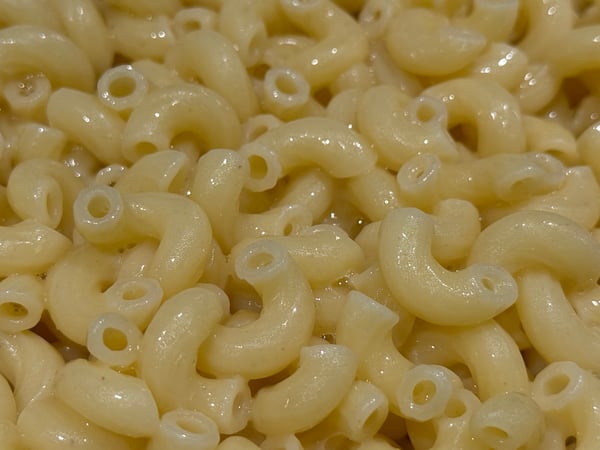
It has a neutrality in flavor that lends itself to many different dishes as a side, but it is also great as an after-school snack or a medicinal treat when one is under the weather or looking to gain back an appetite. It can be a perfect balance of flavor between the mild, nutty pasta, the sweet creamy butter, and the proper seasoning of salt. It can be quite addicting.
Fettuccine Alfredo
Buttered noodles can also be elevated to an equally simple classic Italian pasta dish – Fettuccine al Burro or as it is more commonly known - Fettuccine Alfredo. A bit more refined and with the addition of cheese, this is the authentic recipe for Fettuccine Alfredo and different from what we may be used to in Italian-American restaurants. More about the differences in a minute.
For this dish, I use fresh egg fettuccine, good quality butter, and a finely grated Parmigiano-Reggiano. Fresh pasta is a more flavorful product, and the texture will have a springier bite than the firmer and resilient al dente bite of store-bought.
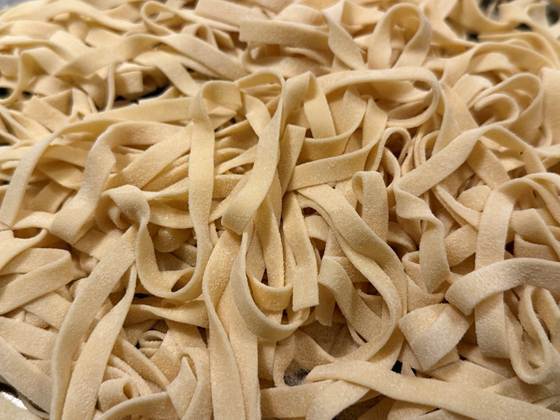
Across most of Italy, you will not find “Fettuccine Alfredo” on a local menu. Instead, it is listed as fettuccine al burro or fettuccine burro e parmigiano. There are a couple of exceptions in Rome where the term Alfredo is used – Alfredo alla Scrofa and Il Vero Alfredo. These establishments trace their lineage back to Alfredo di Lelio, the dish’s creator. Alfredo di Lelio was a Roman restauranteur who created his extra-buttery version of fettuccine al burro in 1908 to help his pregnant wife regain her appetite after childbirth.
While the authentic version of fettuccine al burro is made with fresh egg fettuccine, whole butter, fine grated Parmigiano-Reggiano, and a splash of hot pasta water, the American version is different. In the U.S., Alfredo is often served as a white sauce of heavy cream and sometimes a bechamel (milk or cream thickened with roux). This helps to keep the sauce thick and stable. I am offering a recipe for the former and more authentic version of Fettuccine Alfredo. But before the recipe, a bit about the technique.
Technique
Creating a perfect buttered noodle or an authentic Fettuccine Alfredo both take the same technique and understanding. It’s so much more than writing the ingredients/amounts on a recipe and putting everything in a pan and hoping it all turns out. It takes skill and understanding of how to manipulate the simple ingredients to create a velvety sauce that coats the pasta. Here are some important notes to help understand the technique.
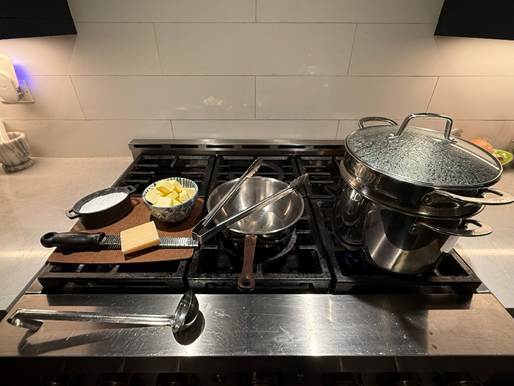
- Pasta needs to be cooked properly. For buttered noodles, I try and take the store-bought pasta just past an al dente cook. This will help the pasta release a bit more starch into the pasta water. More about pasta water below. For fresh egg fettuccine, you will only need to cook your pasta for 2-3 minutes. The fresh pasta will release much more starch into your pasta water than the store-bought. The recipe for fresh pasta below is The Chopping Block's standard pasta dough made with both “00” flour and semolina.
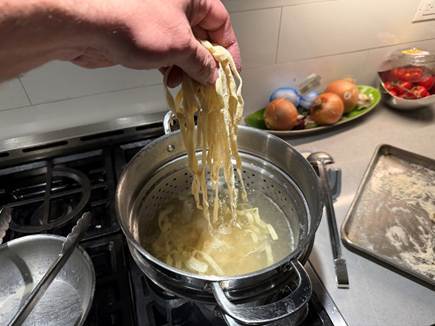
- Pasta water: The water that you use to cook the pasta in is essential for any good buttered noodle or Alfredo. The starch that is released into the water helps to create a sauce when added back to the cooked pasta and emulsified with butter. Instead of pouring the water out into a colander to strain the pasta, use a pasta pot with a perforated insert to retain the nice starchy pasta water.
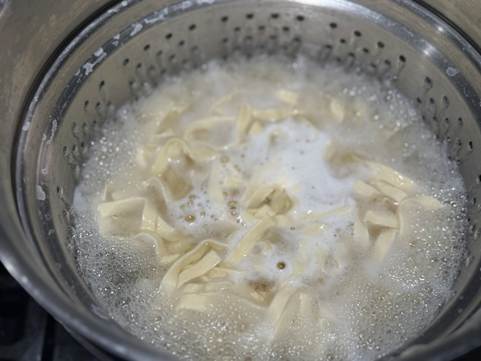
- Butter: Good quality, unsalted butter is always a must. For this technique, the butter needs to be cut into tablespoon sized pieces. The butter can be at room temperature, just not melted. Butter is an emulsification of fat, water and milk solids. When adding to a pasta, we maintain that emulsification by tossing vigorously. More on that in a minute.
- Parmigiano-Reggiano: for Alfredo, a good quality Parmesan is in order. This will add a nice salinity to your pasta. The cheese will be added with pasta water and butter to create the sauce. It thickens, it seasons, it adds complexity.
- Proper pan selection is important as well. Having a good deep saucier pan is key. This is a small, shallow, wide-mouthed pan with curved sides. This type of pan is ideal for tossing pastas. At home I use a 2 qt. saucier pan quite often.
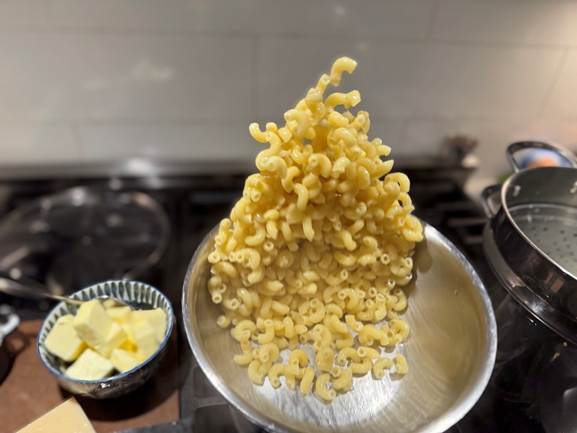
- Understand the consistency. Again, this is more about the technique than it is about the recipe and amounts of ingredients. The idea or trick here is to maintain an emulsion of the pasta starches, the butter, and the pasta water. This is done by adding the butter off the heat, adding hot pasta water into the pan, and always maintaining a lot of tossing in the pan. The tossing is important to help pull the emulsification together and to create some friction in the pan which will help to pull more of the starch out of the pasta.
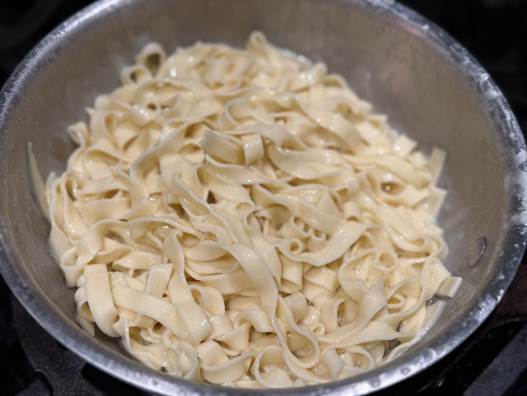
- When is it finished? If you’ve made it this far you probably like buttered noodles or Alfredo. If you do like buttered noodles or Alfredo, than you probably have some preferential standards when it comes to your pasta. This is a pasta sauce we are making in a pan a la minute so you need to be patient and look for signs that the pasta is to your liking. I like my pasta to have a good flow and to be well coated in sauce. This isn’t like the American version of Alfredo where you are spooning a cream sauce over the pasta. This is a velvety, smooth, slightly runny consistency. If the product is too tight or dry, add some more pasta water. If it’s too runny, agitate the pasta in the pan, create that friction and add some more butter. Important to note, I like to toss the pasta and adjust with water until it is just slightly wetter than I like to have on my plate. As a pasta like this sits, it will thicken up so you want it a bit runnier than you prefer. It also will benefit you to warm your dish or bowl you will be serving in as a cold dish will cause the pasta to thicken up or seize up slightly.
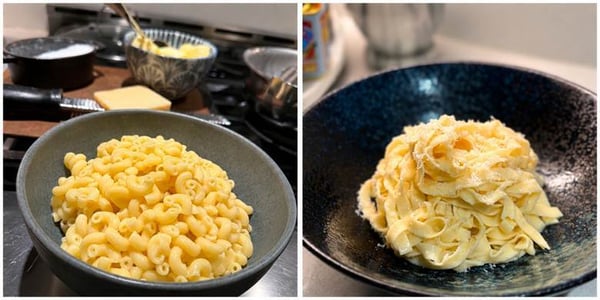
Buttered Noodles
Yield: 4 servings
Active time: 20 minutes
1 pound elbow pasta
3 Tablespoons whole butter
2 oz. pasta water
Salt to taste
- Bring 6 quarts of water to a boil. Place enough salt in the water so that it is seasoned well.
- Cook pasta for about 8 minutes.
- Drain the pasta well. Add to saucier with 2 tablespoons butter and 2 oz. pasta water.
- While off the heat, toss the pasta to create emulsion of the pasta, water and butter. Add a bit more water and/or butter to get desired consistency.
- When desired consistency is reached, season with salt to taste, plate and serve.
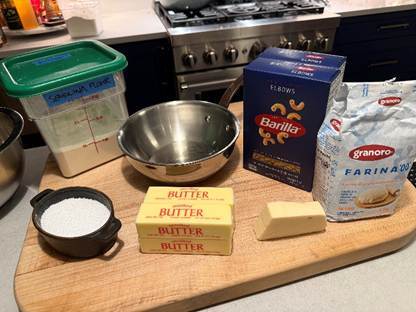
Fresh Pasta
Yield: 4 servings
Active time: 15 minutes
Total time: 35 minutes
2 cups hard wheat (“00”) flour
1/4 cup semolina flour
3 eggs
2 Tablespoons water
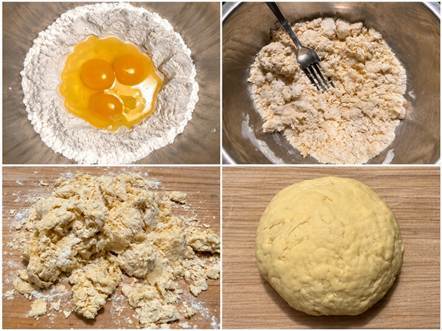
1. In a medium sized bowl, mix the flour and semolina
2. Make a well in the center of the dry ingredients. Crack the eggs into the well. Add the water.
3. Using a fork, beat the eggs gradually while mixing the dry ingredients into the wet.
4. When mixture becomes too thick, transfer the dough onto your work surface. Using your hands, knead the dough until smooth and elastic 5-7 minutes. Wrap the dough in plastic and allow to rest for 20 minutes.
5. Roll out in a pasta maker until smooth, then roll into sheets and cut to desired noodles.
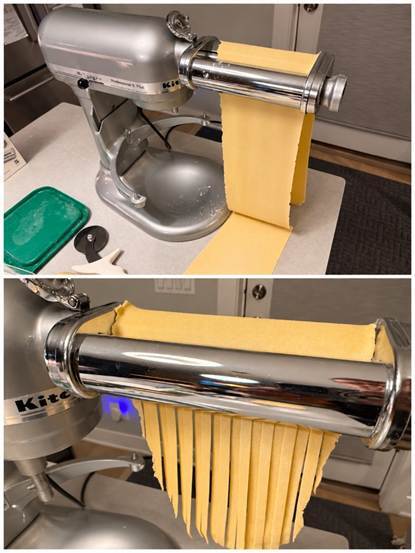
6. To cook, plunge into rapidly boiling water for about 2 minutes.
Fettuccine Alfredo
Yield: 4 servings
Active time: 10 minutes
4 servings fresh pasta
3 tablespoons whole butter
2 oz. pasta water
Grated Parmesan to taste
Salt to taste
- Bring 6 quarts of water to a boil. Place enough salt in the water so that it is seasoned well.
- Cook fresh pasta for about 2-3 minutes.
- Drain the pasta well. Add to saucier with 3 tablespoons butter and 2 oz. pasta water.
- While off the heat, toss the pasta to create emulsion of the pasta, water and butter. Grate an ounce of parmesan into the saucier. Add a bit more water and/or butter to get desired consistency.
- When desired consistency is reached, season with salt to taste, plate, grate more Parmesan on top and serve.
The Chopping Block's amazing Pasta and Gnocchi Workshop classes are a great way to practice some of the techniques here and work with this same fettuccine dough. These classes sell out quickly, so be sure to sign up soon!
You can also take your cooking beyond the recipe with immersive, hands-on culinary training designed for home cooks with one of our Boot Camps. Check out our schedule to see our upcoming classes.
Also, the holidays are upon us. Looking for the perfect gift? Check out our online gift cards, which make an easy holiday gift for anyone who loves to cook or wants to learn!
