
Over the summer, I attended a book signing for a new Evanston published cookbook, Great Bakes: Modern Classic Recipes from the Midwest by 2023 Great American Baking Show winner and Chicagoan Martin Sorge. The book highlights Midwestern flavors, ingredients, and baking techniques. After the author shared the story behind the cookbook’s origin, the writing process, and some personal anecdotes, time was left for questions from the audience.
One question and answer struck me for its simplicity. The attendee asked “What advice do you have for me? I just can’t get things to turn out.” Sorge’s response, “Weigh the ingredients.” This was not necessarily novel to hear, because several recipes at The Chopping Block have select ingredients listed by weight, including those in our Artisanal Bread Boot Camp. In this class, students even weigh the water.
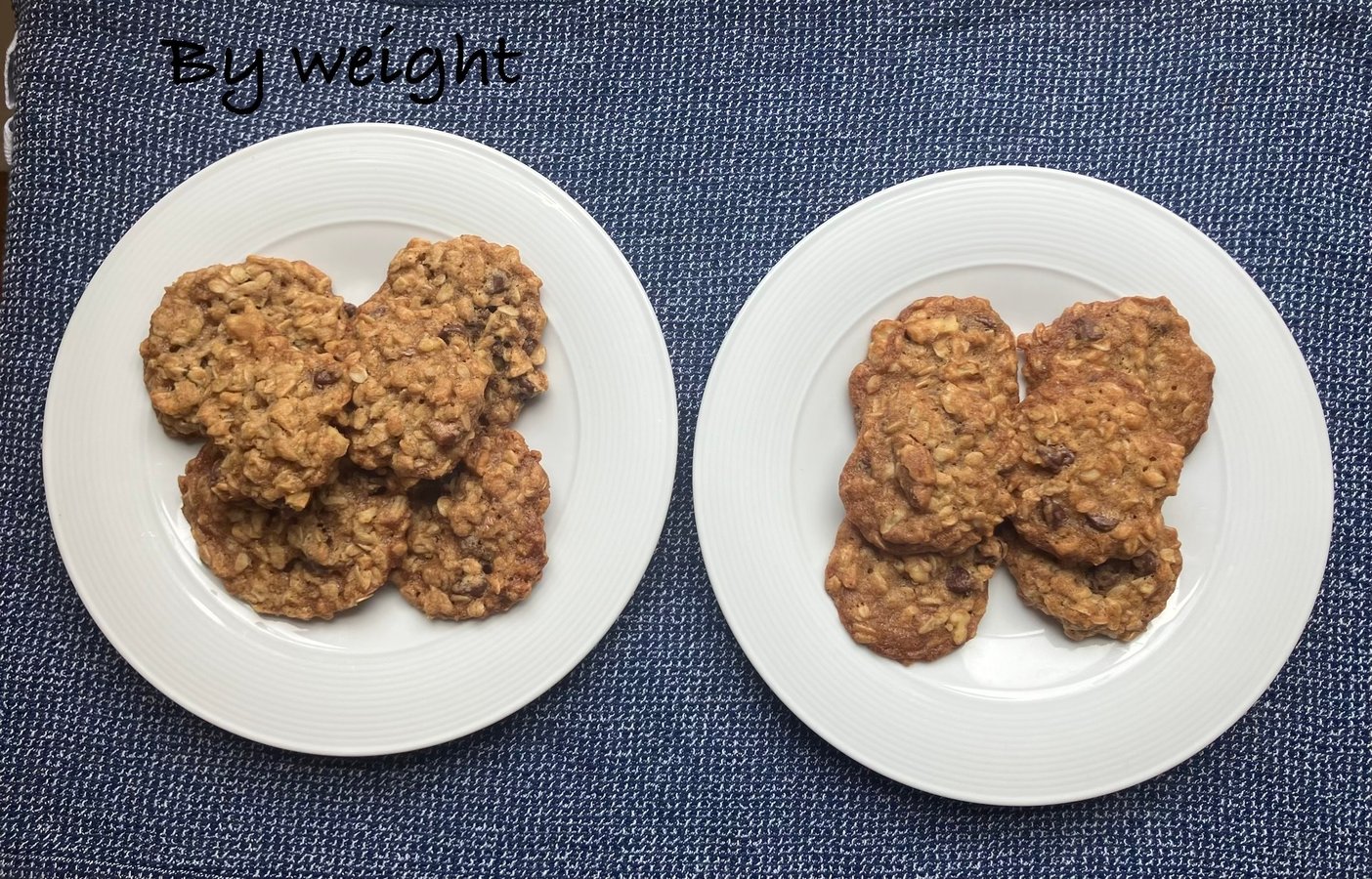
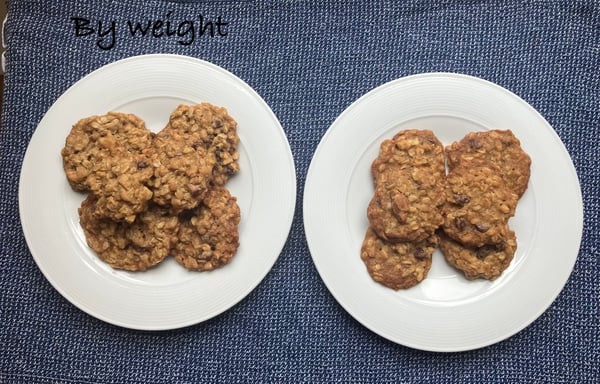
It was something about the question’s succinctness that caught my attention. At home, I don’t usually measure by weight. Is weighing ingredients worth the effort? Would doing so produce a better result? It was time to see for myself. I made Sorge’s Ultra-Oaty Oatmeal Chocolate Chip Cookies, but you could do your experimenting with weighing just as well with these chocolate chip cookies. I made them using the usual measuring cup and measuring spoon method and again using a scale. Then I compared the results.
Ultra-Oaty Oatmeal Chocolate Chip Cookies
Recipe courtesy of: Great Bakes: Modern Classic Recipes from the Midwest
Yield: 18 big cookies
Prep time: 30 minutes
Bake time: 15 minutes
Inactive time: 15 minutes
Total time: 60 minutes
227 g (1 cup) butter, at room temperature
250 g (1 1/4 cups) light brown sugar
1 tsp (5 g) fine sea salt
¾ tsp (2.5 g) baking soda
¾ tsp (2 g) ground cinnamon
½ tsp (1 g) freshly ground nutmeg
1 large egg, at room temperature
2 tsp (8 g) vanilla extract
150 g (1 1/4 cups) all-purpose flour
350 g (3 cups plus 1 Tablespoon) rolled oats
160 g (1 cup) chocolate chips or chopped chocolate
130 g (1 1/4 cups) toasted walnuts or pecans chopped
Flaky sea salt to finish
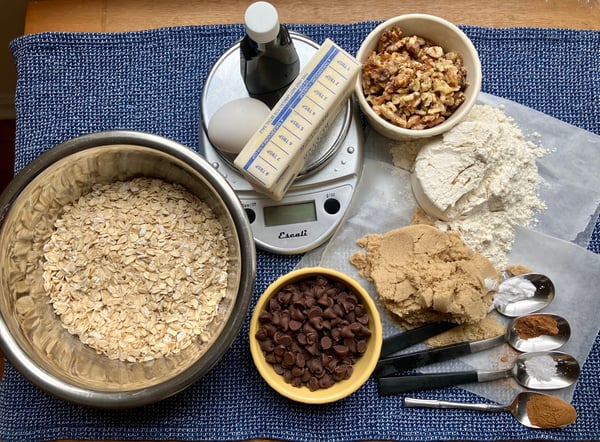
1. In the bowl of a stand mixer fitted with a paddle attachment, add the butter, brown sugar, salt, baking soda, cinnamon, and nutmeg.
2. Beat on low speed for about 1 minute, raise the speed to medium-low for 4-5 minutes, until light and fluffy.
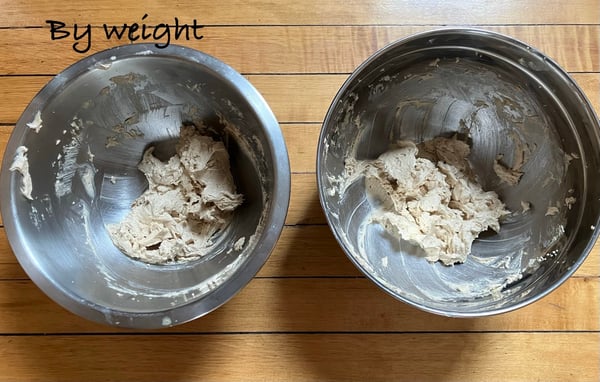
3. Scrape down the sides of the bowl and the beater, add the egg and vanilla. Beat on medium low for about 1 minute.
4. Add the flour and beat on low until well combined. Scrape down the bowl and beaters and mix for a few more seconds.
5. Add the oats and beat to combine, then add the chocolate and walnuts, and beat on low to mix.
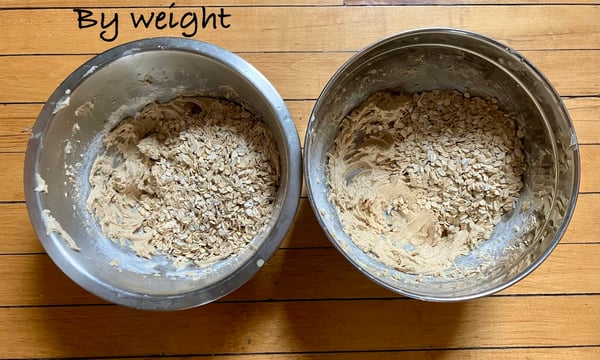
6. Line cookie sheets with parchment paper. As desired, use a 2-ounce scoop to place the cookies on the pan. Leave 2 inches between each cookie.
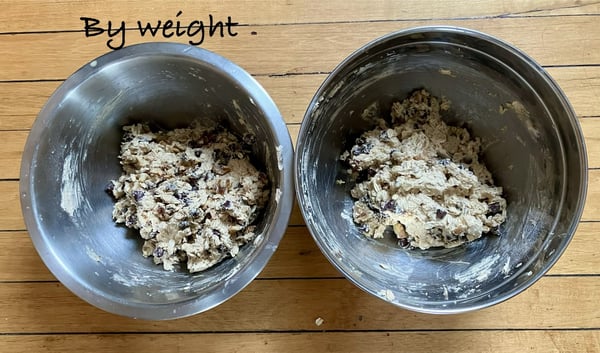
7. Right before baking, sprinkle the cookies with a bit of flaky salt.
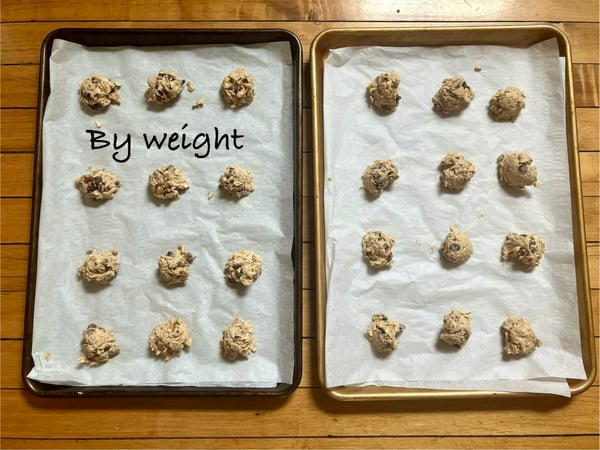
8. Bake cookies until they have flattened and puffed and cracked a bit, and the edges look golden brown, 14-17 minutes. They will firm up as they cool.
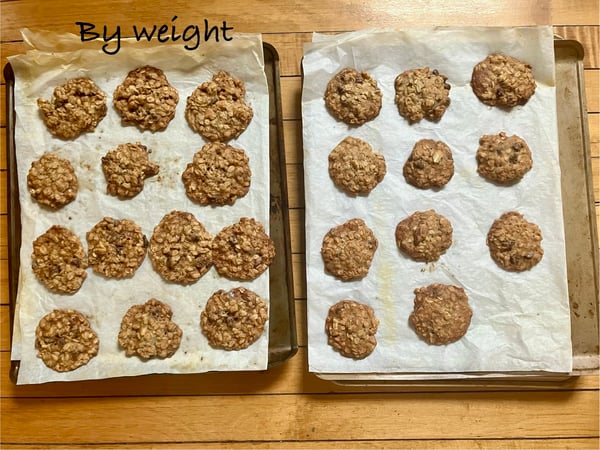
9. Let the cookies cool for 15 minutes on the cookie sheet before transferring to a cooling rack.
The scooped cookies can be frozen. Let them sit in the refrigerator for up to 24 hours. Once fully chilled, freeze in an airtight container for up to 3 months. Bake right from the freezer adding 2-3 minutes to the baking time.
Steps and Necessities for weighing ingredients
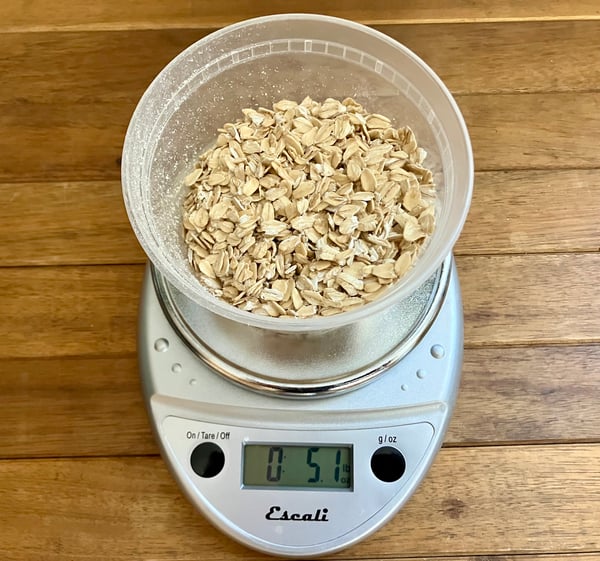
Digital Kitchen Scale There are many options. Digital ones are easy to read and compared to other kitchen tools and gadgets, not a big investment.
Plastic Wrap Keep your scale clean by placing plastic wrap on top.
Extra bowl or plastic containers This argument can go either way. I prefer to weigh each ingredient in its own separate vessel to avoid ingredients getting combined before or after reaching the target weight.
Zero the scale Zero the scale each time a new ingredient is weighed.
Grams vs. ounces Grams offer smaller, more precise increments and eliminates fractions.
Why Weighing is Better
Weighing ingredients like dry goods such as flour is more precise. Packing flour in a measuring cup can result in up to 50% extra flour. Weighing also makes up for ingredient differences. Think about salt. Different salt crystal sizes take up varying amounts of space to make a teaspoon. Measuring by weight also maintains the chemical ratios of flour, liquid and leavening agents needed for structure and rise.
The Results
As someone who doesn’t normally weigh ingredients, I found the process a bit tedious. Also, to stay consistent, I weighed even the small quantities like a teaspoon of vanilla and salt. Perhaps making weighing a habit would make it feel less cumbersome. In the end, I was pleased with the taste of all the cookies. However, I’ll admit the ones with weighed ingredients were oatier and had a better texture. Not surprising, because it actually looked like there were more oats in those cookies.
You can learn more about precision in baking during Cupcake Boot Camp or for graduates of Culinary Boot Camp 1, we have Culinary Boot Camp 2.
