
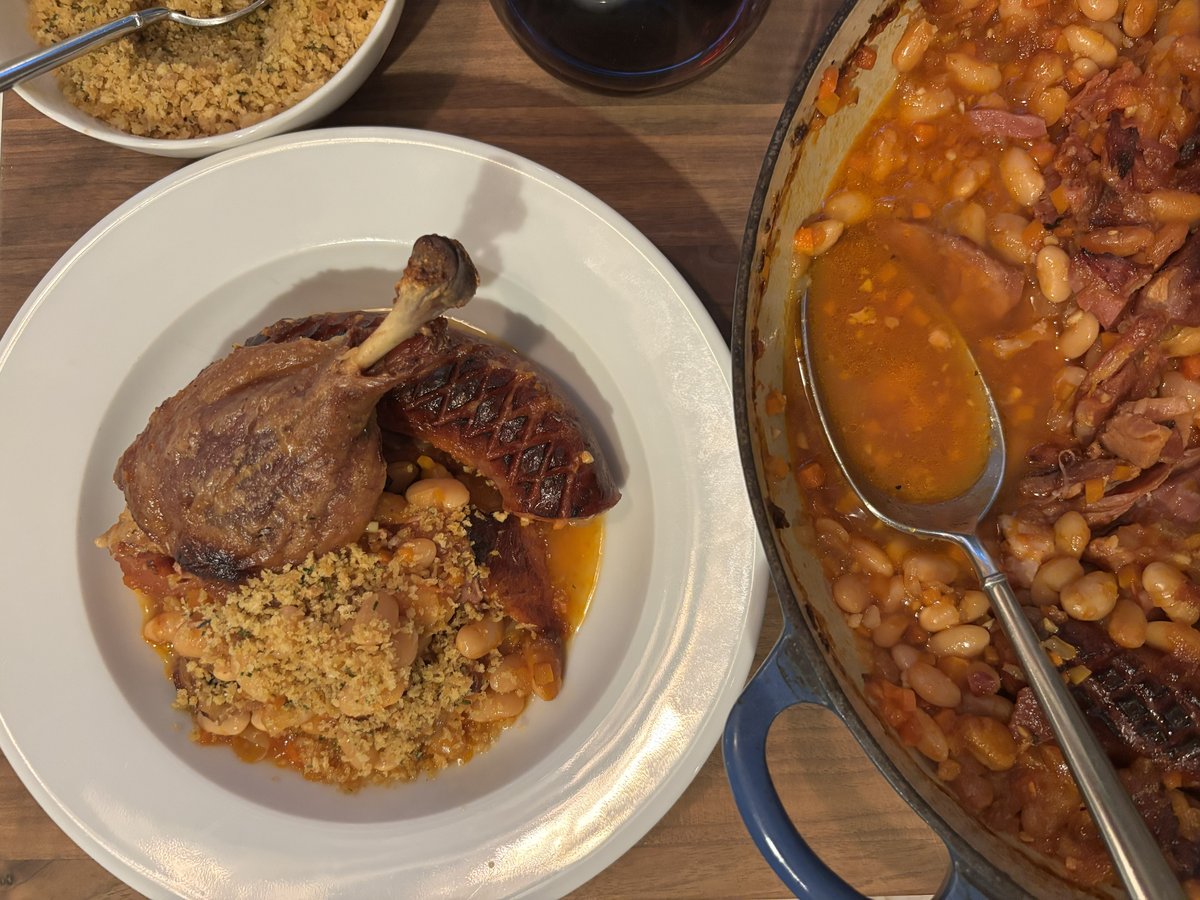
Now that fall is here and the weather is cooling off, I have been craving cassoulet. This classic French dish is a hearty, slow-cooked stew made with white beans, garlic, herbs and an assortment of meats. It gets its name from cassole, the traditional earthenware pot used to cook it. It’s the type of dish that simmers for several hours, fills your home with mouth-watering aromas and is perfect to enjoy on a cool night with a glass of red wine.
Cassoulet comes from southwestern France, and there are several regional versions of the dish. The most common meats include duck confit, garlic pork sausage and pork shoulder, but depending on the region and the recipe, you may also find lamb, goose or game birds. Castelnaudary, Carcassonne and Toulouse are particularly well known for their own interpretations of cassoulet, and yes, there are some pretty strong opinions about which version is the “right” one!
There are many variations of cassoulet and plenty of heated debates online about how it should be made. But here’s the good news: you don't need a traditional cassole or a complicated recipe to make a delicious cassoulet at home. While it does take some time, much of that time is hands-off, and the process can easily be broken down into manageable steps. My ultimate goal is for you to make this dish without feeling overwhelmed by it. So, let’s get into it!
The Beans
Cassoulet is traditionally made with dried white beans, which is great because they are also more cost effective than canned beans. A day before you make this recipe, soak 1/2 pound of dried Great Northern beans, navy beans or cannellini beans. Place the beans in a container large enough to accommodate their expansion. Cover them with about 2 inches of cold water, cover the container with a lid or plastic wrap and place it in the refrigerator.
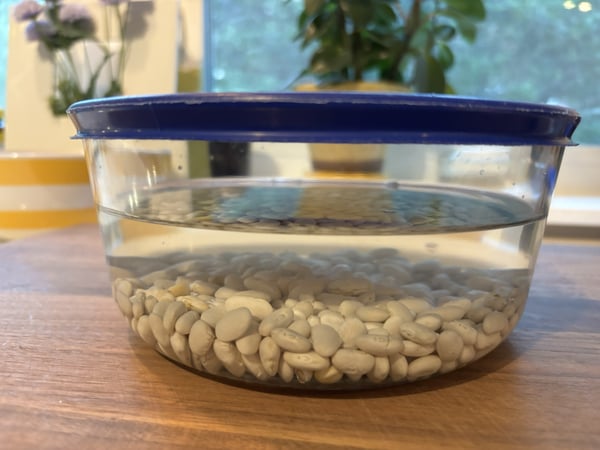
Soaking the beans does a couple of things:
-
It shortens the cooking time—it will still take a while, but less time than cooking them from dry.
-
It can help reduce some of the compounds in beans that are associated with digestive discomfort.
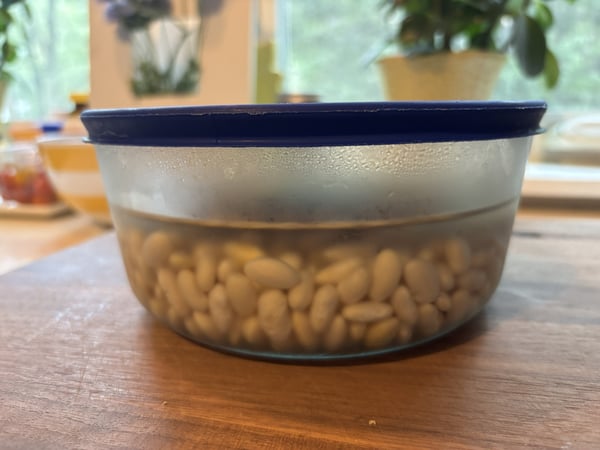
Once the beans have soaked, drain and rinse them and set them aside.
Cooking the Beans: The Vegetables, Aromatics and Cooking Liquid
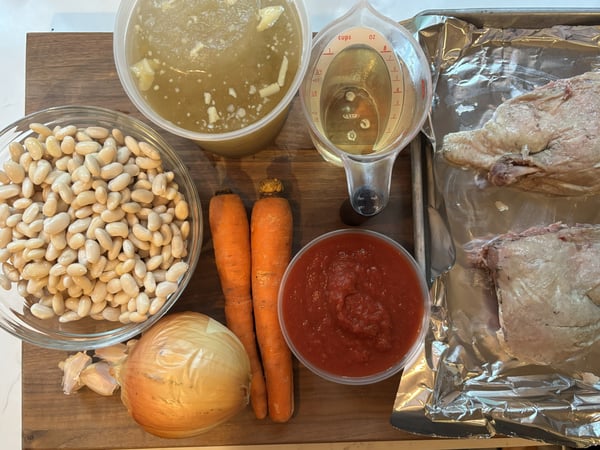
Most of the cassoulet recipes I found online use onions, carrots and garlic—no celery. I cut the onions and carrots into small dice because I wanted them to practically melt into the stew rather than have large pieces of vegetables throughout.
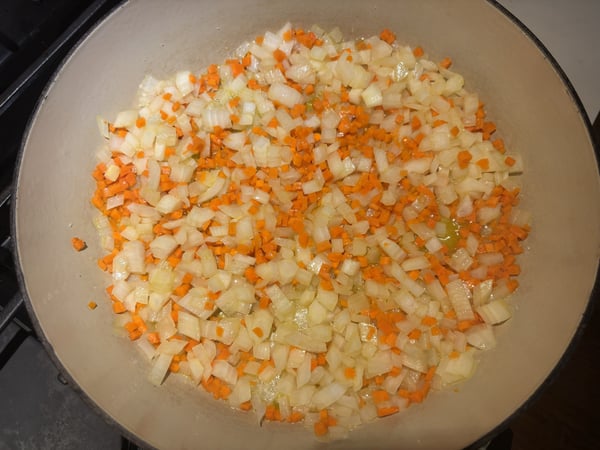
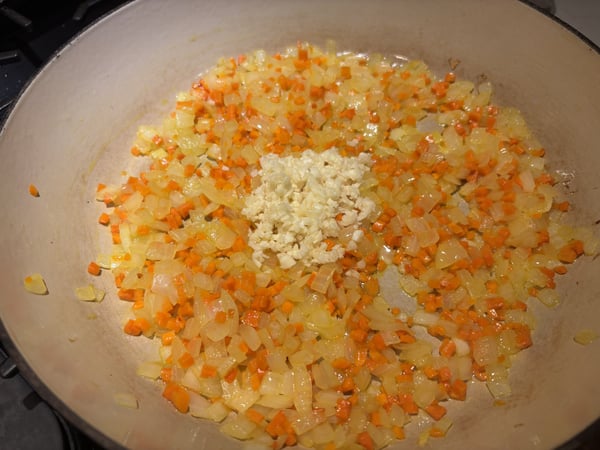
Once the vegetables were gently sautéed, I added the garlic and cooked it until fragrant.
I then deglazed the pot with white wine.
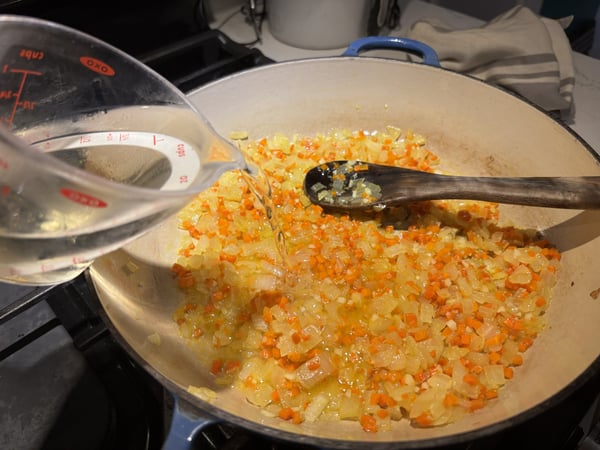
Once the wine had evaporated, I added the crushed tomatoes, chicken stock, bay leaves and thyme.
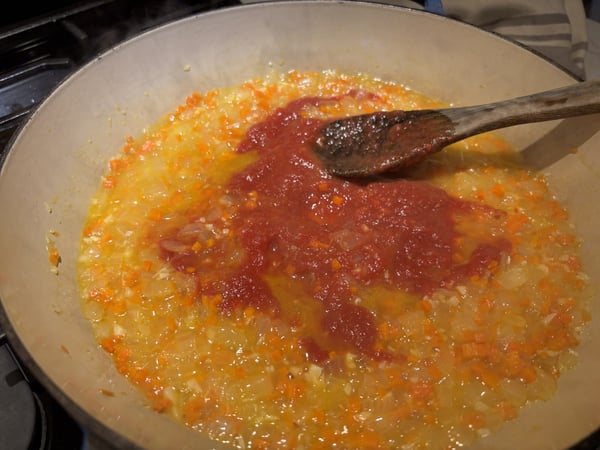
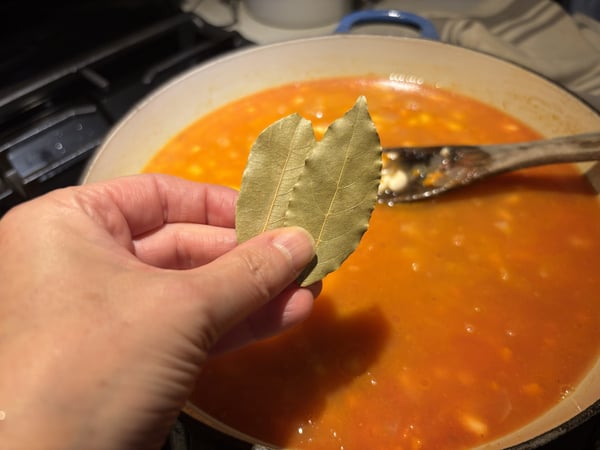
Add the beans to the pot, bring the liquid to a boil, then reduce it to a simmer. Wait to add the salt until the beans start to become tender.
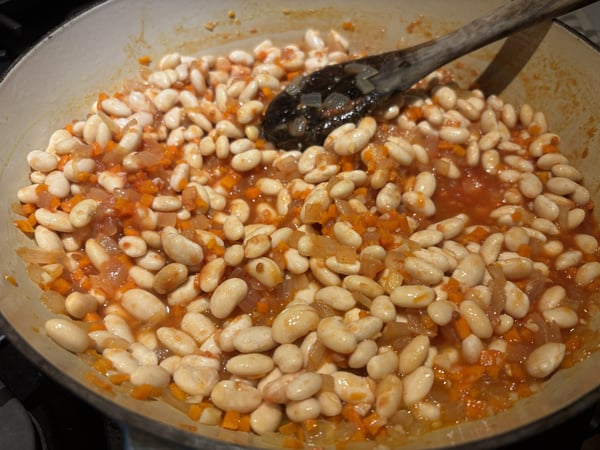
There’s an ongoing debate about when to salt beans, and you can read all about it in Autumn’s blog. Cover the pot and simmer the beans until they are just about tender, about 1 1/2 hours. This is the first long cooking step, but don’t let the cooking time intimidate you—once the pot is simmering, there’s not much hands-on work required.
The Meat
This is where you have a lot of control based on what’s available to you and your preferences. The traditional meats in cassoulet are duck confit, garlic pork sausage and pork shoulder, but use what works best for you! For my cassoulet, I looked through my freezer and pulled out duck confit, smoked pork sausages and pieces of ham that were left over from Christmas!
I used already prepared duck confit that my husband brought home from work—he’s also a chef instructor and sometimes has access to things like this. You can source prepared duck confit or try making it from scratch if you’re looking for a project. Read Max’s part one and part two blogs on how to prepare it.
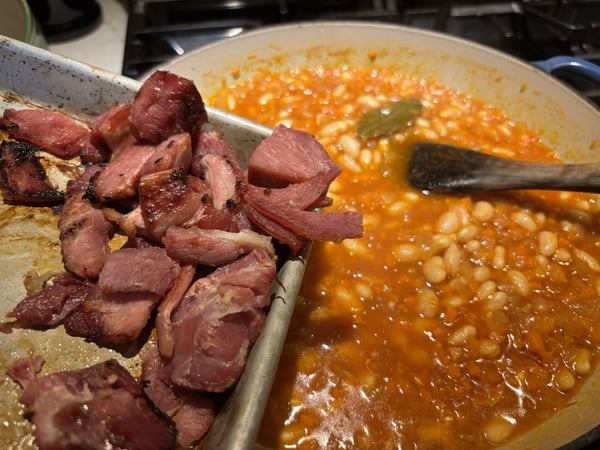
I placed the duck confit on a foil-lined sheet tray along with the sausages and pieces of ham.
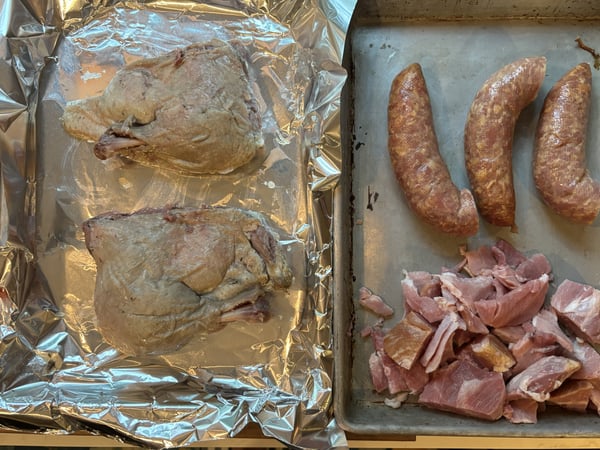
I slid the sheet tray under the broiler to give the meats some color and crispness.
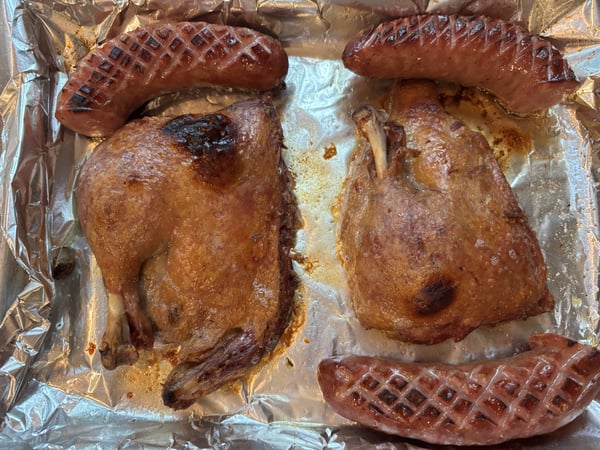
I separated the duck legs from the thighs, shredded the thigh meat and left the legs whole.
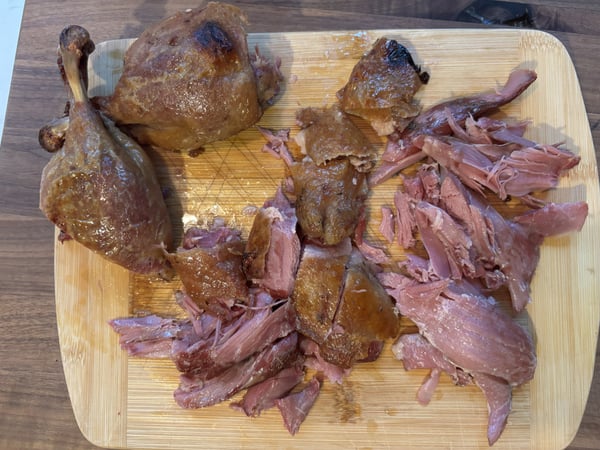
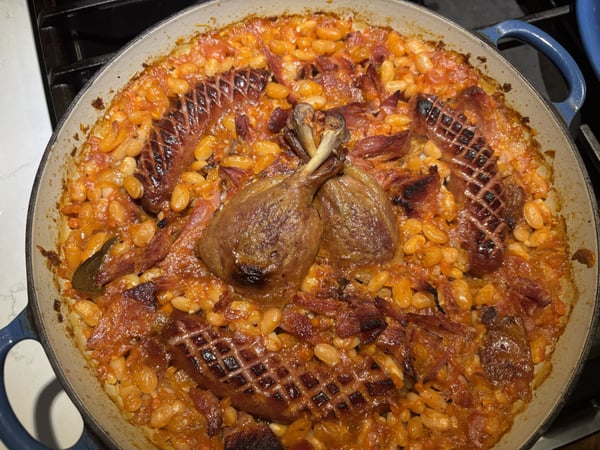
I stirred the shredded duck meat and ham into the stew, then placed the sausages around the edges and the two duck legs right in the middle.
This makes for a pretty impressive presentation when the cassoulet comes out of the oven, but don't worry—you can absolutely skip the whole duck legs if you’re using another type of meat.
Make It Your Own
Here’s where cassoulet gets really flexible. If you don’t have access to duck confit, boneless, skinless chicken thighs are an easy substitute. Cut them into 2-inch pieces and brown them in the same pot before adding the onions and carrots. Remove the chicken and set it aside while the beans cook, then add it back to the stew later.
You can also use leftover cooked chicken or turkey, which makes this a great recipe for using up Thanksgiving leftovers. A rotisserie chicken works, too.
For the sausage, you have plenty of options. Kielbasa, andouille, sweet or hot Italian sausage, and turkey sausage would all work well.
The ham in my version is already a substitute for the traditional pork shoulder, but you can also use thick-cut bacon or pancetta to add that savory, porky flavor. If using either one, render it slowly over low heat in the same pot before adding the onions and carrots. Remove it and set it aside while the beans cook, then add it back to the stew later.
The Final Cook
Once the stew is assembled with the meat of your choice, slide the pan into a 350°F oven and bake, uncovered, until the cassoulet is hot throughout and the top has developed a beautiful golden-brown crust, about 1 hour. You don’t want the finished cassoulet to be too dry, so keep an eye on it as it bakes. If it looks like it needs a little more moisture, don’t hesitate to drizzle some additional chicken stock around the edges of the pan.
There’s plenty of debate about this finishing step, too. Some recipes have you press down the baked crust and continue baking until another crust forms, repeating the process several times. Other recipes call for topping the cassoulet with breadcrumbs before baking. I did neither. I simply baked the cassoulet until a golden-brown crust formed.
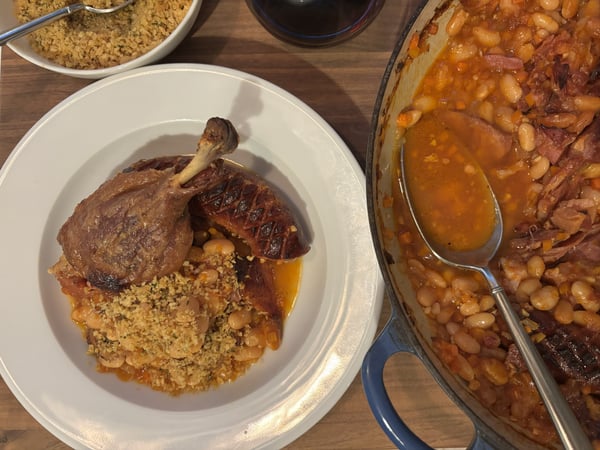
Instead, I tossed panko breadcrumbs with olive oil and rosemary and baked them separately on a sheet tray until golden and crisp. When serving the cassoulet, I sprinkled the toasted, herby breadcrumbs over the beans, which added a really nice crunch and textural contrast.
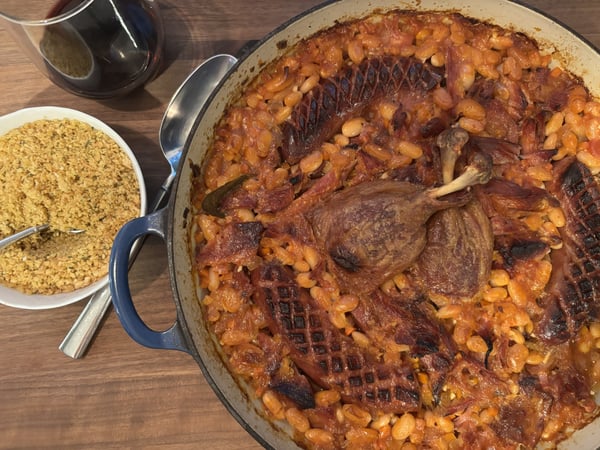
And that's the beauty of making cassoulet at home: there are plenty of traditional rules and opinions, but you can take the elements you love and make the dish work for you.
Now it’s Your Turn!
Cassoulet does take some time, but don’t let that intimidate you. Most of the cooking is hands-off, and there’s plenty of flexibility when it comes to the meats and finishing touches. Think of this recipe as a delicious project for a cool fall day—put on some music, pour yourself a glass of wine and let the cassoulet do its thing. I hope you give it a try and make it your own!
Cassoulet (White Bean, Duck Confit and Sausage Stew)
Yield: 6 servings
Active time: 45 minutes
Start to finish: 1 day, 3 hours (includes overnight bean soaking time)
1/2 pound dried great northern beans
Cold water to cover
3 tablespoons extra virgin olive oil
1 onion, small dice
2 carrots, small dice
4 cloves garlic, minced
Salt and pepper to taste
1 cup white wine
1/2 cups canned crushed tomatoes
2 1/2 cups chicken stock
2 bay leaves
2 sprigs thyme
2 pieces duck confit (legs and thighs)
1/2 pound cooked ham, cut into 1-inch pieces
2 smoked sausages, cut in half to make 4 pieces
1 cup breadcrumbs
1 tablespoon extra virgin olive oil
1 tablespoon fresh rosemary, finely chopped
- Place the beans in a container and cover by about 2 inches of cold water. Cover the container with a lid or plastic wrap and place in the refrigerator overnight. Tip: Make sure the container is large enough for the expanding beans.
- Once the beans have soaked, drain and rinse the beans and set aside.
- Heat a wide, heavy pan over medium heat and add the olive oil. Sauté the onions and carrots until tender, 5 to 7 minutes.
- Add the garlic and cook for an additional minute or until aromatic. Season with salt and pepper to taste.
- Deglaze with the white wine, scraping free any bits of fond from the bottom of the pan. Reduce until the pan is just about dry.
- Add the tomatoes, chicken stock, bay leaves and thyme.
- Bring to a boil and reduce to a simmer. Cook the beans, covered, until they are just about tender, 1 1/2 hours. Once just about tender, season with salt and pepper to taste, keeping in mind the salt levels of the meats you add.
- While the beans are cooking, preheat the broiler to high. Place the duck confit, sausages and ham on a foil-lined sheet tray. Note: Be sure to reference the “Make it Your Own” section in my blog for alternative meat options.
- Broil the meats until they have some color and crispness.
- Cut the duck legs from the thighs and shred the thigh meat. Stir into the beans.
- Add the ham to the beans and sir well.
- Place the sausages around the edges of the pan and place the duck confit legs in the center.
- Preheat the oven to 350º.
- Slide the pan into the oven and cook until a golden brown crust forms on top of the cassoulet, about 1 hour. If the cassoulet seems too dry while baking, drizzle in an additional 1/4 to 1/2 cup of chicken stock around the edges, and continue baking.
- While the cassoulet is baking, prepare the breadcrumbs. In a small bowl, toss together the breadcrumbs, olive oil and rosemary. Spread out on a sheet tray and bake until golden brown.
- Remove the cassoulet from the oven and allow to rest for 10 minutes.
- When ready to serve, spoon the beans onto your plate along with a sausage and duck leg. Top with a sprinkling of the toasted rosemary breadcrumbs and serve.
Now that it’s fall, we have some classes using dried beans to show you just how versatile they are. First of all, there’s our very popular Culinary Boot Camp. On day four, we cook dried beans and make a delicious White Bean Bruschetta. This week-long course always sells out, so be sure to sign up early if you’re looking for a comprehensive, hands-on cooking experience.
Our popular Hands-On Weeknight Wins: Cook Once, Eat All Week class has a new menu for the fall and winter, and white beans make an appearance in the form of Ribollita, a hearty Tuscan bean soup. This class is running on Monday, October 19 at 6pm and Friday, November 20 at 10am.
We also have a new class this November called Hands-On Comfort Food Remix on Tuesday, November 10 at 6pm where we’re making White Bean, Butternut Squash and Italian Sausage Gratin with Rosemary Breadcrumbs - a delicious riff on cassoulet- in addition to Cornbread Chicken Pot Pie with Jalapeños and Cheddar and Grilled Portobello “Quesabirria” Tacos with Mushroom au Jus. The perfect food to enjoy on a chilly day!
